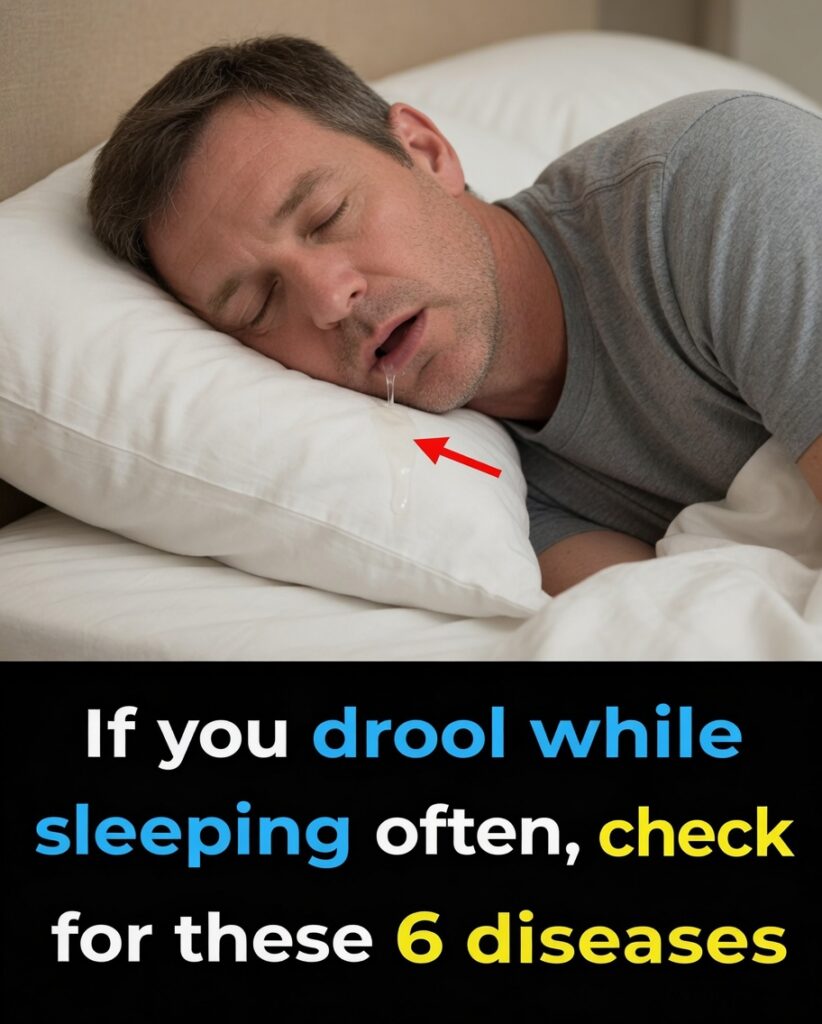
Waking up to a wet pillow can feel awkward, uncomfortable, and a little puzzling. It’s easy to dismiss it as “just deep sleep,” but if it keeps happening night after night, frequent drooling during sleep may be your body’s quiet hint that something else is going on—such as digestive reflux, breathing changes, or sinus congestion.
The good news is that once you understand the most common causes (and a few practical fixes), you can start making improvements as early as tonight. There’s also one frequently overlooked habit near the end that surprises many people.
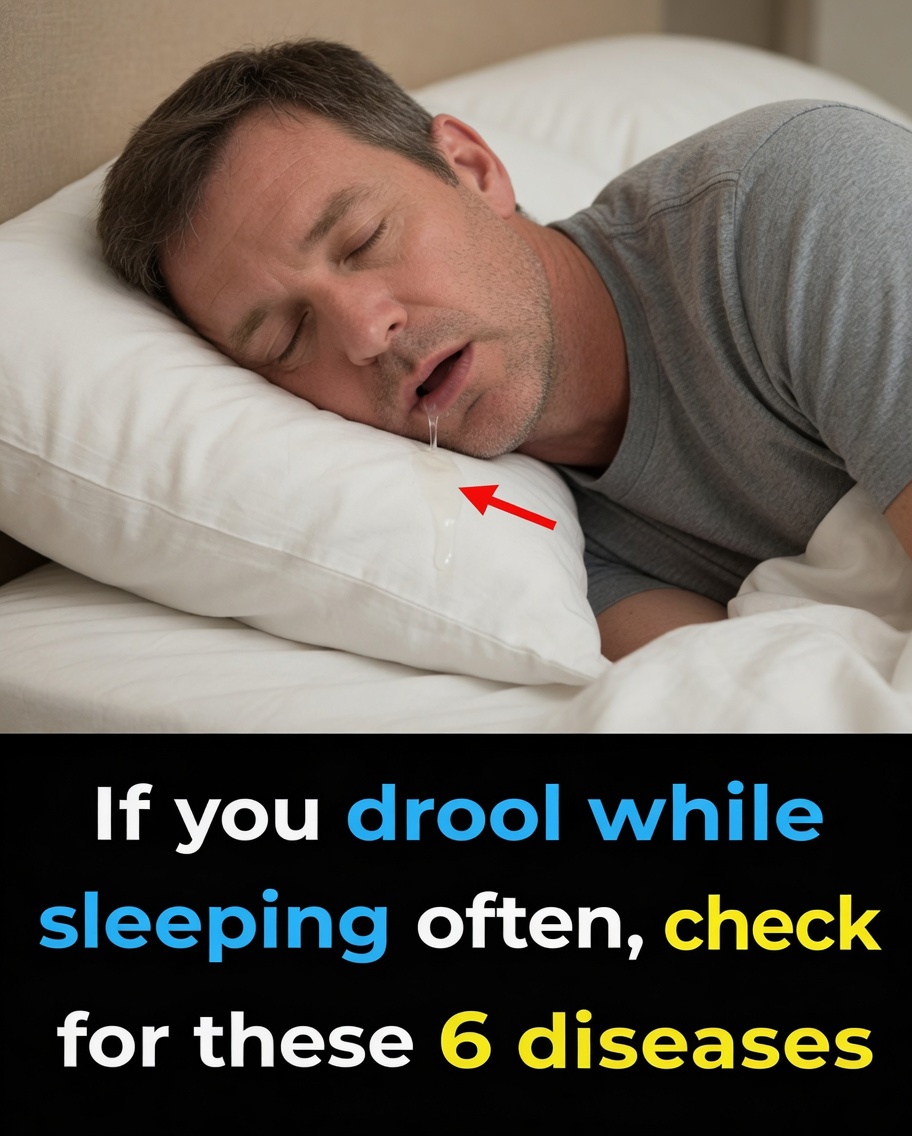
Why Do People Drool While Sleeping?
Saliva is essential for digestion, oral health, and protecting teeth. During sleep, your swallowing reflex naturally slows. If you produce more saliva than usual—or if your mouth stays open—saliva can pool and leak out.
A crucial distinction:
- Occasional drooling is common and often harmless.
- Frequent drooling or a sudden change (especially with other symptoms) is worth noticing.
Sleep medicine and neurology research suggests that changes in breathing, nerve control, and inflammation in the mouth/throat can affect how well the body manages saliva at night. Below are six of the most common contributors.
1) Acid Reflux (GERD) and Digestive Imbalance
With gastroesophageal reflux (GERD), stomach acid moves upward into the esophagus. To protect itself, the body may release extra saliva to dilute the acid—sometimes called water brash.
Why reflux can lead to drooling:
- Acid irritation can trigger increased saliva production
- Lying down makes reflux easier because gravity no longer helps
- You swallow less often during sleep, so saliva builds up
Other signs you may notice:
- Burning chest sensation
- Sour or bitter taste
- Frequent throat clearing
- Nighttime coughing
A detail many people overlook: reflux can increase saliva even without dramatic heartburn.
2) Sleep Apnea and Mouth Breathing
Sleep apnea involves repeated pauses or restrictions in breathing during sleep. When airflow is limited, many people start breathing through the mouth—making drooling more likely.
Common symptoms linked with sleep apnea:
- Loud snoring
- Gasping or choking during sleep
- Morning headaches
- Daytime exhaustion
- Dry mouth on waking
Sleep research also notes that disrupted sleep cycles can affect normal saliva control. Even without apnea, chronic mouth breathing (from congestion or habit) often leads to drooling simply because the lips don’t remain sealed.
3) Mouth and Throat Infections or Irritation
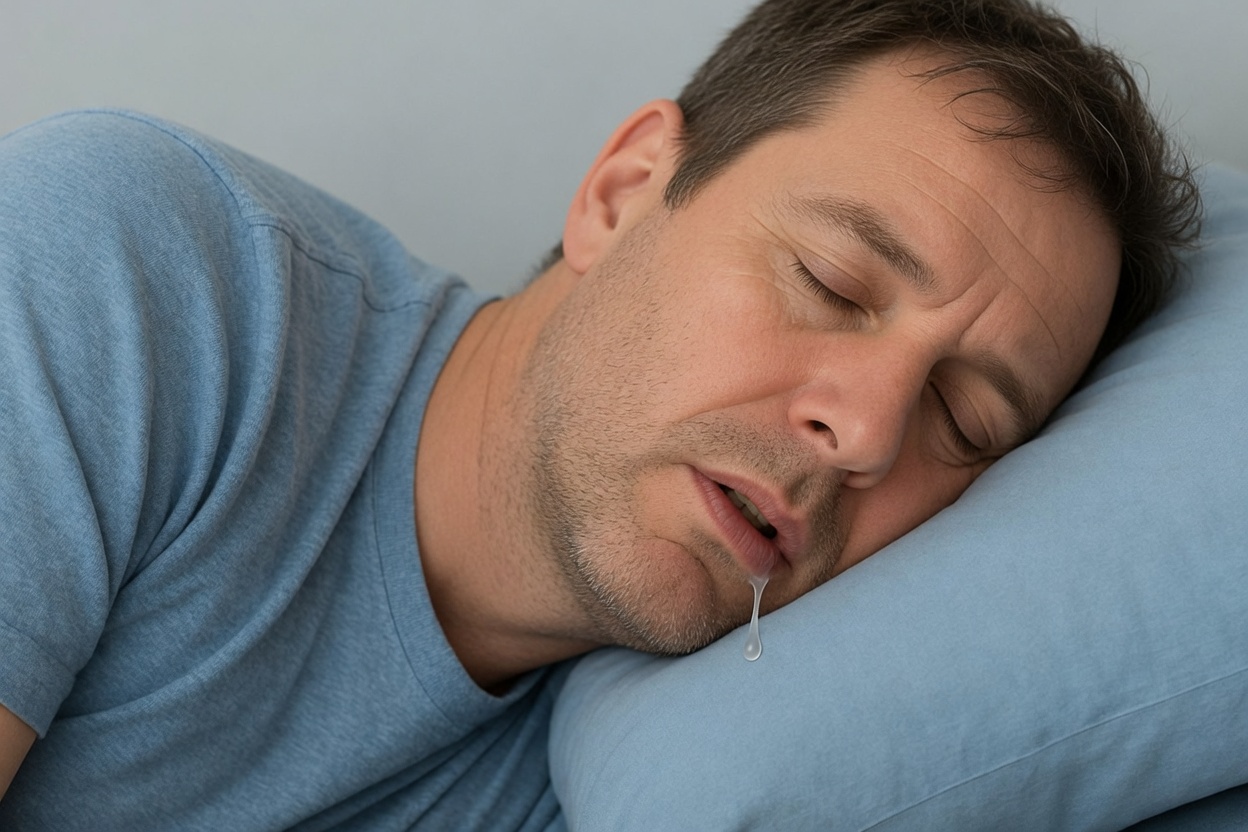
Inflammation in the mouth can stimulate saliva flow. Issues like gum disease, tonsillitis, tooth decay, or mouth ulcers may also make swallowing uncomfortable, allowing saliva to accumulate.
Look for:
- Bleeding gums
- Bad breath
- Painful swallowing
- Swollen tonsils
- Ongoing mouth soreness
Dental research consistently links untreated oral problems with altered saliva flow and swallowing coordination. Even mild gum inflammation can be enough to increase nighttime drooling.
4) Possible Early Stroke Warning (Especially in Older Adults)
In older adults, sudden drooling—particularly from one side—can sometimes be neurological. If drooling appears alongside facial or speech changes, it requires immediate medical attention.
Emergency warning signs:
- Drooling mainly from one side
- Facial drooping
- Slurred or unclear speech
- Arm weakness
- Sudden confusion
If drooling starts abruptly with facial changes or breathing difficulty, seek emergency care immediately.
5) Facial Nerve Weakness (Cranial Nerve VII)
The facial nerve (cranial nerve VII) controls muscles involved in lip closure and saliva management. When it becomes inflamed or weakened, one side of the face may not work normally—leading to leakage.
Typical signs:
- One-sided drooling
- Trouble closing one eye
- Uneven smile
- Facial tightness or weakness
What sets this apart from position-related drooling: it often affects one side and may be noticeable during the day, not only at night.
6) Allergies, Sinus Congestion, and Blocked Nasal Breathing
When the nose is blocked, people naturally switch to mouth breathing, which can significantly increase drooling while sleeping.
Common triggers:
- Seasonal allergies
- Chronic sinus inflammation
- Deviated septum
- Common cold
Possible accompanying symptoms:
- Stuffy or runny nose
- Postnasal drip
- Sneezing
- Itchy/watery eyes
ENT research strongly associates chronic nasal obstruction with mouth breathing and nighttime drooling. Even “mild” seasonal allergies can make a bigger difference than most people expect.
When Should You See a Doctor?
Drooling from time to time is usually not a medical problem. Consider evaluation if you have:
- Drooling that continues for more than a few weeks
- Choking, gasping, or breathing difficulty during sleep
- One-sided facial weakness
- Slurred speech
- Sudden onset drooling in an older adult
- Trouble swallowing
Early assessment can rule out serious concerns and identify treatable causes like reflux, allergies, or sleep-related breathing disorders.
Practical Things You Can Try Tonight
1) Change Your Sleep Position
- Try sleeping on your back (if comfortable)
- Slightly elevate your head with a supportive pillow
- Avoid very soft pillows that push the chin downward
2) Upgrade Your Nighttime Oral Care
- Brush and floss before bed
- Use alcohol-free mouthwash
- Replace your toothbrush about every 3 months
3) Support Digestion Before Sleep
- Avoid heavy meals 2–3 hours before bed
- Cut back on spicy or acidic foods at night
- Reduce late-day caffeine
4) Reduce Nasal Blockage
- Use a saline rinse or spray
- Run a humidifier in dry air
- Wash bedding frequently during allergy season
5) Pay Attention to Your Breathing
If you snore loudly and feel tired during the day, talk with a healthcare provider about whether sleep testing is appropriate.
Small, consistent adjustments often lead to noticeable improvements.
Quick Comparison: Harmless vs. Concerning Drooling
-
Frequency
- Likely harmless: occasional
- Needs medical check: persistent or worsening
-
Side
- Likely harmless: both sides
- Needs medical check: mainly one side
-
Other symptoms
- Likely harmless: none
- Needs medical check: speech changes, weakness, choking, swallowing issues
-
Timing
- Likely harmless: only during sleep
- Needs medical check: also occurs during daytime
-
Duration
- Likely harmless: short-term
- Needs medical check: continues for weeks or escalates
The Often Overlooked Habit That Helps Most
Many people focus only on sleeping position. However, one of the most underestimated factors is nasal airflow quality. When you improve nasal breathing—through allergy control or gentle nighttime nasal care—you often reduce mouth breathing, and drooling may drop dramatically.
Sometimes the real solution isn’t about saliva production at all.
It’s about breathing.
Conclusion
Frequent drooling during sleep is usually harmless, but it can sometimes be connected to underlying issues such as acid reflux, sleep apnea and mouth breathing, oral inflammation, allergies/sinus congestion, facial nerve weakness, or—in rare urgent cases—neurological events. Watching for patterns (especially one-sided symptoms and added warning signs) helps you decide when to seek professional guidance.
With simple changes in sleep posture, oral hygiene, digestion-friendly habits, and nasal care, many people see meaningful improvement.
FAQ
1) Is drooling during sleep normal for adults?
Yes. Occasional drooling can happen with deep sleep or side sleeping. Persistent drooling or sudden changes should be taken more seriously.
2) Can stress cause drooling at night?
Stress may contribute indirectly by disrupting sleep quality and affecting digestion (including reflux), which can increase the likelihood of nighttime drooling.