A Gentle, Natural Alternative: Why Homemade Clove Oil Is Worth Trying
Sensitive skin, end-of-day tension, and the push to simplify your self-care routine can be frustrating—especially when many store-bought options rely on synthetic fragrances and hard-to-decipher ingredient lists. If you’re looking for something affordable, multipurpose, and easy to control, a DIY herbal infusion can be a practical starting point.
Homemade clove oil is a warm, aromatic infusion you can make in your own kitchen—and with one small technique (shared later), you can help your infusion extract more of clove’s naturally occurring compounds.

What Is Homemade Clove Oil (and Why Has It Become So Popular)?
Homemade clove oil is a herbal infusion, created by soaking dried cloves in a carrier oil such as olive oil, coconut oil, or sweet almond oil. Many people choose this approach because it feels more approachable than working with highly concentrated essential oils.
Cloves come from the Syzygium aromaticum tree. They contain eugenol, a key compound responsible for clove’s distinctive spicy aroma and many of its traditional applications. Scientific literature has explored eugenol for potential antioxidant and antimicrobial activity, which helps explain clove’s continued popularity in natural beauty and wellness routines.

Homemade Clove Oil vs. Clove Essential Oil: Not the Same Thing
A common misunderstanding is assuming an infused oil is identical to an essential oil. It isn’t:
- Homemade clove oil: clove steeped in a carrier oil → generally milder and more beginner-friendly.
- Clove essential oil: distilled and highly concentrated → requires stricter dilution and greater caution.
Potential Benefits of Homemade Clove Oil for Everyday Self-Care
Homemade clove oil is not a medical treatment, but it may be a supportive addition to a balanced routine—especially when you want something simple, comforting, and customizable.

1) A Warming Option for Massage and Post-Work Tension
Long hours at a desk can leave shoulders, neck, and lower back feeling tight. Because clove contains eugenol—studied for mild soothing properties—some people use diluted homemade clove oil in massage blends for temporary comfort.
Traditional clove preparations have also been associated with relief for minor aches (including tooth discomfort), and research has examined clove-derived compounds for potential analgesic effects. Even so, proper dilution matters to reduce irritation risk.
2) Skin Support (With Extra Caution for Sensitive Skin)
When you’re trying to simplify skincare, it can be tempting to reach for multipurpose DIY oils. In very small, well-diluted amounts, homemade clove oil may offer gentle antimicrobial support in blends like:
- DIY body oil blends
- Balms (used sparingly)
- Spot-use products (only after patch testing)
Some lab studies show clove extracts can inhibit certain microbes in controlled settings. However, clove can be irritating—so patch testing is essential, especially if your skin is reactive.
3) Aromatic Comfort for Relaxation Rituals
Stress often shows up quietly: mental fatigue, difficulty unwinding, or restless evenings. The scent of homemade clove oil is warm, spicy, and grounding, which is why many people use it in home rituals like self-massage, relaxing baths (properly dispersed), or cozy aromatherapy blends.
It also pairs beautifully with:
- Orange peel
- Cinnamon-infused oil
- Vanilla-infused oil
How to Make Homemade Clove Oil (Simple DIY Infusion)
Making homemade clove oil is straightforward, and the best part is you control the freshness, ingredients, and fragrance intensity.
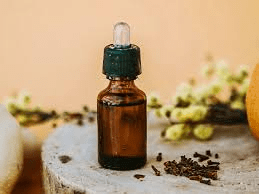
Ingredients
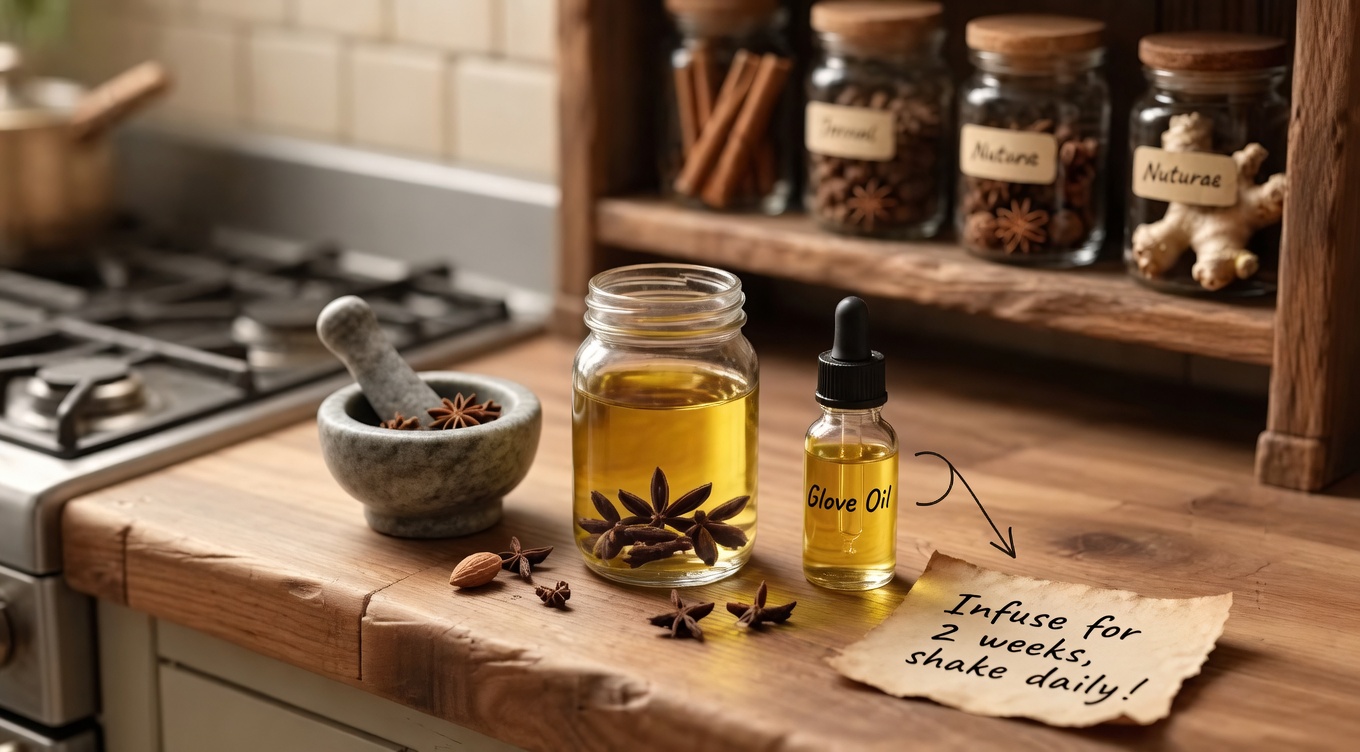
- 1 cup dried whole cloves
- 1 cup carrier oil (olive oil, sweet almond oil, or coconut oil)
Equipment
- A clean glass jar with a tight lid
- Cheesecloth or a fine strainer
- A dark glass bottle (for storage)
Step-by-Step Instructions
-
Lightly crush the cloves
Use a mortar and pestle (or the back of a spoon) to gently crack the cloves. This helps expose more surface area for infusion. -
Cover with carrier oil
Add the crushed cloves to the jar, then pour in oil until the cloves are fully submerged. Full coverage helps reduce spoilage risk. -
Infuse slowly (2–4 weeks)
Seal the jar and keep it in a cool, dark place. Shake gently every few days to redistribute the plant material. -
Strain and bottle
Strain through cheesecloth or a fine strainer. Transfer the finished homemade clove oil to a dark bottle and store it away from heat and light.
This slow method avoids high temperatures, helping maintain a more delicate, true-to-ingredient infusion.
Practical Ways to Use Homemade Clove Oil
Homemade clove oil is useful precisely because it can fit into several routines—without becoming another product that sits unused.
For Massage
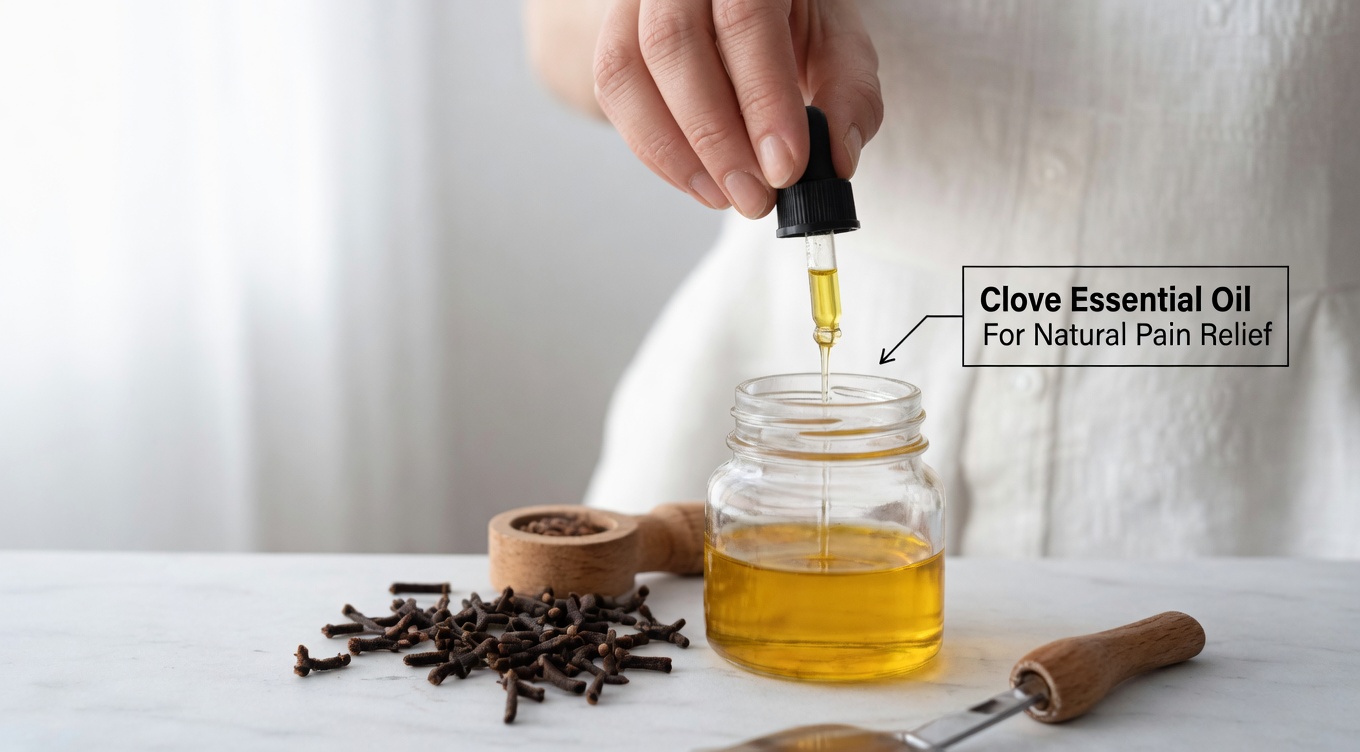
- Blend a small amount of homemade clove oil with additional carrier oil before applying to skin.
- Start with low amounts to keep the sensation gentle and reduce irritation risk.
For DIY Beauty Blends (Keep Concentrations Low)
You can incorporate small amounts into:
- Lip balms (very diluted)
- Body butters
- Sugar scrubs
- Scalp oil blends
If your skin is sensitive, use extra caution—or skip leave-on facial use entirely.
For Aromatherapy-Style Comfort
Homemade clove oil can add a cozy note to personal rituals when blended with complementary scents like:
- Orange peel oil
- Cinnamon-infused oil
- Vanilla-infused oil
Homemade Clove Oil vs. Clove Essential Oil: Key Differences
| Feature | Homemade Clove Oil | Clove Essential Oil |
|---|---|---|
| Concentration | Mild infusion | Highly concentrated |
| Typical skin use | Often gentler when properly diluted | Requires extreme caution and strict dilution |
| DIY accessibility | Beginner-friendly | Better for advanced users |
| Aroma strength | Warm and subtle | Strong and intense |
If you’ve been hesitant about essential oils, homemade clove oil can be a more manageable way to explore clove in your routine.
Safety Tips for Using Homemade Clove Oil
Even though an infusion is milder, clove is still potent and can irritate sensitive skin.
- Dilute before topical use, especially for large areas
- Patch test on a small area first (wait 24 hours if possible)
- Avoid eyes, lips, and mucous membranes
- Keep away from children and pets
- Do not ingest without professional guidance
High amounts of clove-derived compounds may cause irritation or unwanted reactions, so use mindfully and discontinue if discomfort occurs.
Make Your Homemade Clove Oil More Effective: Practical DIY Tips
-
Choose fragrant, high-quality cloves
If the cloves smell weak or stale, the infused oil will likely be underpowered. -
Match the carrier oil to your goal
- Olive oil: stable, widely available
- Sweet almond oil: lighter feel for body use
- Coconut oil: thicker texture (solidifies in cool temperatures)
-
Label and date your bottle
This helps you track freshness and avoid keeping an old batch too long. -
Start with a small batch first
Especially if you’re new to herbal infusions or have reactive skin—smaller batches reduce waste and make testing easier.
Final Thoughts: A Simple Infusion with Big Potential
Homemade clove oil is a versatile, budget-friendly clove infusion that can enhance massage blends, DIY body care, and comforting home rituals. When made carefully and used responsibly, it offers a customizable alternative to heavily fragranced commercial products.
And the small technique that makes a real difference is this: lightly crush the cloves before steeping. That simple step increases surface area, helping your homemade clove oil absorb more of clove’s natural aromatic compounds—often resulting in a richer, more effective infusion.