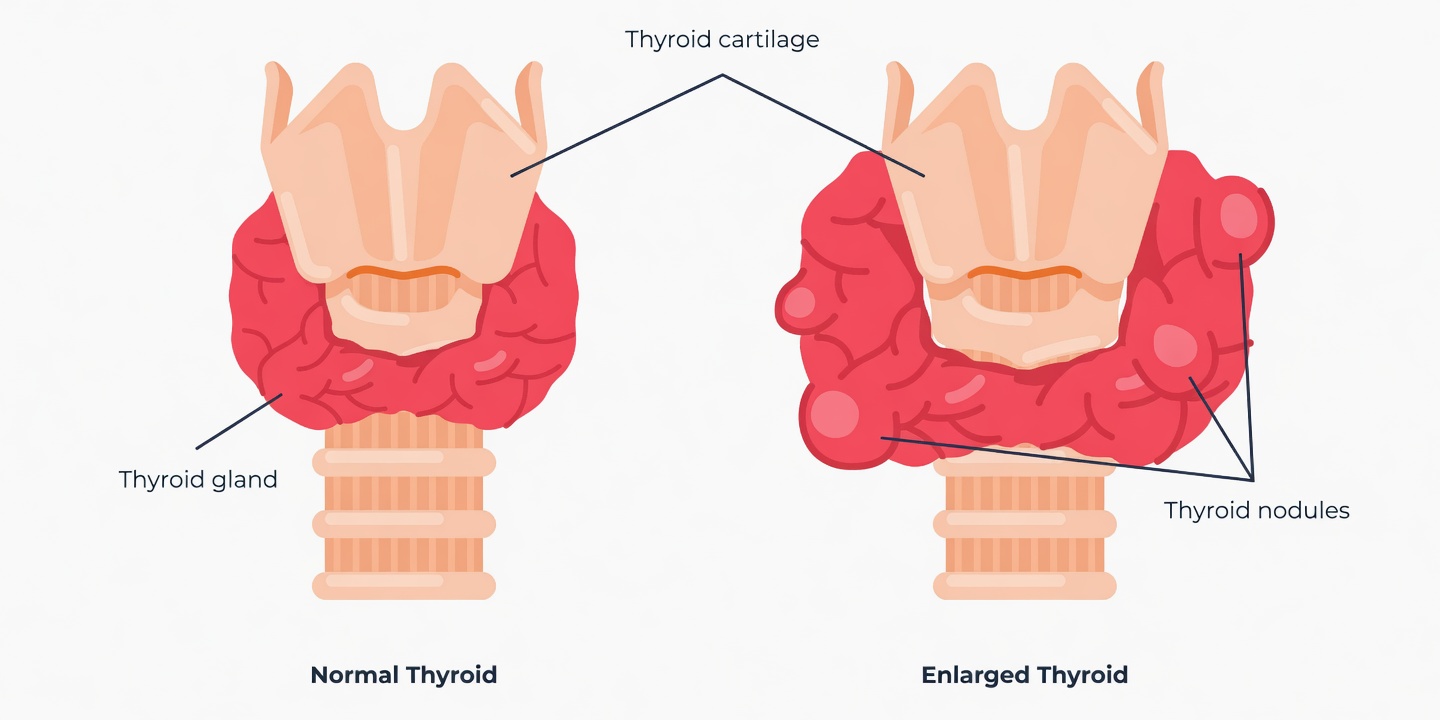
Noticing a faint swelling at the front of your neck can be worrying—especially when it starts to interfere with everyday actions like swallowing, speaking comfortably, or turning your head. This kind of change is often associated with an enlarged thyroid (also called a goiter). It may develop slowly and come with symptoms such as fatigue, mood changes, or unexpected weight shifts that make daily life feel harder than it should. Many adults—particularly those over 40—first discover thyroid enlargement during a routine exam and begin looking for gentle, supportive ways to help their body regain balance.
The encouraging news is that daily habits can influence thyroid wellness for some people. And near the end, you’ll learn why a simple two-nutrient combination often stands out as especially important.
Understanding the Thyroid (and Why It Can Enlarge)
The thyroid is a small, butterfly-shaped gland located at the base of the neck. Despite its size, it plays a central role in:
- Metabolism and energy production
- Temperature regulation
- Heart rate and overall hormonal balance
- Mood and mental clarity
When the thyroid grows larger, it may be responding to internal stressors—such as nutrient shortfalls, immune-related inflammation, or other metabolic signals. If the enlargement progresses, it can create pressure sensations in the throat and may disturb sleep, focus, and comfort.

Health research and guidance from major medical organizations suggest that, in certain situations, lifestyle factors may influence thyroid function and symptom severity. To understand what to do next, it helps to start with the most common triggers.
Common Causes of Thyroid Enlargement
Thyroid enlargement does not have a single cause. It often reflects one or more of the following factors:
- Iodine imbalance (either too little or sometimes too much)
- Autoimmune thyroid conditions, such as Hashimoto’s thyroiditis
- Chronic stress, which can affect hormone signaling
- Dietary patterns that contribute to inflammation or nutrient gaps
Addressing these areas thoughtfully—rather than drastically—may support better thyroid harmony over time.
Iodine: Essential, but All About Balance
Iodine is a key building block used to produce thyroid hormones. When iodine intake is too low (especially in areas where diets lack iodine-rich foods), the thyroid may enlarge as it works harder to capture enough iodine for hormone production.
Common moderate sources include:
- Iodized salt
- Seafood
- Dairy products
However, iodine is not a “more is better” nutrient. Research cautions that excess iodine (often from high-dose supplements or certain concentrated sources) may be unhelpful—especially without knowing your current thyroid status.
Selenium: A Powerful Thyroid Ally
Selenium is highly concentrated in thyroid tissue and supports antioxidant defenses that help protect the gland from oxidative stress.
Evidence from multiple studies has linked adequate selenium intake with:
- Support for healthy inflammatory markers
- Assistance with thyroid hormone conversion in selenium-deficient individuals
- Potential benefits noted in recent reviews (including work published in 2023)
Food sources include:
- Brazil nuts (often 1–2 per day is enough)
- Fish
- Eggs
Because Brazil nuts are extremely selenium-rich, moderation matters—small amounts can go a long way.
Other Nutrients That May Support Thyroid Wellness
Beyond iodine and selenium, several nutrients frequently appear in thyroid health discussions:
- Vitamin D: Often low in people with thyroid concerns; may help support immune balance
- Iron: Helps with processes involved in hormone production and energy
- Zinc: Supports hormone synthesis and metabolic pathways
A diet built around leafy greens, nuts, seeds, and lean proteins can help provide these nutrients steadily.
Building a Thyroid-Friendly Eating Pattern
Rather than focusing on strict rules, aim for a nutrient-dense, consistent approach:
- Choose whole foods most of the time for reliable micronutrient intake
- If you eat large amounts of raw goitrogenic vegetables (like broccoli or cabbage), consider cooking them, which can reduce goitrogenic activity
- Add anti-inflammatory flavors such as:
- Turmeric
- Ginger (some studies suggest it may support related symptoms)
Sustainable changes often support steadier energy and better overall well-being.
Stress Management and Thyroid Balance
Long-term stress can interfere with hormone signaling pathways and may worsen symptom perception. Stress-reducing practices are widely used as supportive tools, including:
- Meditation
- Gentle yoga
- Breathing exercises
- Daily quiet time without screens
Research also connects stress reduction with improved markers in some autoimmune-related conditions, making it a practical area to prioritize.
Gentle Exercise That Supports (Not Strains)
Moderate movement can support circulation, metabolism, mood, and weight stability—without overloading the system.
Helpful low-impact options include:
- Walking
- Swimming
- Light cycling
- Mobility-focused stretching
Start gradually and check with a qualified clinician if you have symptoms like dizziness, palpitations, or significant fatigue.

Anti-Inflammatory Herbs: Emerging (But Not Definitive) Support
Some herbs are being studied for antioxidant and stress-related effects that may indirectly support thyroid wellness:
- Ashwagandha: studied for stress and oxidative balance
- Ginger and turmeric: commonly used for inflammation support
While human evidence is still developing, these may play a complementary role for some people when used appropriately and safely.
Sleep: A Foundational Pillar for Hormones
Sleep is not optional when it comes to hormone regulation. Aim for 7–9 hours per night, ideally with a steady schedule.
Better sleep supports:
- Natural repair and recovery processes
- More stable mood and energy
- Improved resilience to daily stress
The biggest benefits often come when sleep improvements are paired with nutrition and stress management.
A Holistic Strategy Works Better Than a Single Fix
Thyroid wellness support is rarely about one “magic” change. The most consistent approach is a combined system:
- Balanced key nutrients
- Lower daily stress load
- Gentle, regular movement
- High-quality sleep
Over time, these habits can reinforce each other and help you feel calmer, clearer, and more stable day to day.
Practical Steps You Can Start This Week
Use these simple actions as a low-pressure starting point:
- Check your nutrient status: Ask your clinician about bloodwork for thyroid hormones and key nutrient levels.
- Add selenium carefully: Try 1–2 Brazil nuts daily (not handfuls).
- Keep iodine reasonable: Use iodized salt in normal cooking amounts and avoid extreme supplementation without guidance.
- Schedule daily decompression: Do 10 minutes of deep breathing or meditation.
- Track how you feel: Write down energy, mood, sleep quality, and neck discomfort weekly to identify patterns.
Key Nutrients at a Glance
-
Iodine
- Food sources: iodized salt, seafood, dairy
- Role: essential for thyroid hormone production; helpful when deficiency is present
-
Selenium
- Food sources: Brazil nuts, fish, eggs
- Role: antioxidant protection; associated with thyroid function support in research
-
Vitamin D
- Food sources: sunlight exposure, fortified foods, fatty fish
- Role: immune balance support; commonly discussed in thyroid wellness
-
Zinc
- Food sources: nuts, seeds, meat
- Role: contributes to hormone synthesis and metabolism
Monitoring Progress and Getting Professional Guidance
Because thyroid enlargement can have different causes, routine monitoring matters. Regular check-ins and lab testing can help you:
- Confirm whether hormone levels are shifting
- Identify nutrient gaps (or excesses)
- Make adjustments based on data, not guesswork
Personalized care is especially important if you have ongoing symptoms, a history of thyroid disease, or signs of autoimmune involvement.
A Simple Takeaway for Everyday Balance
Starting with awareness—and small, consistent habits—can provide meaningful support over time. You deserve to feel comfortable, energized, and confident in your next steps.
One standout tip: a single Brazil nut can provide roughly a day’s worth of selenium for many people, making it one of the simplest habits to try.
Frequently Asked Questions
What foods are best for thyroid support?
Aim for variety and balance. Common supportive choices include seafood (iodine), Brazil nuts (selenium), leafy greens, nuts, seeds, and lean proteins. Moderation matters, especially with iodine and selenium.
Can stress really affect thyroid health?
Stress can influence hormonal signaling and how symptoms feel. Relaxation practices—such as meditation and breathing exercises—are often used to support better balance, and research links stress reduction with improved markers in some autoimmune-related conditions.
When should I see a doctor about thyroid enlargement?
Seek medical evaluation if you notice neck swelling, throat pressure, difficulty swallowing, voice changes, or persistent fatigue and weight shifts. A clinician can determine the cause and guide safe next steps.
Medical disclaimer: This article is for informational purposes only and does not replace professional medical advice. Always consult a qualified healthcare provider for diagnosis and personalized care.