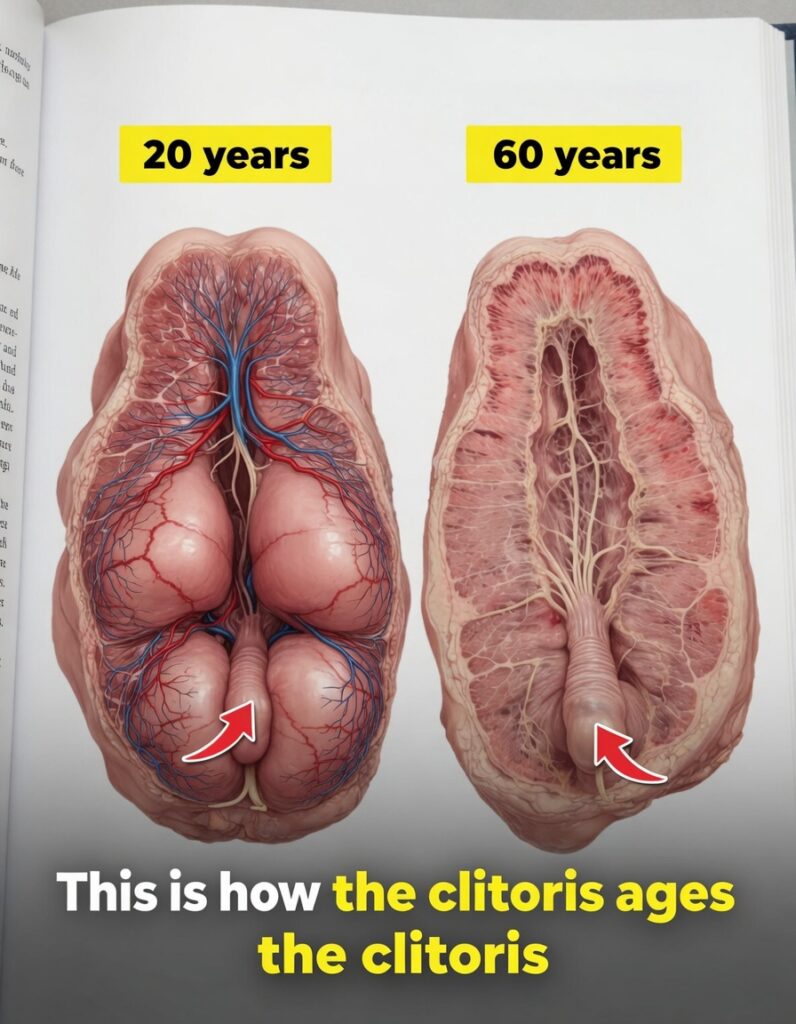
Many women notice their bodies changing with age—especially in areas tied to intimacy and pleasure. Hormone fluctuations can sometimes create discomfort, frustration, or a sense of disconnection, raising concerns about whether enjoyment in relationships will fade. The good news is that learning how the clitoris adapts over time can be deeply reassuring: physical changes do not automatically mean a loss of pleasure. In fact, there’s a surprising reality about clitoral size that challenges common myths and highlights how resilient the body can be.
What Is the Clitoris—and Why Is It So Important?
The clitoris is a small yet highly influential part of female anatomy, positioned at the upper area of the vulva where the inner labia meet. It is widely recognized as the only human organ designed primarily for pleasure. Anatomical research estimates it contains roughly 8,000–10,000 nerve endings, making it exceptionally sensitive and central to arousal and orgasm.
What many people don’t realize is that the clitoris is far more than the small external “tip” that’s visible. Much of it extends internally, forming a structure often compared to a wishbone, with two “legs” that run alongside and partially surround the vaginal canal. This internal design allows stimulation in multiple ways and contributes to a broader range of pleasurable sensations.
Pleasure is not only physical—it also supports emotional health, confidence, and intimacy. Staying informed about clitoral anatomy and function can reduce anxiety, improve body awareness, and help maintain satisfying sexual experiences across life stages.
How the Clitoris Changes Over the Decades
From the 20s through the 60s and beyond, hormone levels naturally rise and fall, influencing blood flow, tissue elasticity, and moisture in the genital area.
In early adulthood, higher estrogen levels generally support:
- faster blood flow and swelling response
- easier lubrication
- more “effortless” arousal for many women
During the 40s and 50s, perimenopause and menopause commonly bring a drop in estrogen. This can affect the surrounding tissues by reducing natural lubrication and changing the feel of the vulva and vagina.
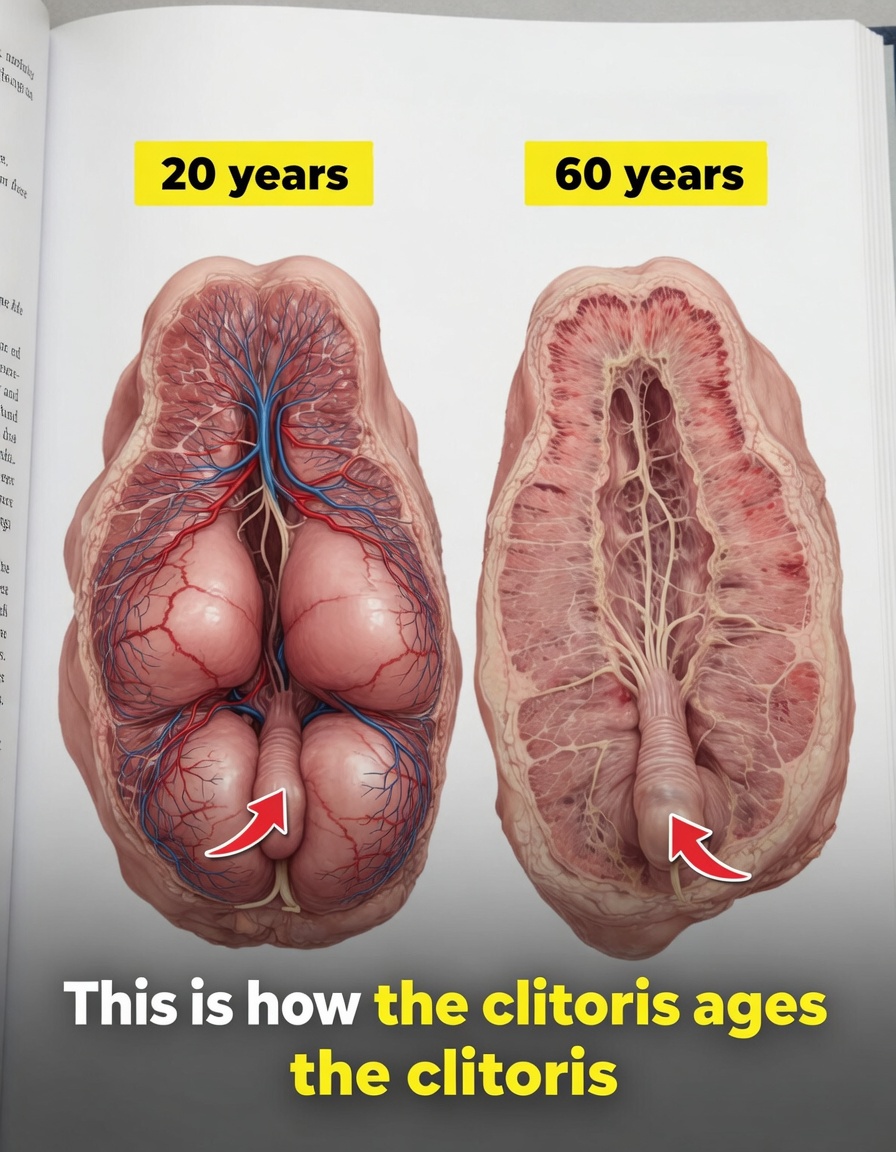
Here’s the twist: the clitoris does not necessarily shrink with age. Some observations and clinical discussions suggest it may increase subtly in size over time, influenced by lifelong hormonal patterns and the behavior of erectile tissue. Some sources note that by the 30s, the clitoris may be several times larger than it was at puberty, and it can continue to show changes around menopause. These shifts are typically not dramatic on the outside, but they reflect natural biological adaptation—not “decline.”
That said, lower estrogen can make nearby vaginal tissue thinner and drier, which may indirectly change how stimulation feels. Many people simply need more time, more warmth-up, and more comfort support—not less pleasure capacity.
Clitoris at 20 vs. 60: Key Differences at a Glance
Here’s a simple comparison of common patterns:
-
Hydration and lubrication
- At 20: Estrogen often supports quicker natural moisture.
- At 60: Lubrication may take longer or be reduced, but lubricants can greatly improve comfort.
-
Size and structure
- At 20: Typically more compact in appearance, with rapid engorgement.
- At 60: May be subtly larger due to tissue changes, though not always visually obvious.
-
Sensitivity and nerve function
- At 20: Strong, immediate feedback is common.
- At 60: Nerve endings generally remain intact; sensation is still very possible and often consistent.
-
Overall sexual response
- At 20: Arousal may happen faster for many people.
- At 60: More gradual arousal is common, but enjoyment remains achievable and meaningful.
The takeaway: while the experience may evolve, the core capacity for pleasure often remains.
How Pleasure and Sensation Adapt With Age
One of the most comforting facts is that the clitoris’ nerve supply does not “disappear” with aging. Unlike some sensory systems that may weaken over time, clitoral sensation is supported by dedicated neural pathways that typically remain functional.
What often changes is the surrounding environment:
- reduced lubrication
- slower arousal build-up
- shifts in collagen and elastic fibers in genital tissues
These factors can change how pleasure is accessed, but they do not eliminate it. Regular stimulation—solo or partnered—can support healthy blood flow and tissue responsiveness. Many women also report that pleasure can become more satisfying with age due to improved communication, stronger self-knowledge, and reduced performance pressure.

Practical Ways to Support Clitoral Health Over the Years
Supporting sexual wellness doesn’t need to be complicated. These habits can help maintain comfort, sensitivity, and confidence:
-
Prioritize regular stimulation
- Solo or partnered stimulation can encourage blood circulation.
- Start gently and focus on comfort rather than speed.
-
Use lubricant strategically
- Choose water-based or silicone-based lubricants to reduce friction.
- Apply before stimulation and reapply as needed for comfort.
-
Improve overall circulation
- Aim for about 30 minutes of cardio most days, such as walking, cycling, or swimming.
- Better circulation supports pelvic tissue health too.
-
Experiment with technique
- Try different pressures, rhythms, or angles.
- A simple approach:
- Get comfortable and relaxed.
- Start with light, external touch.
- Adjust based on what feels best and repeat what works.
-
Check in on hormone-related concerns
- If dryness, discomfort, or changes are disruptive, discuss options with a healthcare provider.
- Solutions may include lifestyle changes or medically appropriate therapies.
Extra Habits That Can Improve Comfort and Enjoyment
Small, consistent choices can enhance sexual well-being over time:
- Mindfulness during intimacy to increase body awareness and sensation
- A balanced diet (including omega-3 sources) to support tissue health
- Daily hydration to support natural moisture and overall wellness
Conclusion: Aging Doesn’t End Pleasure—It Changes the Path to It
The clitoris does change across the lifespan—especially in how it responds to shifting hormones and tissue conditions. But its fundamental role in pleasure remains strong. Rather than signaling loss, many age-related changes reflect the body’s ability to adapt.
And the surprising fact that overturns a common myth: the clitoris may actually become larger over time, not smaller—an example of how complex and resilient sexual anatomy can be. With knowledge, communication, and a few practical habits, pleasure can remain a meaningful part of life at every stage.
Frequently Asked Questions (FAQ)
What causes changes in clitoral sensitivity with age?
Hormonal changes—especially around menopause—can affect lubrication and the time needed for arousal. However, the nerve endings typically remain present and functional. Comfort support (like lubricant) and regular stimulation can help.
Can the clitoris really get larger over time?
Yes. Some clinical observations and anatomical discussions suggest gradual growth related to tissue and hormonal influences. The change is often subtle and may not be obvious externally.
What can I do if stimulation feels different or less comfortable?
Try a high-quality lubricant, use gentler pressure, allow more time for arousal, and consider pelvic health practices. If discomfort persists, consult a qualified healthcare professional for personalized guidance.
Medical note: This article is for educational purposes only and is not a substitute for professional medical advice. For concerns about sexual health, pain, or hormonal symptoms, consult a licensed healthcare provider.