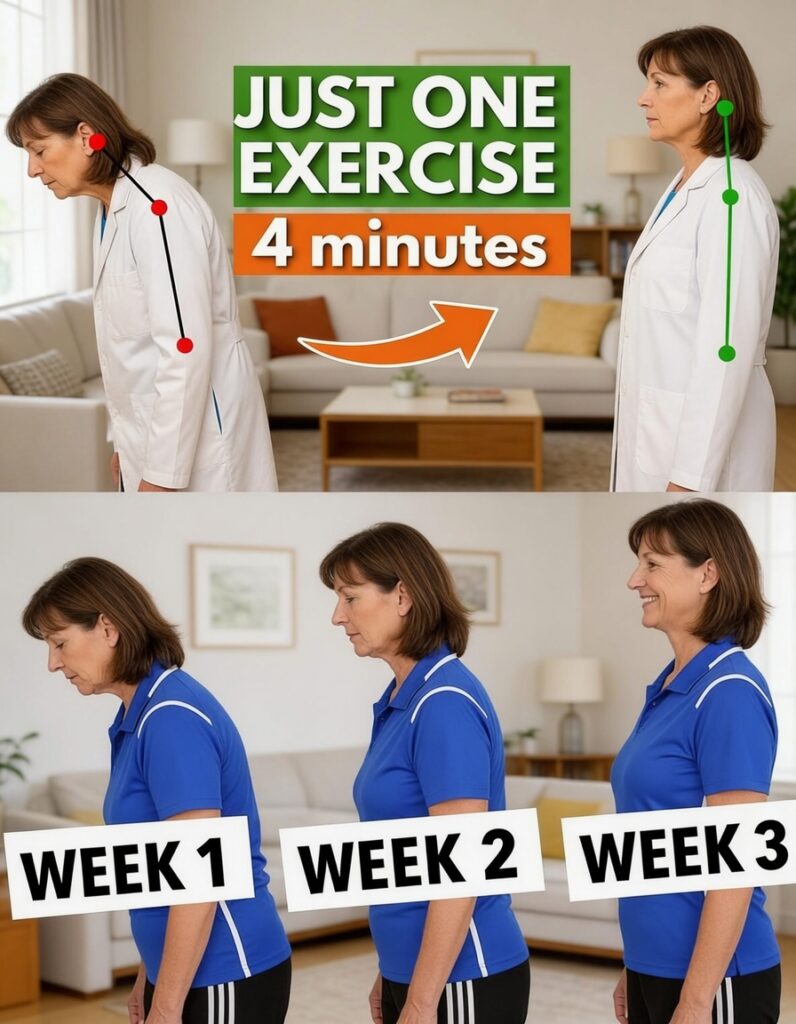
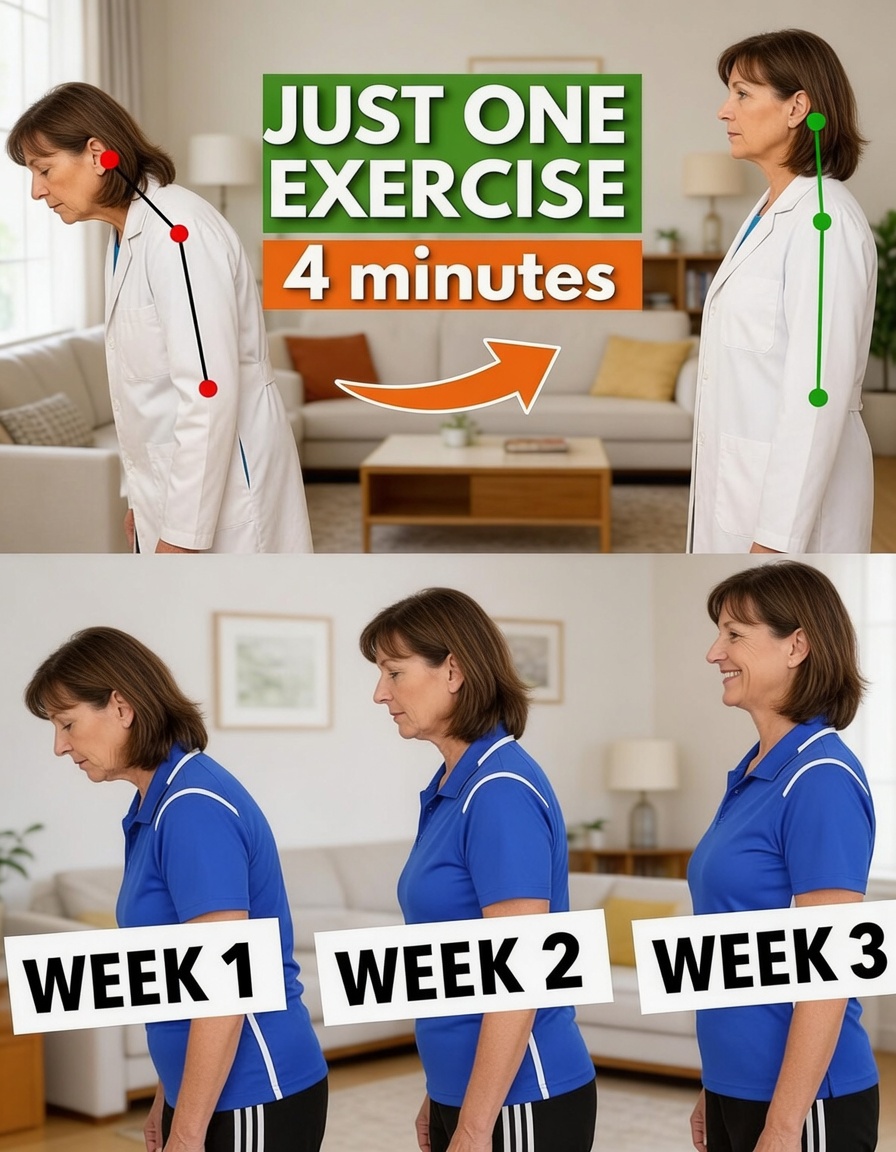
Many adults notice forward head posture after 60, where the head drifts in front of the shoulders and everyday movement starts to feel heavier. Over time, this can bring neck tension, upper-body “weight,” and a sense that simple actions—like turning your head or walking—take more effort. Some people also experience daytime fatigue and shallower breathing, along with concerns about steadiness during daily tasks.
What if improving your alignment didn’t require forceful correction—just a calm, nervous-system-friendly approach? The 4-minute gentle routine below is designed to feel doable, even on low-energy days.
Why Forward Head Posture After 60 Often Feels More Obvious
Forward head posture after 60 is commonly linked to years of looking down at phones, books, crafts, or desk work—combined with age-related shifts in muscle support and daily movement patterns. When the head sits forward, the neck and upper back may work harder than they should, which can contribute to:
- Persistent neck and shoulder discomfort
- A “compressed” feeling through the chest and upper body
- Lower energy as the day goes on
- Occasional balance concerns or a heavy sensation in the upper trunk
Understanding this matters because the body often responds best to slow, safe inputs rather than aggressive “fixes.”
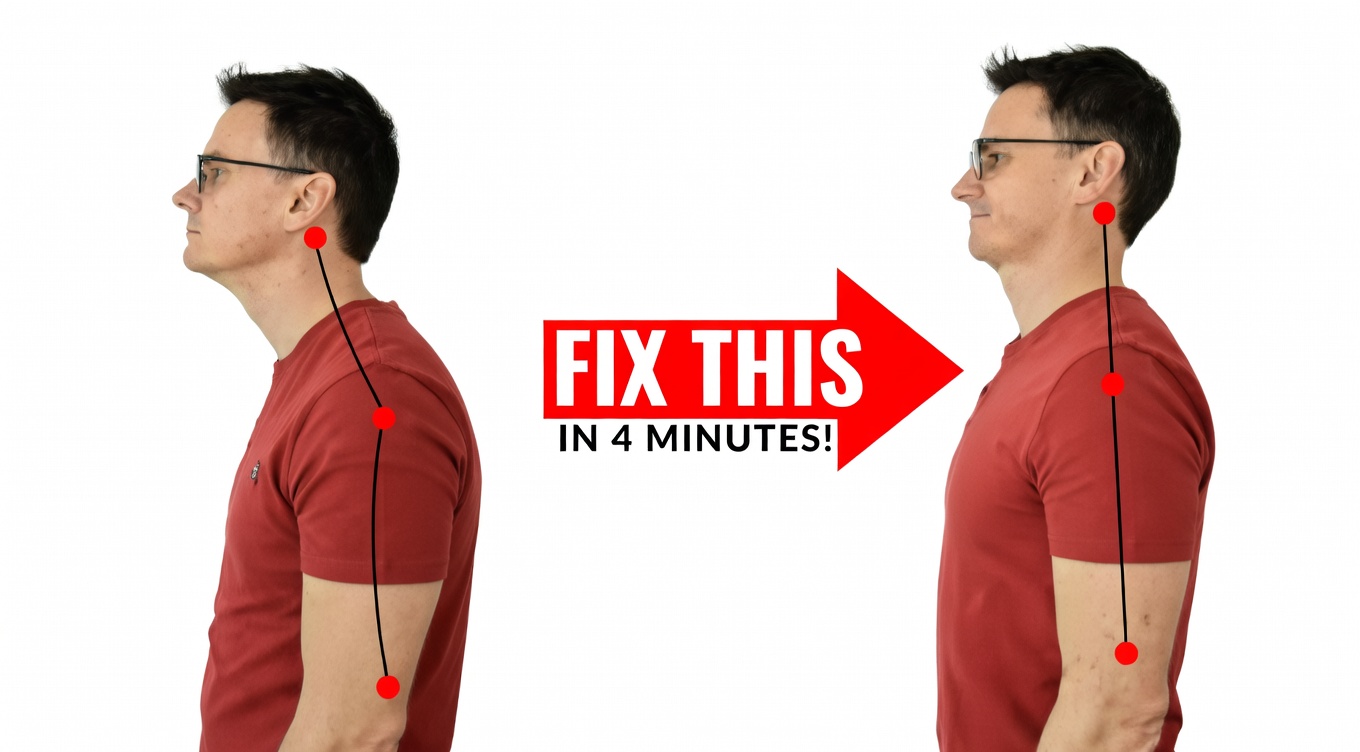
The Foundation: A Gentle 4-Minute Routine for Forward Head Posture After 60
Many physical-therapy-informed strategies emphasize that posture improves more reliably when you support the nervous system with calm, controlled movement—rather than forcing the head back or “standing up straight” all day.
This routine takes about 4 minutes and has four phases:
- Sensory neck warm-up
- Integrated retraction with shoulder blade support
- Passive towel support (gentle traction)
- Thoracic opening (chest and mid-back release)
Equipment: None required. Optional: a small towel or cushion.
With consistency, many older adults report improved comfort and better awareness of head-and-neck alignment over time.
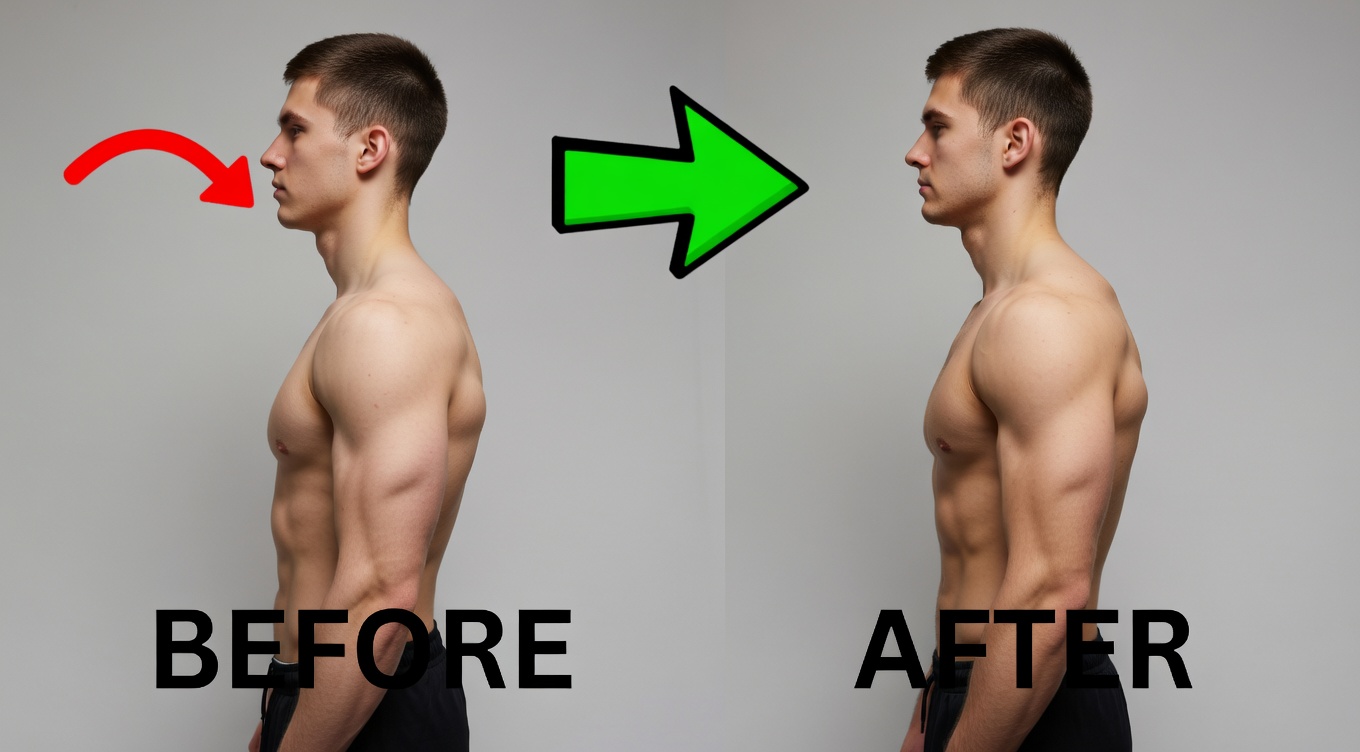
Step 1: Sensory Neck Warm-Up (60 seconds)
Sit or stand comfortably. Move slowly and stay within a pain-free range.
- Turn your head gently side to side
- Nod “yes” and “no” in small, easy motions
- Tilt your ear toward your shoulder (both sides)
Keep breathing steady throughout. This phase is meant to reduce guarding, wake up body awareness, and soften unnecessary tension—especially helpful for forward head posture after 60.
Slow mobility work is often recommended for older adults because it supports coordination and awareness without stressing joints.
Step 2: Integrated Retraction + Shoulder Blade Support (60 seconds)
Sit tall (not rigid). Then:
- Gently draw your shoulder blades back and down
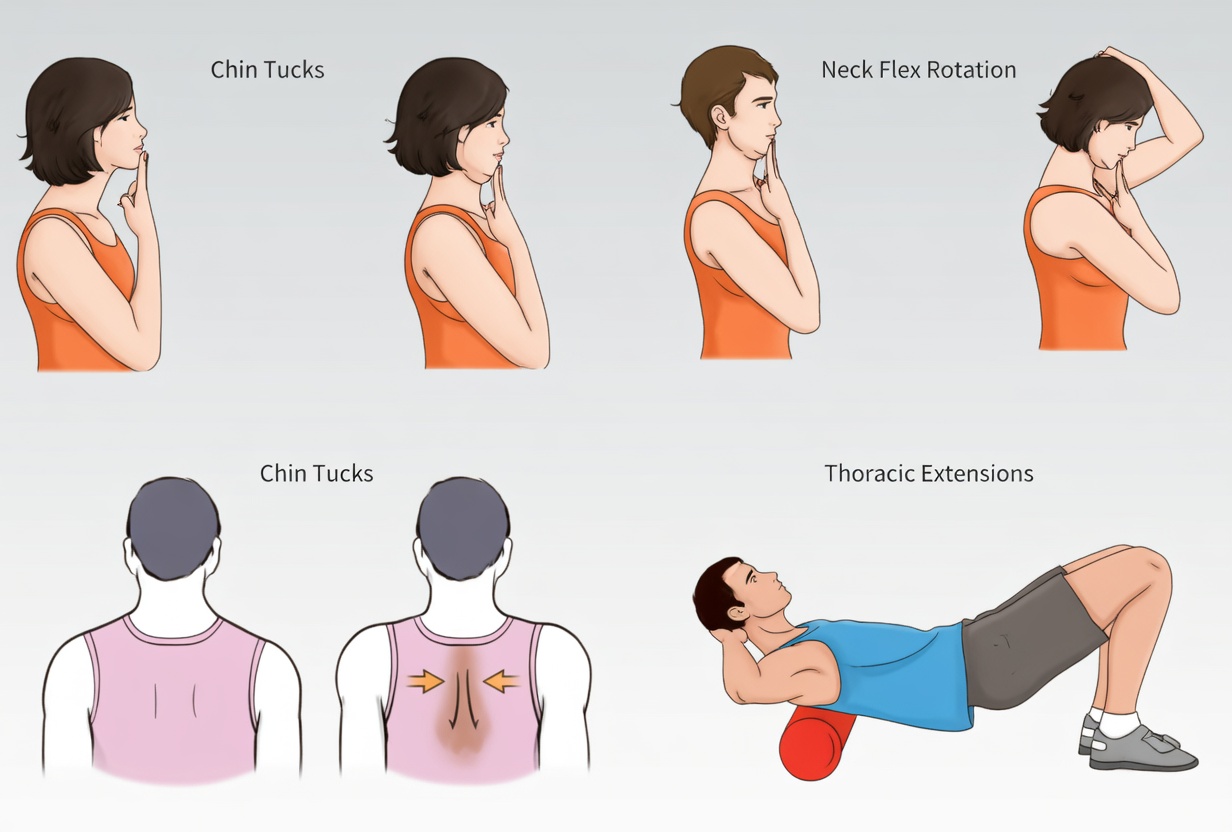
- At the same time, slide your head straight back (as if making a soft double chin)
- Keep your eyes level (don’t tip the head up)
- Hold briefly while breathing, then release
Repeat several times in a smooth rhythm.
This combined motion encourages supportive engagement along the upper back and neck. Many people notice they feel subtly “lifted” afterward—because the head and shoulder girdle are working together, not separately.
Step 3: Passive Towel Support (60 seconds)
Roll a small towel. Sit back in a supportive chair and place the towel at the base of your skull (not under the neck curve).
- Let your head rest into the towel
- Breathe slowly and allow gravity to create a mild lengthening sensation
- Hold briefly, rest, and repeat if desired
This is a gentle way to invite space through the upper neck without forcing. Move slowly and stop immediately if symptoms increase.
Step 4: Thoracic Opening (60–90 seconds)
Lie on your back. Place a rolled towel or cushion under your mid-back (thoracic area), not the lower back.
- Let your arms relax out to the sides
- Breathe into your ribs and upper abdomen
- Stay only as long as it feels comfortable and easy
This step supports the natural curves of the spine and can help counter the “collapsed chest” feeling that often accompanies forward head posture after 60. Many people also find it encourages fuller breathing.
Quick Comparison: Common Options for Forward Head Posture After 60
| Approach | Effort Level | Gentle on the Body? | Long-Term Habit Potential |
|---|---|---|---|
| Isolated chin tucks | Medium | Varies | Moderate |
| Posture reminders only | Low | Yes | Good (with practice) |
| This 4-minute routine | Very low | High | High |
This is why many people prefer a gentle routine: it’s simple enough to repeat consistently, which is often what creates change.
Bonus Tips to Get Better Results
- Attach it to a daily cue (for example: after brushing your teeth)
- Check once a week in a mirror to notice small shifts, not “perfection”
- Add mindful breathing pauses during the day to reinforce body awareness
Small, repeatable habits often work better than intense efforts for forward head posture after 60.
The Key to Long-Term Improvement
Better posture is rarely about “forcing yourself upright.” It’s more often about sending your nervous system consistent signals of safety, ease, and alignment through gentle practice. Over time, many adults over 60 report feeling more comfortable and steadier in daily life with approaches like this.
Start slowly, keep it pain-free, and listen to your body.
Frequently Asked Questions
How often should I do this routine?
Daily practice is commonly recommended—especially because it only takes a few minutes and builds awareness over time.
Is this safe for everyone?
The routine is designed to be gentle, but you should check with your healthcare provider first—particularly if you have neck pain, balance issues, osteoporosis, or other medical concerns.
When will I notice results?
It varies. Many people notice a growing sense of ease and awareness with regular practice, even before major visible changes occur.
Medical Disclaimer
This article is for informational purposes only and is not a substitute for professional medical advice. Consult your healthcare provider before starting any new exercise routine—especially if you have neck concerns, balance issues, osteoporosis, or other health conditions. Stop immediately if you feel pain.
P.S. Try noting how you feel before and after one week of gentle practice. Small changes—like easier breathing or less neck tension—can be motivating signs that your body is responding.