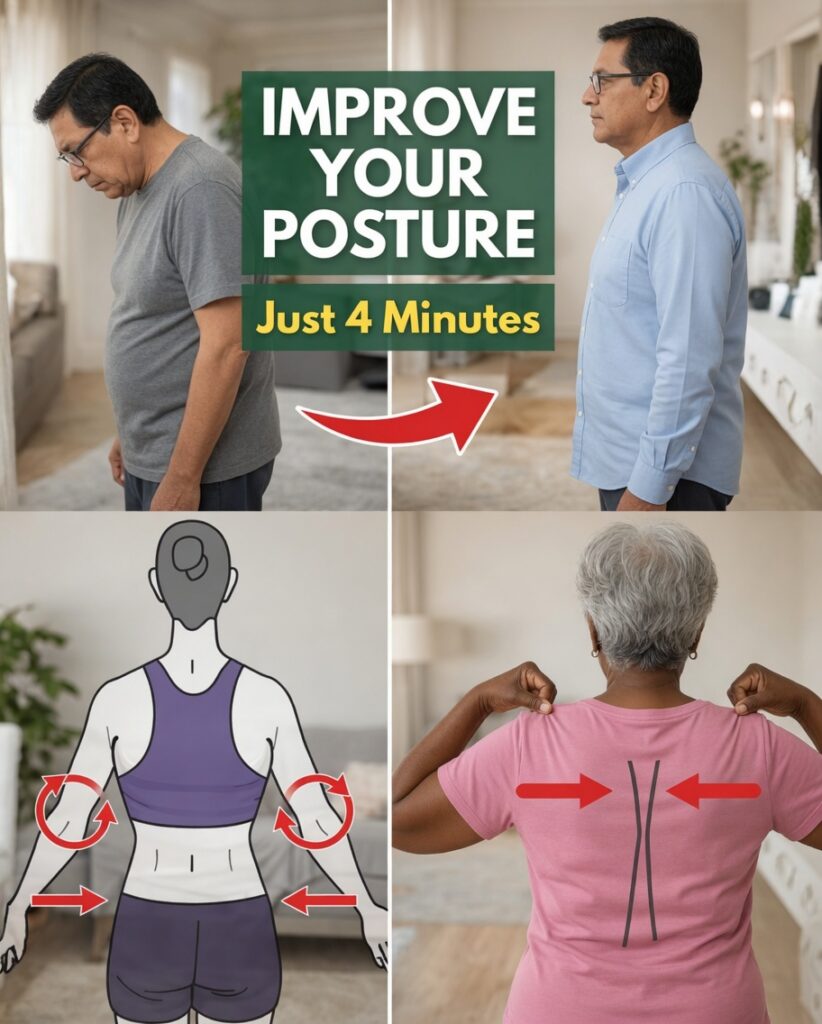
Forward Head Posture After 60: A Gentle 4-Minute Routine to Support Better Alignment
Many people over 60 start to notice subtle—but frustrating—changes: the head begins to drift forward, the shoulders round, and the upper back curves more than it used to. This shift is often linked to years of screen use, reading, desk habits, and the natural age-related changes in muscle balance and spinal alignment.
Over time, this posture can contribute to neck tightness, daytime fatigue, less efficient breathing, and even mild changes in steadiness when walking or turning. And while you may remind yourself to “stand up straight,” the correction often disappears within seconds because the body simply returns to its familiar default.
The encouraging part is that posture doesn’t always respond best to force. A calm, nervous-system-friendly strategy can help your body relearn a more comfortable head-and-neck position—without straining. Below is a simple 4-minute sequence inspired by gentle Japanese wellness approaches, plus the science-informed reasoning behind why it can be effective.
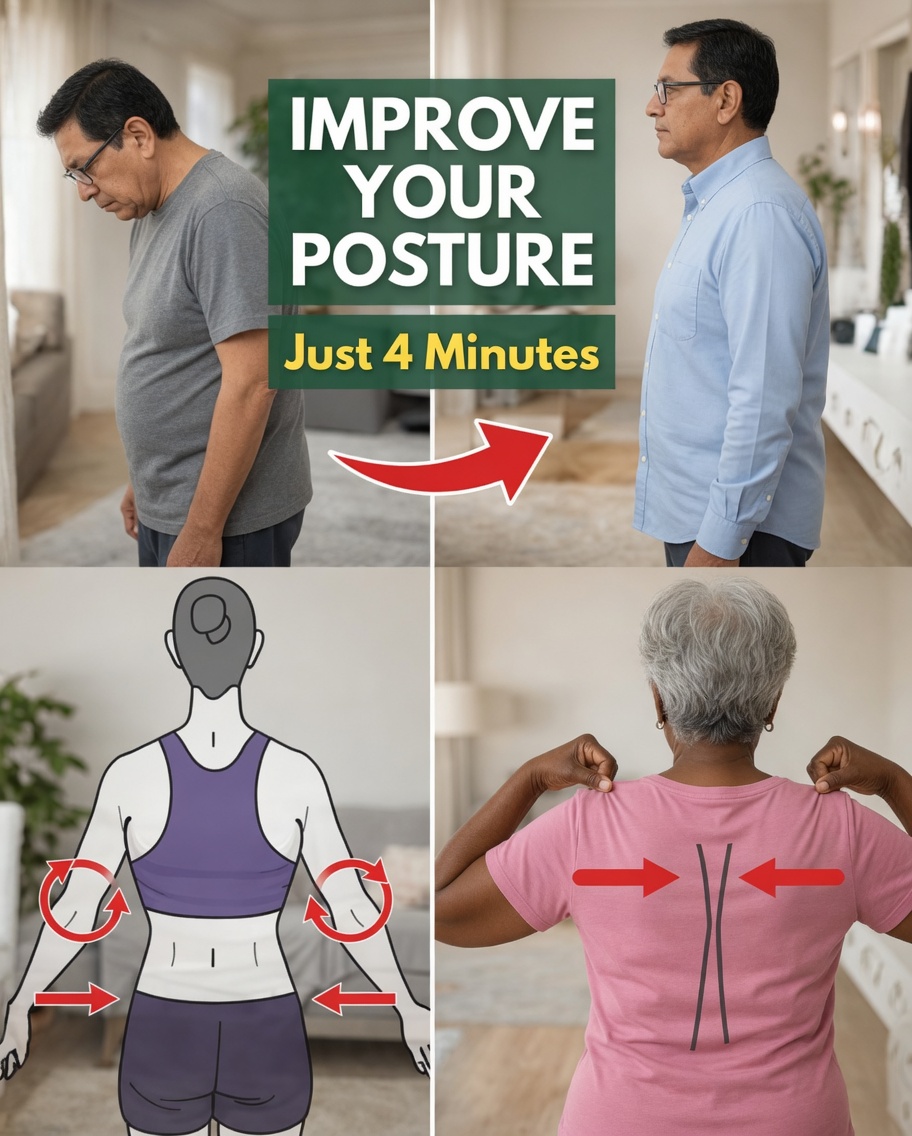
Why Forward Head Posture Becomes More Common After 60 (and Why “Forcing It” Often Doesn’t Work)
As the years pass, frequent downward gaze—toward phones, tablets, books, and countertops—gradually trains the head to sit forward of the shoulders. This isn’t just cosmetic: a forward-shifted head increases demand on the neck and upper spine. A widely cited biomechanical estimate suggests each inch of forward head drift can add roughly 10 pounds of load to the cervical area.
That extra strain may be associated with:
- Neck and upper-back stiffness
- A “drained” feeling by mid-day
- Shallower breathing mechanics
- Subtle balance or steadiness concerns
Many people try quick fixes such as repeated chin tucks, rigid posture devices, or intense stretches. Unfortunately, aggressive correction can sometimes trigger protective muscle tension (“guarding”), making the pattern harder to change long-term.
In contrast, research in physical therapy and geriatric movement care often points to slow, low-intensity, multi-directional movements—especially those that feel safe to the nervous system—as more sustainable for older adults. Instead of demanding change, the goal is to invite it.
Why a Gentle Nervous-System Approach Can Be Especially Effective After 60
Posture isn’t only a strength issue. It’s also strongly influenced by how your brain and nervous system interpret body position. After years of living with a forward head posture, the body may treat that alignment as its “normal” or “safe” baseline—even if it creates discomfort.
Gentle, rhythmic movements help the body update that baseline by:
- Stimulating proprioceptors (your position-sensing receptors)
- Improving awareness of where the head and shoulders are in space
- Encouraging parasympathetic “rest-and-digest” calm
This 4-minute routine uses four stages:
- Sensory preparation
- Integrated alignment
- Gentle decompression
- Mid-back opening
You only need a rolled towel or small cushion. Move within a comfortable range, and consider doing it daily—especially in the morning or after long sitting.
The 4-Minute Sequence (No Special Equipment)
Step 1: Sensory Neck Warm-Up (60–90 seconds)
Start by helping your neck feel safe and ready to move.
- Sit or stand comfortably, hands relaxed on thighs (or loosely clasped).
- Slowly rotate: right → center → left → center for about 30 seconds (around 5–6 smooth cycles).
- Add gentle nods: bring the chin slightly toward the chest, then look up just a little (avoid “crunching” the neck).
- Finish with easy side bends: bring the ear toward the shoulder on each side without forcing.
Breathing cue:
- Inhale to prepare, exhale to soften into the motion.
Studies on senior mobility suggest that slow, multi-directional neck movement can improve position awareness and reduce the sensation of stiffness over time. Many people also notice their breathing becomes slightly easier right away—often a sign of decreased tension.
Step 2: Head Retraction + Shoulder Blade Support (60 seconds)
This is the “whole-chain” move that links the head, neck, and upper back.
- Sit or stand tall.
- Gently draw the shoulder blades back and slightly down (as if holding a small object between them—without shrugging).
- Keep shoulders away from the ears.
- Slide your head straight back (a soft “double chin”), keeping your eyes level.
- Hold 10–15 seconds, breathing calmly, then release.
- Repeat 3 times.
Why it matters: Physical therapy research suggests that pairing scapular engagement (shoulder blade control) with head retraction can support better head position when practiced consistently—especially in older adults.
Quick check-in:
- After the first hold, rate neck/shoulder ease from 1–10. Did anything shift?
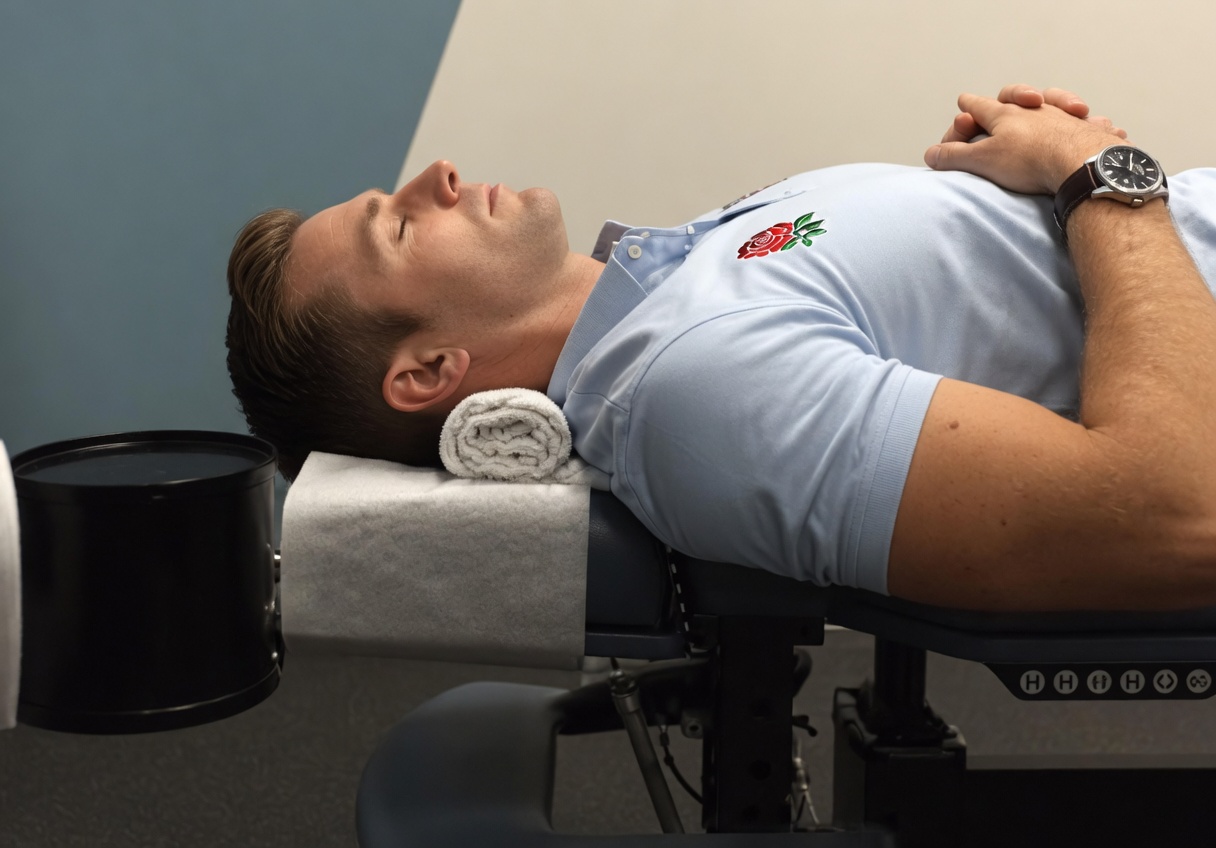
Step 3: Passive Cervical Traction with a Rolled Towel (60 seconds)
This step uses support and gravity—no muscular effort required.
- Sit on a firm chair.
- Roll a small towel and place it horizontally at the base of the skull (supporting the occiput).
- Rest the head back over the roll, arms relaxed.
- Let gravity create a gentle lengthening sensation through the neck.
- Imagine the crown of your head subtly lifting upward.
- Hold 15–20 seconds, repeat 3 times, breathing slowly into the ribs.
Supported positioning approaches, including those reported in Japanese geriatric settings, are often used to encourage healthier cervical curve patterns over time. Many people describe an immediate sense of “unloading” through the neck and shoulders.
Step 4: Thoracic Extension Over Support (60–90 seconds)
If the mid-back is stiff and rounded, the head often compensates by drifting forward. Opening the thoracic spine can reduce that “anchor.”
- Lie on your back.
- Place a rolled towel or small cushion horizontally just below the shoulder blades.
- Bend knees, feet flat.
- Let arms open comfortably to the sides, palms up. (If needed, place a thin pillow under your head.)
- Breathe deeply: inhale to expand the chest, exhale to let shoulders soften.
- Hold 30–60 seconds (longer if it feels good), then roll off slowly.
Geriatric physical therapy evidence supports thoracic opening for improved breathing mechanics and postural ease in adults 65+. Some people notice an emotional “drop” or release here—often linked to long-held tension unwinding.
Why This 4-Minute Routine Often Feels More Sustainable Than Common Alternatives
A quick comparison:
- Chin tucks alone: higher effort, can trigger guarding, results may not last
- Posture braces: passive support, risk of dependency, posture often rebounds after removal
- Aggressive stretching: intense input may feel unsafe to the system
- This gentle sequence: low effort, safety-oriented, easier to repeat daily, and many notice improvement within 1–4 weeks
Simple Ways to Make It a Daily Habit
- Attach it to a reliable routine (for example, after brushing your teeth).
- Check your posture once a week in the mirror and track small wins.
- Add one slow belly breath every hour to reinforce calmer alignment.
The Core Idea: Posture Is Often “Learned Memory” in the Nervous System
This routine works by giving your body consistent, reassuring signals—so it gradually updates its default posture without forcing or fighting. With steady practice, many people report lighter head carriage, fuller breathing, and more confident movement.
Medical note: This article is for educational purposes and is not a substitute for medical advice. Speak with your healthcare provider before starting a new routine, especially if you have neck pain, dizziness, osteoporosis, recent surgery, or balance problems. Start gently and stop if you feel pain beyond mild discomfort.
FAQ
How often should I do this routine?
Daily is best. If that’s not realistic, 4–5 days per week can still be effective. Morning sessions or “after long sitting” work particularly well.
Can I do this if I have arthritis?
Many people with arthritis tolerate gentle motion well, but you should ask your clinician first and stay strictly within a pain-free range.
When will I notice changes?
Some people feel immediate improvements in breathing or a sense of lightness. Visible posture changes often appear within 2–4 weeks with consistent practice.