
Peeing in the Shower: Is It Safe, Hygienic, and Actually Good for You?
For many people, the urge to pee hits right in the middle of a shower—and the easiest option can feel like simply letting it go down the drain instead of stepping out to use the toilet. It’s far more common than most assume, with surveys often reporting that a majority of adults admit to doing it at least sometimes.
Even though it may seem harmless (and potentially water-saving), it’s normal to wonder about the health side of the equation. Could it increase infection risk, affect bladder habits, or create other problems over time? For most healthy adults, urinating in the shower at home is generally considered low-risk, but there are a few important caveats that can change the answer depending on your situation.

Why Do So Many People Urinate in the Shower?
The main reason is simple: it’s fast and convenient. You’re already in the bathroom, water is running, and cleanup feels automatic because you rinse immediately afterward.
Another major motivator is environmental: skipping a toilet flush can reduce water use. Medical sources frequently note that urine is mostly water, and in healthy individuals it typically contains relatively low levels of bacteria. In a clean, private shower with constant water flow, the urine is quickly diluted and washed away.
Still, “usually fine” isn’t the same as “always risk-free,” so it’s worth looking at both the advantages and the potential downsides.
The Real Benefits (Why It Feels Like a Smart Idea)
Here are the most practical reasons people choose to pee in the shower:
-
Water conservation
A single toilet flush can use roughly 1.5 to 7 gallons depending on the toilet model. If you pee during a shower you were already taking, you typically don’t add extra water use—so the savings can accumulate over weeks and months. -
Speed and convenience
No pause, no dripping across the bathroom, no stepping onto cold floors. -
Less (or no) toilet paper
Some people prefer an immediate rinse over wiping, and see it as a cleaner-feeling option. -
Relaxation
Warm water can help muscles loosen, making urination feel easier or more natural for some.
In short, the habit can be efficient and environmentally friendly—especially if you keep your showers reasonably short.

Potential Health Downsides You Should Know
While shower peeing isn’t a major hazard for most people, it isn’t completely consequence-free in every scenario. One key point: urine is not sterile, even in healthy individuals. Bacterial levels are usually low, but they can increase under certain conditions.
Key risks and situations where caution makes sense
-
Open cuts, scrapes, or irritated skin
If you have broken skin—especially on the feet or legs—there’s a theoretical chance bacteria could enter and lead to a minor skin infection. This is uncommon, but it’s more relevant if you shave regularly, have razor irritation, or have small wounds. -
Women’s health considerations
Because the urethra is anatomically close to the vagina, urine and bacteria can potentially contribute to irritation in people who are prone to issues like yeast infections or other vaginal discomfort. If you currently have symptoms (burning, unusual discharge, itching), many clinicians recommend using the toilet instead. -
Public or shared showers (gym, dorms, pools)
A private home shower is very different from a shared facility. In communal spaces, you’re dealing with other people’s microbes and a less-controlled environment—so the hygiene tradeoff is less favorable. -
Pelvic floor and bladder emptying
Some urologists and pelvic health specialists note that standing to pee may not allow the pelvic floor to fully relax the way sitting does. Over time, incomplete emptying or “not fully letting go” could be an issue for certain people—especially those with pelvic floor symptoms.
These concerns are not guaranteed outcomes; they’re context-dependent exceptions that matter more for some bodies than others.
The Surprising Part: Running Water Can Train Your Bladder
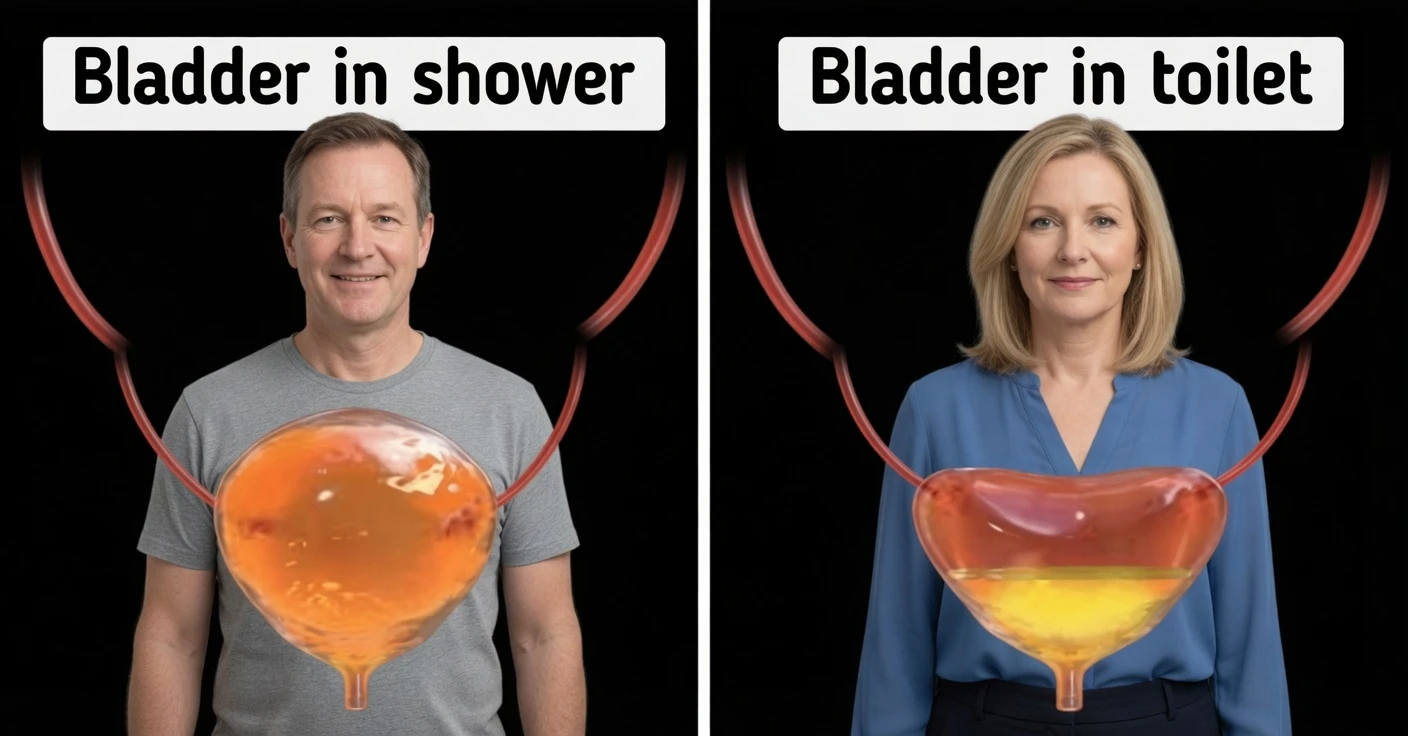
If you’ve ever turned on a faucet and suddenly felt an urgent need to pee, you’re not imagining it. This is a form of classical conditioning: your brain can learn to connect the sound (or sensation) of running water with urination.
Because many bathroom routines involve water sounds—flushing, handwashing, showers—your nervous system may start treating water noise as a “go now” signal. If you frequently pee in the shower, you can strengthen that association. For some sensitive individuals, this may contribute to:
- stronger urgency when hearing running water
- “key-in-the-door” urgency (needing to go immediately upon arriving home)
- symptoms that resemble an overactive bladder or mild urge incontinence
The upside: once you recognize the pattern, you can reduce it by changing habits and being more intentional about when and where you urinate.
Pros vs. Cons at a Glance
-
Hygiene
- Pros: immediate rinsing, no toilet paper contact
- Cons: low but possible concern with broken skin or irritation
-
Environmental impact
- Pros: avoids a flush and can save water over time
- Cons: savings shrink if the shower runs significantly longer
-
Convenience
- Pros: quick, comfortable, seamless
- Cons: may reinforce a “running water = pee” reflex
-
Overall safety
- Pros: typically low-risk in a clean home shower for healthy people
- Cons: avoid during active infections, with wounds, or in shared showers
How to Do It More Safely (If You Decide to)
If you choose to pee in the shower, a few habits can reduce the already-low risks:
- Clean your shower regularly to prevent buildup, odor, and microbial growth.
- Rinse well afterward, letting water run over any area that may have been splashed.
- Skip it if you have cuts, razor burn, or irritated skin, especially on the feet and legs.
- Avoid it during active vaginal or urinary symptoms (burning, itching, unusual discharge, suspected UTI).
- Consider sitting when possible (for example, using a stable shower stool) if pelvic floor relaxation or complete bladder emptying is a concern.
- Pay attention to urgency patterns—if water sounds start triggering sudden urges, break the association by using the toilet more consistently.
Final Takeaway: Should You Pee in the Shower?
For most healthy adults, peeing in a clean, private shower is generally considered low-risk and can offer small but real convenience and water-saving benefits. The main reasons to avoid it are practical: open wounds, current infections or irritation, communal showers, and the possibility of conditioning your bladder to respond to running water.
It ultimately comes down to personal preference—just make the choice with good hygiene and body awareness.
FAQ
Is urine sterile?
No. Even healthy urine can contain small amounts of bacteria. In a shower, the continuous water flow typically dilutes and washes it away effectively.
Can peeing in the shower cause a UTI?
For most healthy people, it’s unlikely. Risk may increase if hygiene is poor, if you have active symptoms, or if you’re in a shared/public shower environment. Women may want extra caution due to anatomy and susceptibility to irritation.
Does it truly save water?
Skipping a flush per shower can save gallons over time, especially in households with frequent showers. That said, shorter showers usually make the biggest difference overall.
Disclaimer
This article is for informational purposes only and does not replace professional medical advice. If you have urinary symptoms, skin problems, pelvic floor concerns, or recurrent infections, consult a qualified healthcare professional for personalized guidance.