The restaurant was the kind of place where the menus didn’t list prices and the water arrived already sparkling. Everything glowed—candlelight on crystal, gold trim on the mirrors, the soft confidence of people who knew exactly how they wanted their steak.
I was there because I worked there. I’m not one of those servers who says they “like people.” I like tips and clean sections, but I do have a talent for reading a room. And that night, the room was basically a stage set for romance.
Table twelve was the best seat in the house: tucked near the window, two chairs angled like they were meant to lean toward each other. It had been booked for weeks under the name “Mr. Rowan Hale,” and it came with a note: anniversary, make it special, no interruptions.
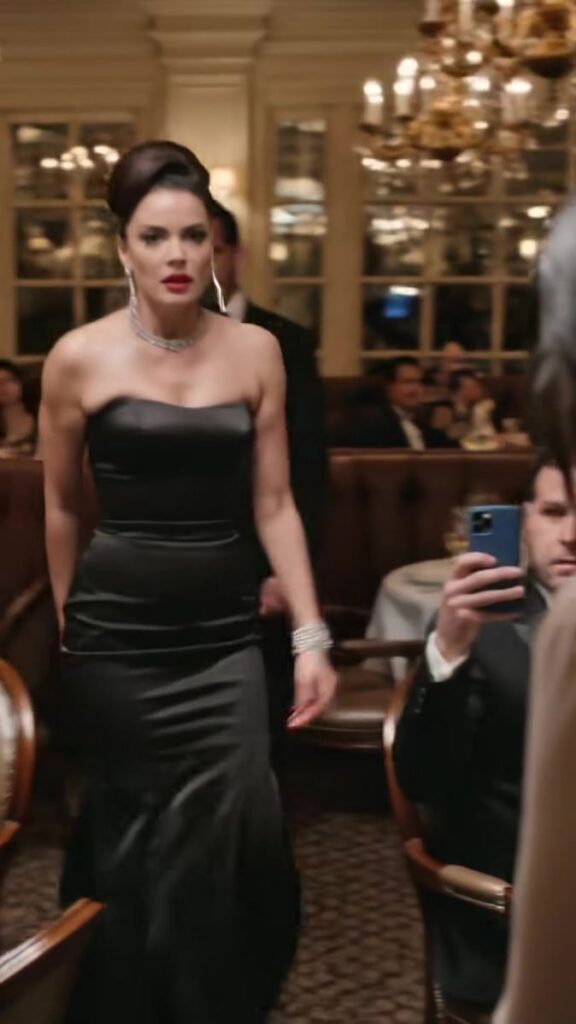
Rowan arrived early in a tailored suit and the kind of smile that said he’d practiced it. He slipped me his card for the deposit like it was a magic trick. When his wife showed up, she was all elegant calm—light-catching earrings, a dress that looked effortless but absolutely wasn’t. She kissed him once, quick and precise, then let him pull out her chair.
“Happy anniversary,” he said, loud enough for the nearest tables to hear. He liked an audience. She liked being admired. It worked for them.
Through appetizers and wine, they played the role perfectly. He told a story about their first vacation, she laughed at exactly the right parts, and when he lifted his glass, nearby diners glanced over the way people do when they sense a moment worth borrowing for their own lives.
Then it happened—the sort of shift you feel before you see. Like a cold draft moving through a warm room.
A woman stood near the edge of the dining area, just beyond the host stand, like she’d walked in and forgotten how to keep walking. She was younger than the wife but not young-young; late twenties maybe. Her hair was damp around the edges, as if she’d been outside in mist or had been crying so long it made its own weather. Her coat hung open, and her hands were wrapped around an old envelope pressed to her chest.
People noticed because misery doesn’t blend in at a place like that. It’s like spilling ink into milk.
I started toward her, automatically—server instinct: fix the disturbance before it becomes a scene. The host looked at me with panic like, please, you handle this. But before I could get there, the wife at table twelve saw her.
At first the wife’s smile stayed in place, like she thought her eyes were playing a trick. Then her face tightened. Her shoulders went high and stiff. She stood up so fast her napkin slid to the floor.
Her voice cracked through the room, sharp and polished at the same time. “You really came here to ruin my marriage in front of everyone?!”
Everything paused like someone hit mute. Forks hovered. A laugh died mid-breath. Even the pianist over by the bar stopped, fingers suspended above the keys.
The crying woman flinched, like she’d been slapped from across the room. She shook her head, mascara streaking down, her lips trembling with the effort of not falling apart.
The wife stepped away from the table in heels that clicked like punctuation. “Tell them,” she said, loud again, louder. “Tell them how much money you wanted this time.”
I saw phones come up. People always record the worst moments because they think they’re safe behind a screen.
The crying woman’s face crumpled. “I never asked for money,” she sobbed, voice ragged. “He asked me to stay silent…”
It wasn’t the words that did it. It was the “he.” The way she said it like she’d been carrying it in her mouth for years and it finally burned through.
Rowan Hale’s body locked. Not startled, not confused—frozen. A person who recognizes a trap they built themselves.
The wife turned slowly, as if she couldn’t quite make her head move. Her eyes landed on her husband, and for a second her face wore a childlike bafflement, like she’d been told the earth was fake.
A hush rolled across the dining room. Nobody was watching the crying woman anymore. Everyone was watching him.
Rowan tried to stand but didn’t fully rise, as though his legs didn’t get the message. “This is ridiculous,” he began, voice smooth, rehearsed. “We don’t have to do this here—”
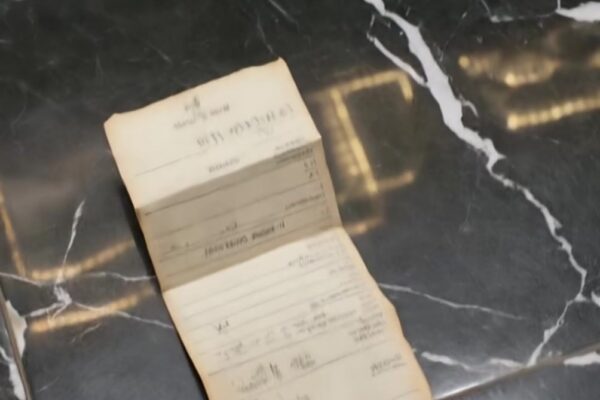
But the crying woman lifted the envelope higher, and in the candlelight the seal caught my eye. It wasn’t just old wax. It had an imprint—an emblem pressed deep, a little crest with a star and an “R” curled like a hook.
Our owner, Mr. D’Angelo, happened to be walking the floor then. He did that when the room was full—gliding between tables, the benevolent captain. He stopped mid-step when he saw the envelope, like someone had played a note only he could hear.
His face drained. His hand went to the back of a chair for balance.
“That seal,” he whispered, and the whisper somehow carried. “That belonged to the private room booked the night his first bride vanished.”
Gasps popped around the room like flashbulbs. A couple at table eight leaned in with the kind of hunger people have for tragedy that isn’t theirs.
The wife’s mouth opened but no sound came out. She didn’t look at the crying woman. She stared at Rowan like she was trying to see through him and failing.
Rowan’s jaw worked as if he was chewing air. “That’s nonsense,” he said, but his eyes were on the envelope now, not on anyone’s faces.
The crying woman stepped forward, shaking so hard the envelope trembled in her hands. She kept her gaze on Rowan, not pleading—aiming.
“Then ask him,” she said, voice thin as wire, “why he kept writing to me under her name.”
That sentence hit the room like a thrown glass. You could feel it shatter. People didn’t know what to do with it. It wasn’t regular cheating. It wasn’t the kind of scandal that ends with someone storming out and someone else ordering another drink. This was the kind of sentence that made you check your own memory of his face.
The wife’s hand went to her throat. “Rowan…?” she managed.
Rowan tried to smile again, but it came out crooked. “She’s lying. She’s sick. She’s—”
“Don’t,” the crying woman said, and it was the first time she sounded steady. She slid a thick stack of folded paper from the envelope and held it out like evidence and like a weapon at once. “You don’t get to tell me what I am.”
The letters were aged, edges soft, some with water stains. They were all addressed in the same slanted hand. I couldn’t read the names from where I stood, but I saw enough to know they were written over time—different inks, different pens, desperation evolving into routine.
She looked around the room, at the phones, at the rich faces with their glossy curiosity. Then she looked back at Rowan, and the casual cruelty he’d worn like cologne started to sweat off him.
“Or should I read the one,” she whispered, “he sent me the day they buried her?”
The wife made a sound like she was swallowing glass. “There was no burial,” she said, and it came out as both protest and prayer.
Mr. D’Angelo’s voice went hoarse. “There was a memorial,” he said, almost to himself. “Closed casket. Private.”
Rowan’s hand shot out. “Give me those.” It was the first honest thing he’d done all night—reflex, panic, control. But the crying woman stepped back, and for once he didn’t have the power of the room behind him.
I watched the wife’s face rearrange itself around a new idea of her life. She looked at Rowan like she was meeting him for the first time, except this version had teeth.
“You told me she left,” she said, voice shaking, anger rising under it. “You said she ran off with someone and—”
“Because you needed a story,” the crying woman cut in softly. “He always has one. And he always makes sure it fits the person he’s telling.”
Silence sat heavy over the tables. No music. No clinking. Just the faint sound of someone’s phone focusing, the tiny mechanical click of a digital world capturing a real one.
The crying woman took a breath and pulled one letter from the middle of the stack. She didn’t open it yet. She held it up so everyone could see the seal again, the imprint like a fingerprint.
“He wrote to me as ‘Evelyn,’” she said. “He told me to keep answering. He said it helped him grieve. He said it was private.” Her voice got rough. “He said if I ever spoke, nobody would believe me.”
Rowan’s face had gone pale in a way money can’t fix. His eyes darted to the exit, to the staff, to Mr. D’Angelo, calculating if he could buy his way out of a public moment.
The wife’s hands curled into fists at her sides. “Who are you?” she asked the crying woman, and it wasn’t meant as an insult this time. It was an anchor—something she could hold while the rest of her world tipped.
The crying woman swallowed. “I’m the girl he hired to answer letters,” she said. “I’m the girl who thought it was a weird grief thing until I realized he was making sure her voice stayed useful.”
She nodded toward Rowan. “And I’m the girl who found out his ‘first bride’ didn’t vanish. She tried to leave.”
Rowan opened his mouth, but nothing came out. Whatever story he’d planned next couldn’t find a shape that fit the room anymore.
Mr. D’Angelo straightened, something hard settling behind his eyes. “Call the police,” he told the host without taking his gaze off Rowan.
The wife didn’t move. She didn’t cry, not at first. She just stared at her husband as if staring could force the truth out of his skin. Then, quietly, she reached for the letter in the crying woman’s hand.
“Read it,” she said, voice low, terrifyingly calm. “If he wrote it, he can listen to it.”
And as the crying woman’s fingers slipped under the flap, as the paper crackled open in the candlelight, every person in that restaurant leaned in—not toward her this time, but toward him—because whatever was inside that letter had already changed who he was in their eyes.
He wasn’t the charming husband at the anniversary table anymore. He was the man the room had finally learned to be afraid of.