“STOP—DON’T TOUCH IT—!” Mara’s shout tore through the cabin as if it had teeth. The sound bounced off the log walls, struck the low rafters, and returned thinner, meaner. Outside, the lake wind worried at the shutters; inside, the lantern’s flame flinched hard enough to make the shadows look like they were breathing.
Jonah froze with his hands half-raised, fingers hovering over the small tin case on the table. It was no bigger than a deck of cards, dented and old, the kind of thing you’d find in a fisherman’s tackle box. Except it was warm. Not from the lantern—warm as skin. Mara had carried it in her coat pocket for the hike up, and the metal had pulsed faintly against her ribs the whole way, like a second, anxious heart.
“You brought it,” Jonah said, voice thin. “You said you wouldn’t.”
“I said I didn’t want to,” Mara corrected, stepping in and pushing his hands down before they could make a mistake. His skin was slick with sweat, and under it his muscles were jumping in quick, irregular waves. His eyes kept darting toward the case as though it were calling him. “And then you started hearing it again.”
Jonah’s shoulders hitched. “It’s not hearing. It’s… it’s like a pressure behind my ear. Like someone’s pressing a thumb into my skull from the inside. It gets worse when it rains.” He swallowed and tried to laugh, but the sound fractured. “It’s ridiculous. Maybe it’s an old infection. Maybe I’m just losing it.”
“You’ve had it since you were nine,” Mara said, more sharply than she intended. Jonah’s gaze flicked to her, and she softened her tone. She had practiced this speech in the car, in the dark, in the mirror—every version had sounded like cruelty. “Your mother wrote to my father about it. She begged him to come. He was the only one who knew what to do.”
At the mention of her father, the room seemed to tighten. Mara’s father, Silas Reed, was a name people in the county still spoke with their lips barely moving, as if the syllables could stain a tongue. He’d been a medic once, then a man who fixed injuries no one admitted to having, and finally a missing man. Mara had spent her twenties pretending she didn’t care. She’d spent her thirties learning the difference between not caring and refusing to look.
Jonah pressed his palms to the table, knuckles whitening as if his bones were trying to climb out. “If it was inside me,” he whispered, “then why didn’t it kill me?”
Mara slid the tin case closer, forced herself not to flinch when she felt its heat. “Maybe it didn’t want you dead.” She clicked it open. Inside lay a tool wrapped in cloth: a slender, curved pick, the sort of thing meant for delicate work. Beside it, a small mirror, and a vial of clear liquid that smelled faintly of cloves and something metallic. Her father’s handwriting, cramped on a folded slip of paper, read: Do not hesitate once you begin. Do not let it hear you bargain.
“Mara,” Jonah said, and her name sounded like a plea. He tried to stand, but his legs shuddered and refused. His head jerked to the side in a sudden, involuntary twitch, as if someone had tugged an invisible string anchored behind his ear. He made a sound—half gasp, half stifled cry—and clapped a hand over the side of his head.
The lantern sputtered, flame lowering until the light turned thick and amber. Shadows lengthened, warped. For an instant Mara thought she saw a second profile on the wall behind Jonah’s head—something that didn’t match his movements, something that leaned in close when he leaned away.
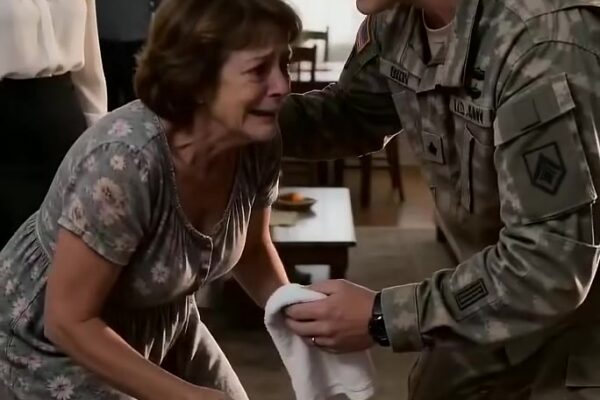
“Hold still,” she said, and hated how her voice shook. She poured a line of the clove liquid onto a rag and pressed it against Jonah’s jaw. He flinched at the sting, then sagged, breathing hard through clenched teeth.
“It’s… moving,” he managed. “Like it’s adjusting. Like it knows.”
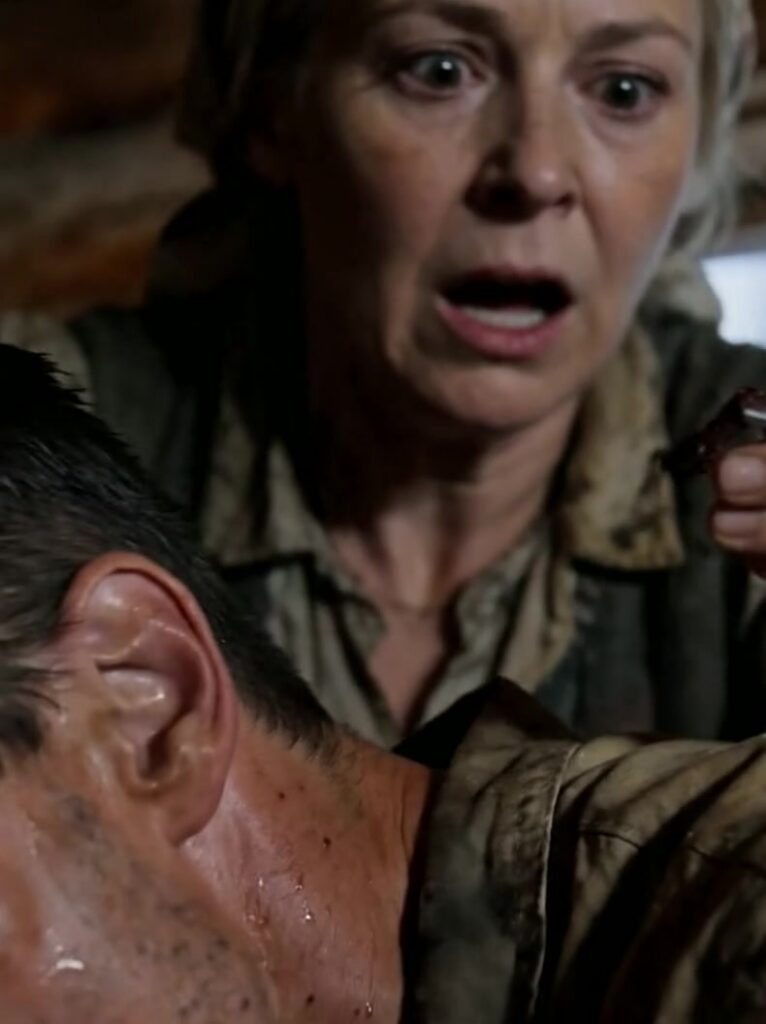
“It might,” Mara whispered, though she hadn’t meant to. She positioned the mirror, lifted the lantern higher, and turned Jonah’s head so she could see the rim of his ear. The skin there was oddly smooth, as if scar tissue had been polished. She thought of the childhood photo Jonah had shown her once—the one where his hair was cropped close, and a faint crescent mark hid behind his ear like a secret smile.
Mara took the pick and, with her free hand, held Jonah’s head steady. His tremors ran into her arm. She felt them in her teeth. “If you can hear anything,” she said, “tell me. Whatever it is. Words, whispers, anything.”
Jonah’s eyes rolled toward her, glassy with panic. “I hear… water. I hear my name being said wrong.”
Mara inserted the pick, slow and careful. A scraping sound rose immediately, wrong in the intimate hush of the cabin. Not the clean scrape of metal on wax, but something like dragging a spoon across a wet stone. Jonah’s breath stuttered. His fingers clawed at the table’s edge as if he might lift the whole thing to escape.
“Wait,” Jonah gasped. “It—” His sentence collapsed into a strangled noise. His whole body seized, rigid as a board, and for a moment Mara thought she had killed him. Then the lantern flared, and Jonah’s throat worked as if he were swallowing something too big to fit.
Mara felt resistance at the end of the pick—then a subtle give, like a knot loosening. Something shifted, not in her hand but in Jonah, an internal turning as unmistakable as a living creature rearranging itself to avoid a trap. Her stomach turned cold.
“Don’t pull away,” she said, but Jonah was already trying, twisting his shoulders, eyes squeezed shut. She tightened her grip, fingers digging into his temples. “Jonah. If it stays, it will keep feeding on you. Do you understand?”
He gave a tiny, frantic nod. Tears ran from the corners of his eyes into his hair.
Mara hooked the pick and drew back in one steady motion, the way her father’s note demanded—no bargaining, no pause. There was a wet sound, soft but final, like suction breaking. Something slid free with a reluctant jerk.
For half a second Mara couldn’t make her mind accept what her hand held. It was dark and thin, like a strip of burnt seaweed, except it flexed on its own. It glistened under the lantern, not with blood but with a slick sheen that seemed to drink the light. Along its length were tiny ridges that fluttered, as if tasting the air. It writhed around the metal pick as though it recognized the shape of a weapon and wanted to learn how to be one.
Silence fell so abruptly it felt arranged. Jonah’s tremors stopped. His shoulders dropped. He drew in a long breath, clean and deep, and lifted his head with an expression that belonged to a man waking from a fever. “I…” he said softly, blinking. “I can hear the wind. I can hear you breathing.”
Mara couldn’t look away from the thing. It twitched, once, then twice, and a faint sound emerged—high, almost like a word spoken through water. Her skin prickled. The ridges along its length flared open, revealing pale inner membranes that pulsed in time with her heartbeat, as if it had already synced itself to her.
“This was inside you,” she said, and the sentence tasted like ash. “All this time.”
Jonah reached toward her, not for the thing but for her wrist, grounding himself. His touch was steady now, human. “Is it dead?”
Before Mara could answer, the lantern flickered violently. The flame snapped low, then surged, then went out as if a mouth had closed around it. Darkness poured into the cabin. Mara’s breath caught. She felt the thing in her hand thrash, suddenly strong, tugging against her grip with a purpose that wasn’t panic but direction.
In the black, a sound brushed her ear—something between a whisper and a sigh. Not Jonah’s voice. Not the wind. A sound that seemed to form her name without using any of the letters.
Jonah’s fingers tightened around her wrist. “Mara,” he said, urgent. “Where is it?”
Mara held her arm out, but she couldn’t see her own hand. She could only feel the slippery coil sliding, patient as a rope. And then, impossibly, she sensed it pause—as if listening, as if deciding.
From somewhere in the darkness, close enough to be inside her ribs, came the faintest imitation of speech, a broken cadence that made her blood run colder than the lake outside. It sounded like someone trying to remember how to be a person.
And then the thing moved again—up her arm, toward the warmth of her throat—while Jonah, newly quiet, breathed in a calm that didn’t belong to him at all.