The rain came down so hard it made everything look crueler. Not just the sky—everything. The hedges looked like they’d been beaten into place. The streetlights made puddles gleam like bruises. Even the little ceramic cherub on the gatepost looked like it was judging you.
Maribel stood at the black iron gate and watched it shiver in the wind. The bars were cold and slick under her fingers, and the stone walkway beyond it shone like wet glass. She’d worn her good gray coat—habit, dignity, superstition—but it had already surrendered to the weather, clinging to her shoulders like a damp apology.
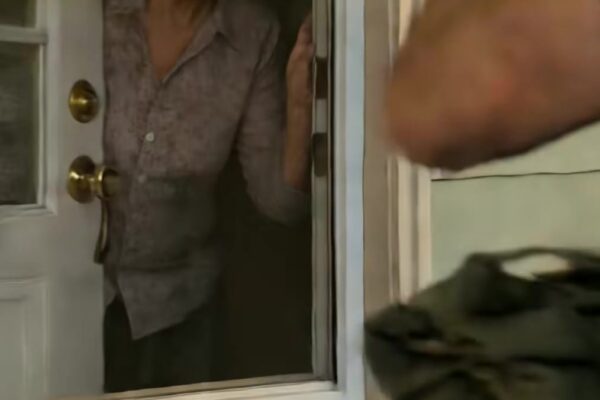
At the center of the path, her son finally appeared in the doorway. Nico was taller than she remembered, or maybe he just held himself like a wall now—square and shut. He didn’t wave her in. He didn’t do the old routine of kissing her forehead and calling her “Ma” like he used to when he was seven and still smelled like soap and summer. He stepped forward just enough to be seen, then shoved a burlap sack into her arms so abruptly she lurched back.
“Take it and go,” he said. His voice didn’t tremble, but his eyes didn’t meet hers either. “Rice. Just… take it.”
Maribel caught the sack against her chest, the rough fabric scraping her wrists. It had weight, but not the right kind—too lumpy in the wrong places, like a lie. Her mouth opened with a dozen things in it: Are you eating? Are you safe? Why do you look like you haven’t slept? Instead she got only one word out. “Nico.”
Behind him, inside the dim hallway, someone moved. A younger woman stepped into the thin shelter of the doorway, arms crossed as if she owned the air around him. She wore a neat coat that somehow looked dry despite the storm, hair pinned up like a decision. Maribel had seen her once before, briefly, at a distance—enough to notice the sharpness in her posture. The woman’s face now was calm in the way calm things can be dangerous.
Nico glanced toward her, then back at the rain as if it was easier to talk to weather than to people. “Don’t come back later,” he said, and it came out too fast. “Don’t… don’t wait around. Just go straight home.”
Maribel’s throat tightened. Mothers have a special sense for the difference between rejection and rescue. This wasn’t him being cold for sport. This was him building a wall with his own hands because someone was standing behind him with matches.
She nodded because she always nodded. She nodded when the landlord raised rent. She nodded when the doctor spoke in careful words. She nodded when Nico moved out with a suitcase he’d packed like he was leaving a burning building. Nodding was what she did when the world insisted she accept things before she understood them.
She turned away, hugging the sack like it contained exactly what he’d promised. The rain drummed on her hair, ran down her cheeks, and for a second it felt like she was crying, but it was only the sky doing it for her. She didn’t look back until she reached the corner—superstition again, like turning around would turn her into salt.
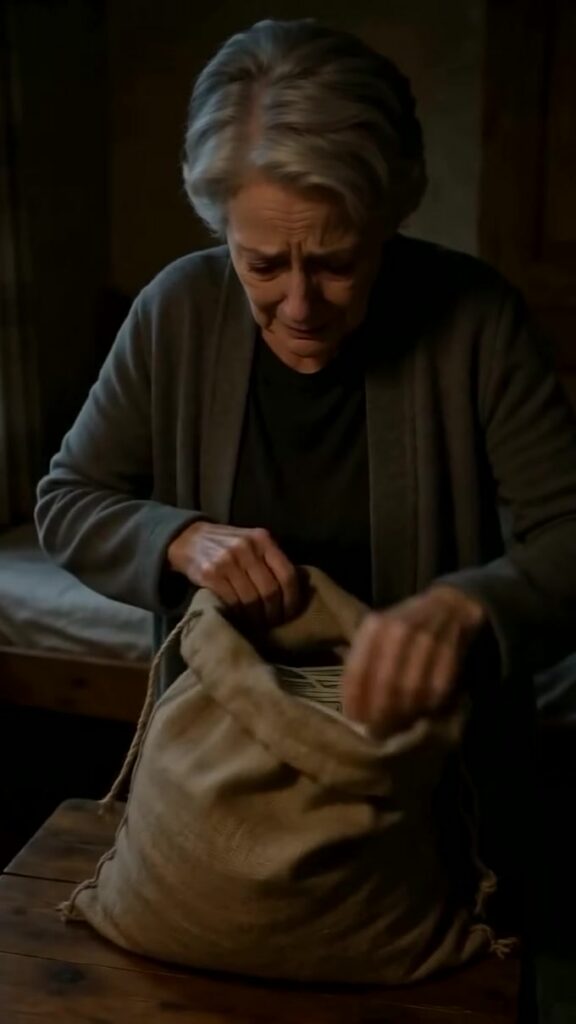
Her apartment was two bus rides away and always smelled faintly of fried onions from somebody else’s dinner. It was quiet inside, the kind of quiet that makes you hear your own joints complain. Maribel set the sack on the small wooden table, breathing hard as if she’d carried more than fabric and weight. Her hands shook while she worked the rope loose.
No rice spilled out. Not a single grain.
Instead, a white envelope slid against her palm, smooth and clean in a way that didn’t belong inside burlap. On the front, in Nico’s handwriting—rounded letters he’d had since grade school—was one word: “Mom.”
Maribel’s breath snagged. She pulled the envelope out like it might bite. Inside was money—more than grocery money, more than rent money, more than “I’ve got you covered for a bit.” It was the kind of money that comes with a story you don’t want to hear. Beneath the bills sat a folded note.
She opened it with both hands, like the paper might crack if she wasn’t gentle.
The first line made her stomach drop: I’m sorry.
Her eyes blurred and she had to blink hard. The rain ticked at the window like impatient fingers. She read on.
I couldn’t say it with her listening. She watches everything. I told you it was rice because she checks the bags. Don’t come back for me. Don’t ask questions you don’t want answers to. Leave before dark.
Maribel lowered the note and stared at her table as if it could explain the last few months. Nico’s missed calls. His too-fast excuses. The way he’d started answering in short phrases, like someone had trained him to keep conversations small.
She forced herself to read the next part.
If I stay, she keeps taking. If I run, she’ll come after you first. So I’m pushing you away on purpose. I’m trying to be the bad guy because it’s safer than being the weak one.
A sound left Maribel’s throat that didn’t feel human, more like a cracked kettle. She pressed the heel of her hand against her mouth, holding in a sob that wanted to become a scream. There were people in the building who would knock if they heard. There were people who meant well. She didn’t have time for well-meaning.
She unfolded the last crease of the note and read the final line.
By the time you read this, I’ll either be gone… or she’ll know.
Maribel moved without deciding to. She crossed to the window and yanked the curtain back. The street below was slick and glossy, a river disguised as asphalt. In the distance, past the smear of rain and the blur of headlights, she could just make out Nico’s house. The gate. The path. A figure standing there, dark against the porch light.
Nico was still outside, soaked through, shoulders hunched, not moving like a man guarding his own cruelty. He looked like a kid forced to stand in the corner for something he didn’t do. He lifted a hand and wiped his face, the motion quick, ashamed—like he was erasing proof.
Then the doorway brightened again.
The younger woman stepped out into the rain as if she didn’t feel cold. She walked with a slow patience, the kind that says she knows exactly what happens next. In her hand, something dark and straight caught the porch light for one sharp second.
Maribel’s heart slammed against her ribs. “No,” she whispered, and the word fogged the glass.
She didn’t have shoes on, didn’t have a coat on anymore, didn’t have a plan. She had a stack of dirty money on the table and a note that tasted like goodbye. She grabbed her phone with hands that couldn’t stay steady and stabbed at Nico’s number.
It rang once. Twice.
He didn’t answer.
Outside, thunder rolled like furniture being dragged across a floor. The rain kept falling, making every line harsher, every shadow meaner. Maribel pressed her forehead to the window and watched her son—her stubborn, gentle, terrified son—take a half-step back toward the gate like he’d finally decided to stop pretending.
The woman raised her arm.
Maribel’s phone slipped in her wet palm. She didn’t know who she was calling anymore—Nico, the police, God. All she knew was that she’d nodded long enough. The rain could make the world look crueler all it wanted, but she was done letting it decide what was true.
She turned from the window, grabbed the envelope, and ran for the door, as if love could outrun a storm.