Many people notice minor breast changes—slight redness, a feeling of heaviness, or a new sensation—and assume it’s temporary. Often, it is. However, subtle shifts can sometimes be early clues of a more serious issue. Breast cancer can begin quietly, and spotting unusual changes early can significantly improve outcomes.
Reliable data, including findings referenced by the American Cancer Society, shows that when breast cancer is detected at a localized stage, the 5-year relative survival rate is over 99%. The challenge is that waiting “to see if it goes away” can allow a problem to progress. Below are 10 important warning signs supported by established medical guidance, plus a simple plan to help you stay proactive.
Why Noticing Breast Changes Early Is So Important
Breast cancer forms in breast tissue—most commonly in the ducts or lobules—and it may not hurt in the early stages. According to the American Cancer Society’s Breast Cancer Facts & Figures 2024–2025, an estimated 310,720 new invasive breast cancer cases were projected in the U.S. in 2024 among women, and the average lifetime risk remains about 1 in 8.
Survival rates vary significantly by stage at diagnosis:
- Localized: over 99%
- Regional: around 87%
- Distant: about 33%
The reassuring truth: most breast changes are not cancer. Knowing what to look for helps you respond quickly and appropriately—without panic, but without delay.
10 Breast Cancer Warning Signs to Watch For
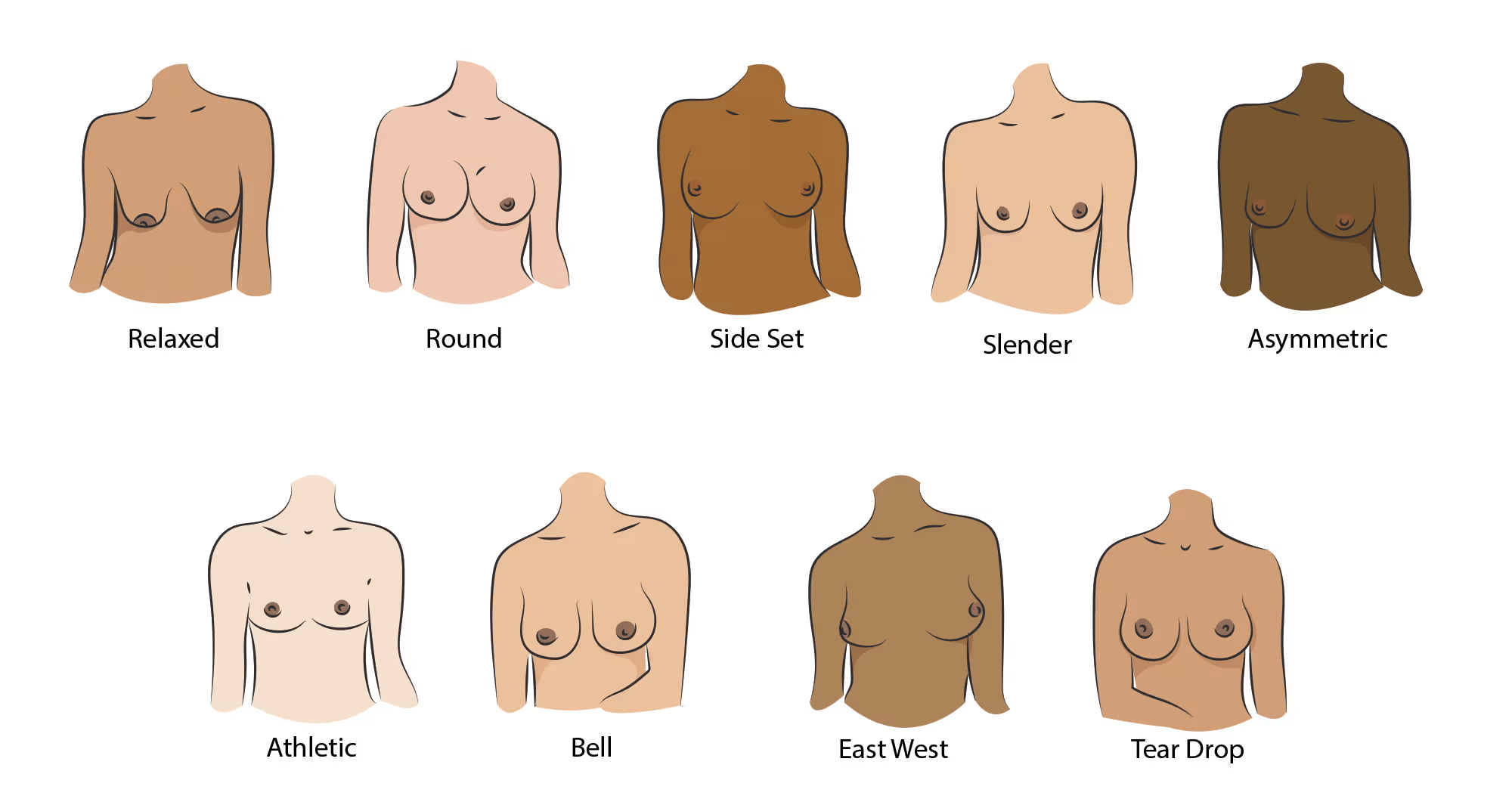
10. Noticeable Changes in Breast Size or Shape
You may see one breast becoming slightly larger, fuller, or shaped differently, even if you don’t feel a distinct lump. This can develop slowly if a tumor alters the structure of breast tissue.
Some research suggests a notable minority of early cases may first be recognized through size or shape differences rather than a clear lump.
Red flags include:
- Only one breast is affected
- The change lasts longer than 2 weeks
- It isn’t explained by menstrual cycle, pregnancy, weight changes, or hormones
- One side feels denser or firmer
Helpful habit: Take monthly comparison photos (arms down, arms raised, hands on hips) in consistent lighting.
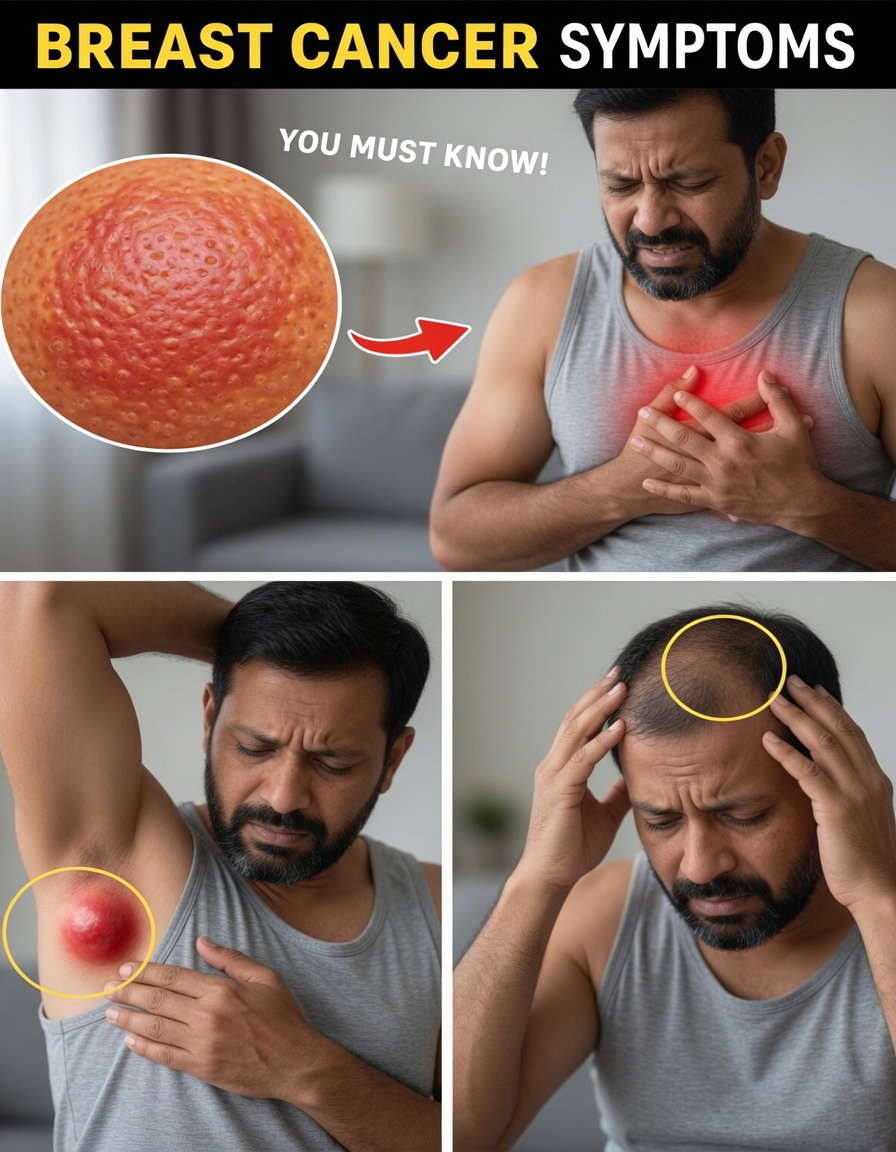
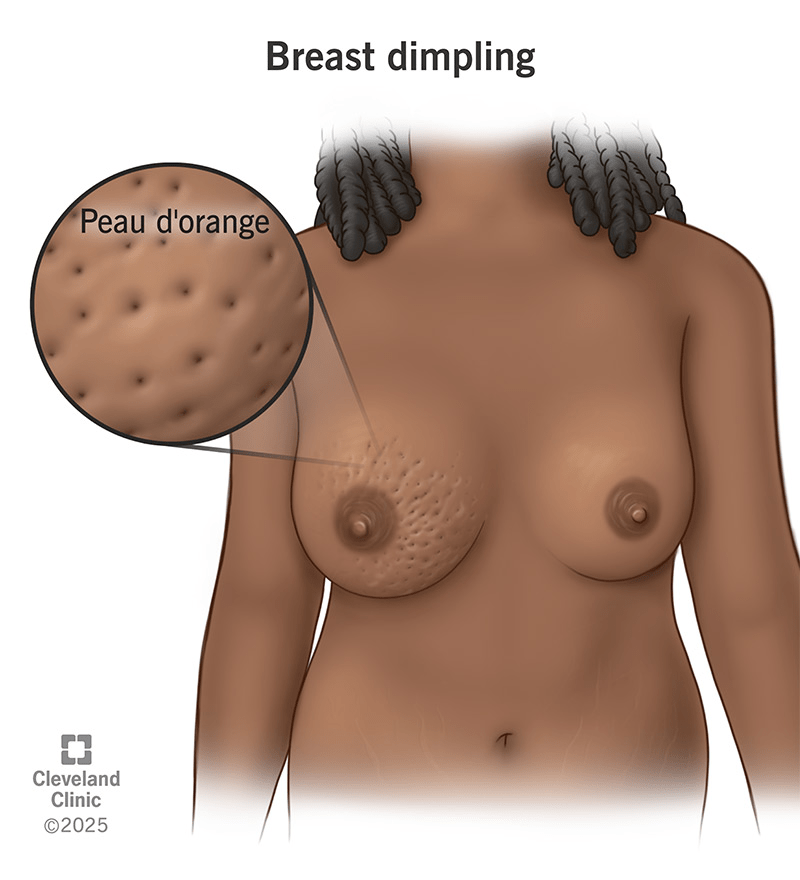
9. Skin Changes: Dimpling or “Orange Peel” Texture
Breast skin may start to look puckered, dimpled, or thickened, sometimes resembling an orange peel (often called peau d’orange). This can happen when tissue beneath the skin pulls inward or when lymph drainage is disrupted.
How to check effectively:
- Stand in front of a mirror with arms relaxed.
- Put hands on hips and press down to tighten chest muscles.
- Raise arms overhead and look for pulling, dimpling, or unevenness.
- Gently pinch the skin to compare texture across both breasts.
If dimpling persists, a professional evaluation is important.
8. Ongoing Itching or Irritation That Doesn’t Improve
Persistent itching—especially with redness, warmth, or swelling—can be associated with inflammatory breast cancer (IBC), a rarer but aggressive type. IBC represents roughly 1–5% of breast cancer cases and often looks different than a typical lump-based presentation.
Possible IBC pattern:
- Itching that continues for weeks
- Redness across part or most of the breast
- Breast feels warm to the touch
- Swelling that seems to worsen over time
If itching is paired with these signs, seek medical care promptly.
7. A Hard, Fixed Lump or a Thickened Area
A suspicious lump is often described as hard, irregular, and difficult to move, and it may be painless. This can contrast with benign cysts or fibroadenomas, which are more likely to feel smooth, mobile, or tender.
General comparison:
- More often benign: smooth, movable, may be tender
- More concerning: irregular edges, fixed in place, usually painless, may enlarge over time
Self-checks can be done in the shower or lying down. Pay close attention to the upper outer breast, where many changes are found.
Note: Men can also develop breast cancer (rare, but real—lifetime risk is about 1 in 726). Any persistent chest lump should be evaluated.
6. Persistent Breast or Nipple Pain (Not Cycle-Related)
Pain is not the most common first symptom, but ongoing, localized pain—especially on one side and not linked to your menstrual cycle—should not be ignored. Concern increases if pain appears alongside a lump, swelling, or skin changes.
Track whether the pain is:
- Deep rather than surface irritation
- One-sided
- Increasing over time
5. Unexplained Swelling in the Breast or Armpit
Swelling can occur even without an obvious lump. You might notice fullness in the breast, underarm, or nearby areas if lymph nodes are reacting or affected.
Quick underarm check: Raise one arm and use the opposite hand to feel for firm, enlarged areas in the armpit.
4. New Nipple Retraction or Sudden Inversion
If a nipple that has always pointed outward suddenly begins pulling inward, it can be caused by tissue changes beneath the surface. A new change—especially on one side only—deserves medical attention.
3. Red, Flaky, Crusted, or Thickened Skin (Especially Near the Nipple)
Breast skin may look irritated—similar to eczema or a rash—but doesn’t resolve. It may also feel warm, thickened, or sensitive.
A rare condition called Paget’s disease of the nipple can begin with visible changes like:
- Redness or scaling around the nipple
- Crusting or persistent irritation
- Ongoing skin thickening
2. Nipple Discharge That Is Spontaneous or Bloody
Any nipple discharge that is not breast milk—especially if it happens without squeezing—should be assessed. Discharge that is bloody or appears suddenly is generally more concerning.
1. Swollen Lymph Nodes in the Armpit or Near the Collarbone
Firm swelling under the arm or around the collarbone can indicate lymph node involvement, particularly if paired with other breast symptoms. Because this can signal spread, it’s one of the most urgent reasons to seek evaluation.
A Simple 30-Day Breast Health Action Plan
Staying proactive doesn’t need to be complicated. Use this month-long routine to better understand what’s normal for you and to detect changes earlier.
Week-by-Week Plan
- Week 1: Do a short daily self-check (shower + lying down) to learn your baseline.
- Week 2: Take weekly photos in consistent positions to track subtle changes.
- Week 3: Review your personal risk factors (age, family history, dense breasts, prior radiation).
- Week 4: If you’re due, schedule a clinical breast exam or mammogram. Many guidelines commonly recommend screening starting at age 40, earlier for higher-risk individuals.
Quick Daily Routine (Under 5 Minutes)
- Morning (1 minute): Mirror check for symmetry, dimpling, redness, and nipple changes
- Evening shower (2 minutes): Feel breast tissue and armpit area systematically
- Before bed (1 minute): Note pain, discharge, or new sensations
Higher-Risk Factors: When to Act Earlier
Consider earlier or more frequent screening if any apply:
- Close family history of breast cancer
- Known genetic variants (such as BRCA mutations)
- Dense breast tissue
- Previous chest radiation
- Certain medical conditions associated with elevated risk
Men with breast lumps should seek medical evaluation right away.
When to See a Doctor Without Delay
Contact a healthcare professional promptly if you notice:
- A new lump or thickened area
- Ongoing redness, dimpling, or skin texture changes
- Bloody or spontaneous nipple discharge
- Enlarged lymph nodes with breast symptoms
Getting checked early can provide reassurance—or ensure timely treatment when it matters most.
Frequently Asked Questions
How often should I do a breast self-exam?
Many clinicians suggest monthly, ideally a few days after your period when breast tenderness is lower. Self-checks should complement—not replace—professional screening.
Are most lumps cancer?
No. Many lumps are benign, such as cysts or fibroadenomas. Still, any new, growing, or changing lump should be evaluated.
When should screening mammograms begin?
Many experts commonly recommend starting at age 40, or earlier if you have higher risk factors. The best plan depends on your personal history, so discuss timing with your clinician.
Medical Disclaimer
This article is for educational purposes only and does not replace professional medical advice. If you notice breast changes, consult a qualified healthcare provider as soon as possible. Regular screening and early evaluation remain essential for breast health.