Persistent cramps that break your concentration, low back pain that hangs around for days, or fatigue that feels far too intense can easily be dismissed as “just life” or “just my period.” Many women push through these symptoms in silence, assuming they’re normal or unavoidable. But when discomfort becomes a regular feature of your month, it can quietly affect your career, relationships, and emotional well-being.
By the end of this article, you’ll recognize an overlooked daily pattern that may help you understand what your body has been trying to communicate for a long time.
Endometriosis, Explained in Plain Language
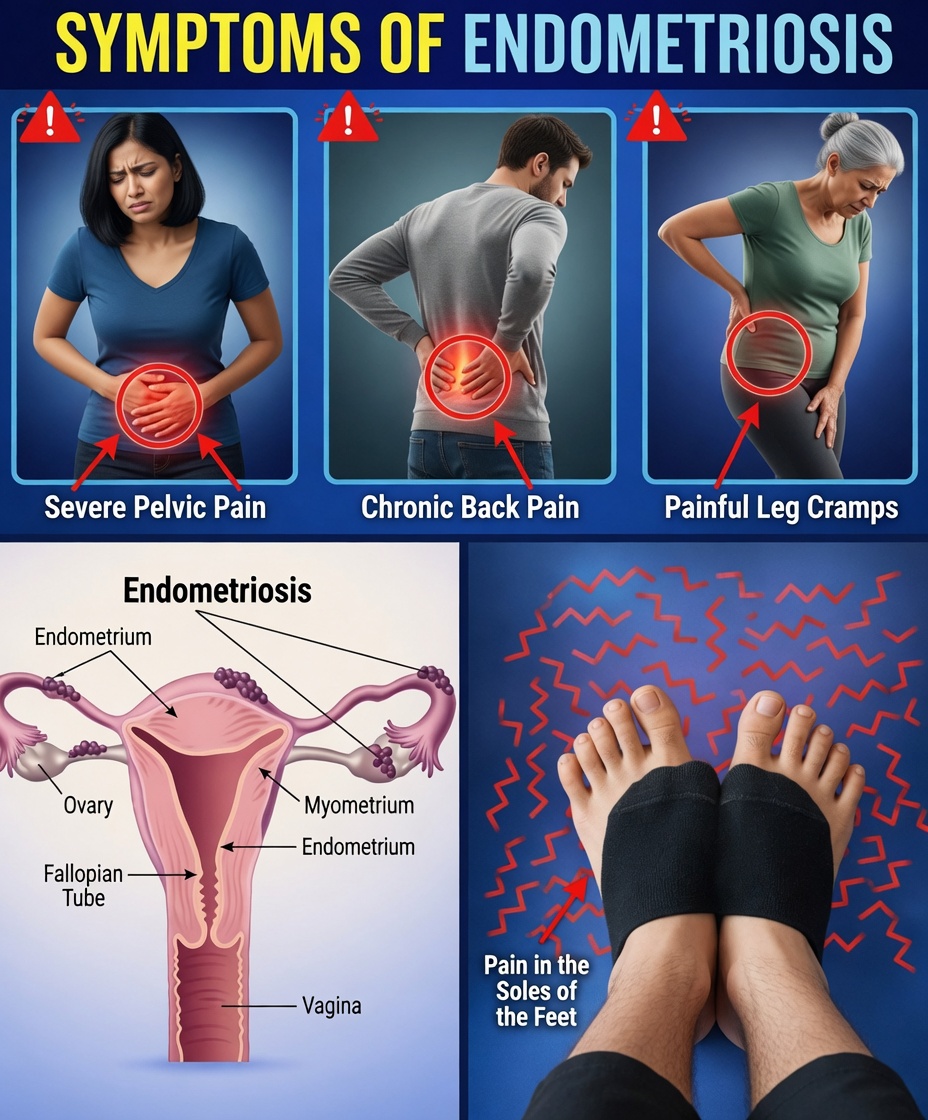
Endometriosis occurs when tissue similar to the uterine lining grows outside the uterus. Like the uterine lining, it reacts to hormonal shifts throughout the menstrual cycle. The problem is that outside the uterus, this tissue can trigger irritation, inflammation, and pain.
Global health organizations (including the World Health Organization) and findings published in leading gynecology journals estimate that millions of women worldwide live with endometriosis—often for years before it’s recognized. One major reason is that its symptoms can look like “typical” period issues.
What matters most is this: the early signs often build slowly and quietly.
13 Endometriosis Warning Signs You Shouldn’t Brush Off
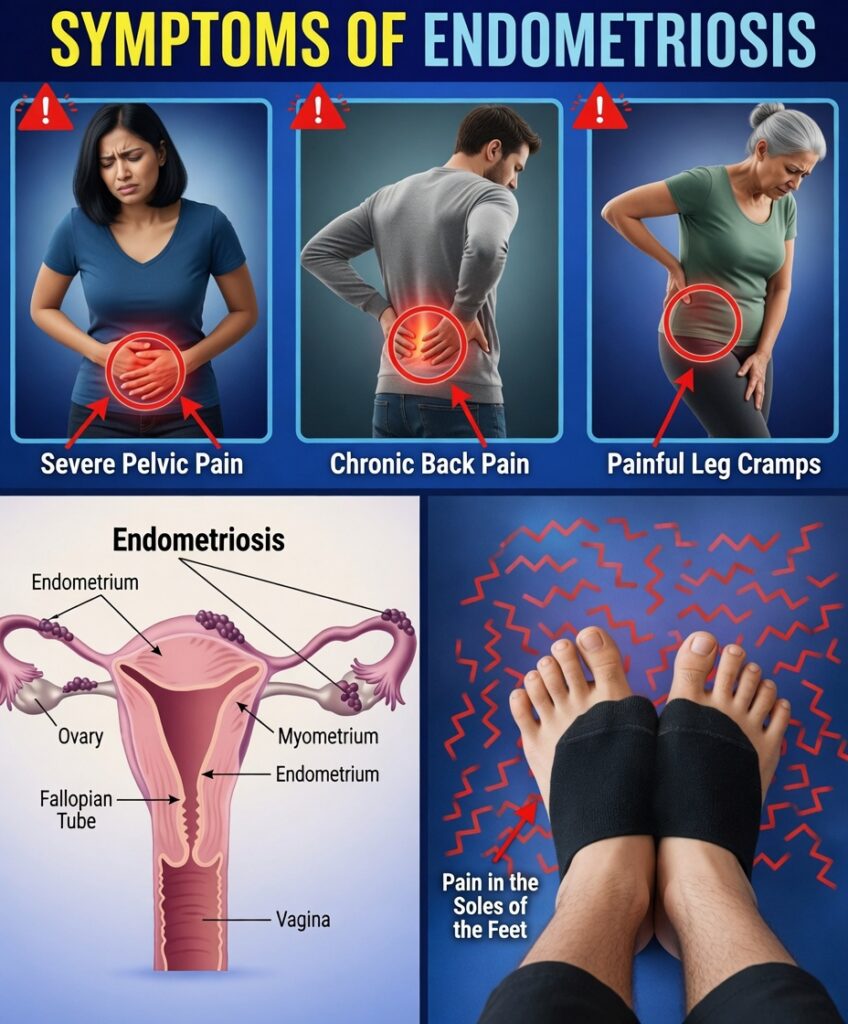
1) Severe Period Cramps That Disrupt Normal Life
Mild cramps can be common. But pain that makes you skip work, school, or plans deserves attention. Severe menstrual pain is one of the most frequently reported symptoms linked to endometriosis in clinical research.
2) Ongoing Pelvic Pain Outside Your Period
If pelvic pain shows up before, during, and after bleeding, that pattern is important. Pain that isn’t limited to your period may signal a deeper issue.
3) Low Back Pain That Returns Every Month
Back pain that consistently flares around your cycle may reflect pelvic inflammation. It’s often blamed on stress or posture, but the timing can be a key clue.
4) Pain During or After Sex
This can be difficult to talk about, but it’s common among women with endometriosis. Many don’t realize this symptom can be cyclical, increasing at certain points in the month.

5) Heavy or Prolonged Bleeding
If you frequently soak through pads or tampons every 1–2 hours, pass large clots, or bleed longer than seven days, it may be more than a “heavy period.”
6) Digestive Symptoms That Worsen Around Your Period
Bloating, nausea, constipation, or diarrhea that predictably intensify near menstruation are sometimes labeled “period digestive issues.” When these symptoms are consistent month after month, they’re worth tracking.
7) Fatigue That Feels Extreme
Inflammation and chronic pain can contribute to persistent exhaustion. If you feel unusually drained—even after enough sleep—especially around your cycle, it may be connected.
8) Painful Bowel Movements During Menstruation
Pain when using the bathroom during your period is often ignored out of embarrassment. Yet it’s a commonly reported symptom in clinical settings.
9) Spotting Between Periods
Bleeding between cycles can have many causes. But when it appears alongside pelvic pain, heavy periods, or digestive symptoms, it becomes more meaningful.
10) Difficulty Getting Pregnant
Not everyone with endometriosis experiences fertility challenges, but research shows a strong association between endometriosis and reduced fertility in some women.
11) Pain That Shoots Into the Legs
Some women describe sharp, burning, or aching pain radiating into one or both legs during menstruation. This can happen when inflammation or lesions affect nearby nerves.
12) Urinary Pain or Discomfort During Your Period
Painful urination that aligns with menstruation is less discussed but documented in medical literature, particularly when pelvic structures are involved.
13) Symptoms That Gradually Intensify Over Time
One of the most concerning patterns is progression. If your symptoms become stronger, longer, or more disruptive year after year, don’t ignore that trend.
Recognizing the signs is only step one. Understanding why they’re so often dismissed is the next.
Why Endometriosis Symptoms Are Commonly Overlooked
Many women minimize warning signs for reasons such as:
- Cultural messaging that period pain is “normal”
- Assuming symptoms are caused by stress, burnout, or diet
- Worry about being dismissed or told “it’s nothing”
- Limited awareness of endometriosis symptom patterns
The reality is simple: pain is not something you should be expected to tolerate as your baseline.
Typical Period Discomfort vs. Concerning Patterns
This overview is not meant for self-diagnosis—only to help you notice patterns more clearly.
-
Common: Mild cramps relieved by over-the-counter pain relief
Concerning: Pain that doesn’t improve with typical remedies -
Common: Discomfort mainly in the first 1–2 days
Concerning: Pain lasting most of the cycle -
Common: Light to moderate bleeding
Concerning: Heavy bleeding or periods lasting longer than 7 days -
Common: Mild tiredness
Concerning: Ongoing fatigue that interferes with daily function
The piece many people miss: tracking reveals patterns you can’t see in the moment.
Practical Steps You Can Start Today
Step 1: Keep a Symptom Journal
Record the following:
- Pain level (1–10)
- Where you feel it (pelvis, back, legs, etc.)
- When it occurs in your cycle
- Related symptoms (bloating, bowel changes, fatigue, spotting)
After 2–3 months, many women notice clearer trends.
Step 2: Watch for Lifestyle-Related Flares
Some people observe worsening symptoms during:
- High-stress periods
- Poor sleep
- Certain foods
- Strenuous exercise or overexertion
Noting these triggers can help you speak more clearly with a healthcare professional.
Step 3: Treat Flare-Ups Like Real Recovery Time
During symptom spikes, supportive strategies may help, such as:
- Gentle stretching
- Heat (warm compresses)
- Hydration
- Extra rest
Step 4: Go Into Appointments Prepared
Bring your symptom journal and a short list of questions. Clear documentation often improves communication and decision-making.
Step 5: Build a Support System
Trusted friends, online communities, or support groups can reduce isolation. Research on chronic conditions consistently shows that emotional support improves overall well-being.
A surprising takeaway many women report: simply understanding what might be happening can reduce anxiety and self-doubt.
The Emotional Toll People Often Miss
Recurring pain and uncertainty can lead to:
- Mood changes
- Irritability or frustration
- Lower productivity
- Avoiding social situations
These reactions are valid. Chronic pain can influence mental health, and acknowledging that connection is a form of strength. Women’s health research also suggests that earlier recognition and validation can improve quality-of-life outcomes.
This brings us back to the overlooked pattern: it’s not only how intense the pain is—it’s how consistently it follows a monthly rhythm, especially when it worsens over time.
When to Consider Professional Guidance
Consider speaking with a healthcare provider if:
- Pain repeatedly interferes with daily activities
- Symptoms steadily worsen year by year
- Bleeding is heavy, prolonged, or irregular
- You’re unsure what’s normal for your body
Seeking answers isn’t overreacting. It’s proactive self-care.
Conclusion
Endometriosis symptoms often start subtly. Severe cramps, pelvic pain, digestive changes, fatigue, and heavy bleeding can be easy to normalize—especially when society insists that periods are “supposed to hurt.” But persistent, recurring, and progressively worsening discomfort deserves attention.
Tracking your symptoms, learning the patterns, and getting informed support can change how you manage your health and quality of life.
Listening to your body isn’t dramatic. It’s responsible.
Frequently Asked Questions
1) Is severe period pain always caused by endometriosis?
Not always. Painful periods can have multiple causes. However, pain that disrupts daily life, doesn’t respond to common pain relief, or worsens over time should be assessed by a healthcare professional.
2) Can endometriosis symptoms appear even if my cycles are regular?
Yes. Regular cycles do not rule out endometriosis. Many women have predictable periods and still experience cyclical pelvic pain, digestive issues, fatigue, or pain during sex.