
Subtle Breast Changes Can Matter More Than You Think
Many women move through everyday life without noticing that small breast changes may sometimes point to something serious. Breast cancer is among the most common cancers affecting women globally. While that reality can feel unsettling, recognizing unusual changes early can significantly improve outcomes.
It’s also important to keep perspective: most breast changes are not cancer. However, overlooking persistent or unusual signs can delay a valuable medical conversation. Guidance from trusted public health organizations—such as the American Cancer Society and the CDC—consistently emphasizes the value of knowing what’s normal for your body so you can spot differences sooner.
A key detail people often miss is that early warning signs can be subtle. Learning what to watch for—and doing a quick routine at home—can be a practical, empowering step.

Why Noticing Breast Changes Is Important
Breasts naturally change over time. Hormones, age, pregnancy, breastfeeding, and even your menstrual cycle can affect breast size, sensitivity, and texture. Still, some changes—especially those that are new, persistent, or occur on one side only—deserve attention.
Research and clinical guidance suggest that breast awareness, combined with recommended screenings, increases the likelihood of finding potential concerns when they’re easier to evaluate and treat.
Below are four warning signs that medical experts frequently highlight.
1. A New Lump or Thickening in the Breast or Underarm
One of the most common discoveries is a new lump or an area that feels thicker than usual, either in the breast or the underarm (axilla). A lump may feel hard with irregular edges, but it can also be softer or more movable. Sometimes the change shows up as localized swelling without a clearly defined lump.
Key things to note:
- It may be painless at first (though pain can occur)
- It may feel fixed in place or slightly mobile
- Compare both breasts and underarms to notice differences
Many lumps are benign (such as cysts or fibroadenomas). Still, any new lump that doesn’t resolve should be assessed by a healthcare professional. The CDC includes a new lump or thickening as a primary warning sign, reinforcing that self-awareness can support earlier evaluation.

2. Nipple Changes: Discharge, Inversion, or Retraction
Nipples can provide important clues. A sudden shift—such as a nipple turning inward, flattening, or producing unexpected discharge—shouldn’t be ignored.
Watch for nipple-related changes such as:
- Clear, bloody, or unusual discharge that is not breast milk
- A nipple that pulls inward or appears newly inverted
- Itching, pain, scaling, or irritation around the nipple area
These signs often occur in just one breast. The American Cancer Society notes that nipple discharge (especially if bloody, spontaneous, or only on one side) should be evaluated promptly—even if there’s no pain. Subtle nipple changes can be easy to dismiss as aging, but they’re worth checking.
3. Breast Skin Changes (Dimpling, Redness, or Orange-Peel Texture)
Healthy breast skin typically looks and feels smooth and consistent. Changes in the skin’s appearance or texture can be an important signal—especially if they persist.
Be alert for:
- Redness or inflammation that doesn’t improve
- Skin that feels thicker, swollen, or unusually firm
- Puckering or dimpling, especially noticeable when raising your arms
- A dimpled texture similar to an orange peel (peau d’orange)
These changes may occur when underlying tissue affects the skin’s surface. Public health guidance frequently lists dimpling or persistent skin irritation as reasons to seek medical evaluation. Because these shifts may develop gradually, monthly checks can help you notice them earlier.
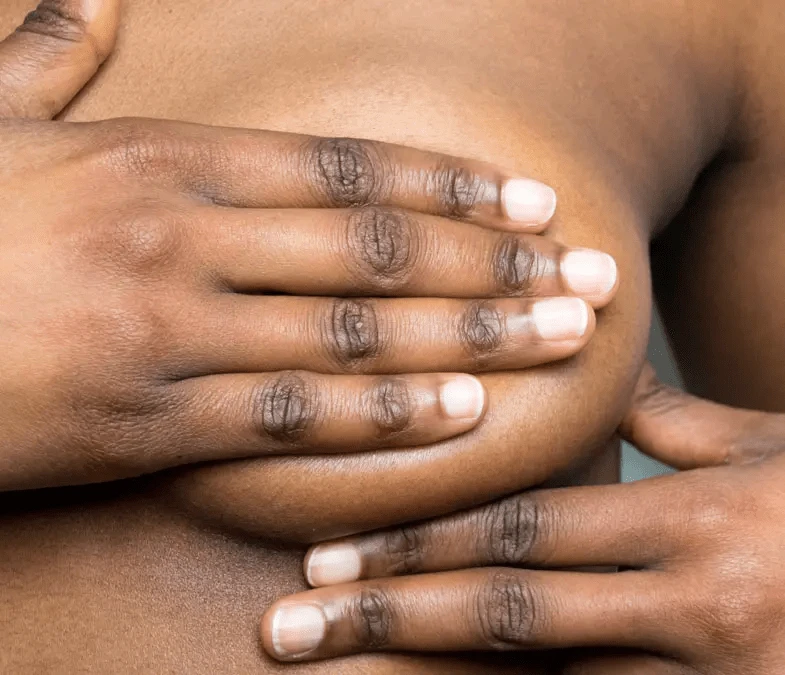
4. Unexplained Changes in Breast Size, Shape, or Persistent Pain
A noticeable difference between breasts—new asymmetry, swelling, or ongoing discomfort—can be concerning, particularly when it’s new and one-sided.
Examples include:
- A rapid increase or decrease in one breast’s size
- Swelling without an obvious cause
- Persistent pain or tenderness not linked to your menstrual cycle
Breast pain is common and often harmless. However, pain that is unusual for you—especially when paired with other changes—should be discussed with a clinician. Medical organizations (including Mayo Clinic) advise getting any unexplained change in size, shape, or appearance evaluated.
How to Do a Simple Breast Self-Check at Home
Regular self-checks help you learn what’s normal for your breasts, making it easier to detect changes. Many experts recommend doing this once per month, ideally a few days after your period ends, when breast tenderness is usually lower.
Use these simple steps (adapted from widely trusted guidance such as BreastCancer.org and similar resources):
-
Visual check in the mirror
- Stand with arms at your sides, then with hands on hips, then with arms raised overhead.
- Look for changes in shape, size, skin texture, swelling, or nipple position.
-
Manual check while lying down
- Place a pillow under one shoulder and use the opposite hand to examine that breast.
- Use the three middle fingers to make small circular motions, working from the nipple outward.
- Cover the entire breast and the underarm area using light, medium, and firm pressure.
-
Optional check in the shower
- Soap and water can make it easier to glide over the tissue.
- Feel for lumps, thickening, or new tenderness.
Consistency matters. Treat this like any other self-care routine and choose a predictable time each month.
When to See a Doctor: Don’t Delay
If you notice any of the signs above—even if they seem mild—book an appointment with a healthcare provider. They may perform a clinical breast exam and recommend imaging such as a mammogram or ultrasound if appropriate. Getting evaluated early can either provide reassurance or help you take timely next steps.
Most breast changes are benign, but getting them checked is always a smart decision.
Frequently Asked Questions (FAQ)
-
If I find a lump that doesn’t hurt, could it still be serious?
Yes. Many breast lumps—including cancerous ones—may be painless early on. Any new or persistent lump should be evaluated by a medical professional. -
How often should I do a breast self-check?
Aim for once a month. Choosing a consistent time (such as the week after your period) helps reduce confusion from hormonal fluctuations. -
Do these warning signs apply only to women, or can men have them too?
Men can also develop breast cancer, though it is less common. Similar symptoms—such as a lump or nipple discharge—can occur, so awareness is important for everyone.
Disclaimer
This article is for informational purposes only and is not a substitute for professional medical advice. If you notice changes in your breasts or have health concerns, consult a qualified healthcare provider. Awareness and screening can support early detection, but only a clinician can diagnose and recommend appropriate care.