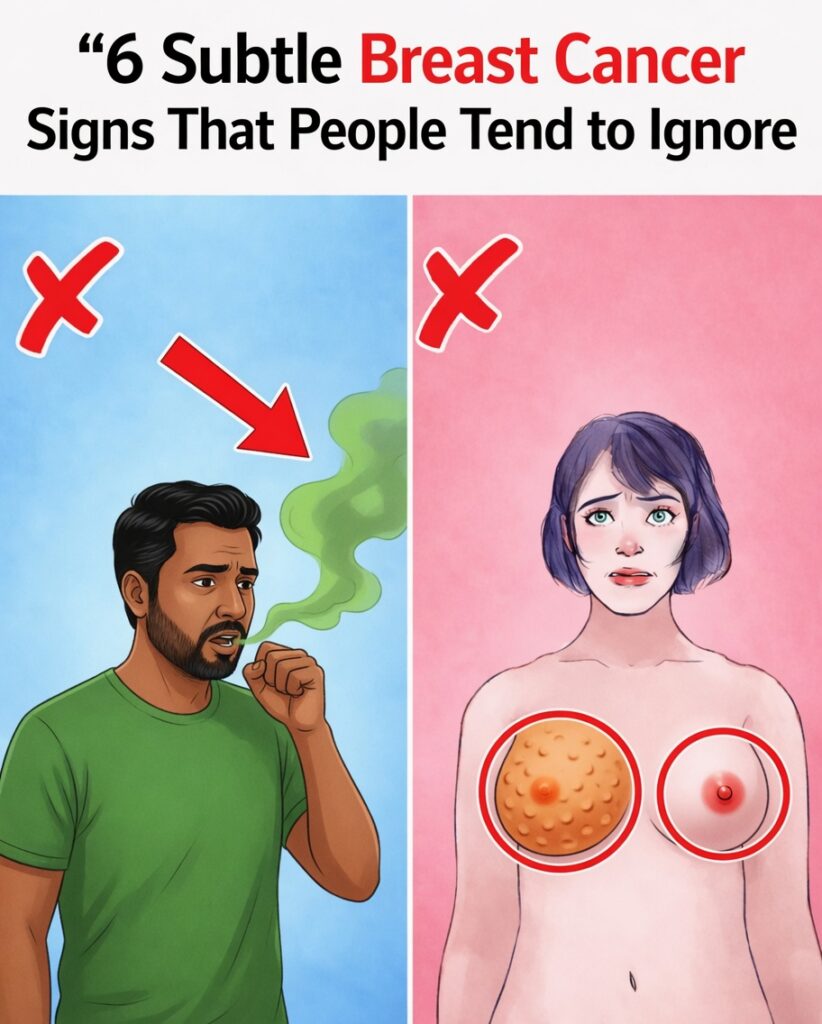
Many people link breast cancer symptoms mainly with discovering a lump during a self-check. While a lump is a common warning sign, it’s not the only one—and in some cases, breast cancer can develop without a noticeable mass. Early changes may show up instead as subtle shifts in skin texture, nipple appearance, or sensation. Because these signs can look like normal hormonal changes, aging, or everyday irritation, they’re often ignored—leading to delayed medical evaluation.
Major health organizations such as the American Cancer Society and Mayo Clinic emphasize that recognizing non-lump breast cancer signs can support earlier check-ups and, when needed, earlier diagnosis.
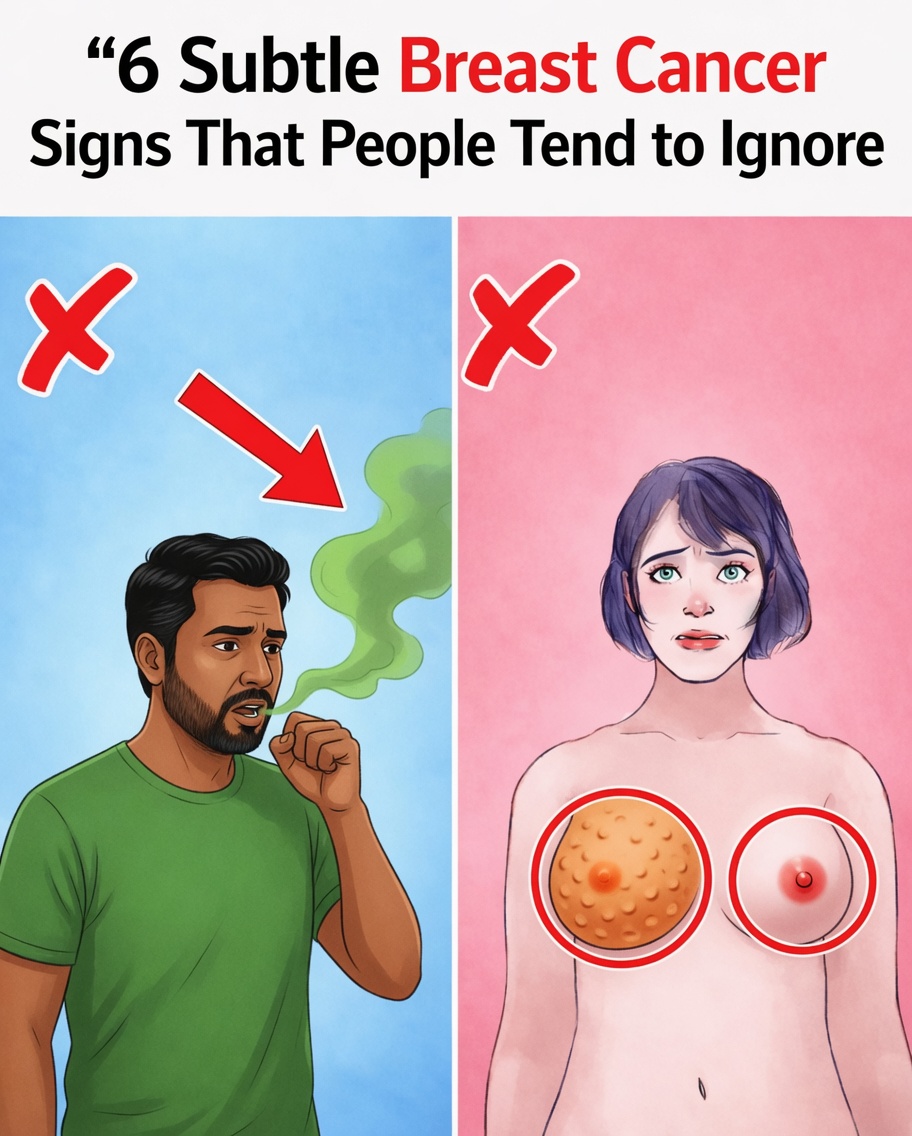
Some of the most meaningful clues aren’t dramatic or painful at first. They tend to be quiet, gradual changes—easy to miss unless you know what to watch for. Below are six commonly overlooked breast cancer warning signs, why they may happen, and practical ways to stay proactive about breast health.
Why Subtle Breast Changes Deserve More Attention
Breasts contain glands, ducts, connective tissue, fat, skin, and lymph vessels—so changes can come from many causes, and most are benign. Still, certain patterns are more concerning because they can reflect changes beneath the surface, including duct or skin involvement.
The encouraging part: many of these signs are visible during a mirror check or noticeable during everyday routines like showering or getting dressed. Building awareness helps you act sooner if something seems unusual.
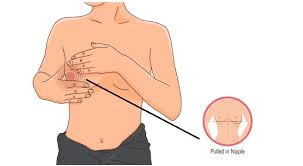
1. New Nipple Retraction or Inversion
A nipple that suddenly turns inward, flattens, or looks pulled back can be an important change—especially if it happens on one side only or appears later in life. This may occur when tissue behind the nipple tightens or is affected by changes in surrounding structures.
If your nipples have always been inverted, that’s often normal. The concern is a new or progressive change, even if it’s painless. Medical sources (including Mayo Clinic) recommend having newly inverted or retracted nipples assessed by a clinician.
2. Orange-Peel Skin Texture (Peau d’Orange)
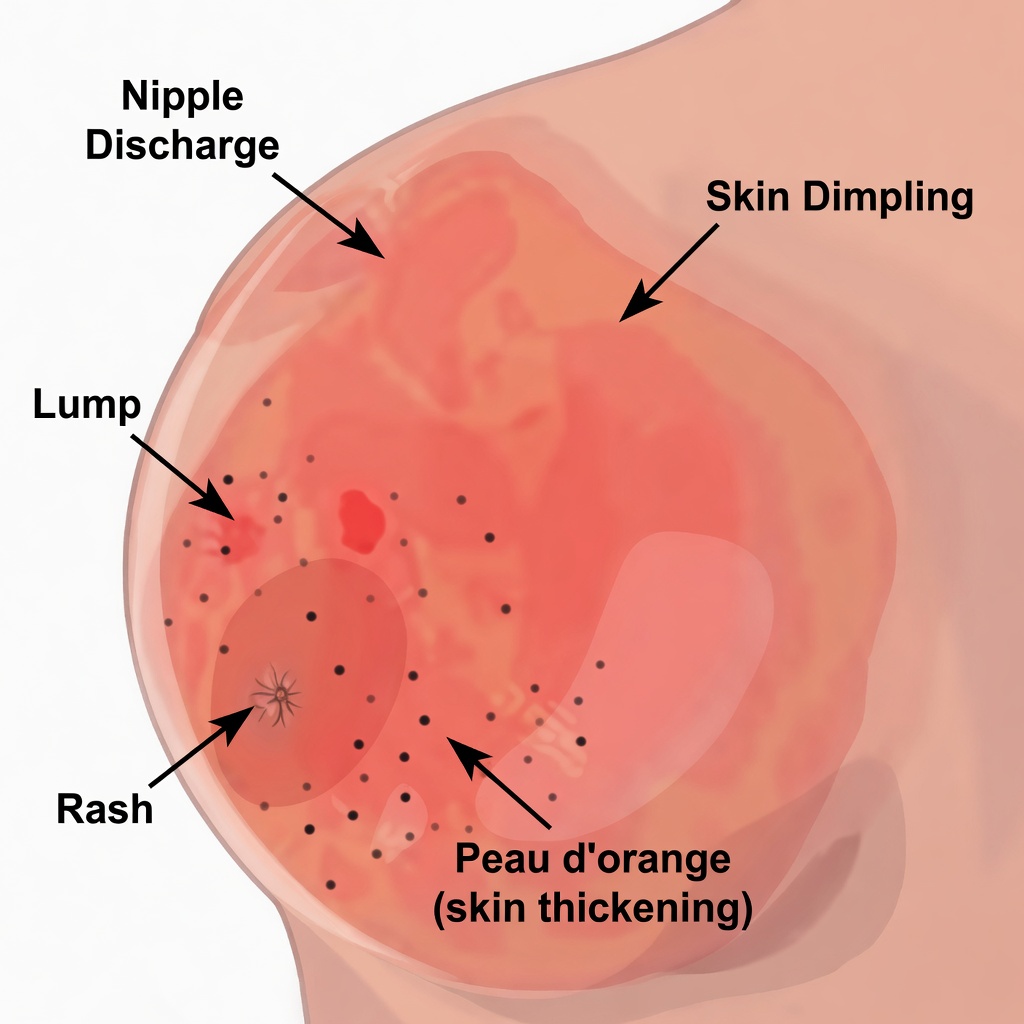
If part of the breast skin starts to look thickened, dimpled, or pitted—similar to an orange peel—this is known medically as peau d’orange. It can happen when lymph flow is disrupted and fluid builds up, causing swelling and tiny indentations around hair follicles.
Additional changes may include:
- Warmth in the area
- Redness or darkening
- Visible swelling affecting part or all of one breast
This sign is especially associated with inflammatory breast cancer, which may not present with a clear lump. Persistent thickening or dimpling should be checked promptly.
3. Ongoing Breast, Nipple, or Underarm Discomfort
Tenderness related to menstrual cycles is common. What’s more concerning is persistent discomfort that doesn’t match your typical pattern—such as:
- A dull ache that doesn’t go away
- Burning or irritation around the nipple
- Ongoing soreness in the breast or underarm area
Pain alone is not the most common sign of breast cancer, but persistent, unexplained pain—particularly if it’s one-sided or paired with other changes—should be discussed with a healthcare professional.
4. Unusual Nipple Discharge (Not Breastfeeding-Related)
Any nipple discharge outside pregnancy or breastfeeding deserves attention, especially if it is:
- Bloody
- Clear and spontaneous (happens without squeezing)
- Coming from one breast or one duct
Discharge can result from benign issues such as infection or duct changes, but spontaneous or bloody discharge is a recognized red flag. Organizations like the Breast Cancer Research Foundation advise clinical evaluation for any new, unexplained nipple fluid.
5. Sudden or Uneven Changes in Breast Size or Shape
Most bodies are naturally slightly asymmetrical. However, a noticeable change—particularly if it appears relatively quickly—can be significant, such as:
- One breast becoming larger, heavier, or swollen
- A new distortion in contour or shape
- A persistent difference not explained by weight change, pregnancy, or injury
These shifts may reflect internal tissue changes or swelling and should be assessed if they persist.
6. Persistent Itching, Scaling, or Flaking on the Nipple or Breast Skin
If you have itching, redness, dryness, or flaking around the nipple or areola that doesn’t improve with typical moisturizers or over-the-counter creams, don’t assume it’s just eczema.
A long-lasting, worsening, or recurring rash-like change can sometimes relate to Paget’s disease of the breast, a rare condition involving skin and ductal changes. Any persistent nipple-area irritation warrants medical advice.
Quick Guide: Normal vs. Concerning Breast Changes
Use this simple comparison during self-checks:
-
Often Normal / Usually Benign
- Cyclic tenderness before a period
- Long-standing, natural asymmetry
- Occasional clear discharge linked to hormonal shifts
- Mild itching from dry skin or fabric irritation
-
Potentially Concerning (Schedule a Medical Review)
- New nipple inversion, flattening, or retraction
- Orange-peel dimpling or thickened skin
- Persistent pain not linked to cycles or injury
- Spontaneous clear or bloody discharge
- Sudden or lasting change in size/shape
- Ongoing scaling, rash-like irritation, or itching near the nipple
Practical Steps: How to Check Your Breasts Regularly
You don’t need special equipment—just a consistent routine:
-
Mirror check
- Stand with arms at your sides, then raise them overhead
- Look for skin dimpling, swelling, redness, or changes in nipple position
-
Feel for changes
- Lie down and use the pads of your fingers
- Move in small circles across the breast, then include the armpit area
-
Watch for discharge
- Notice any discharge that occurs spontaneously
- Avoid forcefully squeezing if nothing appears naturally
-
Track changes
- Record what you notice (date, side, description) in a journal or phone note
-
Follow screening guidance
- Schedule mammograms and clinical exams based on your age and risk factors
- Many guidelines start routine screening around age 40–50, earlier with family history or elevated risk
For many people, monthly self-checks work best a few days after a period ends, when breast tenderness is usually lower.
Key Takeaway: Awareness Supports Earlier Action
Knowing these six subtle signs—nipple inversion, orange-peel skin, persistent discomfort, unusual discharge, size/shape changes, and ongoing itching or scaling—helps you respond earlier if something seems off. Most breast changes are not cancer, but timely evaluation can bring reassurance or faster next steps.
If you notice something new or persistent, trust that observation and speak with a qualified healthcare professional.
Frequently Asked Questions
Is breast pain usually a sign of breast cancer?
Most breast pain is linked to hormones, cysts, muscle strain, or benign conditions. Still, persistent, unexplained, or one-sided pain—especially with other symptoms—should be evaluated.
Can men experience these subtle signs too?
Yes. Although male breast cancer is less common, men can develop nipple changes, skin texture changes, discharge, or pain. Any new breast-related symptom should be checked.
How often should I do a breast self-exam?
For many adults, once per month is a practical schedule. Pair self-checks with clinical exams and screening recommendations from your doctor for more complete monitoring.
Disclaimer
This article is for informational purposes only and is not a substitute for professional medical advice, diagnosis, or treatment. Always consult a qualified healthcare professional with questions about symptoms or health concerns.