A Patient’s Question Many Adults Secretly Share
Last week, a woman in her early 60s leaned toward the mirror in my office and quietly asked something I hear far more often than people realize: “Doctor, why do these tiny white bumps make my skin look older—even when I’m taking good care of it?”
She had already tried everything she could find—scrubs, squeezing, and online “overnight fixes.” Instead of looking smoother, her skin became red, irritated, and more textured.
What she was dealing with is extremely common in adults: milia. And the biggest problem isn’t the bumps themselves—it’s that many people misunderstand what they are, then use the wrong approach and accidentally make them worse.
The encouraging news: a few simple, consistent habits can noticeably improve how your skin looks and feels over time. One of the most overlooked (yet helpful) habits is shared near the end of this article.
Why Those Tiny White Bumps Usually Aren’t Acne
A lot of adults—especially after 40—see small white dots and assume they must be acne. That assumption is understandable, but it’s often incorrect.
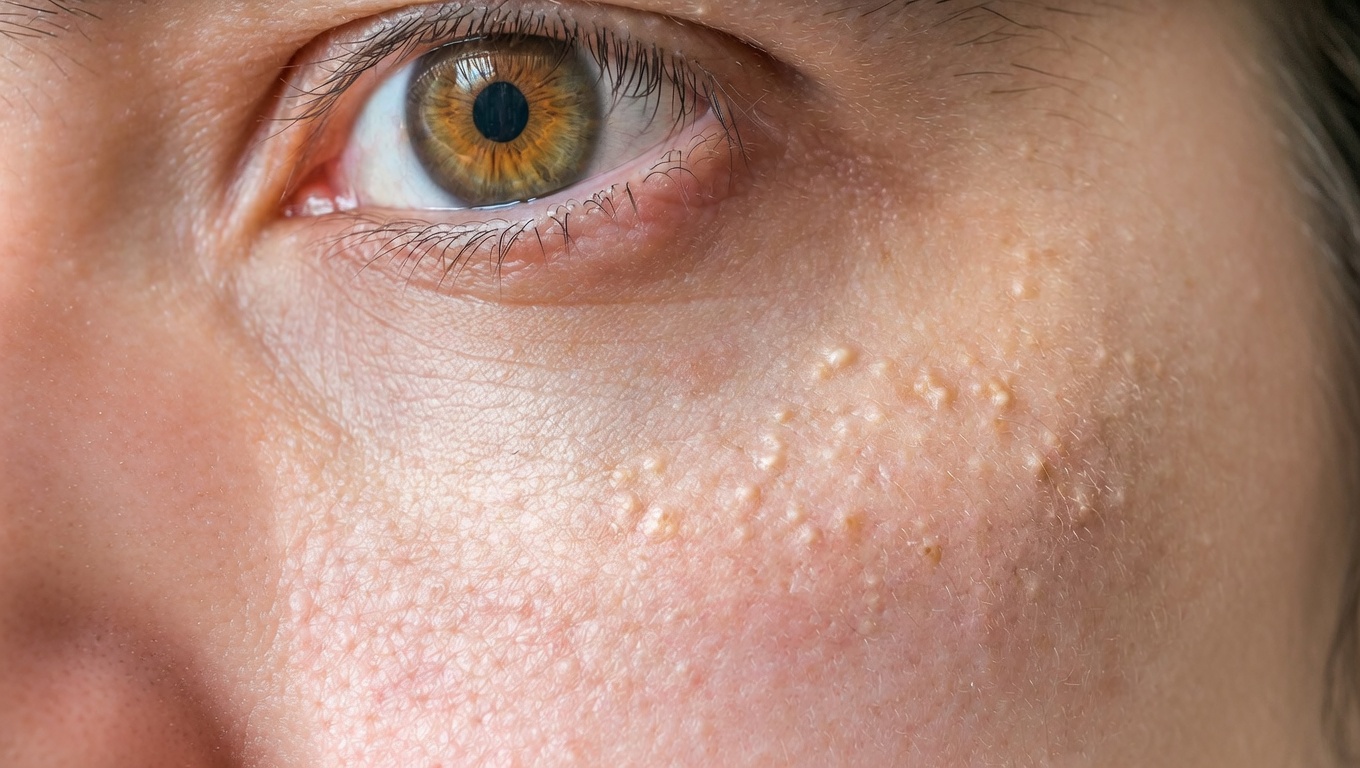
Milia are tiny, keratin-filled cysts that sit just beneath the skin’s surface. The key difference from acne: milia have no opening to the surface, which is why squeezing typically doesn’t work.
Dermatology research consistently shows that milia form when dead skin cells and keratin get trapped under the outer layer of skin rather than shedding normally.
Why this matters:
- When people treat milia like acne, they often choose harsh products or try to pop them.
- That can trigger inflammation, redness, and sometimes long-lasting discoloration or marks.
Common places adults notice milia include:
- Around the eyes
- On the cheeks
- Along the sides of the nose
- Sometimes on the forehead
Here’s the surprising part: milia are very common in adults, and they often become more noticeable as skin renewal slows with age.
Milia vs. Acne: A Quick Comparison
| Skin Bump Type | What It Looks Like | Opening on the Skin | Typical Cause |
|---|---|---|---|
| Acne whitehead | Soft bump with a pore | Yes | Oil + bacteria + clogged pore |
| Milia | Firm, white “pearl-like” dot | No | Trapped keratin |
| Blackhead | Dark plug in a pore | Yes | Oxidized oil in a pore |
Once you can identify milia, it becomes much easier to choose gentle care instead of aggressive treatments that backfire.
Why Milia Show Up More Often After Your 30s and 40s
As we get older, the skin changes gradually—often in ways you don’t notice day to day.
One major shift is that cell turnover slows down. Dead skin cells stay on the surface longer, and some can become trapped under the outer layer. That’s a common setup for milia.
But aging isn’t the only factor. Several everyday habits can increase the likelihood of these bumps.
Dermatologists often point to triggers such as:
- Heavy eye creams or rich moisturizers used in the eye area
- Thick ointments that seal the skin too tightly
- Sun exposure that roughens and damages the surface
- Harsh scrubbing that irritates the skin barrier
- Healing after certain cosmetic treatments
Many people assume “more moisture” is always the answer. Hydration matters, but very heavy products can sometimes trap keratin, especially around the eyes where the skin is thinner.
It’s also why milia can suddenly become obvious under makeup—foundation catches the light and makes texture stand out, which many adults find frustrating.
The advantage of understanding the cause is simple: you can work with your skin’s renewal process instead of battling it.

Why Viral Home Remedies Often Make Milia Look Worse
Social media is packed with “milia removal” hacks that promise instant results:
- Coffee scrubs
- Baking soda pastes
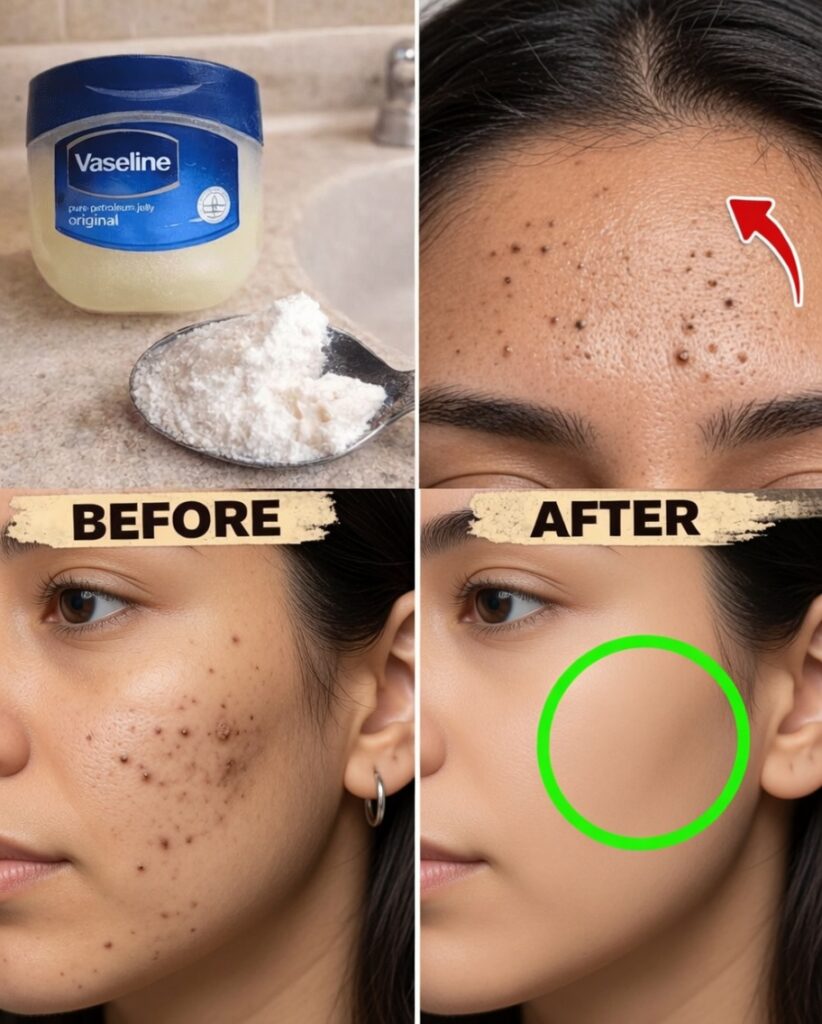
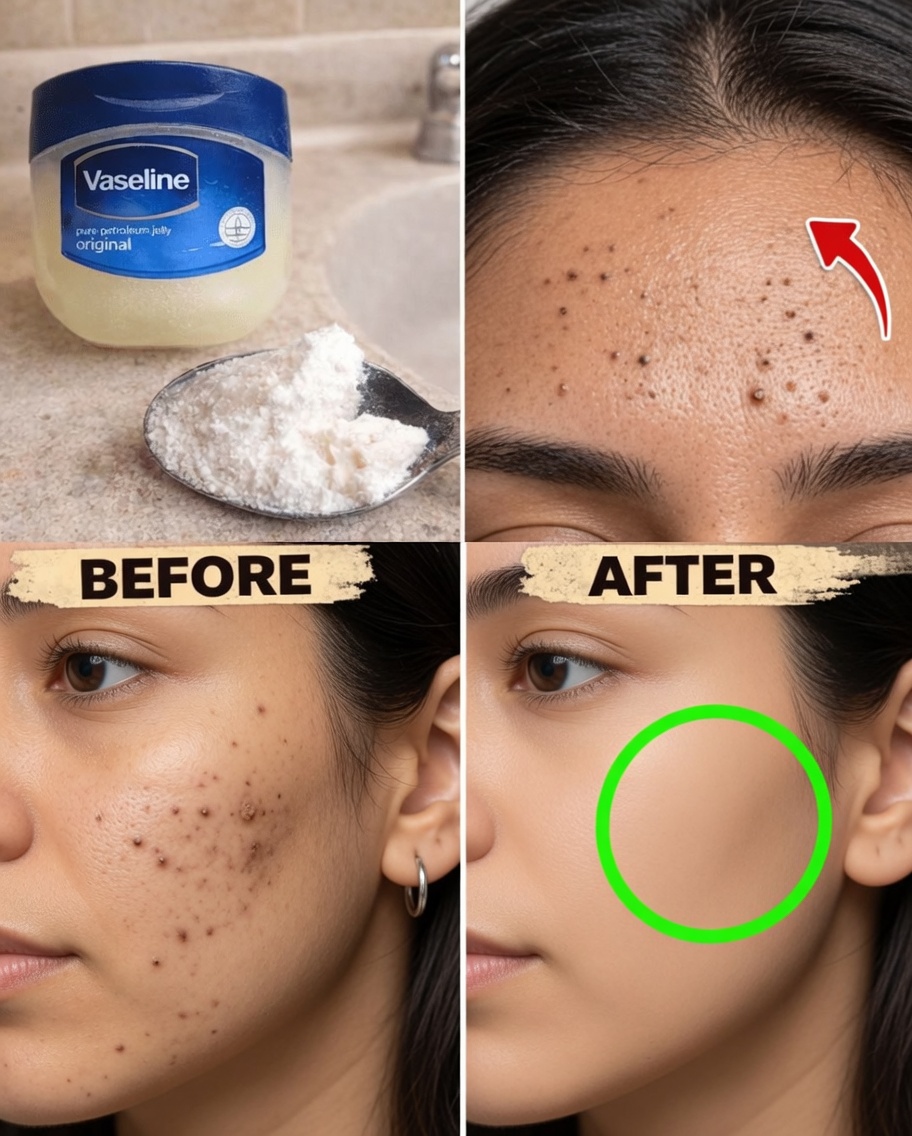
- Petroleum jelly mixtures
- Other DIY blends advertised as quick fixes
They spread fast because they’re easy and inexpensive—but many dermatology professionals warn against them, especially for aging or sensitive skin.
Why? Because the eye and cheek area can be fragile, and these DIY trends may lead to:
- Irritation and burning
- Increased dryness and redness
- A weakened skin barrier
- More sensitivity over time
A good example is baking soda: it has a very high pH, and frequent use can disrupt the skin’s natural protective balance. Abrasive scrubs can also cause micro-irritation, leaving skin looking rougher rather than smoother.
There’s another issue many people don’t realize: petroleum-based products are highly occlusive. They can be useful in specific situations, but heavy application around the eyes may trap dead skin cells—potentially encouraging milia formation.
This doesn’t mean every natural ingredient is “bad.” Ingredients like aloe or honey may feel soothing for some people. However, there’s limited strong scientific evidence that DIY mixtures remove milia quickly.
For most adults, the safest and most effective strategy is not dramatic—it’s consistent, gentle care.

Gentle Skin Habits That Can Improve Texture Over Time
Healthy skin rarely changes overnight. It usually improves through small, steady habits that support normal shedding and renewal.
Dermatology research suggests that supporting skin turnover can gradually reduce the buildup that contributes to milia.
Habits commonly recommended by professionals include:
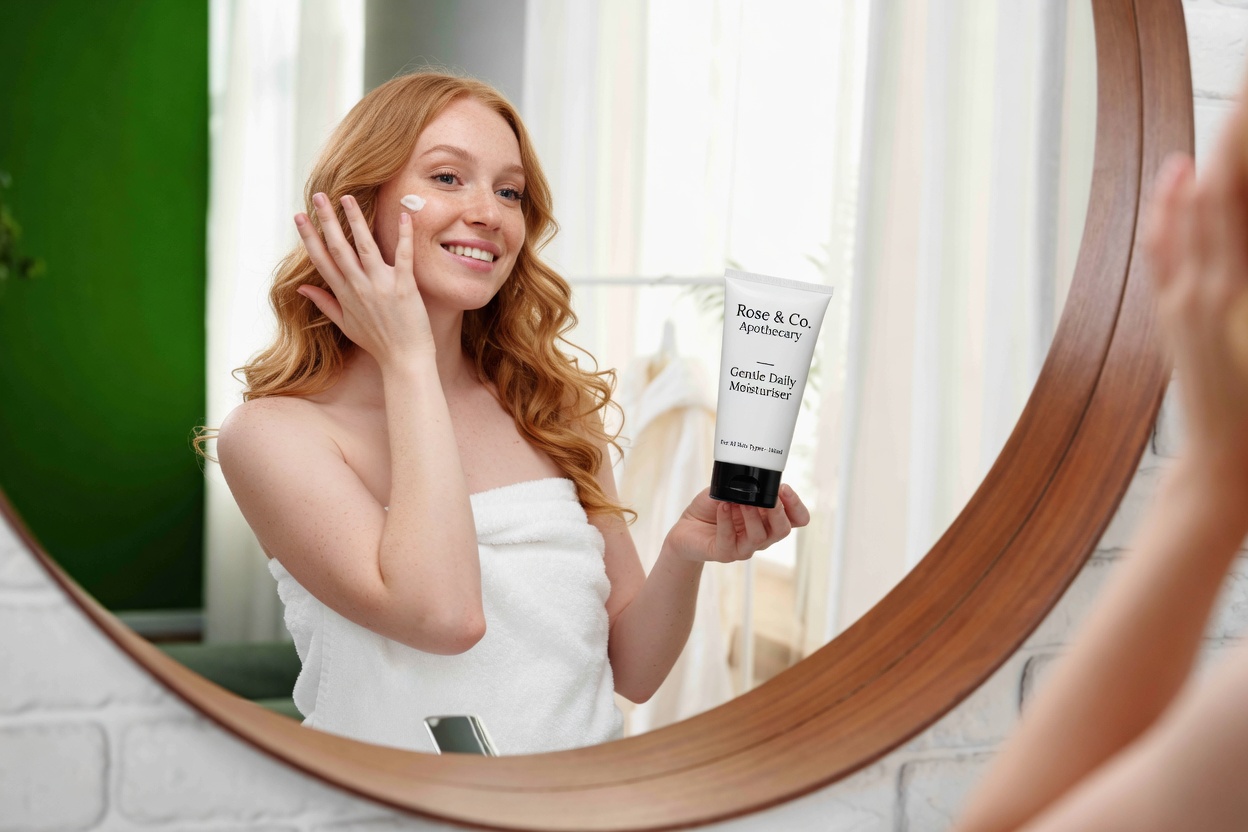
- Cleanse gently twice a day to remove daily buildup
- Choose lightweight moisturizers labeled non-comedogenic
- Wear sunscreen every day to protect the skin surface
- Avoid picking, squeezing, or harsh scrubbing
- Add mild exfoliation a few times per week (not daily for everyone)
Gentle “renewal” ingredients often used in milia-prone routines include:
- AHAs (like glycolic acid)
- BHAs (like salicylic acid)
- Retinoids (best chosen with professional guidance, especially for sensitive skin)
These can support smoother texture by helping the skin shed more evenly—but patience is essential. A gradual change over several weeks is typically safer and more sustainable than any viral “overnight” method.
Many adults also see improvement when they stop overcomplicating their routine. Instead of layering ten products, a simpler approach often reduces irritation.
Simple Routine Example
Morning
- Gentle cleanser
- Lightweight moisturizer
- Broad-spectrum sunscreen
Evening
- Cleanser
- Mild exfoliating/renewal product (a few nights a week)
- Simple moisturizer
For many people, less truly is more.
When It’s Time to See a Dermatology Professional
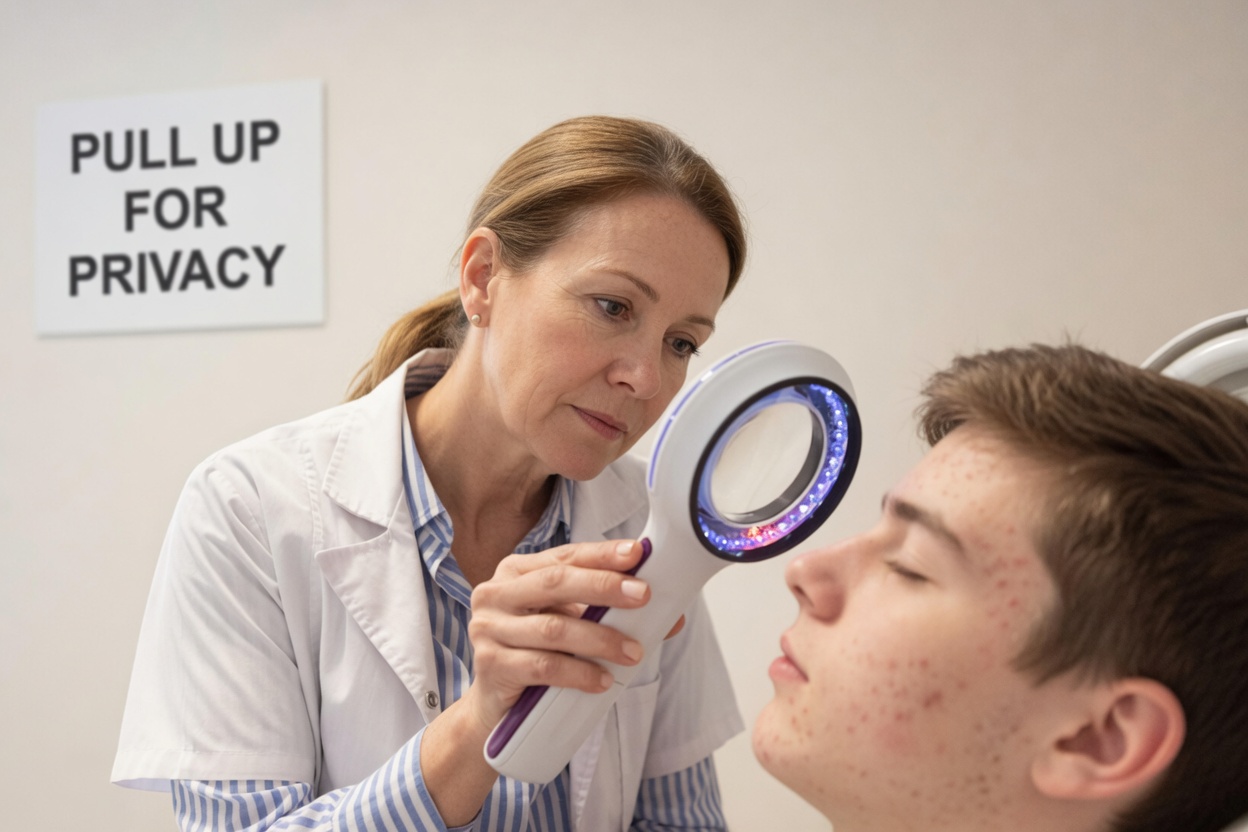
Some milia are persistent. If bumps remain for months despite gentle care, a dermatologist can often remove them safely using sterile, specialized tools.
This is typically quick in a clinical setting—but trying to do the same thing at home is risky. Improper extraction can lead to:
- Skin injury
- Infection
- Scarring or long-lasting marks
A professional can also confirm whether the bump is truly milia or another condition that looks similar. In certain cases, they may recommend prescription-strength options to support renewal.
Many patients feel genuinely relieved once they understand that milia are harmless and manageable.
As one older patient told me after her visit:
“I wish someone explained this years ago. I spent so much time fighting my skin instead of understanding it.”
That’s the real takeaway: long-term skin health is usually built on knowledge and consistency—not quick fixes.
A Simple, Practical Plan for Smoother-Looking Skin
If you want an easy starting point, use this step-by-step approach and give it time.
-
Stop squeezing and harsh scrubbing
Treat milia as a texture issue—not acne. Picking often leads to irritation and lingering marks. -
Switch to lighter, non-comedogenic products—especially around the eyes
If you’re using heavy creams or thick ointments daily in delicate areas, consider replacing them with a lightweight alternative. -
Use sunscreen every single day
This is one of the most overlooked habits. Daily sun protection helps prevent surface damage that can worsen uneven texture over time. -
Add gentle exfoliation slowly (a few times a week, not all at once)
Choose a mild AHA/BHA or a professionally recommended retinoid, and increase frequency gradually to avoid irritation. -
If bumps persist for months, get professional evaluation and removal
It’s faster, safer, and helps prevent unnecessary skin damage from trial-and-error methods at home.
With the right approach, milia don’t have to be a constant frustration. Gentle, steady habits can support smoother texture—and help your skin look more even, calm, and refreshed over time.