Hair Thinning Can Sneak Up Fast—Could Onion Juice Help?
Hair thinning often feels sudden: one week your ponytail looks normal, and the next you’re spotting extra strands in the shower and a wider part line in the mirror. It can be discouraging—especially after years of heat styling, chronic stress, or hormonal changes that leave hair looking less dense and less vibrant. Many people cycle through expensive shampoos, serums, and supplements with only minor improvement.
A surprising contender has entered the chat: onion juice for hair growth. But the real reason it may help isn’t the “viral hack” most clips focus on.
Why Hair Changes After 30 Can Feel So Personal
By age 50, nearly half of women and most men experience visible thinning—yet for many, the first signs appear in their 30s.
Common contributors include:
- Hormonal shifts that affect the hair growth cycle
- Long-term stress that can increase shedding
- Nutrient gaps that weaken hair fiber
- Years of styling damage that cause breakage and finer-looking strands
This isn’t just about appearance. Thinning hair can impact confidence, social comfort, and even how you feel in photos. Many people privately rate their “hair confidence” lower than they’d like—often around 4 or 5 out of 10.
While genetics matter, so does scalp environment and follicle health—and that’s where onion juice becomes relevant.
Why Onion Juice for Hair Is Trending
Onion juice went viral after dramatic before-and-after videos—most notably a clip shared by creator Shivan Kay—showing heat-damaged hair appearing shinier and fuller after regular use.
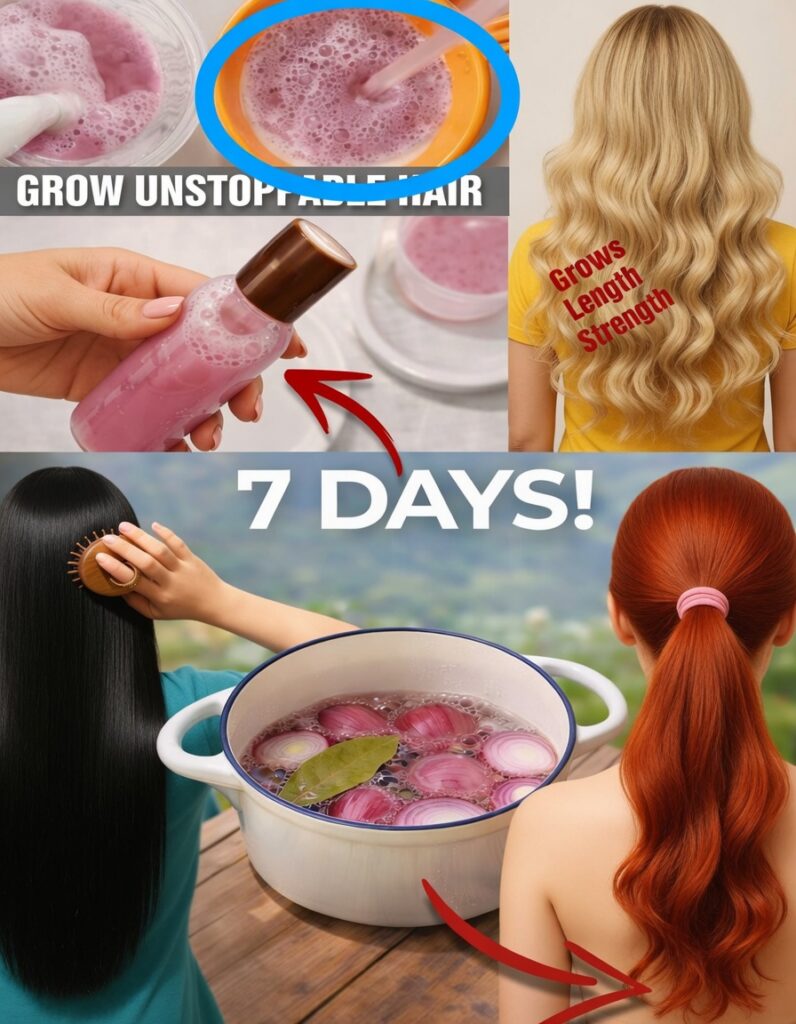
The typical routine looks like this:
- Blend red onions
- Strain to extract juice
- Let it sit briefly
- Apply to the scalp
- Cover for about 20 minutes
- Shampoo thoroughly
Virality isn’t proof, though—so it’s worth looking at what science and scalp biology actually suggest.
The Science: What Onion Juice Contains That May Support Hair
Onions are naturally rich in compounds often linked to scalp and hair support, including:
- Sulfur compounds
- Quercetin (antioxidant)
- Other flavonoids
Why sulfur matters
Sulfur is involved in producing keratin, the key structural protein that makes up hair. In practical terms, sulfur support may contribute to stronger, more resilient strands.
What Research Says (And What It Doesn’t)
A frequently referenced 2002 study in The Journal of Dermatology examined crude onion juice in people with alopecia areata (an autoimmune condition that causes patchy hair loss). After six weeks:
- 86.9% of the onion-juice group showed regrowth
- 13% of the control group did
Important context:
- The study was small (38 participants)
- It focused on patchy autoimmune hair loss, not typical pattern thinning
- Some participants saw regrowth within two weeks, which helped spark ongoing interest
More recent dermatology discussions often point to onion’s potential for:
- Anti-inflammatory support
- Antimicrobial effects
- Improved local circulation, especially when combined with massage
In theory, combining antioxidants + sulfur + better circulation may improve the scalp environment. But it’s not a guarantee of dramatic regrowth—individual response and consistency are key.
15 Potential Benefits of Onion Juice for Hair (What It Can—and Can’t—Do)
Here’s a clear breakdown of what onion juice may help with, based on its properties and how topical scalp care works.
Foundational benefits
- Supports keratin structure due to sulfur content
- May reduce breakage by strengthening strands
- Encourages blood flow when applied with massage
- May help ease minor irritation due to quercetin’s antioxidant activity
Scalp and appearance benefits
- May support regrowth in patchy thinning (limited evidence)
- Helps maintain a cleaner scalp environment
- May reduce dandruff-related discomfort
- Can improve shine by smoothing the hair cuticle
- Over time, may help hair look thicker and healthier
Lifestyle and practical benefits
- Very budget-friendly
- Typically free of synthetic additives
- Easy to combine with add-ons like honey or oils
- May reduce the look of shedding when breakage decreases
- Builds the habit of regular scalp massage
- Fits well into an overall scalp wellness routine
A key takeaway: most benefits relate to scalp health and strand strength, not instant “new hair” overnight. That distinction prevents disappointment—and helps you use it more effectively.
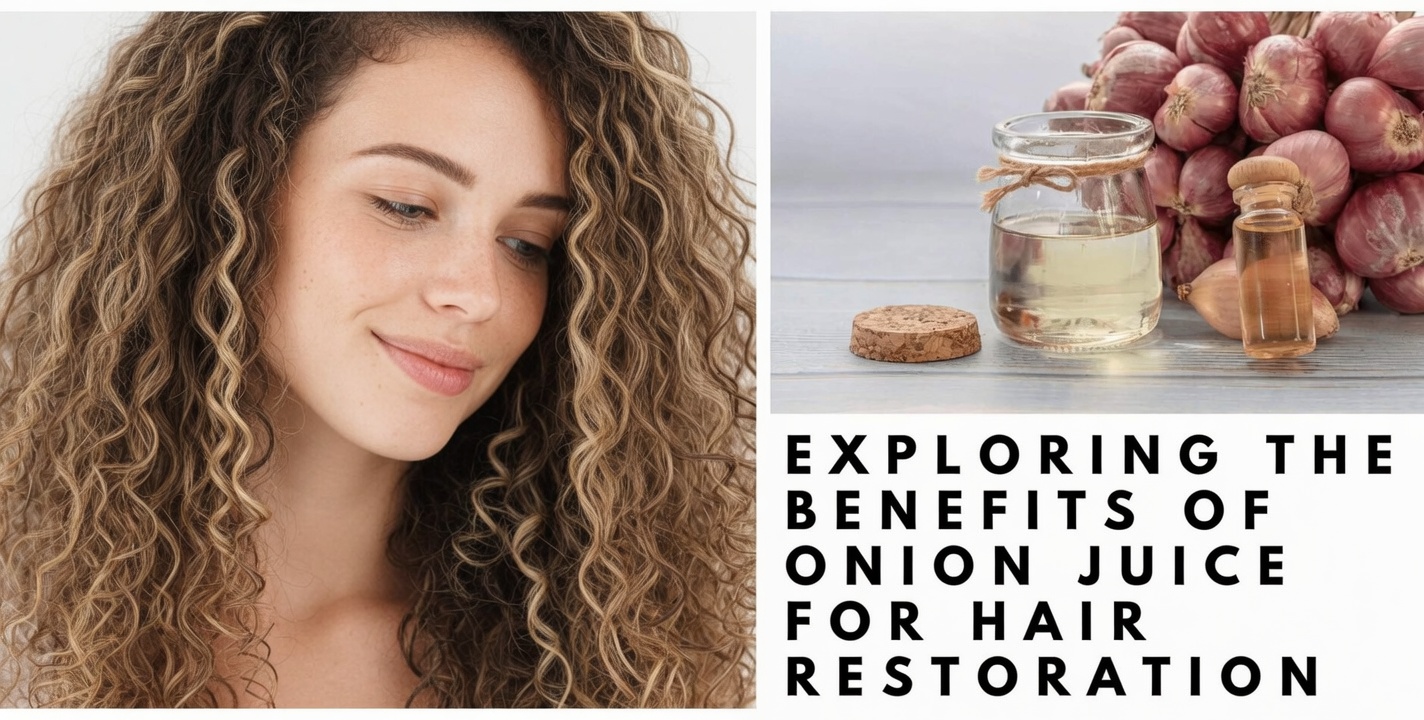
How to Make Onion Juice for Hair (Step-by-Step)
Ingredients
- 4 medium red onions
- 1/2 cup water
- Cheesecloth or a fine sieve
Instructions
- Chop onions into small pieces.
- Blend with water until smooth.
- Strain thoroughly to remove all pulp.
- Let the juice sit for 1–2 hours (this may slightly reduce odor).
- Apply to a dry scalp.
- Massage for 5–10 minutes.
- Cover with a shower cap for 20–60 minutes.
- Shampoo twice to remove residue and smell.
Optional odor tip: Finish with a diluted apple cider vinegar rinse or a diluted lemon rinse.
How often to use it
- Start with 1–2 times per week
- Increase gradually only if your scalp tolerates it well
Practical tip: Freeze leftover juice in ice cube trays so you can thaw one portion at a time.
Onion Juice vs. Common Hair Growth Options
Here’s a quick comparison to help set expectations:
-
Cost
- Onion juice: very low
- Minoxidil: moderate
- Biotin supplements: low
-
Evidence
- Onion juice: limited, most promising for patchy loss
- Minoxidil: strong clinical support
- Biotin: mixed (helpful mainly when deficient)
-
Downsides
- Onion juice: odor, possible irritation
- Minoxidil: dryness, possible temporary shedding
- Biotin: usually mild, but not always effective
They’re not necessarily “either/or.” People often combine approaches depending on sensitivity, budget, and the type of hair loss.
Realistic Results Timeline: What You Might Notice
Weeks 1–2
- Less itchiness (for some)
- Better shine
- Hair feels stronger
Weeks 3–4
- Potential “baby hairs” for some users
- Less breakage and fewer snapped strands
After 5+ weeks
- Fuller-looking hair if consistency is high
- Improved overall scalp condition
Not everyone experiences visible regrowth. Often, the biggest improvements come from:
- Better scalp circulation
- Less inflammation/irritation
- More careful, gentle hair handling habits
Side Effects and Safety Precautions
Onion juice isn’t risk-free. Possible issues include:
- Redness
- Stinging
- Mild burning sensation
- Persistent odor
Before using it on your scalp, do a patch test (inner arm) to check for sensitivity.
Avoid onion juice if:
- Your scalp has open cuts or wounds
- You have severe scalp conditions
- You develop strong irritation
If symptoms persist, stop and consider professional guidance.
The Overlooked “Secret” Most Articles Miss
The biggest game changer often isn’t onion juice alone.
It’s the scalp massage.
Small studies suggest regular scalp massage may help improve hair thickness over time through increased blood flow and mechanical stimulation of follicles. When you pair that with a sulfur-rich topical like onion juice, you may increase your odds of visible improvement.
Think of it as:
Onion juice + consistent massage + gentler hair care = better chances of progress
Not instant miracles—just steady gains.
30-Day Action Plan to Try Onion Juice Safely
- Patch test first
- Use twice weekly to start
- Massage thoroughly each session
- Take photos every 2–3 weeks
- Track shedding, breakage, and how your scalp feels
Even noticing patterns—what helps, what irritates, what improves—puts you in control.
Final Thoughts
Onion juice for hair growth is neither a miracle cure nor pure hype. Its sulfur content, antioxidants, and potential circulation support may improve hair strength and scalp conditions—and it may be especially relevant for patchy thinning based on limited research.
The real difference comes from consistency, realistic expectations, and pairing it with scalp massage and gentle care. Commit for 30 days and you may see shinier hair, less breakage, and possibly early regrowth.
FAQ
-
How long does onion juice take to work for hair?
Some people notice improved shine or reduced shedding within 2–3 weeks. Visible regrowth (if it happens) commonly takes 4–6 weeks or longer with consistent use. -
Can onion juice help with genetic pattern hair loss?
Evidence is limited. It may support scalp health, but it is not a replacement for clinically supported treatments for pattern thinning. -
How can I remove the onion smell completely?
Shampoo twice, then use a diluted apple cider vinegar rinse or a diluted lemon rinse to help neutralize lingering odor.