Aging Skin After 50: Why It Feels Drier and Less Firm
After 50, many people notice their skin becoming drier, thinner, less elastic, and more prone to fine lines. These natural changes can influence how you feel in everyday moments—whether you’re in family photos, meeting friends, or simply looking in the mirror.
While many anti-aging creams promise dramatic results, they often focus on surface-level hydration and may not provide lasting comfort. That’s why more adults are exploring simple, kitchen-friendly oils as a gentler, budget-conscious way to support skin moisture and resilience.
Why a Two-Oil Routine Is Getting Attention
A straightforward mix of coconut oil and castor oil has become popular among older adults because it’s easy to use and built around something skin often needs most with age: better moisture retention and barrier support.
Science-backed findings suggest:
- Coconut oil is particularly effective for improving hydration and strengthening the skin barrier.
- Castor oil contains ricinoleic acid, which is associated with moisturizing and anti-inflammatory support.
Together, they may create a more balanced feel and function than either oil alone.
The Less-Discussed Struggles of Mature Skin
In your 60s and beyond, the skin typically produces less natural oil, and cell turnover slows down. As a result:
- moisture escapes more easily
- the skin barrier weakens
- dryness and irritation become more common
- fine lines can look deeper due to dehydration
For many older adults, these visible changes can affect confidence. And when expensive products fail to deliver, it’s natural to look for simple, reliable alternatives that don’t feel complicated or costly.
Why Natural Oils Can Be a Practical Option
Plant oils have been used for skin care for centuries in places like Morocco and Egypt, and modern skincare research has renewed interest in them for one main reason: they act as emollients, helping to soften skin and reduce water loss.
Unlike heavily fragranced or additive-rich formulas, pure oils can offer a more minimal approach—especially helpful for skin that becomes more reactive with age.
Coconut Oil: A Strong Base for Hydration
Virgin coconut oil contains medium-chain fatty acids (including lauric acid) and is widely studied for dry skin support. Research indicates it can:
- improve skin hydration
- reduce transepidermal water loss (water escaping through the skin)
- reinforce barrier function
Because coconut oil can absorb more easily than many thick creams, some people find it leaves skin feeling noticeably softer with regular use. One retired professional described feeling more comfortable day to day after consistent application and noticed a smoother skin texture.
That said, coconut oil alone can feel too greasy for some—this is where pairing it can help.
Castor Oil: Added Comfort and Soothing Support
Castor oil is rich in ricinoleic acid, which is associated with:
- moisturizing effects
- anti-inflammatory activity
- improved skin comfort, especially when skin feels irritated or tight
Small observations and user experiences often mention improvements tied to better hydration—such as reduced visible dryness and softer-looking fine lines over time.
For example, a golfer in his late 60s reported that regular use helped his forehead feel more comfortable and appear firmer, which boosted his confidence during outdoor activities.
The takeaway: coconut oil hydrates efficiently, while castor oil adds deeper-feeling comfort—and the blend can balance texture.
The Best Mixing Ratio for Daily Use
A practical everyday formula is:
- 60% coconut oil
- 40% castor oil
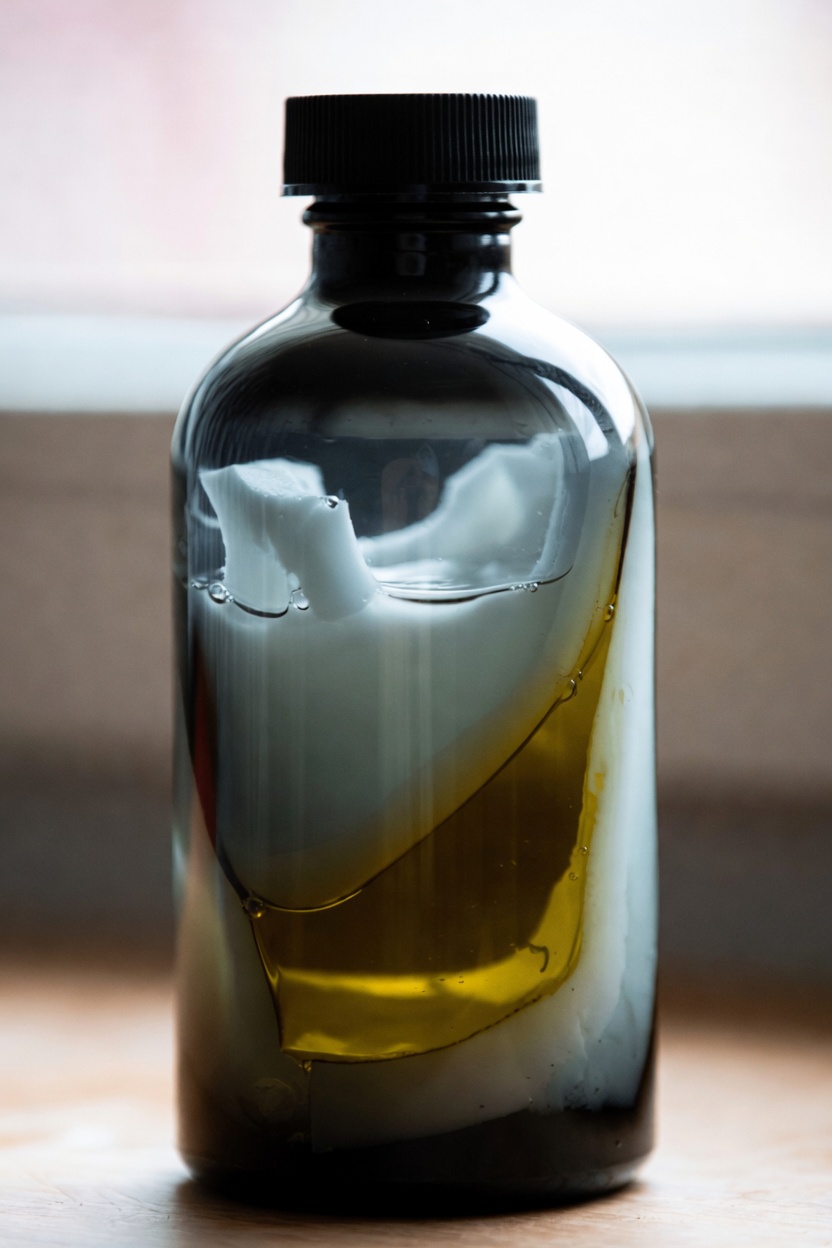
This ratio is popular because castor oil alone can be thick and sticky, while coconut oil helps create a smoother, easier-to-spread consistency. Some users also feel this blend absorbs more comfortably than using either oil on its own.
- Tip: Warm the mixture between your hands before applying so it glides on more evenly.
When to Apply for the Best Results
For many people, the most effective time is morning, right after cleansing—while the skin is still slightly damp. Applying emollients to damp skin can improve moisture retention, helping hydration last longer throughout the day.
A simple method that many find gentle and effective:
- Press-and-release application: press oil into the skin rather than rubbing aggressively
- lightly tap with your ring fingers to encourage circulation and reduce tugging on delicate areas
Step-by-Step Guide: How to Apply the Coconut–Castor Blend
Follow this routine to keep it quick and skin-friendly:
- Cleanse your face gently.
- Pat dry, leaving skin slightly damp.
- Prepare your 60/40 coconut-to-castor blend (or pre-mix a small batch).
- Warm 2–3 drops between your palms.
- Press onto key areas:
- around the eyes
- forehead
- cheeks
- neck
- Tap lightly for 30–60 seconds to support absorption.
Important: Do a patch test on the inner arm first to check sensitivity.
What You May Notice Over Time
While results vary, many people describe a gradual improvement in comfort and texture:
- Week 1: skin often feels softer and less tight
- Weeks 2–4: texture may look smoother; dryness may feel reduced
- Long term: consistent use can help maintain a healthier moisture balance
Quick Comparison
-
Main benefit
- Many commercial creams: surface hydration
- Coconut–castor blend: deeper moisture support
-
Typical monthly cost
- Many commercial creams: $30–$60+
- Coconut–castor blend: often under $5
-
Texture
- Many commercial creams: lightweight, but varies
- Blend: natural feel, adjustable by ratio
-
Potential concerns
- Many commercial creams: irritation from additives/fragrance
- Blend: usually minimal if oils are pure (patch test still recommended)
Smart Tips to Improve Results (and Avoid Common Mistakes)
- Choose high-quality oils:
- cold-pressed, virgin coconut oil
- pure castor oil (solvent-free)
- Use less than you think you need: max 3 drops to reduce the risk of clogged pores.
- Store properly:
- keep in a dark glass bottle
- avoid heat and direct sunlight
- Be gentle: press, don’t rub—rubbing too hard can irritate mature skin.
Optional upgrade:
- Add 1 drop of vitamin E to improve preservation and add antioxidant support.
Why This Simple Routine Appeals to So Many Older Adults
This approach is attractive because it’s:
- affordable and low-maintenance
- centered on consistency rather than “instant lifting” claims
- built around fatty acids that resemble the skin’s natural lipids, supporting barrier function without harsh ingredients
Over time, many people feel more in control of their skincare routine—and often notice subtle improvements in comfort and appearance with steady daily use.
Optional Add-Ons for Specific Skin Goals
If you want to customize without complicating your routine:
- Vitamin E: supports stability and may improve feel (about 10 drops per 2 tablespoons of blend)
- Rosehip oil: often used to help the look of uneven tone (add a few drops in the morning)
- Sea buckthorn: sometimes used for occasional redness (use 1 drop when needed)
Final Thoughts: Keep It Simple and Start Small
A month of consistent care can be more rewarding than constantly searching for the “perfect” product. Try using the coconut–castor blend once daily and observe how your skin responds.
P.S. Patch test first, especially if your skin is sensitive.
FAQ
How soon might I feel a difference?
Many people report a smoother, more hydrated feel within 1–2 weeks of daily use, with continued improvement from consistency.
Is this blend okay for sensitive skin?
Pure oils are often well tolerated, but sensitivity varies. Patch test first and stop if irritation occurs.
Can I apply it under makeup?
Yes. Use a small amount, then allow it to absorb fully so your makeup base doesn’t feel greasy.
Medical Disclaimer
This article is for informational purposes only and is not a substitute for professional medical advice. For personalized guidance, consult your healthcare provider.