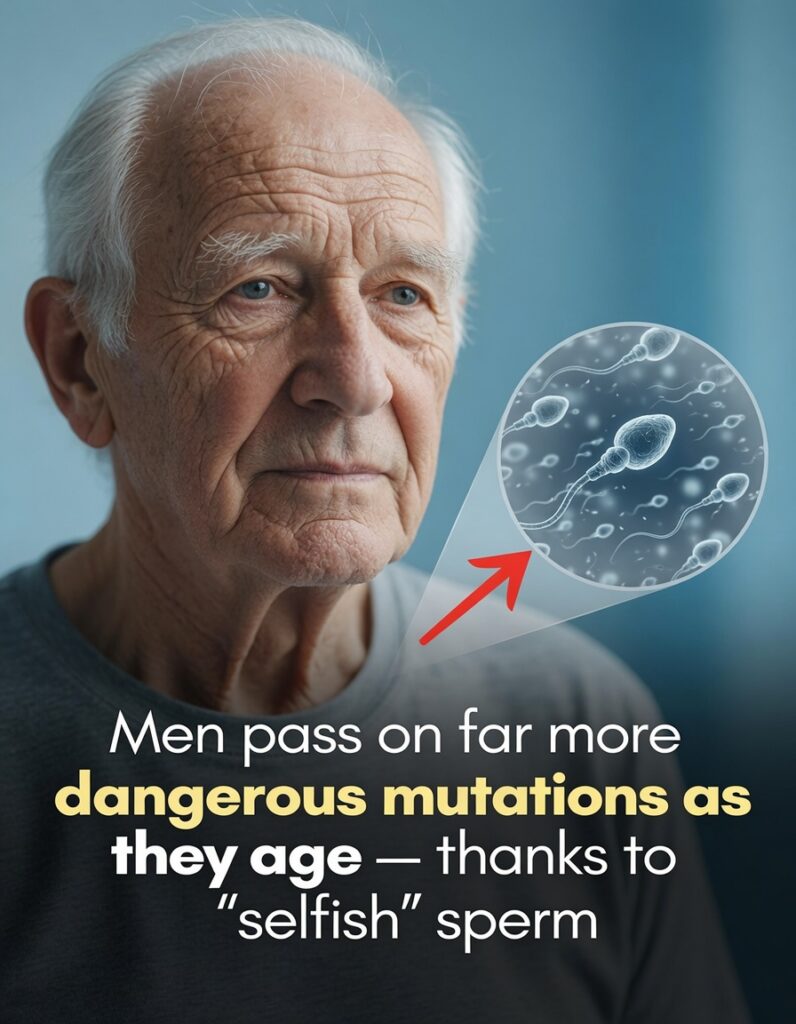
Fatherhood Later in Life: How Paternal Age Can Influence a Child’s Long-Term Health
Choosing to become a father in your late 30s, 40s, or beyond often feels like a deliberate and stable decision. Yet growing scientific evidence suggests paternal age can subtly affect a child’s long-term health in ways many families never think about.
As men age, small changes inside sperm cells can raise the likelihood of passing along certain genetic mutations—some associated with developmental conditions and an increased cancer risk. That can sound worrying, especially if you’re planning pregnancy later in life. The encouraging reality is that understanding what’s happening at the cellular level helps families make clearer, more informed choices. A surprising mechanism—often described as “selfish sperm”—sits at the center of this research and may change how you view paternal age altogether.
What Research Shows About Paternal Age and Sperm DNA
Large genome-sequencing projects are now revealing how sperm DNA changes over time. Reporting discussed by science journalist Michael Le Page highlights a key point: mutations in sperm don’t just stack up randomly with age. Some can expand in ways that allow mutated cells to become more common than you’d expect.
Researchers have observed patterns like these:
- In men in their early 30s, about 1 in 50 sperm cells may carry a potentially harmful mutation.
- By around age 70, the estimate rises to nearly 1 in 20 sperm cells.
- Scientists have flagged over 40 genes that could contribute to this effect.
- Many of the genes involved are tied to neurodevelopment and cancer-related pathways.
Crucially, the shift isn’t explained by aging alone. It’s also driven by a biological process scientists call selfish sperm.
What “Selfish Sperm” Means (and Why It Happens)
“Selfish sperm” may sound like a headline-ready phrase, but it describes a real cellular phenomenon.
Inside the testes, sperm-producing stem cells keep dividing throughout a man’s life. Occasionally, a mutation appears in one of these stem cells. If that mutation makes the stem cell divide faster or survive longer, it can gradually take over more of the sperm-production process.
Put simply:
- The mutation doesn’t help the future child
- It helps the stem cell replicate and persist
- Over time, these faster-growing mutated cells can crowd out healthier stem-cell lines
That self-serving advantage is exactly why scientists use the term “selfish.”

Why Mutations Often Involve Neurodevelopment and Cancer-Related Genes
One striking detail is where these mutations tend to occur. Many appear in genes that strongly influence:
- Early brain development
- Cell growth and regulation
These systems are especially sensitive during fetal development. Researchers also note overlap between the identified genes and those associated with:
- Autism spectrum conditions
- Severe developmental disorders
- Higher susceptibility to certain cancers
This does not mean older fathers will have children with these outcomes. Most children born to older fathers are healthy. However, large population studies indicate the probability gradually increases with paternal age, with risk becoming more noticeable after roughly 40–50.
Importantly, the pattern appears exponential rather than linear—meaning the rise can become steeper over time instead of increasing at a steady rate.
Aging vs. Lifestyle: What Actually Drives These Mutations?
Many people assume environmental factors—smoking, alcohol, toxins—are the main reason sperm mutations accumulate. The research suggests a more nuanced picture.
Unhealthy lifestyle factors were linked to higher mutation loads in blood cells. But sperm cells seemed comparatively shielded from many external exposures. In other words:
- Lifestyle still matters for fertility and overall reproductive health
- But the age-related mutation pattern appears to be driven mainly by internal stem-cell dynamics, not just environmental damage
This perspective also rebalances the reproductive conversation. For years, discussions focused heavily on maternal age. The emerging data suggests paternal age deserves serious attention too.
How Mutation Risk Shifts Across Decades
A simplified way to understand the overall trend:
- Early 30s: about 1 in 50 sperm carries a potentially harmful mutation
- 40s: a gradual rise becomes more apparent
- 50s: acceleration becomes more noticeable
- 70s: about 1 in 20 sperm carries a potentially harmful mutation
These are population averages, not individual predictions. Real-world outcomes vary widely from person to person.
Why This Matters for Family Planning Decisions
The purpose of this research isn’t to alarm people—it’s to inform them.
Understanding paternal-age effects can help couples:
- Try to plan earlier when feasible
- Discuss genetic screening options with clinicians
- Make timing decisions based on realistic probabilities, not fear
- Evaluate risk thoughtfully rather than emotionally
A key reassurance: even though mutation frequency rises with age, the absolute risk for any one pregnancy is still relatively low. What increases is likelihood, not certainty.
Practical Steps for Men Considering Fatherhood Later
If you’re thinking about having children later in life, these steps can support more confident decision-making:
-
Talk About Timing Early
If possible, discuss family plans before age 40. Even a small shift in timing can affect average mutation rates. -
Consider Preconception Counseling
A healthcare provider or genetic counselor can:- Review family medical history
- Explain screening options
- Offer personalized risk context
-
Support Overall Reproductive Health
Age-driven stem-cell mutations may not be fully preventable, but health still influences fertility and sperm quality:- Eat a balanced diet
- Exercise consistently
- Prioritize sleep
- Manage chronic health conditions
- Avoid tobacco and limit heavy alcohol use
-
Ask About Sperm Banking (When Relevant)
Freezing sperm at a younger age may be worth discussing for men expecting a significant delay in parenthood. It isn’t necessary for everyone, but it can be part of long-term planning. -
Stay Up to Date on Genetic Screening
Screening tools—including noninvasive prenatal screening—continue to improve. Discuss what’s appropriate with a qualified provider during pregnancy planning.
Emotional Perspective: Avoiding Unnecessary Guilt
This topic can trigger anxiety, so it’s worth stating clearly: biology is complicated.
Many older fathers have healthy children. Genetics is only one piece of the puzzle—maternal health, prenatal care, environment, and natural variation all play major roles. Learning about selfish sperm is not about blame. It’s about making choices with better information and shared responsibility.
What Scientists Are Still Working to Understand
Ongoing research continues to examine:
- How quickly selfish stem-cell lines expand over time
- Whether some men are predisposed to faster mutation accumulation
- Whether future screening methods could detect relevant mutations earlier
As evidence grows, recommendations may evolve. For now, awareness is one of the most useful tools prospective parents have.
The Bigger Picture: Age Influences Risk, Not Destiny
If this information feels unsettling, remember: age can affect probability, but it does not dictate outcomes. Most mutations do not cause disease, and the body has powerful repair and regulatory systems. Pregnancy outcomes depend on many variables—not a single number.
Still, timing can matter. Understanding the why helps couples plan with greater clarity.
Key Takeaways
- Certain sperm mutations become more common with paternal age
- Some mutated stem cells gain a growth advantage, driving the selfish sperm phenomenon
- Many mutations involve genes linked to neurodevelopment and cancer-related pathways
- Risk tends to rise more steeply over time rather than steadily
- Most children of older fathers are healthy, but informed awareness supports better planning
The surprising biological detail at the center of this research is that mutations can spread not merely because men age, but because some sperm-producing stem cells gain a competitive advantage—allowing certain mutations to become more common over time.