Fire Cider: A Warming Homemade Tonic for Cold-Season Routines
When cold season is at its peak, that familiar throat tickle can show up fast—followed by low energy, lingering sniffles, and days that feel heavier than they should. As motivation dips and simple tasks start to feel like a chore, many people lean on comforting routines. One option that has stood the test of time is a bold, homemade herbal tonic that adds warmth, flavor, and consistency to everyday wellness habits.
Fire Cider is a traditional “master tonic” made by infusing raw apple cider vinegar (with the mother) with ginger, turmeric, lemon, warming spices, cayenne, and honey. It’s known for its spicy kick, tangy brightness, and a gentle sweetness that makes it surprisingly drinkable when diluted. Below, you’ll learn what it is, why people love it, how to make it at home, and how to use it thoughtfully—plus a simple customization tip near the end that can elevate the flavor.

What Is Fire Cider—and Why Is It So Popular?
At its core, Fire Cider is apple cider vinegar infused with roots, citrus, and spices. Over time, the vinegar pulls out flavors and plant compounds, creating a golden, pungent liquid that delivers an immediate warming sensation.
Many people use Fire Cider as part of a daily ritual, especially in cooler months. A small shot (usually diluted in water or tea) can feel energizing and grounding—an easy habit that brings a sense of momentum to the day.
While Fire Cider itself isn’t a medical treatment, research on several individual ingredients is often cited:
- Ginger and turmeric are widely studied for their potential roles in supporting the body’s natural inflammatory response.
- Apple cider vinegar contains acetic acid, which has been associated in some research with digestive comfort and metabolic markers (including blood glucose responses in certain contexts).
- Cayenne provides capsaicin, responsible for its signature heat.
- Raw honey is traditionally used for its soothing qualities and to round out sharp flavors.
After weeks of infusion, the result is a complex taste that fans describe as equal parts fiery, tangy, and comforting.
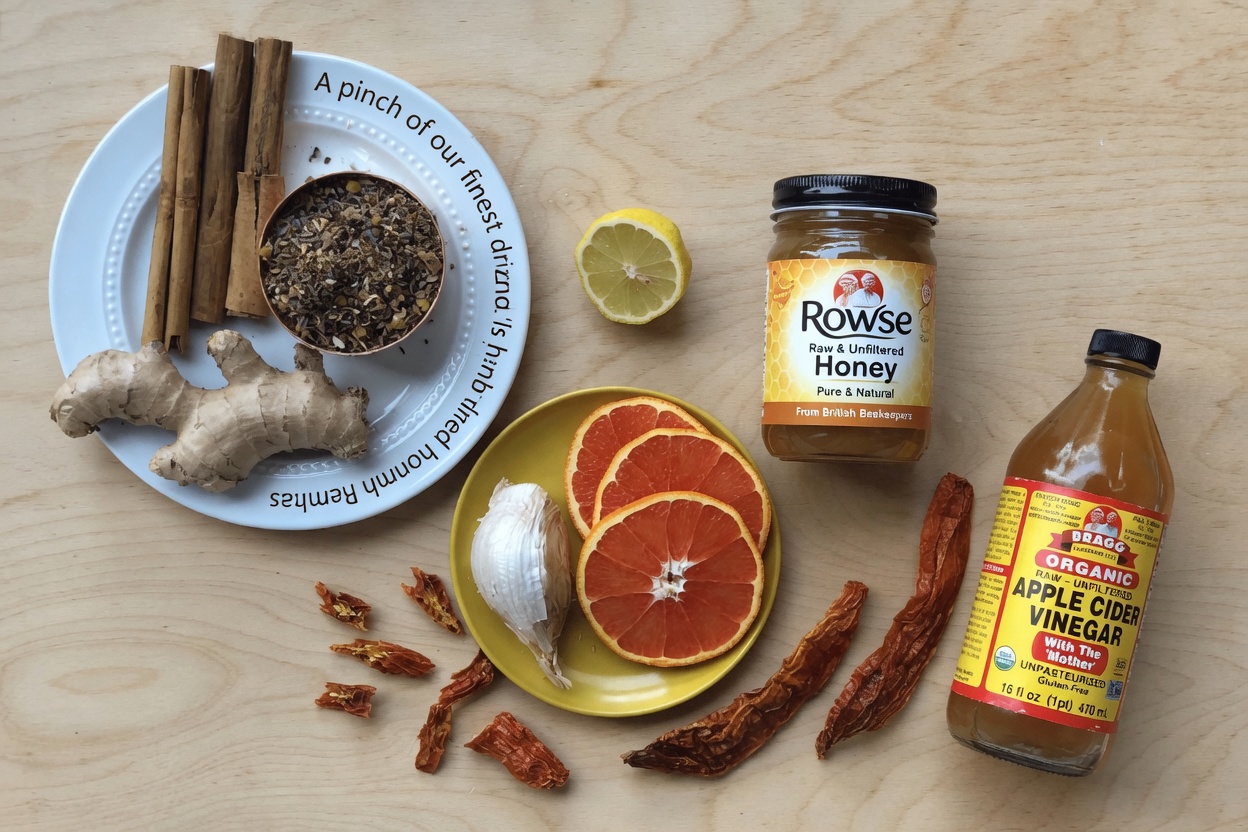
Key Fire Cider Ingredients (and the Traditional Reason They’re Used)
Each ingredient contributes both flavor and traditional appeal:
- Raw Apple Cider Vinegar (with the mother): The acidic base of the tonic, valued by many for fermentation-related components and its strong, preserving nature.
- Fresh Ginger: Adds sharp heat and is traditionally used to support digestion and circulation.
- Turmeric: Brings deep golden color and curcumin, a compound studied for antioxidant potential.
- Lemon: Bright, fresh acidity plus a vitamin C boost.
- Cinnamon and Cloves: Warm, aromatic spices that add depth and a cozy finish.
- Cayenne Pepper: Provides the “fire”—that quick, sinus-opening heat.
- Raw Honey: Balances intensity with sweetness and a soothing texture.
Many recipes also include garlic and onion for extra pungency. These are optional and can be adjusted based on your taste.
Why People Add Fire Cider Shots to Their Routine
A diluted Fire Cider shot can feel like a fast reset: a quick burst of spice followed by a lingering warmth. Some people enjoy it during seasonal transitions or on cold mornings when they want something that feels invigorating.
Others prefer Fire Cider in food—drizzled over vegetables, mixed into sauces, or used as a punchy dressing. For many, the biggest benefit is the routine itself: a simple daily act of self-care that encourages more consistent wellness habits.
Keep expectations realistic: individual experiences vary, and Fire Cider is best viewed as a supportive tradition rather than a cure for any specific condition.
Commonly Cited Benefits (Based on Tradition and Ingredient Research)
People most often enjoy Fire Cider for these reasons:
- Warming sensation: Ginger and cayenne deliver noticeable heat that many associate with circulation support.
- Digestive comfort: Diluting a small amount before meals is a common traditional use, especially due to vinegar and ginger.
- Antioxidant support: Turmeric (curcumin) and lemon (vitamin C) contribute protective compounds.
- Clearer-feeling sinuses: The spicy kick can feel instantly opening when you’re feeling stuffy.
- More balanced flavor: Honey smooths out sharp edges and makes the blend easier to sip.
- A consistent wellness ritual: Many use 1–2 tablespoons in warm water as a daily habit.
- Flexible culinary use: Adds brightness to marinades, soups, roasted vegetables, and dressings.
- Seasonal “preparedness” mindset: Often used proactively in fall and winter.
- A gateway to whole-food habits: Can inspire interest in other simple, homemade wellness staples.
Quick Ingredient Reference
- Apple Cider Vinegar (with the mother): Acetic acid; traditional infusion base and digestive support
- Ginger: Gingerol; warming and soothing
- Turmeric: Curcumin; antioxidant potential
- Cayenne: Capsaicin; heat and circulation-focused tradition
- Lemon: Vitamin C; bright, fresh lift
- Cinnamon & Cloves: Aromatics and antioxidants; warming flavor balance
- Honey: Natural sweetness; traditionally soothing
How to Make Fire Cider at Home (Simple Step-by-Step)
Making your own Fire Cider lets you control the intensity, sweetness, and overall flavor.
-
Prep your ingredients
- Ginger: about 1/2 cup, grated or chopped
- Turmeric: 1/4–1/2 cup, grated or chopped
- Lemon: sliced
- Optional: garlic and onion
- Spices: cayenne, cinnamon sticks, whole cloves
-
Add everything to a clean quart-sized jar
-
Cover with raw apple cider vinegar
- Pour until all ingredients are submerged
- Leave 1–2 inches of headspace
-
Seal and infuse
- Store in a cool, dark place for 4–6 weeks
- Shake the jar daily
-
Strain
- Use cheesecloth or a fine mesh strainer
- Press solids to extract as much liquid as possible
-
Add honey
- Stir in to taste (start around 1/4 cup, then adjust)
-
Bottle and refrigerate
- It can keep for months when stored properly
How to Take It
- Start small to assess tolerance.
- Always dilute to protect your teeth and stomach:
- 1–2 tablespoons in 8 oz (240 ml) warm water or herbal tea

Safety Tips and Precautions
- Choose organic ingredients when possible.
- If you’re sensitive to spice, make a milder batch and build up gradually.
- Avoid or speak with a clinician first if you have acid reflux, ulcers, or ingredient sensitivities.
- Do not give honey-based Fire Cider to infants under 1 year (botulism risk).
- Consider allergy risks and consult your healthcare provider before use if you are pregnant, breastfeeding, taking medications, or managing a health condition.
A Simple Upgrade: The “Surprise” Customization Tip
For a smoother, more aromatic version, add either of the following during the infusion:
- Fresh rosemary sprigs for an herbal twist
- Orange zest for softer, sweeter citrus notes
Many people find this variation mellows the heat and makes the tonic more enjoyable to drink.
Medical Disclaimer
This article is for informational purposes only and is not a substitute for professional medical advice. Always consult your healthcare provider before adding new supplements or remedies to your routine, especially if you have existing health conditions or take medications.
FAQ
How should I take Fire Cider?
Dilute 1–2 tablespoons in warm water or herbal tea and take daily, or use smaller amounts in cooking.
How long does homemade Fire Cider last?
When refrigerated, it typically stays good for 6 months or longer.
Can I make Fire Cider without honey?
Yes. You can skip the honey for a vegan version, or sweeten individual servings as needed.