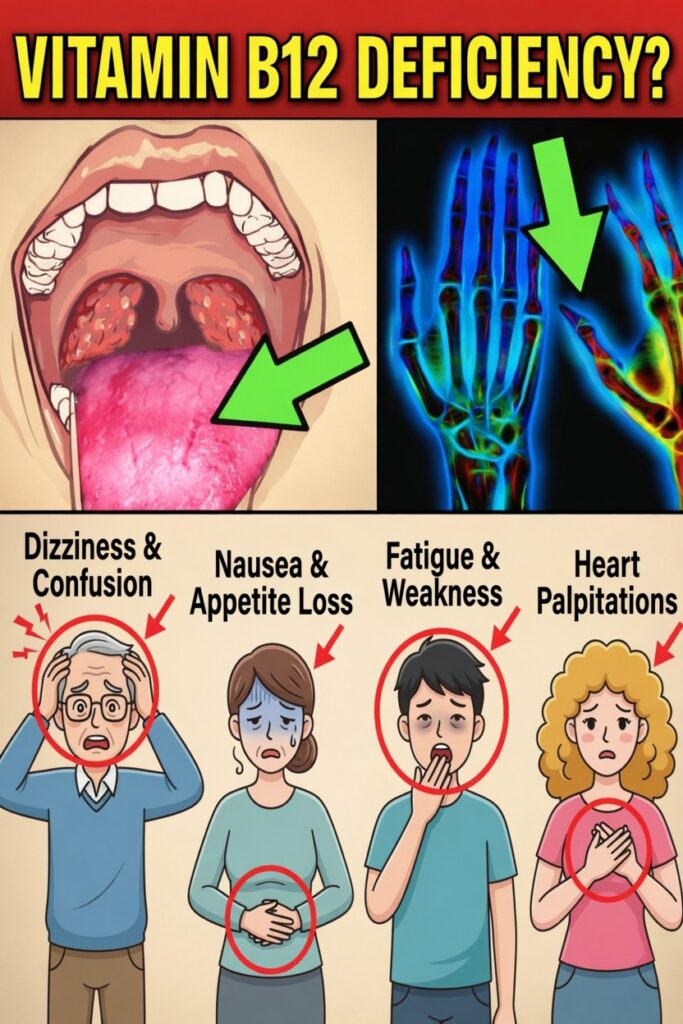
Many adults over 50 start the day feeling unusually drained—even after a full night of sleep—and may notice unexplained tingling in the hands or feet. Because these changes often develop slowly, it’s easy to blame them on stress or “just getting older.” However, guidance and findings referenced by trusted medical organizations such as the Cleveland Clinic, Mayo Clinic, and Harvard Health highlight something important: vitamin B12 is essential for energy, nerve health, and brain function, and deficiency becomes more common with age due to reduced absorption.
The good news is that spotting early warning signs can help you take practical steps—often before symptoms significantly impact daily life. Below are the top five signs of low vitamin B12 and what you can do next.
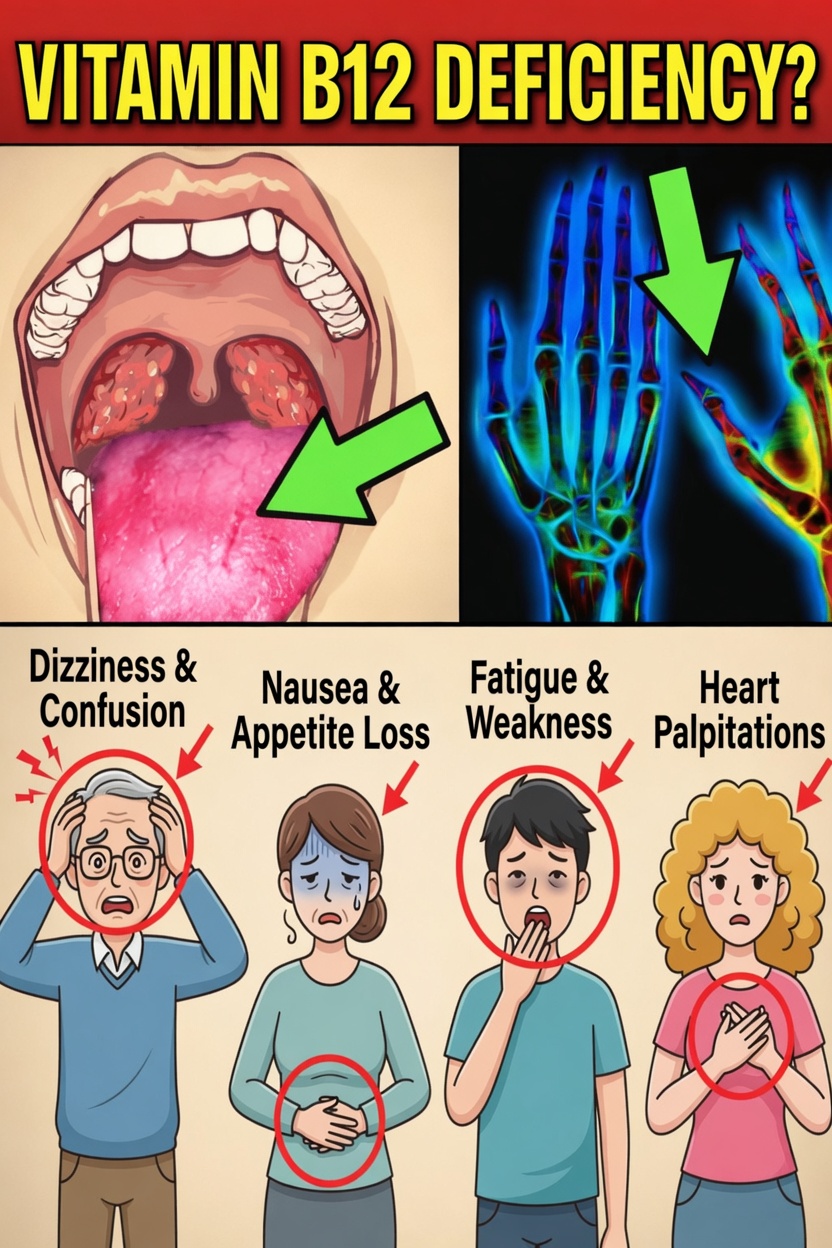
Why Vitamin B12 Becomes More Important After 50
Vitamin B12 supports several core processes in the body, including:
- Red blood cell production, which helps deliver oxygen efficiently
- Nerve protection, by maintaining the myelin sheath (a fatty layer that insulates nerves)
- Brain health, supporting clear thinking and emotional stability
Research frequently cited by major clinical resources suggests that up to about 20% of older adults may have low or borderline B12 levels. One major reason is that the stomach may produce less acid over time, and stomach acid is needed to separate B12 from food during digestion. Certain medications and dietary patterns can further reduce absorption.
What makes this issue challenging is how quietly it can progress: symptoms may begin mildly, then gradually intensify—often mistaken for typical aging.
The Top 5 Warning Signs of Low Vitamin B12
5. Ongoing Fatigue and Weakness That Rest Doesn’t Fix
If you feel wiped out after basic activities—like household chores or short walks—despite sleeping normally, low B12 may be a factor. Clinical resources such as the Cleveland Clinic and Mayo Clinic commonly list fatigue among the earliest and most frequent symptoms.
With insufficient B12, the body may struggle to produce enough healthy red blood cells, which can reduce oxygen delivery and trigger a heavy, “running on empty” feeling.
Common signs that may appear alongside fatigue include:
- Shortness of breath with light exertion
- Lightheadedness
- Pale-looking skin
- A faster heartbeat
Persistent low energy can quietly limit independence and overall quality of life—so it’s worth investigating if it doesn’t improve.

4. Numbness or Tingling in Hands and Feet (“Pins and Needles”)
Tingling, numbness, or a buzzing sensation in the extremities—often called paresthesia—is a well-known neurological clue discussed by sources such as Harvard Health and the NHS.
B12 helps protect nerves through the myelin sheath. When levels fall, nerve signaling may become disrupted, leading to sensations such as:
- Pins and needles in feet or hands
- Numb patches
- Subtle weakness or clumsiness
If ignored long-term, these symptoms can progress and may contribute to balance trouble. Many people notice improvement when B12 levels are properly addressed, especially when caught early.
3. Memory Slips, Mental Fog, or Mood Changes
If you find yourself forgetting names more often, struggling to focus, or feeling unusually irritable, it may not be “just stress.” Harvard Health and Mayo Clinic note that low B12 can affect cognitive and emotional health, particularly when deficiency becomes more significant.
Possible changes can include:
- Brain fog or slower thinking
- Confusion
- Low mood or irritability
- Memory lapses
A simple way to think about common symptom groupings:
- Physical: fatigue, weakness, pale skin (often related to oxygen delivery)
- Neurological: tingling, numbness, balance problems (nerve involvement)
- Cognitive/emotional: memory changes, irritability, confusion (brain and nervous system effects)
Because these symptoms overlap with many other conditions, testing is key to getting clarity.
2. Balance Problems or Difficulty Walking Steadily
Feeling unsteady—like your footing is unreliable—can be more than a minor annoyance. Clinical descriptions referenced by organizations such as the Cleveland Clinic associate prolonged low B12 with nerve pathway issues that may affect coordination and gait.
Watch for signs like:
- Wobbliness or “drifting” while walking
- Staggering steps
- Frequent near-falls or tripping more easily
This matters because falls can lead to serious injuries, especially in older adults. Noticing subtle balance changes early can prompt timely evaluation and reduce risk.
1. Vision Changes or More Serious Nerve-Related Symptoms
In more advanced or prolonged cases, some individuals experience blurred vision or other significant neurological effects. References from organizations such as the NHS and Harvard Health note that ongoing deficiency may, in rare situations, contribute to issues involving the optic nerve or broader nerve function.
This warning sign is especially important because delayed treatment can increase the chance of longer-lasting problems. Early action helps protect independence and long-term quality of life.

What to Do If You Recognize These Signs
Because these symptoms can resemble many other health concerns, it’s best not to self-diagnose. Use this practical, step-by-step approach:
-
Speak with a healthcare professional
Share your symptoms and ask about testing for vitamin B12. Providers may also check related markers such as methylmalonic acid (MMA) for a clearer picture. -
Evaluate your diet
Common B12 sources include:- Meat, poultry, fish
- Eggs and dairy
- Fortified cereals and fortified plant milks (useful for vegetarian/vegan diets)
-
Consider absorption barriers
Reduced stomach acid with age, certain medications (including some for acid reflux or diabetes), and digestive conditions can interfere with absorption. -
Follow a professional plan
Depending on the cause, your clinician may recommend dietary changes, oral supplements, or other approaches if absorption is limited. Stick to advised dosing. -
Track symptoms over time
Note energy, sensation changes, mood, balance, and any vision concerns—then report progress during follow-ups.
Key Takeaways
Low vitamin B12 can show up as persistent fatigue, tingling or numbness, memory or mood shifts, unsteady walking, and—less commonly—vision changes. Since these signs are often subtle at first, recognizing them early can help you seek testing and support before symptoms progress.
FAQ
What foods help maintain healthy vitamin B12 levels?
B12 is naturally found in meat, fish, poultry, eggs, and dairy. If you eat plant-based, consider fortified cereals, fortified plant milks, and nutritional yeast.
Who is most likely to have low vitamin B12?
Higher-risk groups commonly include:
- Adults over 50 (due to reduced absorption)
- Vegetarians and vegans
- People taking certain long-term medications (such as metformin or proton pump inhibitors)
- Individuals with digestive or absorption-related conditions
How do doctors test for low vitamin B12?
Typically, a clinician orders a blood test for B12 levels. In some cases, additional lab markers (such as MMA) are added to improve accuracy.
Medical disclaimer: This article is for informational purposes only and does not replace professional medical advice. Always consult a qualified healthcare provider for guidance on symptoms, testing, and treatment options related to vitamin B12.