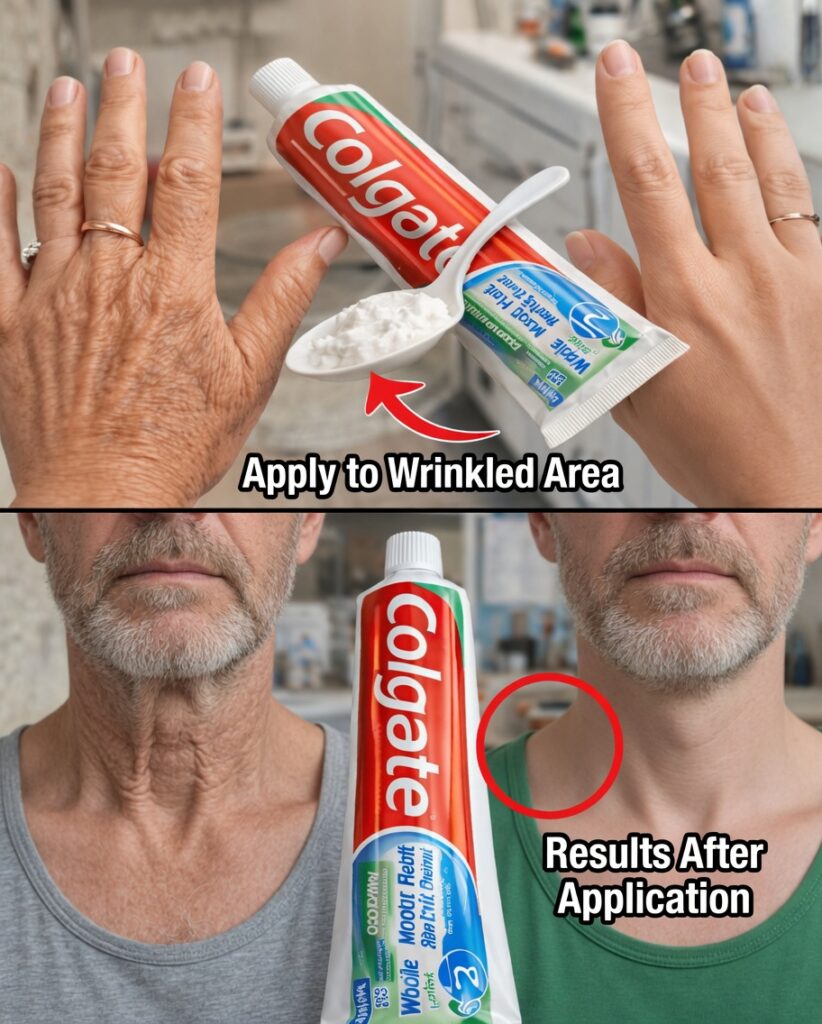
Why Hands Show Aging Faster Than the Face
Hands go through constant stress every day—frequent washing, gripping objects, exposure to detergents, and UV rays—often without the same consistent care people give their facial skin. Over time, natural collagen and elastin levels decline, which can make the skin look thinner and more prone to fine lines.
Another common concern is uneven pigmentation. “Age spots” (also called sun spots) typically develop after years of cumulative sun exposure, leading to darker patches and a less even tone.
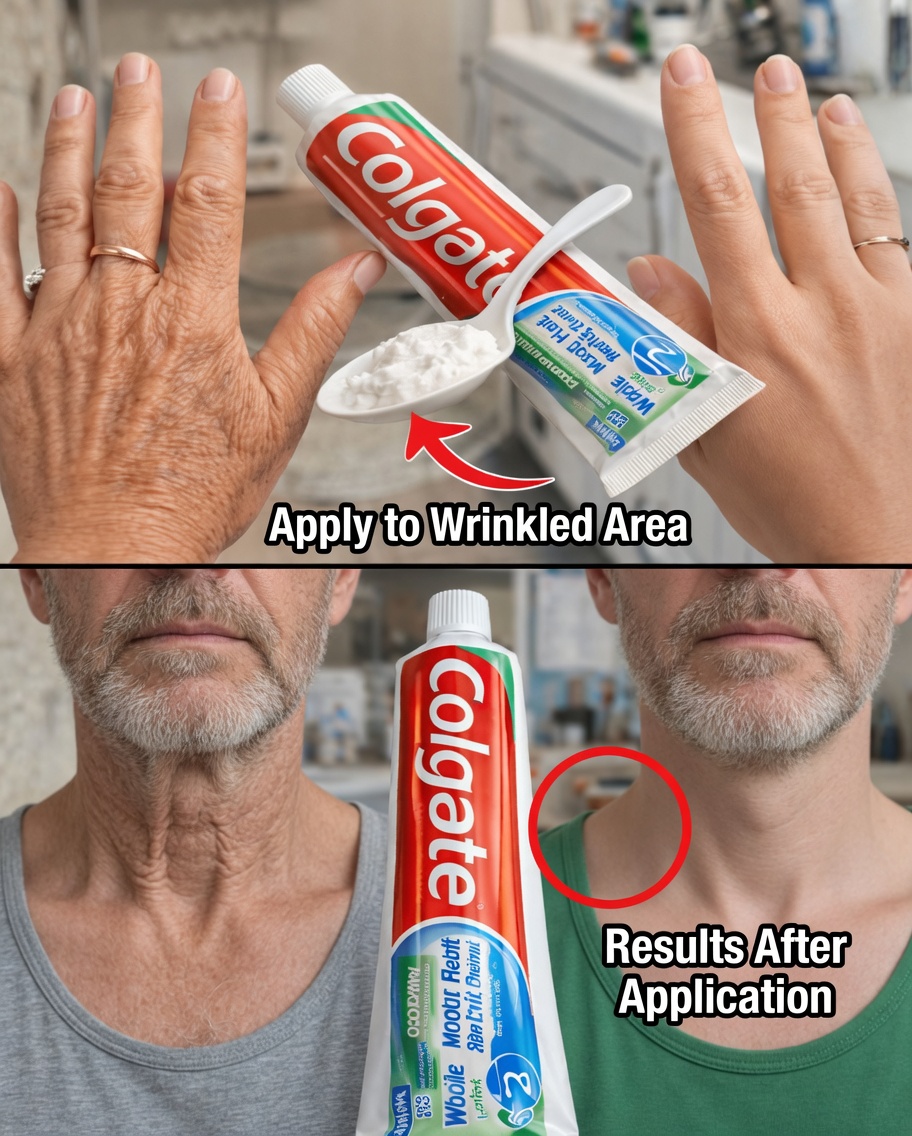
The Baking Soda + Toothpaste Trend: Why It’s So Popular
This DIY mix is frequently shared in social media and home-remedy circles for a simple reason: it’s cheap, convenient, and uses products most people already have at home.
- Baking soda works as a mild physical exfoliant thanks to its fine, gritty texture. Because it’s alkaline, it may also temporarily alter the skin’s surface environment.
- Toothpaste often contains additional polishing agents (such as silica). Many formulas also include fluoride, and some include “whitening” components.
That said, it’s important to keep expectations realistic: there are no strong clinical studies proving that this exact baking soda-and-toothpaste combination significantly reduces wrinkles or sun spots long-term. When people report visible improvement, it’s usually consistent with what mild exfoliation can do—temporarily smoothing the surface and reducing dullness.
Dermatology experts commonly point out that gentle exfoliation can support healthier-looking skin, but overly harsh scrubbing can damage the skin barrier, causing irritation and sensitivity.
What Gentle Exfoliation May Do (and What It Can’t)
Research suggests that mild exfoliation can help remove built-up dead skin cells, which may make skin look and feel better in the short term. With careful use, household exfoliation may offer:
- Smoother texture: Light buffing can reduce roughness and flaking.
- A brighter look: Removing surface dead cells can improve visible radiance.
- Better product absorption: A smoother surface may help moisturizers spread and absorb more evenly.
- Low-effort maintenance: Accessible ingredients, minimal cost.
Some studies note that baking soda has mild antibacterial properties and can be used in certain contexts (for example, diluted in baths). However, direct topical use requires caution, because it may be drying and can disrupt the skin’s natural pH balance.
How to Use a Baking Soda and Toothpaste Paste Safely at Home
If you want to try this method, start carefully. Patch test first (inner arm is a good spot) and wait 24 hours to check for redness, itching, or stinging. If you proceed, keep it minimal: no more than 1–2 times per week, and moisturize right after.
Step-by-step recipe
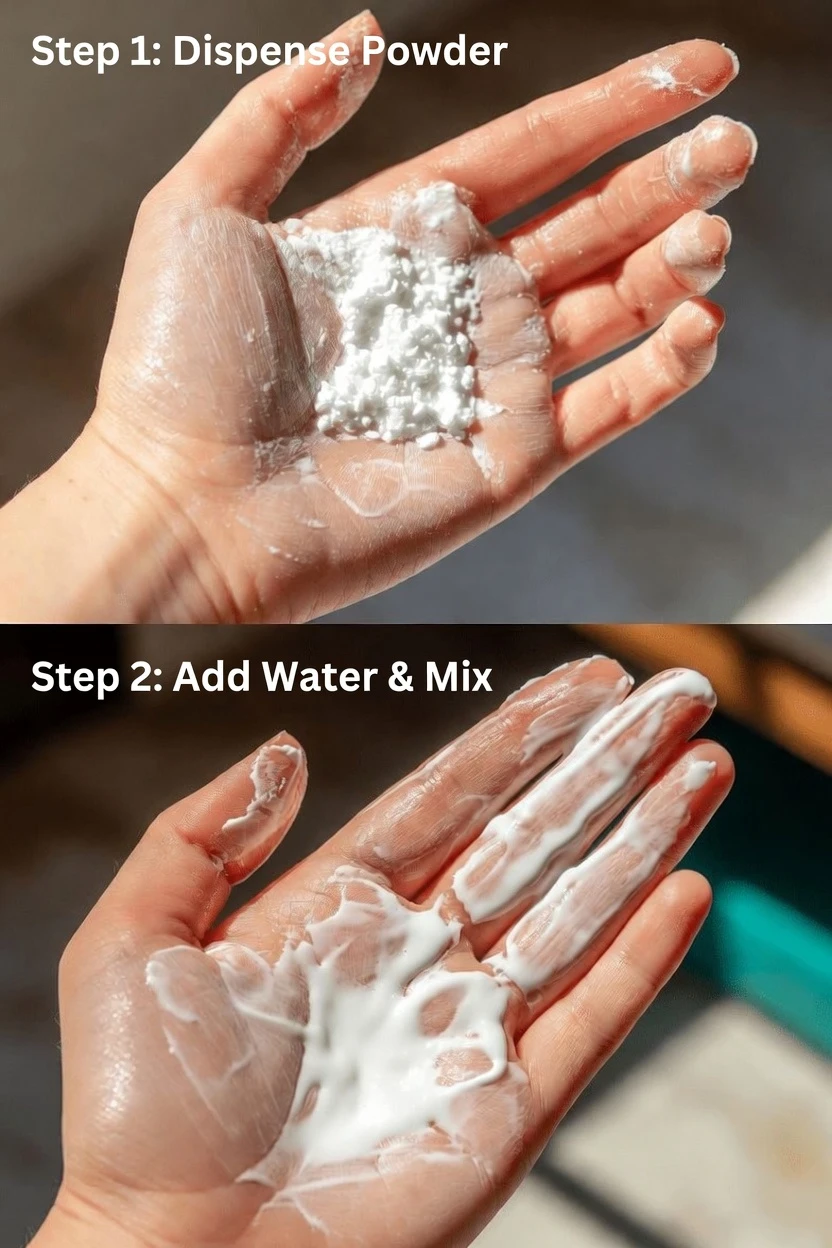
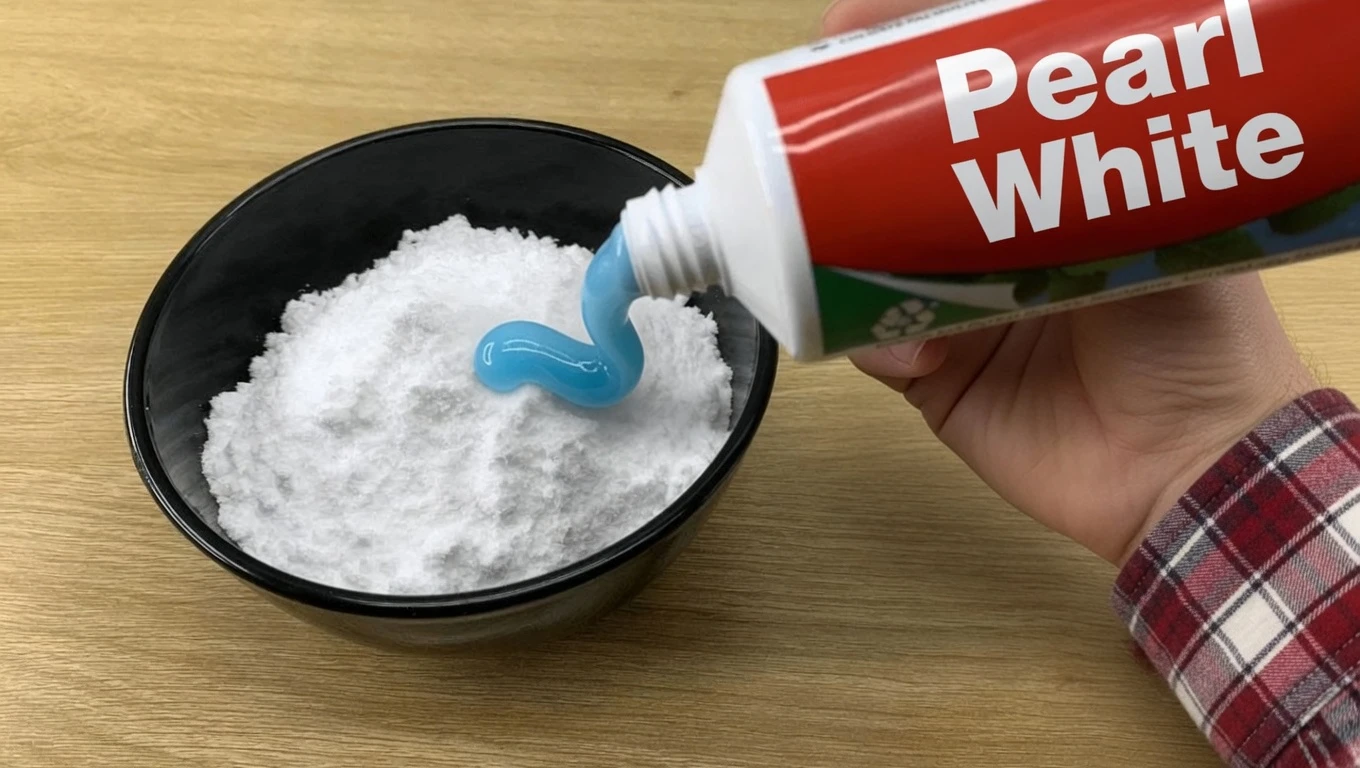
- Add a pea-sized amount of toothpaste to a small bowl.
- Choose a simple formula; some people prefer a basic “whitening” toothpaste that already includes baking soda.
- Add ½ to 1 teaspoon of plain baking soda.
- Adjust until you get a thick, spreadable paste.
- Mix well. If it’s too dry, add one drop of water.
- Wet hands/arms with lukewarm water.
- Massage gently in circular motions for 30–60 seconds.
- Focus on rough areas, but don’t press hard.
- Rinse thoroughly with cool water.
- Pat dry and apply a rich hand cream or moisturizer immediately.
Tips to reduce irritation and improve results
- Use very light pressure—think “polishing,” not “scrubbing.”
- Apply sunscreen during the day, because freshly exfoliated skin can become more sun-sensitive.
- Stop right away if you notice redness, burning, stinging, or increased dryness.
Precautions: When You Should Avoid This Mix
Skin naturally prefers a slightly acidic pH (about 4–6). Baking soda is more alkaline (around pH 9), and frequent use may interfere with the skin barrier. That can lead to:
- dryness or tightness
- irritation and redness
- increased sensitivity
- worsening of existing skin conditions
Toothpaste can also include ingredients that feel cooling or “tingly” in the mouth (such as menthol or flavoring agents) but may irritate non-oral skin.
Health-focused sources (including outlets like Healthline) often warn that aggressive or frequent baking soda use may do more harm than good. Skip this approach or consult a dermatologist first if you have:
- sensitive or reactive skin
- eczema or psoriasis
- cuts, rashes, or open areas
- a history of contact dermatitis
This DIY exfoliation is not a replacement for evidence-based skincare options such as retinoids, vitamin C, daily sunscreen, or professional dermatology guidance.
Comparing Exfoliation Options for Hands and Arms
-
Baking soda + toothpaste (physical exfoliation)
- Frequency: 1–2x/week
- Pros: inexpensive, easy to access, quick surface smoothing
- Cons: irritation risk, pH disruption, can be too abrasive
-
Sugar + oil scrub
- Frequency: 2–3x/week
- Pros: more moisturizing base, typically gentler feel
- Cons: messy; doesn’t specifically target discoloration
-
Commercial hand/body scrub
- Frequency: follow label directions
- Pros: formulated for skin use and stability
- Cons: higher cost
-
Chemical exfoliants (AHAs/BHAs)
- Frequency: varies by product strength
- Pros: more even exfoliation, supports skin renewal
- Cons: may cause sensitivity; sun protection becomes essential
Final Takeaway: Is This Worth Adding to Your Routine?
A baking soda and toothpaste paste may function as a simple, occasional exfoliation step, potentially leaving hands and arms feeling smoother and looking temporarily brighter—especially when used gently and infrequently.
The bigger “secret” to improving the look of hands is usually consistent basics:
- daily moisturizing
- regular sunscreen use
- patience and consistency, since visible changes take time
FAQ
-
Is baking soda and toothpaste safe to use daily on hands?
No. Limit use to 1–2 times per week. Daily application increases the risk of dryness, irritation, and barrier disruption. -
Can it remove deep wrinkles or stubborn dark spots?
It may improve surface smoothness and reduce dullness through exfoliation, but deeper wrinkles and persistent pigmentation typically require targeted skincare ingredients or professional treatments. -
What if my skin becomes irritated after using it?
Rinse immediately, apply a thick moisturizer, and stop using the mixture. If symptoms continue, consult a dermatologist.
Disclaimer: This content is for informational purposes only and does not provide medical advice. Results vary by individual. Speak with a qualified healthcare professional or dermatologist before starting a new skincare routine, especially if you have skin conditions or sensitivities.