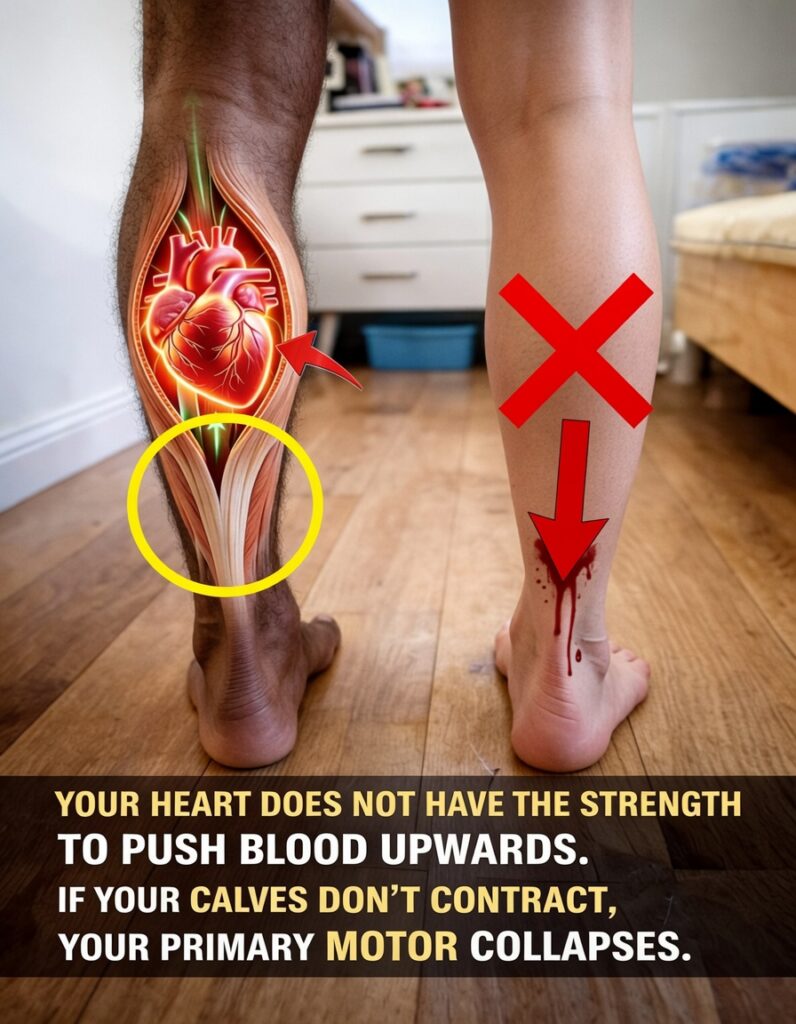
Do your legs feel heavy, tired, or slightly swollen around the ankles after hours of sitting or standing? These everyday symptoms often point to sluggish blood return from the lower body back to the heart. Many people assume circulation is “the heart’s job” alone, but your body depends on additional support—especially when blood must travel upward against gravity. One of the most important helpers is the calf muscle pump, sometimes described as your body’s “second heart.” The encouraging news: simple daily habits can activate this built-in system and support healthier circulation starting today.
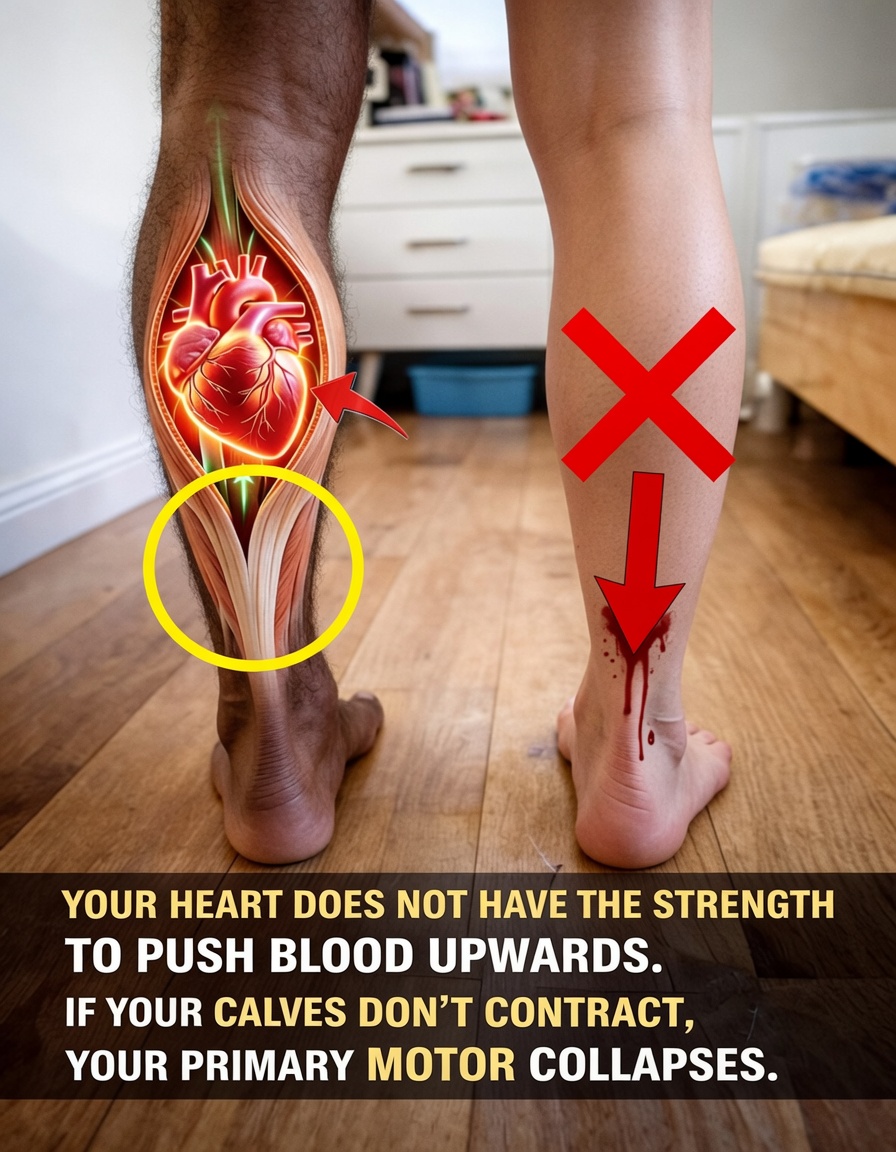
The Calf Muscle Pump: Your Body’s “Second Heart”
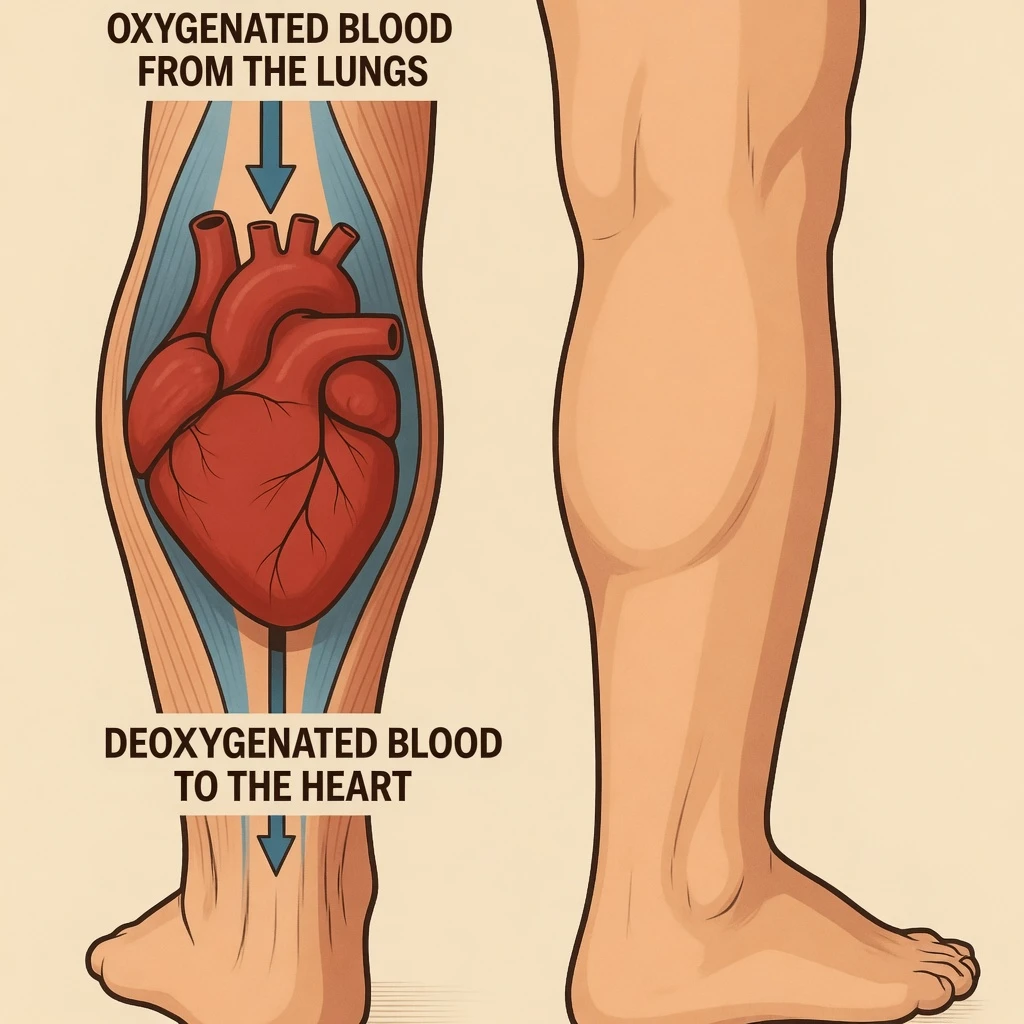
Your heart efficiently sends oxygen-rich blood down to your legs, with gravity working in its favor. The return trip—moving deoxygenated blood back up toward the heart—is harder and requires extra mechanical help. That’s where the calf muscle pump becomes essential.
The main calf muscles (the gastrocnemius and soleus) surround deep veins in the lower legs. When these muscles contract—during walking, climbing stairs, or rising onto your toes—they compress the veins and push blood upward. One-way venous valves help keep blood moving in the right direction and prevent backflow.
Research on venous return and hemodynamics shows that a well-functioning calf pump supports:
- Stronger venous return (less pooling in the legs)
- Better preload (the amount of blood filling the heart before it pumps)
- More efficient overall cardiovascular performance
Without regular leg movement, blood can linger in the lower extremities, contributing to heaviness, fatigue, and swelling-like sensations—especially later in the day.
Why Sitting (or Standing Still) Can Reduce Circulation
Modern routines often involve long periods at a desk, in meetings, commuting, or standing in one place. The issue isn’t only “being inactive”—it’s that the calves aren’t contracting enough to trigger their pumping action consistently.
When the calf muscle pump is underused:
- Blood flow in the lower legs can slow down
- Pooling in leg veins becomes more likely
- The heart may need to work harder to keep circulation steady
Studies also suggest that reduced calf pump function is associated with poorer circulation outcomes in certain groups. In other words, strengthening and using the calves isn’t just about appearance—it’s a practical strategy for supporting blood flow mechanics.
Key Benefits of Activating Your Calf Muscles
Making calf activation a daily priority can improve how your legs feel and how efficiently your circulation works. Effective calf contractions can:
- Improve blood return to the heart
- Support better oxygen delivery throughout the body
- Reduce unnecessary strain on the cardiovascular system during everyday life
Think of your calves as a supportive teammate for your heart: they provide a “hydraulic boost” that helps move blood upward, which matters for comfort and long-term wellness.
What you may notice with better calf pump activity
- Improved venous return: less pooling and steadier flow
- Better leg comfort: reduced heaviness and end-of-day fatigue
- Greater overall efficiency: circulation support that complements heart function
Common Habits That Weaken This Natural Pump
A frequent mistake is treating lower-body movement as optional—or focusing on cardio and upper body while ignoring the legs’ unique role in circulation.
The calf pump becomes less effective when you:
- Sit for long stretches without movement breaks
- Stand still for extended periods without shifting weight or engaging the feet
- Skip consistent lower-leg strengthening entirely
Over time, neglecting this built-in support system can mean your body loses a simple, natural way to assist blood flow back to the heart.
Practical Daily Ways to Activate the Calf Pump (No Gym Required)
You don’t need intense workouts to benefit. Small, consistent movements can meaningfully improve calf pump activation and support healthier circulation.
1. Heel Raises (Calf Raises) for a Simple Morning Routine
Heel raises directly engage the gastrocnemius and soleus, creating a strong pumping effect.
How to do it:
- Stand with feet hip-width apart (use a wall or chair for balance if helpful)
- Slowly rise onto your toes, lifting your heels as high as comfortable
- Hold for 1–2 seconds, focusing on the calf squeeze
- Lower down slowly and with control
- Do 3 sets of 15 reps in the morning
This quick routine can “switch on” your calf pump early and support circulation throughout the day.
2. Brisk Walking With Heel-to-Toe Mechanics
Walking is one of the most natural ways to activate the calf pump—if you use full foot mechanics rather than shuffling.
Tips for better calf engagement:
- Roll through each step from heel to toe
- Push off through the toes to recruit the soleus more effectively
- Aim for 20–30 minutes most days, at a brisk but manageable pace
3. Desk and Office Micro-Breaks (Every 30 Minutes)
If you sit for work, short movement “interruptions” help prevent leg pooling without derailing your schedule.
Easy options:
- Seated heel lifts: raise and lower your heels 10–15 times
- Stand and do a quick set of heel raises
- Use a timer to prompt a brief break every 30 minutes
These mini-activations support venous return throughout the day.
4. Support Muscle Performance With Hydration and Key Nutrients
Calf pumping depends on strong, reliable muscle contraction. Basic nutrition and hydration can help.
- Hydration: supports healthy blood volume and circulation
- Magnesium and potassium: support muscle function (found in foods like bananas, leafy greens, nuts, and legumes)
When muscle performance is compromised, contractions may be weaker—reducing the pump’s effectiveness.
Sedentary vs. Active Calf Habits: What Changes?
-
Prolonged sitting
- Circulation: reduced pump action, more pooling
- Heart workload: potentially higher strain
-
Regular heel raises
- Circulation: stronger contractions, improved return
- Heart workload: lower effort for daily circulation support
-
Brisk, intentional walking
- Circulation: full engagement of the calf pump
- Heart workload: improved efficiency
-
Movement breaks every 30 minutes
- Circulation: less stagnation in the legs
- Heart workload: steadier overall flow
Even modest changes can translate into noticeably better leg comfort by the end of the day.
Conclusion: Small Habits, Stronger Circulation Support
Your calf muscles play a critical role in helping blood return to the heart. By using simple tools—heel raises, mindful walking, and frequent short breaks—you can activate this natural “second heart,” reduce leg discomfort, and support healthier blood flow mechanics overall.
Start with one habit today, then build gradually. Consistency is what makes the biggest difference.
FAQ
How often should I do calf exercises to support circulation?
Daily activation is ideal. A practical baseline is 3 sets of heel raises in the morning plus short movement breaks during the day. Consistency matters more than intensity.
Can weak or inactive calves really influence heart strain?
Studies indicate the calf muscle pump improves venous return and can reduce the load required to maintain circulation. If it’s underused, circulation may become less efficient, although individual health factors vary.
What if I already have leg discomfort—should I still do these movements?
Use caution and listen to your body. Gentle options like seated heel lifts may be a good start, but consult a qualified healthcare professional if you have pain, significant swelling, or underlying conditions.
Disclaimer
This content is for informational purposes only and does not replace medical advice. Consult a qualified healthcare professional before starting new exercises or if you have concerns about circulation or heart health.