
Why Quality Sleep Matters
Getting consistent, high-quality sleep is a cornerstone of overall health. Health organizations such as the National Institutes of Health note that most adults do best with 7–9 hours of sleep per night, supporting energy levels, mood stability, and day-to-day performance.
However, many people don’t hit that target—leading to daytime tiredness, trouble focusing, and a mind that won’t “switch off” at night. The good news is that small, calming bedtime habits can make falling asleep feel smoother and more automatic over time.

The Value of a Relaxing Bedtime Ritual
A predictable wind-down routine helps your body recognize that it’s time to move from “alert mode” into rest. Two simple approaches—aromatherapy and gentle topical self-care—are especially popular because they engage the senses without requiring major effort.
Emerging research and wellness discussions often highlight certain plant-based essential oils and minerals for their potential to reduce tension and encourage a calmer state. Below are three frequently mentioned ingredients.
1) Roman Chamomile Essential Oil
Roman chamomile has been used for generations as a calming botanical. Some studies, including randomized trials, suggest that chamomile essential oil inhalation may help improve perceived sleep quality and reduce restlessness for certain individuals.
Its light, slightly apple-like aroma is typically described as soft and comforting—making it a common choice for evening routines designed to ease nervous tension.

2) Lavender Essential Oil
Lavender is among the most widely studied essential oils for relaxation. Multiple trials and systematic reviews indicate that lavender aroma may support better sleep quality, in part by helping people feel more settled before bedtime.
Many find that even a small amount creates a soothing environment, thanks to its floral, herbal scent that’s strongly associated with comfort and calm.
3) Magnesium Oil (Topical Magnesium)
Magnesium plays a role in hundreds of biological functions, including muscle relaxation and the body’s stress response. Nutrition surveys often show that many adults fall short of recommended magnesium intake (commonly referenced around 310–420 mg/day, depending on age and sex).
Because of convenience, some people use magnesium oil (a topical magnesium chloride solution). While research on how much magnesium is absorbed through the skin is mixed—and experts note the skin is a protective barrier—many users still report feeling more relaxed after applying it. In some cases, the benefit may come from the bedtime ritual, the massage, the aroma, or a combination of factors.
Why apply it to the feet?
Feet are a popular application area because:
- The soles may have thinner skin in certain areas and are often thought to be receptive to topical products
- A brief foot massage before bed feels grounding and soothing
- It offers a practical alternative to a full bath when time is limited
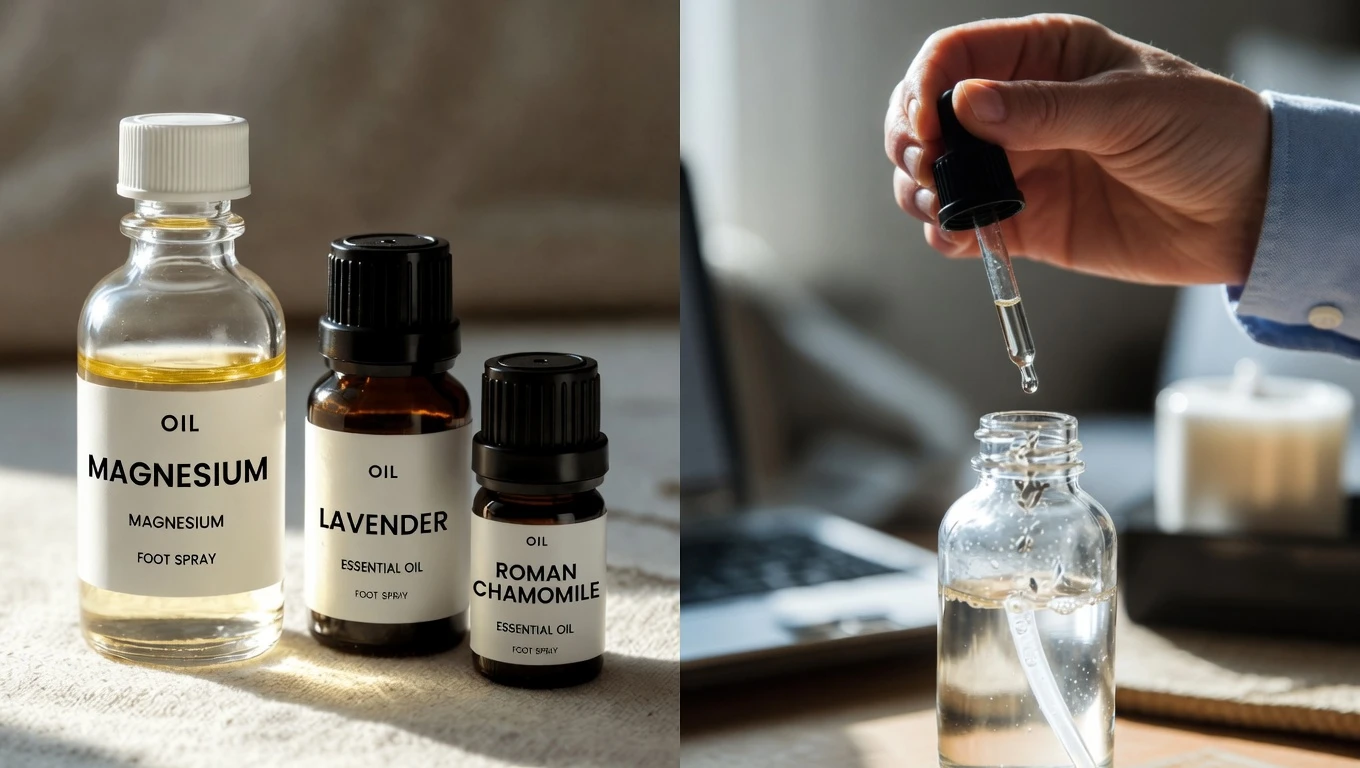
How a Calming Foot Spray Fits Into a Night Routine
This simple DIY spray combines magnesium oil, lavender, and Roman chamomile in an easy format. People who enjoy blends like this often like the multi-sensory effect: a calming scent plus a short massage that signals “sleep time.”
Key reasons it’s appealing:
- Fast and easy: Mix and apply in minutes
- Flexible strength: Adjust the essential oil drops to match your preference
- Simple ingredients: No need for synthetic fragrance or complicated additives
Important: This is a supportive relaxation practice—not a medical treatment. Results differ from person to person, and it’s smart to do a skin patch test first.
Step-by-Step Recipe: Homemade Calming Foot Spray
Ingredients (yields about 4 ounces)
- 4 oz magnesium oil (store-bought or homemade by dissolving magnesium chloride flakes in water)
- 10 drops lavender essential oil
- 10 drops Roman chamomile essential oil
Instructions
- Pour the magnesium oil into a clean 4-ounce (or larger) glass spray bottle (glass helps protect essential oils).
- Add 10 drops lavender essential oil.
- Add 10 drops Roman chamomile essential oil.
- Close the bottle and shake gently but well until blended.
- Keep it stored in a cool, dark place.
How to use it
- About 10 minutes before bed, shake the bottle.
- Spray 3–5 pumps onto the bottom of each foot.
- Massage for 1–2 minutes to enhance the relaxing routine and help distribute the product evenly.
- Optional: put on cotton socks to stay cozy and reduce slipperiness.
- Take a few slow breaths and let the aroma support your wind-down.
Pro tip: If you’re new to magnesium oil, start with fewer sprays. Some people notice mild tingling at first, which often decreases with regular use.
Extra Ways to Strengthen Your Wind-Down
Pairing a foot spray with other evidence-supported habits can create a stronger “sleep cue”:
- Lower lights earlier to reduce blue-light exposure and support natural melatonin rhythms
- Gentle stretching or a brief leg/foot massage, including calming pressure points (such as around the inner ankle)
- Keep a consistent bedtime to reinforce your internal body clock
- Read or journal to quiet mental noise before sleep
Many people find that combining scent + light movement makes relaxation feel more immediate and reliable.
FAQ: Common Questions About Calming Foot Sprays
1) How quickly will I feel more relaxed?
It varies. Some people notice a calmer feeling within a few nights of consistent use. Often, the repeated pattern—spray, massage, breathe—becomes a powerful cue that it’s time to rest.
2) What if I have sensitive skin?
Do a patch test first: apply a small amount to your inner arm and wait 24 hours. If irritation occurs, dilute further or stop using it. Essential oils are concentrated, so choose high-quality, pure oils.
3) Can I use this every night?
For many people, daily use is fine as a topical relaxation ritual. If you’re pregnant, have low blood pressure, take medications, or manage ongoing health conditions, speak with a healthcare professional first—magnesium and essential oils may not be appropriate for everyone.
Final Takeaway
A calming foot spray can be a low-effort, enjoyable addition to your bedtime routine—combining soothing aromas with a mineral linked to relaxation and overall well-being. If you’re looking for a gentle way to support better sleep habits, this ritual is worth trying and adjusting to your preferences.
Disclaimer: This content is for informational purposes only and does not provide medical advice. It is not intended to diagnose, treat, cure, or prevent any condition. Consult a qualified healthcare professional before starting new wellness routines, especially if you have medical concerns or are using other treatments. Individual results may vary.