
Understanding Atorvastatin Side Effects: 15 Reactions to Watch For
Many people take atorvastatin to lower cholesterol and protect long-term heart health. For a large number of users, it works well and becomes part of a smooth daily routine. Even so, some people notice physical changes that can be annoying, uncomfortable, or unexpected. These may include minor muscle aches, digestive changes, or other symptoms that affect everyday well-being. Side effects are not the same for everyone, and factors such as age, overall health, and other medications can influence how the body responds.
Knowing what may happen helps you stay alert without becoming overwhelmed.
The reassuring part is that better awareness often leads to better discussions with your healthcare provider and smarter ways to manage symptoms. And importantly, a few simple steps can make many of these challenges easier to handle.
Why Atorvastatin Can Cause Side Effects
Atorvastatin is part of the statin family of medications. It works by blocking an enzyme in the liver that the body uses to produce cholesterol. This is why it is so effective for many people. However, that same process can sometimes affect other areas of the body, including muscles, digestion, nerves, skin, and more.
According to clinical research and trusted medical sources such as the Mayo Clinic, most people tolerate atorvastatin well. When side effects do occur, they are often mild and temporary. Still, certain things can increase the chance of problems, including:
- Higher doses
- Interactions with certain medications
- Food interactions, especially grapefruit
- Individual genetic differences
- Existing health conditions
Understanding these possibilities makes it easier to recognize symptoms early and respond with confidence.
The Most Common Atorvastatin Side Effects
These side effects are reported more often than others, especially during the first weeks of treatment. In many cases, they improve as the body gets used to the medication.
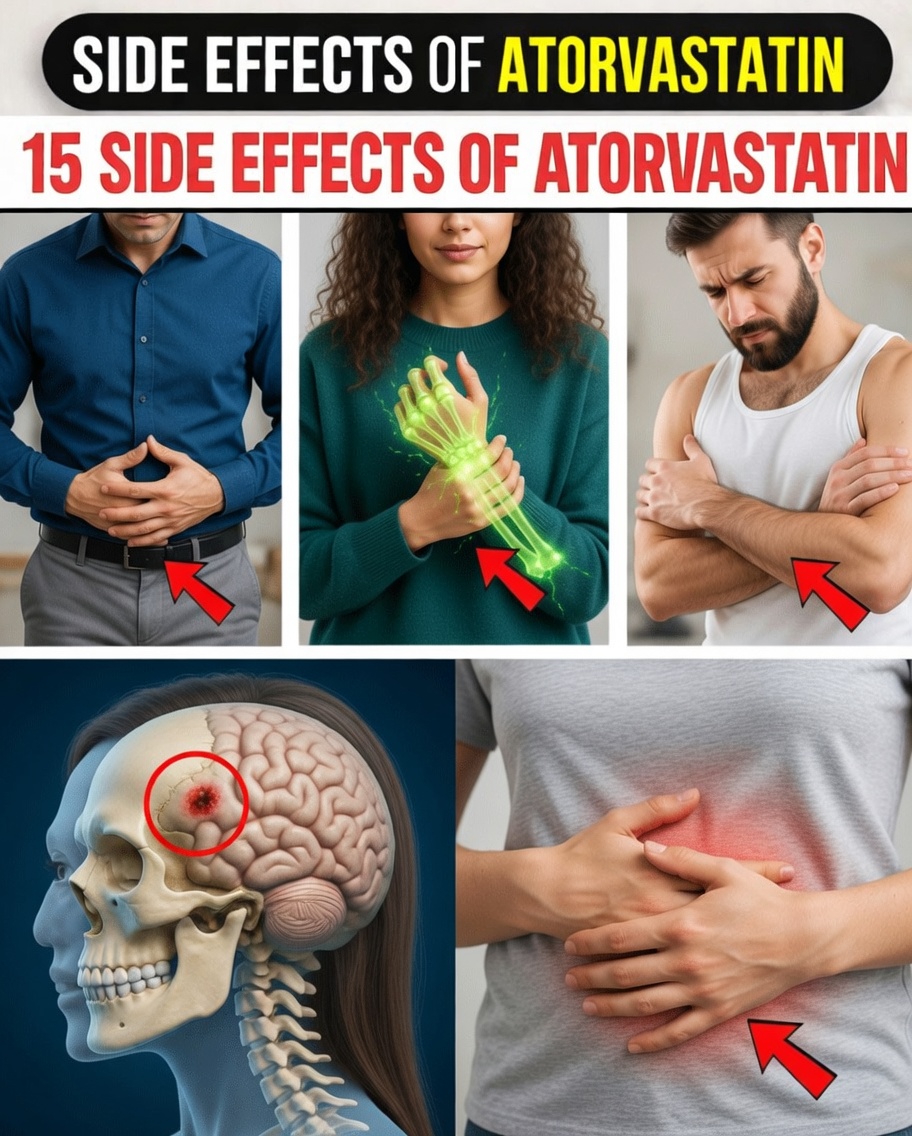
1. Muscle Pain
Muscle soreness is one of the most frequently mentioned issues. It may feel like post-exercise discomfort even when you have not done anything strenuous. Common areas include the legs, shoulders, and back.
2. Muscle Stiffness
Some people feel tightness or reduced flexibility in their muscles. This can make simple movement feel less comfortable, especially in the morning or after sitting for long periods.
3. Joint Pain
Joint discomfort may happen alongside muscle symptoms. Activities such as climbing stairs, bending down, or opening containers may suddenly feel more difficult.
4. Diarrhea
Digestive changes are another common complaint. Diarrhea may be mild and short-lived, but it can still interfere with normal routines.
5. Nausea or Indigestion
Some users experience an unsettled stomach, bloating, or a burning sensation after meals. These symptoms can range from barely noticeable to bothersome.
6. Headaches
Headaches are sometimes reported after starting atorvastatin. In some cases, they may be related to hydration, routine changes, or the body adjusting to treatment.
7. Fatigue
A general sense of tiredness can develop, even if you are sleeping well. This may feel like reduced energy, sluggishness, or less stamina during the day.
8. Arm or Leg Pain
Some people describe aching, heaviness, or dull discomfort in the limbs. This may overlap with muscle-related symptoms but is often noticed as its own issue.
A helpful point to remember is that these common effects often lessen after a few weeks. Keeping a basic symptom journal can help you tell the difference between short-term adjustment and a problem that needs medical attention.
Less Common but Still Important Reactions
These side effects do not happen as often, but they can still affect daily comfort and quality of life. Paying attention to them can help you make informed decisions with your doctor.
9. Skin Rash or Itching
Atorvastatin can occasionally cause skin irritation. This might show up as redness, warmth, itchiness, or a mild rash on the arms, chest, or other areas.
10. Tingling or Numbness
Some people notice unusual nerve sensations in the hands or feet, such as tingling, numbness, or a mild electric-shock feeling. In medical terms, this may be linked to peripheral neuropathy.
11. Memory Changes or Brain Fog
A small number of users report forgetfulness, mental fuzziness, or mild confusion. These symptoms can feel unusual, but research suggests they are often reversible when addressed.
12. Sleep Problems
Difficulty falling asleep, waking frequently, or poor sleep quality may occur in some cases. Over time, disrupted sleep can also make fatigue worse.
13. Dizziness or Lightheadedness
Some individuals feel dizzy, particularly when standing up quickly. This may be brief, but it is worth monitoring if it becomes frequent.
14. Changes in Blood Sugar
Studies have noted that statins may slightly increase blood sugar levels in some people. This matters most for individuals who already have diabetes or are at higher risk for developing it.

One important thing to keep in mind is that several of these symptoms can also be linked to aging, stress, or other health conditions. That is why discussing them openly with a healthcare professional is so important.
Rare but Serious Atorvastatin Side Effects
Serious reactions are uncommon, but they should never be ignored. Recognizing the warning signs early can help protect your health.
15. Severe Muscle Damage
A rare but serious condition called rhabdomyolysis can occur. Warning signs include:
- Intense muscle pain
- Severe weakness
- Dark-colored urine
This requires urgent medical evaluation.
Liver-Related Problems
Although rare, atorvastatin can affect the liver. Symptoms may include:
- Pain in the upper abdomen
- Yellowing of the skin or eyes
- Unusual tiredness
- General feeling of illness
Allergic Reactions
Serious allergic responses need immediate care. Watch for:
- Swelling of the face, lips, or throat
- Hives
- Difficulty breathing
Sexual Health Changes
Some reports mention changes in sexual function, including erectile difficulties. Evidence is mixed, and these changes may also be influenced by other health factors.
Persistent or Severe Abdominal Pain
Ongoing abdominal discomfort should be checked promptly, especially if it is strong, worsening, or combined with other symptoms.
These rare complications are one reason routine blood tests and follow-up visits are important. Most people never experience severe problems, but knowing the signs helps you act quickly if needed.
Practical Ways to Manage Side Effects
Experiencing side effects does not automatically mean you must stop atorvastatin. In many situations, simple changes can improve comfort while allowing you to continue working toward your cholesterol goals.
Try these practical strategies:
-
Keep a daily symptom log
- Write down when symptoms begin
- Note how strong they feel
- Record meals, exercise, and other possible triggers
-
Stay well hydrated
- Drinking enough water may help reduce headaches, fatigue, and general discomfort
-
Choose gentle exercise at first
- Walking, stretching, or swimming may feel better than intense workouts during the adjustment period
-
Review your diet
- Avoid grapefruit and grapefruit juice because they can interact with atorvastatin
-
Ask about dose adjustments
- If symptoms continue for more than a few weeks, your doctor may suggest a lower dose or a different statin
-
Support heart health with nutrition
- Focus on vegetables, whole grains, fruits, and lean proteins
-
Discuss supplements carefully
- Some people ask about coenzyme Q10, though results vary and medical guidance is important before starting any supplement
Many patients feel more in control once they combine these habits with regular medical check-ins.
Quick Guide to Side Effect Categories
Here is a simple way to understand what type of reaction you may be dealing with:
-
Common side effects
- Muscle pain
- Joint discomfort
- Digestive upset
- Headaches
- Usually mild and often temporary
-
Less common side effects
- Rash
- Tingling
- Brain fog
- Sleep changes
- Worth tracking and discussing with your doctor
-
Rare serious side effects
- Severe muscle breakdown
- Liver warning signs
- Allergic swelling or breathing trouble
- Need urgent medical attention
This kind of breakdown can make symptoms easier to interpret and may prevent unnecessary anxiety.
When You Should Contact Your Healthcare Provider
Reach out to your doctor right away if you notice:
- Severe muscle pain
- Muscle symptoms with fever
- Dark urine
- Ongoing or severe abdominal pain
- Yellowing of the skin or eyes
- Swelling of the face or throat
- Shortness of breath
- Symptoms that continue to interfere with daily life
Even milder side effects deserve attention if they do not improve. Early conversations often lead to simple solutions, such as testing, dose changes, or switching medications.
Final Thoughts
Atorvastatin remains an important and effective option for lowering cholesterol and supporting cardiovascular health. By learning about these 15 possible side effects, you can recognize changes early and make informed decisions with your medical team. Most people have few or no problems, and many side effects that do occur can be reduced with small adjustments and open communication.
Your health experience is unique. One of the most valuable steps you can take is to talk honestly with your healthcare provider instead of trying to manage every symptom alone.
FAQ About Atorvastatin Side Effects
How long do atorvastatin side effects usually last?
Many mild symptoms improve within a few weeks as your body adjusts to the medication. If they continue, your doctor may recommend changes in dose, timing, or lifestyle habits.
Can changing to another statin reduce side effects?
Yes, it can in many cases. Different statins may affect people differently, so switching medications sometimes helps reduce discomfort while still supporting cholesterol control.