The first time Mina Park saw her mother cry, it wasn’t over grief or rage. It was over a mirror. The kitchen lights were too bright, too honest, and the steam from a pot of simmering broth made the glass fog, as if even the mirror wanted to look away. Her mother—Eunja—wiped the surface with a dish towel and leaned close, examining the thin new lines that had begun to stitch themselves around her eyes.
“It’s coming,” Eunja whispered, as if the wrinkles were a storm rolling in from the sea. She pressed two fingers to her cheek. “It always comes.”
Mina was fourteen, barefoot on cool tile, and her life still believed in permanence. “It’s just your face,” she said, too quickly, too carelessly. But her mother flinched, and Mina understood: to Eunja, a face wasn’t just flesh. It was currency. Proof. A story she had been trained to tell without words.
Years later, Mina would return to that same kitchen with a different kind of hunger—the hunger of someone who has built a career on the illusion of time standing still. She wasn’t fourteen anymore. She was twenty-nine, and her name was a brand.
People called her “glass-skin Mina” online. They praised her glow like it was a moral achievement. They asked for her routine with the urgency of confession: What serum? What mask? What clinic? What secret?
The truth was, Mina didn’t know. She did everything. She layered expensive products like armor. She let lasers burn her skin into obedience. She drank collagen drinks that tasted like melted plastic and hope. She smiled through sponsorships and stayed awake at night, staring at the phone’s harsh camera, zooming into her pores as if they were crimes.
Then one morning, she woke to a message from her mother. Simple. Unadorned. Almost old-fashioned in its lack of emojis.
Come home. I’m making soup.
Home was the apartment above a narrow market street, where fish scales glittered on the pavement like broken sequins and old women sold bundles of greens tied with red string. Mina arrived with a suitcase, a ring light, and a face washed clean of filters. Eunja opened the door, wearing an apron stained with pepper paste, her hair pinned back with a chopstick. Her skin looked… steady. Not young, exactly. But calm. Like it had made peace with time.
Mina stared at her mother’s face the way she once stared at her own reflection—searching for what was missing. “You look… good,” she said, and hated how accusatory it sounded.
Eunja’s eyes narrowed, amused. “I look like I always look.” She stepped aside. “Come. Before the broth gets shy.”
The kitchen hadn’t changed, but Mina had. The counters were crowded with the familiar clutter of survival: jars of fermented vegetables, bottles of sesame oil, a stone bowl worn smooth by years. A small dish of rice water sat near the sink, cloudy and pale, like diluted moonlight.
Mina pointed at it. “What’s that?”
“For the plants,” Eunja said too quickly.
Mina watched her mother move. Eunja’s hands were confident, unhurried. She lifted the lid of a jar, and a sour, living smell unfurled into the air—sharp as memory. Kimchi, still fermenting, still changing. Time, captured and redirected.
“I need to film,” Mina said, defaulting to what she knew. “A day in the life. People love home cooking. Comfort content.”
“Film if you want,” Eunja said. “But eat first. Your face is too hungry.”
Mina laughed, but it caught in her throat. She sat at the table while Eunja ladled soup into bowls. The broth was rich and peppery, with tofu that trembled like a secret. Mina ate, and warmth spread through her chest with the insistence of truth.
After dinner, Eunja washed dishes. Mina hovered, restless, the ring light still packed away, her mind still buzzing with angles and captions. She noticed, again, the bowl of rice water by the sink. And this time, she saw her mother dip her fingers into it, patting the liquid across her cheeks with a tenderness that looked like prayer.
Mina froze. “Mom,” she said carefully. “That’s not for plants.”
The faucet ran. Eunja didn’t look up. “It’s nothing.”
“You put it on your face.” Mina’s voice sharpened despite her attempt at softness. “You’ve been doing this?”
Eunja shut off the water. The sudden silence was heavy. “Don’t start,” she said. “You’ll make it into a circus.”
“I’m not—” Mina swallowed. “I just… everyone asks me for the secret. I’ve been tearing my skin apart trying to keep up. And you’ve been…” She gestured at the humble bowl as if it had insulted her. “Using kitchen water?”
Eunja finally turned. In the yellow kitchen light, her expression held something fierce and wounded. “You think I don’t know what you do? The needles. The machines. The way you look at yourself like you’re negotiating with a stranger.”
Mina’s cheeks burned. “It’s my job.”
“It’s your prison,” Eunja corrected. She picked up the bowl and carried it to the table with deliberate care. “Sit.”
Mina sat. The rice water smelled faintly sweet, faintly starchy. Ordinary. Ridiculous. Eunja pulled out a small bottle from a drawer—dark glass, no label. She poured a few drops into the bowl. The scent changed instantly: herbal, green, sharp as crushed leaves after rain.
“What is that?” Mina asked.
“Mugwort,” Eunja said. “From Mrs. Han downstairs. She grows it behind the building. This is her ‘beauty potion,’ but it’s really just plants and patience.”
Mina stared, suspicion warring with longing. “So this is the secret? Rice water and mugwort?”
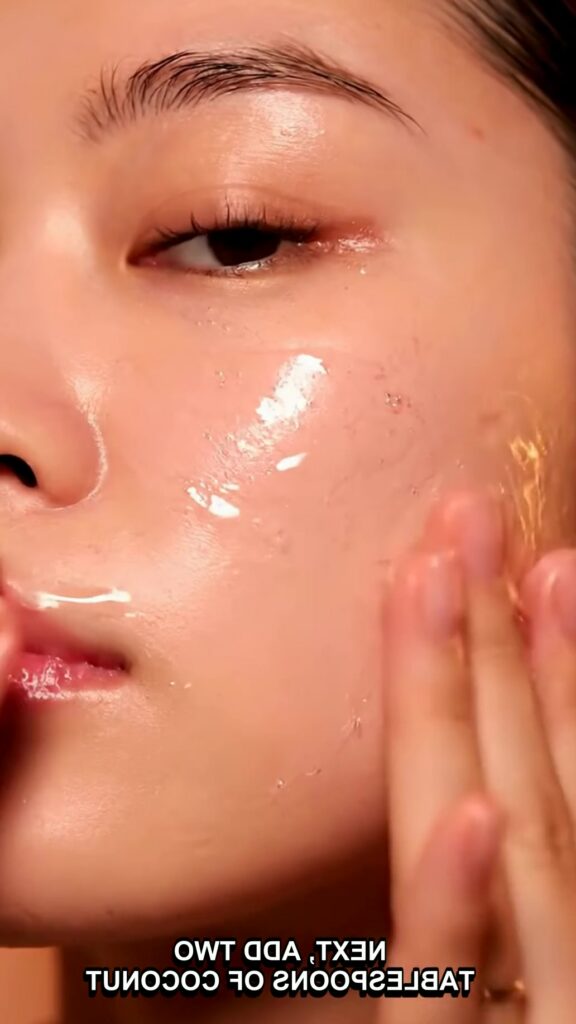
Eunja’s laugh was short. “You want a secret that can be bought. One that fits in a tiny bottle with gold lettering.” She dipped a cloth into the mixture and pressed it against Mina’s cheek. The cloth was cool. The gesture was intimate enough to make Mina’s eyes sting.
“When I was your age,” Eunja said, “I worked in a salon. Rich women came in with faces tight as drums, asking for youth like it was a hairstyle. They taught me a lot.” Her voice lowered. “They taught me fear.”
Mina’s throat tightened. “You were afraid of aging?”
“I was afraid of becoming invisible,” Eunja said. She held the cloth at Mina’s jawline, steady as a hand on a pulse. “And then I had you. And I watched you grow, and I realized something terrible: the world would teach you the same fear, but with prettier packaging.”
Mina closed her eyes. The cloth smelled like kitchens and gardens and something older than trends.
“This,” Eunja continued, “is not magic. It’s care. It’s doing something gentle every day, not something violent once a month. It’s eating food that loves you back. It’s sleeping before midnight. It’s laughing until your face remembers it can move without permission.”
Mina opened her eyes, blinking hard. “That’s not what people want to hear.”
“Then let them be disappointed,” Eunja said. “They don’t have to live inside your skin. You do.”
Later that night, Mina set up her phone on the kitchen counter anyway. She filmed her mother’s hands: rinsing rice, saving the cloudy water, stirring in crushed mugwort, pressing the cool cloth to skin. She filmed the soup simmering, the steam rising like breath. She filmed the jars of fermented vegetables that turned time into flavor instead of terror.
But when she played it back, she didn’t hear a trend. She heard a confession.
In the morning, Mina posted a video without a sponsor, without a product link, without the usual polished promises. Her caption was plain. She talked about her mother’s kitchen remedy, yes—but more than that, she talked about how desperate she had been. How she’d chased youth until her face felt like a battleground. How she’d forgotten that skin was a living thing, not a billboard.
The comments arrived like weather. Some people mocked her, calling it primitive, unsanitary, too simple to matter. Others thanked her in long messages that read like prayers. A few admitted they’d cried. One wrote, I thought my pores were my enemy. I forgot they were just… me.
Mina watched her mother drink tea at the table, unbothered by the internet’s hunger. Eunja’s face caught the light, not flawless, not frozen—alive. Mina touched her own cheek, feeling the softness the cloth had left behind, but also feeling something deeper: the loosening of fear.
“So,” Mina said quietly. “Are you mad I filmed it?”
Eunja glanced up, eyes sharp but not cruel. “Did you tell them it’s a secret?”
Mina hesitated, then smiled—a real smile, the kind that creased the skin at the corners of her eyes. “I told them it’s not.”
Eunja nodded once, satisfied. “Good. Secrets are heavy. Let them go.”
Outside, the market street woke up: vendors calling, knives chopping, life insisting on itself. Mina looked at the bowl of rice water beside the sink. It wasn’t glamorous. It wasn’t a miracle. But it was a reminder that in the most ordinary place—in the heat of a kitchen, in the quiet act of saving what would have been poured away—there could be a kind of rebellion.
Aging would still come. It always came.
But Mina finally understood what her mother had learned in that same room long ago: time wasn’t the enemy. The enemy was believing you had to fight it alone.
She picked up the bowl, dipped her fingers in, and patted the cool water onto her face like an oath.