The chandeliers were a constellation of cut crystal, each dangling prism turning warm light into knives. Beneath them, the ballroom of the Vervain Hotel hummed with money—old money that pretended not to sweat, and new money that sweated through silk anyway. Waiters drifted like ghosts carrying champagne flutes and tiny plates no one would finish, and the air held the mingled scents of gardenias and ambition.
Elena Marrow sat at the longest banquet table, her posture composed, her emerald dress catching the candlelight in glints that looked like scales. The color was a small act of defiance. Everyone here wore black or white—mourning shades for the death of someone else’s dignity. Elena had refused to dress for their appetite.
Across from her, Damon Kline wore a black suit with the ease of a man who believed he was inevitable. His cufflinks were discreet, but his smile wasn’t. A few seats down, Damon’s attorney—pale, hair slicked like a seal—kept glancing at his watch as if the evening had been scheduled down to the minute.
When the orchestra softened into a vague, obedient background, Damon rose without tapping a glass. He didn’t need to. His reputation did the knocking for him.
“Friends,” he said, letting the word land like a coin on stone. “Tonight isn’t just a celebration. It’s a correction.”
Some people laughed in the way they did when they wanted to be seen agreeing. Others leaned forward, hungry for an embarrassment they wouldn’t have to pay for. Elena felt the older woman at her left—Mrs. Voss, a widow with frost in her hair and a taste for public executions—shift with expectation.
Damon lifted a thick stack of papers. “I’ve offered Miss Marrow every chance to be sensible. She’s refused, she’s delayed, she’s—” His gaze slid over Elena’s face as if searching for a crack. “—insisted on being difficult.”
He flung the documents across the polished wood with a flick of his wrist, as though feeding scraps to something beneath him. The pages skated, their corners catching candle wax and salt, and came to rest in front of Elena like a dare.
The room leaned in. Some shocked. Some delighted. Some pretending not to enjoy it.
Mrs. Voss actually clapped once, sharp and pleased, as if a performance had reached the good part.
Damon’s attorney slid a pen toward Elena with two fingers, as if afraid her touch might dirty the lacquer.
“Sign,” Damon said softly, and there was no mistaking the way he meant it. Not a request. A leash being tightened.
The papers were the final step in a siege that had started months ago—quiet pressure on her father’s lenders, rumors like smoke through boardrooms, a sudden audit, a sudden raid, a sudden scarcity of allies. Elena had watched doors close that had always opened. She had watched friends go cold mid-sentence, their eyes darting toward Damon’s shadow.
He wanted her family’s holdings. He wanted her name on his terms. He wanted her made small in front of witnesses, so that her refusal would be rewritten as a lesson.
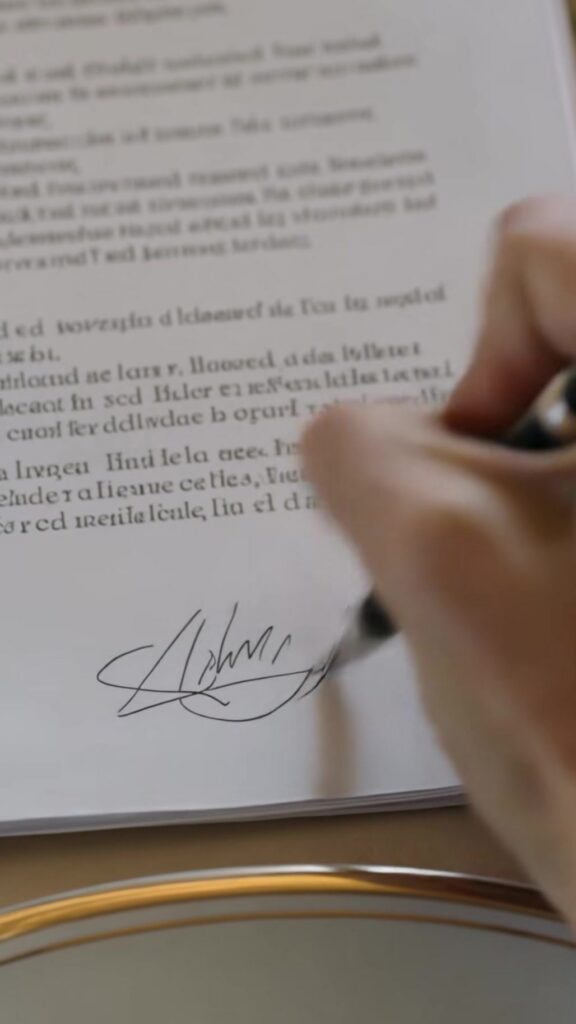
Elena picked up the pen.
All eyes gathered on her hand. Damon’s smile sharpened. Someone at the far end raised a phone, the camera’s little light blinking like an insect.
Elena signed.
Fast. Clean. Without trembling.
It was the first thing that unsettled Damon, though he tried to hide it behind a laugh that came out too thin.
Elena set the pen down with care, as if closing a book rather than surrendering a life. She took a slow breath and lifted her chin. When she met Damon’s gaze, there was no panic in her eyes—only something that made the room feel suddenly colder, like a draft had found its way in.
“You really have no idea what you just did,” she said.
Even the younger woman filming lowered her phone for a second, the gesture involuntary. Elena’s voice didn’t sound like a threat.
It sounded like a verdict.
Damon’s laugh flickered. “Oh, Elena. Don’t do this. Don’t pretend you have a final speech.”
He reached for the papers with the impatience of a child grabbing a prize, eager to hold them up like proof. His attorney’s mouth tightened, already preparing the next steps—press releases, injunctions, a neat public burial.
Damon flipped through the pages quickly, searching for the signature, for the satisfying evidence that the world had bent.
Then his fingers paused.
A page he did not remember.
The last sheet bore Elena’s signature at the bottom in the same clean hand, but the text above it was not the transfer of assets he’d forced onto the table. Damon turned it over, then back again, as if orientation could change meaning. The candles reflected in his pupils like small, frantic fires.
His smile disappeared as if someone had switched it off.
“What is this?” he whispered, the words scraping out.
His attorney leaned in, his face draining as he read. A silence fell so quickly it seemed to swallow the clink of silverware. Even the orchestra faltered, unsure.
Elena did not move. She watched them the way one watches an animal realize it has stepped into a trap too late to lift its paw.
Damon read the header again, then the paragraph beneath. His throat bobbed.
It was not a divorce clause. Not a sentimental confession. Not anything Damon’s arrogance had accounted for.
A voluntary transfer of liability.
A statement that the signing party accepted full responsibility for any investigations, penalties, and restitution related to specific entities listed below—entities Damon had just forced her to “accept.”
Except the document made the ownership change in the opposite direction.
Onto him.
“This—this wasn’t in the packet,” Damon hissed, his voice splintering. “This is fraudulent.”
Elena’s smile was small, almost kind. “It was in the packet. You didn’t read what you threw at me.”
In the pause, the room seemed to tilt. Guests who had been delighted now froze, their faces tightening with the instinct to step away from disaster before it noticed them. The younger woman’s phone rose again, more cautiously this time, as if filming might protect her.
Damon’s attorney turned the page, eyes scanning faster, as if speed could undo ink. “The listed assets are under criminal investigation,” he breathed, the words barely audible. “Foreign accounts. Shell companies. Fraud exposure—”
Damon’s skin went a shade lighter, as if his blood had fled in a single coordinated retreat. “No,” he said, but it wasn’t refusal. It was prayer.
Elena leaned forward a fraction, her perfume cutting clean through the air. “You wanted to corner me in front of everyone who mattered. So I brought the right people into the room.”
At the far end of the ballroom, two men who had looked like guests—plain suits, no jewelry, eyes too calm—set down their napkins at the same time. One stood, drawing attention not with force but with certainty. A second pair rose near the doors, quietly blocking the exits without touching them.
The chatter that tried to start died immediately.
Mrs. Voss’s hands, which had been eager to clap, now hovered uselessly above the table as if she’d forgotten how they worked.
“You set me up,” Damon said, voice thick. His gaze swung around, searching for someone to blame, for laughter he could command. But the room had changed. Smiles fell away. People looked at him like he was contagious.
Elena’s eyes did not waver. “No. I let you set yourself up.”
She tapped the page gently, not at her signature but at his name printed in bold above the acceptance clause, the legal trapdoor hidden beneath the very arrogance that had demanded she sign without thought.
“You thought you were taking my family’s holdings,” she said. “You wanted everyone to watch me swallow poison.” Her voice lowered. “So I handed you the cup and waited for you to drink first.”
Damon’s attorney’s lips moved soundlessly as he reached the final paragraph. The room was so quiet the candle flames seemed loud. When the attorney finally spoke, it was with the tone of a man watching a bridge collapse under his own feet.
“By signing before any subsequent transfers,” he said, “you assumed immediate ownership and liability.”
Damon’s gaze snapped to Elena. “You can’t—”
“I can,” Elena said, and the gentleness of it was the cruelest part. “Because I’ve been losing things all year, Damon. I’ve been practicing.”
The plain-suited man approached the table, producing a badge with a motion that was almost polite. “Mr. Kline,” he said. “We’d like a word. Somewhere private.”
Damon’s chair scraped back, loud as a gunshot. His hands clenched, then opened, then clenched again, as if he could still shape the evening into his victory through sheer will.
Elena stayed seated. She looked around the room at the faces that had come to witness her humiliation. She met the eyes of the woman who’d clapped, then the younger woman with the phone, then the men who had smiled approvingly at Damon’s cruelty. She let them see, without shouting, what their entertainment had purchased.
The room had thought they had just watched a woman lose everything.
That was exactly what made her so dangerous.
As Damon was guided away, Elena lifted her champagne flute and took a single sip. The bubbles tasted like metal and relief. The orchestra, uncertain, began to play again—softly at first, then steadier, as if music could smooth the edges of what had happened.
Elena set the glass down and stood. Her emerald dress caught the light one last time as she moved toward the doors, past the stunned guests who parted without being asked. Behind her, whispers began to bloom—names, accusations, frantic calculations of distance.
Outside, the night air was cold and clean. Elena inhaled as if for the first time in months.
She had not won back what had been taken. Some losses would never be reversed. But she had done something more dangerous than survival.
She had changed who the room would fear next.