Nobody in the diner moved when the kid came in.
Rainwater poured off him in steady streams, pooling at his sneakers and running in gray rivulets toward the kitchen door. His red hoodie clung to his shoulders like wet paper, too thin for the bite of the wind outside, and he shook so hard his sobs rattled in his throat. He didn’t search for comfort in the booths—didn’t look for the waitress with the kind eyes or the grandfather in the corner who always offered candy. He went straight to the man alone by the window and latched on to his leather sleeve with both hands, as if he’d been born knowing where safety lived.
The chair scraped back. Hard. Loud enough to make forks pause midair and coffee cups hover above saucers. The man stood slowly, rising into the yellow diner light with the unhurried certainty of a storm building. One side of his face carried fresh scars that looked like the memory of flame made solid. His shoulders were broad, his posture too still. Not a trucker, not a cop, not one of the local drunks. The kind of person people subconsciously moved around on sidewalks.
The boy vanished behind his leg, pressing his face into the man’s thigh and trying to swallow his crying, failing. The man didn’t reach for him—not at first. He just shifted, a half-step, putting his body between the kid and the room, and the room felt its temperature change.
Then the front doors darkened.
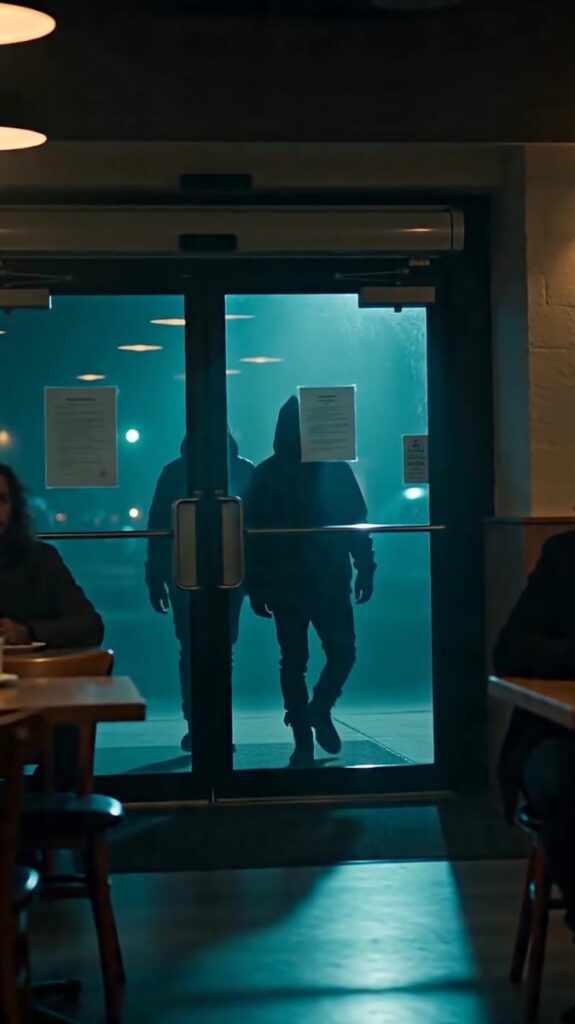
Two figures approached through the wet glass. Hoods up. Hands in pockets. The bell above the entrance chimed once when they came in, bright and wrong for the way every spine tightened. Cold air rolled across the tiles, sliding under boots and chair legs like something alive.
The scarred man didn’t look surprised. He looked tired. The way a person looks when a debt they never agreed to pay finally comes due.
Behind the counter, a waitress’s lips moved without sound, and the name arrived anyway, whispered into the hush like a prayer that didn’t know if it was asking for mercy or war.
Gideon Cross.
Years ago, the city had passed stories about him the way people passed contraband: quiet, eager, a little afraid. Gideon Cross who could walk into a room and take everyone’s courage with him. Gideon Cross who did jobs no one admitted existed and came back with soot under his nails and money he never spent. Then the warehouse fire down on the docks, the one that scorched the river black and set the sky orange for miles—one dead woman, one missing infant, and Gideon vanished. No funeral. No goodbye. Like smoke through a cracked window.
Until tonight.
The boy tugged at Gideon’s sleeve. His fingers were small, trembling, and he shoved something into Gideon’s palm like he didn’t trust the world not to steal it.
A tiny silver zipper pull shaped like a fox.
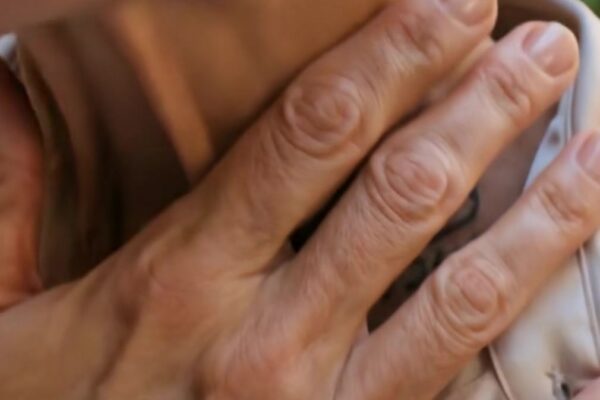
Gideon’s hand closed around it on instinct, then opened again as if the metal had turned hot. His eyes lowered, and for the first time his face changed—not fear, not surprise, but the sharp, strangled look of a man hit by a memory hard enough to bruise.
He knew that charm. He had clipped it to a baby blanket eleven years ago, hands unsteady, promising his sister he’d come back before sunrise. Mara had been pale and furious and brave, hiding a pregnancy from people who profited off secrets. The fox had been his stupid attempt at luck—a symbol of clever escapes. That same night, Mara died in the fire. The baby disappeared. Gideon had spent the next decade chasing ashes across the city, believing the story everyone wanted him to believe: that there was no child to save.
The hooded men stopped just inside the entrance. One of them pushed back his hood enough to reveal a thin smile and a face too young for the calm in his eyes. He didn’t glance at the other customers. They were furniture. His focus stayed on Gideon, sharp as a knife point.
“Move,” he said. “The boss wants the boy back.”
The boy made a small, broken noise and pressed his face into Gideon’s jacket, clinging like the fabric was the only thing keeping him from falling through the floor. Gideon’s stance widened by an inch. It was a subtle shift, but it moved the center of the diner with it.
“What’s your name?” Gideon asked without looking down.
It took the boy three tries to find air. “Eli,” he whispered. The name came out like a secret he’d been trained to keep hidden.
“Eli,” Gideon repeated, and the sound of it cut a line through his chest. He didn’t ask how old the boy was. He didn’t have to. The years fit the way the fox fit in his hand.
The hooded man laughed softly, like this was already decided. “Cute,” he said. “But you can’t keep him. You’re not even supposed to be alive.”
That word—alive—made the other hooded figure shift, a flicker of unease. Gideon saw it. The men at the door were afraid, not of the diner, not of police, not of being seen. They were afraid of Gideon Cross breathing.
Behind the counter, the waitress’s hand slid beneath the register, toward the silent alarm. Gideon’s eyes flicked toward her once, and she stopped—not because he commanded it, but because his look said: if you bring more people into this, more people will get hurt.
Eli’s mouth moved against Gideon’s coat. He spoke into the leather, into the scars, into whatever he’d been told to find. “Mom said if they ever found me… find the man with the fire on his face.”
The diner went so quiet that even the rain seemed to hesitate at the windows.
Gideon lowered his gaze to the fox charm, then to the men, and his voice came out low and edged with something that had been kept on a leash for years. “My sister only had one son.”
The hooded man’s smile widened. “Then you already know,” he said, “why we had to bury another child in his place.”
For a moment Gideon didn’t move. The statement hung in the air like smoke, and the diner’s fluorescent lights buzzed louder in the space it made. Gideon pictured a small coffin—somebody else’s grief sold as closure. He pictured Mara’s face the last time he saw her, furious tears at the corners of her eyes as she whispered, Don’t let them turn him into a ghost.
“Who’s your boss?” Gideon asked.
“A man you tried to burn,” the hooded one said. “He survived. So did you. Isn’t that funny?”
Gideon’s mouth tightened, and Eli’s fingers dug into his jacket. The boy sensed the shape of what was coming the way animals sense thunder.
Gideon reached behind him, not for a gun—there was no showy threat. He simply rested his hand on the boy’s head, steadying him. It was the first gentle thing he’d done all night, and it carried a vow heavier than any weapon.
“Listen to me,” Gideon murmured, barely audible. “When I tell you to run, you run to the kitchen. You don’t stop for anyone. You find the back door.”
Eli shook, but he nodded against Gideon’s coat.
The hooded man took a step forward, confidence returning as if he believed Gideon would fold the way the city had folded around him for years. “You don’t get to play hero,” he said. “You’re a rumor. A scar. A mistake.”
Gideon’s eyes lifted, and the diner understood at once why people used to say he stole courage. It wasn’t that he frightened you into obedience. It was that he made you realize fear was a currency, and he was the one who printed it.
“I left,” Gideon said quietly, “because I thought I’d failed.” He rolled the fox charm between his fingers, the little metal glint catching the light like a spark refusing to die. “Turns out you just hid my failure in a grave that wasn’t his.”
The hooded man’s smile faltered—just a twitch—because Gideon wasn’t bargaining. He was counting.
Gideon shifted his weight, and in the same motion he hooked his foot under his chair and kicked it backward. The chair slammed into the table behind him, coffee splashing, a sharp clatter that made every head duck. The distraction was tiny, but Gideon had lived his life in tiny margins.
He moved before the men could decide whether to draw a weapon. One hand swept Eli toward the narrow gap beside the counter. The other shot out, grabbed the edge of a napkin dispenser, and flung it. Metal and paper hit the hooded man’s face with a crack, not enough to injure badly, enough to blind for a heartbeat.
“RUN,” Gideon barked.
Eli bolted, a red blur streaking for the kitchen door, slipping once on wet tile and catching himself on a stool. The waitress gasped and stepped aside without thinking.
The second hooded man reached into his coat. Gideon was already there, closing the distance with the brutal efficiency of someone who didn’t fight to win applause. He fought to end things. Gideon’s scarred cheek tightened as he drove his shoulder into the man’s chest, slamming him back into the doorframe hard enough to rattle the glass. The bell over the entrance chimed wildly, as if the diner itself were trying to scream.
“Tell your boss,” Gideon said into the man’s ear, voice like gravel dragged over steel, “that he should’ve killed me properly the first time.”
He released him and turned—fast—toward the hooded one wiping blood from his lip. The younger man stared, eyes wide now, not from pain but recognition. Like he’d finally realized the stories weren’t exaggerations.
Outside, a vehicle idled at the curb—dark, patient. The hooded man glanced toward it, calculating whether this job was worth the cost.
Gideon stepped forward, blocking the path to the kitchen with his body angled so Eli could escape deeper into the building. He held up the fox charm between thumb and forefinger. “You see this?” he said. “This is what you missed.”
The hooded man’s jaw clenched. “You can’t protect him forever.”
“No,” Gideon agreed, and there was something colder in the agreement than any threat. “Just long enough.”
The hooded men backed toward the door, retreating not because Gideon had a gun, but because he didn’t need one. Because whatever had been done at the docks, whatever fire had written itself across his face, it hadn’t finished him. And now the one person Gideon thought he’d lost to smoke was running through the kitchen with a red hoodie and a fox at the end of his zipper.
Gideon watched them leave. Only when the doors swung shut and the bell settled into silence did he breathe out. He turned toward the kitchen, toward the back exit, toward the rain, toward the years he had wasted believing there was nothing left to save.
He tucked the fox charm into his pocket like a key, and the scarred man who had tried to disappear stepped into motion again—because the city had finally brought him the right child, and the wrong enemies.
And Gideon Cross had never been afraid of fire.