The old man sat alone in the corner booth with nothing but a glass of water in front of him. The kind of booth that felt like it had been carved out of shadow—wedged between the jukebox that no one fed anymore and a window fogged by the breath of breakfast regulars. He sat upright anyway, as if posture was the last thing the world hadn’t tried to take from him.
His coat had once been a proud navy wool, but now it looked like it had been sun-bleached into surrender. The cuffs were shiny with wear. His shoes were thin at the toes, the leather cracked like dry riverbeds. Beside his hands—hands that shook with their own stubborn rhythm—rested a hat that had clearly known better days. A brown felt brim, carefully brushed, even if the felt itself was tired.
He didn’t stare at anyone. He didn’t stare out the window. He stared at the glass of water like it had an answer at the bottom and he just needed to be patient.
The diner wasn’t fancy, but it had that “newly renovated” vibe that made people feel like they were eating in a place they didn’t have to apologize for. Fresh paint. Sleek menus. A chalkboard sign that said BRUNCH IS BACK, like brunch had been drafted and sent overseas. The kind of place where the coffee came with a tiny spoon that looked like it belonged in a dollhouse.
Across the aisle, a rich young man laughed like he owned not just his table, but the sound in the room. He wore a tailored jacket that still creased like it had been born on a hanger. His watch was huge and shiny enough to have its own weather system. His friends—two guys and a girl with perfect hair—laughed along in bursts, like they were trained to keep the mood expensive.
“Man, I love this place,” the young man said, loud enough to trap every nearby conversation. “No weirdos. No drama. Just good food and—” his eyes snagged on the corner booth, “—well. Mostly.”
The old man didn’t react. He just blinked slowly, like he was taking inventory of how much energy he had left for the day.
The young man’s chair scraped back. He stood and wandered over with the loose swagger of someone who’d never been told no in a way that stuck. He stopped at the edge of the booth and looked down at the water.
“You know you gotta buy something, right?” he said, like he was being helpful. “This isn’t a charity. It’s a business.”
The old man’s mouth twitched, not quite a smile. He looked up with eyes that were pale and steady, the kind of eyes that had seen messes bigger than a diner squabble. “I know,” he said softly. “I’m not staying long.”
“You don’t belong here,” the young man added, and the words landed with that special cruelty people use when they want the room to agree with them.
The old man looked down at his water again. “I know,” he repeated, like he’d been practicing the line for years.
Someone at the counter muttered, “Leave him alone,” but it came out thin, like the speaker didn’t want to take responsibility for their own courage.
The waitress—her name tag said MARI—hovered near the coffee station. She’d been watching. She had the tight, angry patience of someone who’d been working doubles and still believed people could be better. She took one step forward, then stopped, like she was weighing the risk of making things worse.
The young man leaned in, eyes scanning the old man’s coat, the hat, the empty plate space. “What are you doing here anyway?” he asked. “Waiting for someone to pay your bill?”
The old man’s hands trembled harder for a second, and he slid his fingers around the glass of water as if it could anchor him. “Just resting,” he said.
“Rest somewhere else,” the young man said, and then—like the thought was a joke he couldn’t resist—he flicked the brim of the old man’s hat with two fingers.
The hat slid off the table edge, tumbling to the floor in a soft, pathetic flop.
The diner went quiet in a way that felt physical. Forks paused midair. A kid stopped slurping his milkshake. Even the espresso machine seemed to hold its breath.
The old man stared down at where his hat had fallen. He moved slowly, careful like every joint had to negotiate. He tried to bend, but his hands shook too much, and his shoulders dipped with a kind of shame that didn’t belong to him but had stuck anyway.
Mari was there before he could try again. “I got it,” she said, voice tight, eyes shining with something hot and protective.
She crouched and lifted the hat gently, like it might bruise. As she did, something small slipped from inside the crown, bounced once against the tile, and spun to a stop near the toe of her sneaker.
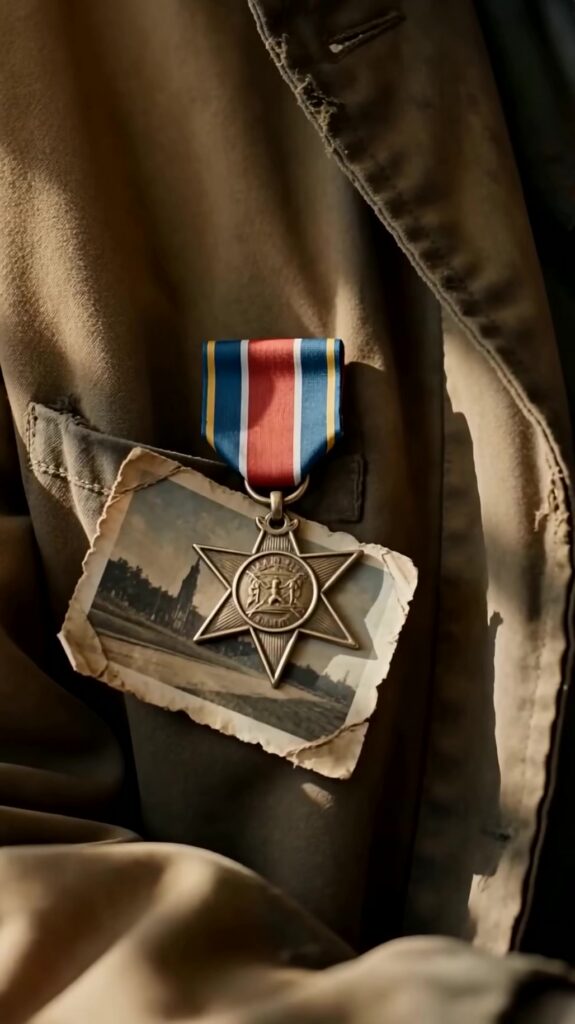
A military medal. Old, dulled by time, but still unmistakable in its shape and weight. A second item followed—paper, brittle at the edges—a faded photograph that skittered flat beside it. In the photo, the old man was younger, stern-faced, in uniform, standing in front of a line of soldiers. His eyes in the picture were the same ones he had now: calm, awake, unflinching. Something about the insignia on his chest and the way everyone behind him stood a little straighter made Mari’s throat tighten.
She picked up the medal with both hands, as if it were suddenly sacred. “Sir,” she whispered, and she didn’t even know why the word came out like a prayer.
The young man’s smirk faltered. He looked at the items on the floor like they’d ruined his fun. “Okay, so what?” he said, too quickly. “My grandpa has a bunch of those in a drawer.”
But his friends weren’t laughing anymore. The girl at his table had gone pale, her hand covering her mouth. One of the guys had started to say something and then thought better of it.
Mari stared at the photo. The name printed on the bottom—half faded, half smudged—was still readable if you looked hard enough. She mouthed it silently, and something in her face changed, like a door unlocking. She’d seen that name before. Not in person, not in a family album. On a plaque somewhere. In the hallway of her high school. In a documentary her dad used to watch when he couldn’t sleep.
The bell above the diner door jingled, sharp in the silence.
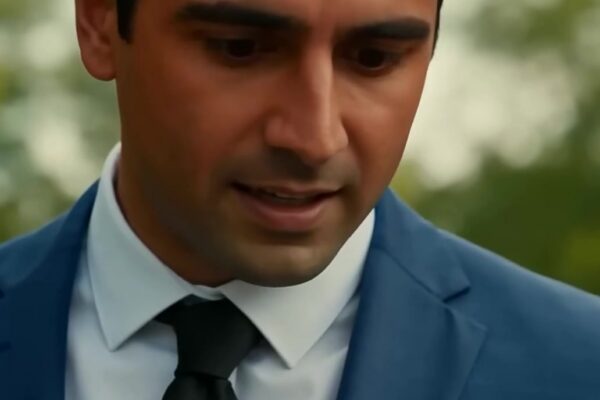
A man in a dark suit stepped inside, crisp like he’d been ironed. He didn’t look like a regular. No one did that kind of posture unless they were paid for it or trained. His eyes swept the room fast, scanning faces, corners, exits—then landed on the medal glinting faintly on the floor.
He froze.
For one second, he looked like someone had punched him in the chest with memory.
His gaze lifted to the booth, to the trembling hands, to the pale steady eyes.
The suit man’s expression collapsed into something raw and disbelieving. “General?” he said, the word coming out small, like he couldn’t make it fit in his mouth.
The old man blinked. Slowly, he lifted his head. His eyes met the suited man’s and softened—not into weakness, but into recognition. “Thomas,” he said, like he was tasting a name from a long time ago.
The suited man didn’t hesitate. He walked forward, ignoring the rich young man entirely, and dropped to one knee beside the booth like the tile was nothing. Like dignity was supposed to move toward this man, not away from him.
“Sir,” the suited man said, voice tight, “we’ve been looking for you.”
The rich young man made a sound that was almost a laugh, but it cracked midway. “Wait—what is this? Who—”
“Stand back,” Mari snapped before anyone else could, surprising herself with the force of it. She held the medal and the photo against her apron like she was guarding them from theft.
The suited man turned his head just enough to look at the young man. His voice stayed controlled, but there was steel underneath it. “You have no idea who you’re talking to.”
The old man’s shaky hands reached toward Mari. She carefully placed the hat in his lap, then set the medal and the photo beside it. He touched the medal with his thumb, almost absentminded. “Didn’t think anyone would care about that anymore,” he murmured.
“People care,” Mari said, and her voice wobbled. “Some of us do.”
The suited man swallowed hard, eyes bright. “Sir, I’m with Veterans Affairs, but… I was also under you. Third Brigade. Kandahar rotation.” He shook his head, like the moment was unreal. “You saved my life.”
The old man studied him, and then he gave the smallest nod. “You made it back,” he said, like that was the only important metric in the whole story.
“Because of you,” the suited man replied. He rose slightly from his kneel, still lower than the old man, still respectful. “We thought you were with family. We thought you were taken care of.” His jaw tightened. “Sir, why are you here alone?”
The old man glanced at his water, and the corner booth suddenly felt like a confession booth. “I didn’t want to be a burden,” he said. “My daughter… she has her own life. My friends…” He paused, and the pause contained funerals and phone calls that stopped coming. “I just needed somewhere warm for an hour.”
The suited man’s eyes flicked to the empty table space, the glass of water, the faded coat. His composure faltered again, anger flashing across his face—but not at the old man.
He turned toward the room, toward the counter, toward everyone who had been quiet. “This man commanded thousands,” he said, voice carrying now. “He’s the reason some of you have family members sitting at your tables today. And he’s sitting here with a glass of water because he didn’t want to ask for anything.”
No one spoke. The silence was different now—not frozen, but heavy with shame and realization.
The rich young man’s face went blotchy red. “I didn’t know,” he muttered, as if ignorance were a coupon.
Mari looked at him like he was something stuck to her shoe. “You didn’t need to know,” she said. “You just needed to not be cruel.”
The suited man reached into his jacket and pulled out a phone. “Sir,” he said to the old man, gentler now, “I’m going to make some calls. Today. Right now. We’re going to get you home. And if you don’t have a home you want to go to, we’ll find one you do.”
The old man’s eyes flicked up. For the first time, something like fear crossed his face—fear of being handled, processed, filed away. “No fuss,” he said quickly. “Please. I don’t want—”
“No fuss,” Mari echoed, and then she straightened like she’d just decided something permanent. “But you’re eating.” She pointed at the menu with a hand that didn’t shake at all. “What do you want, sir? Pancakes? Eggs? Anything.”
The old man hesitated, like choosing was a muscle he hadn’t used in a while. “Soup,” he said finally. “If you have it. Something simple.”
“We have it,” Mari said, and she was already moving, already grabbing a clean spoon, already wiping the table like this booth deserved to shine.
The suited man stayed close, still half-kneeling, half-standing. He leaned in and lowered his voice. “General, I’m sorry it took so long,” he said.
The old man touched the brim of his hat, then the medal, then set both carefully in front of him like a small lineup of his past. “You found me,” he said, and it wasn’t accusation or praise—just fact. He looked around the diner, at the faces watching him now, at the rich young man staring at the floor like it had suddenly become fascinating. “Maybe that’s enough for today.”
Outside, traffic moved on like nothing had happened. Inside, the air had shifted. The corner booth wasn’t just a corner anymore. It was the center of a story everyone in the room had accidentally walked into—and for once, the ending didn’t have to be lonely.