Rain hammered the street outside the black iron gate when the elderly woman reached her son. It wasn’t the gentle kind that makes you want tea and a blanket. This rain came down like it had a job to do. It slapped the sidewalk, filled the gutters, turned the air into a cold, wet curtain. Marisol stood there anyway, her gray coat darkened to nearly black, water seeping through the seams. Her hair, once pinned neatly, had given up and clung to her cheeks in wet strings.
On the other side of the gate, her son looked like he’d been carved out of stubbornness. Mateo’s shoulders were tense, his hands shoved into the pockets of his hoodie like he was trying to keep himself from doing something. The porch light behind him made a pale halo of rain between them. Marisol smiled even though her lips were numb. The smile was a habit—one she’d used through eviction notices, through hospital bills, through the years when Mateo’s father had “gone to find work” and never found his way back.
Mateo didn’t return it. He didn’t even meet her eyes. His gaze skated past her, over her shoulder, like she was a street sign. Marisol opened her mouth to say his name, just once, to remind him who she was, but he moved first—sharp and restless. He grabbed a burlap sack from beside the door and shoved it through the bars into her arms. The weight surprised her; she rocked back a step and caught herself on the slick pavement.
“Take it and go,” Mateo said. His voice was rough, like he’d been yelling earlier, or swallowing words he didn’t want to taste. “It’s rice. Just… take it, Mom. Please.” The word please sounded like it hurt him, like it had edges. Behind him, near the hinge of the gate, stood a younger woman in a yellow raincoat. Her hair was tied up neat, her face set in a kind of quiet watching that made Marisol’s skin prickle. She wasn’t smiling, but she wasn’t frowning either. She looked like someone counting minutes.
Marisol tightened her arms around the sack. The damp fabric scratched her wrists. She wanted to ask Mateo why he was talking like that, why he was acting like she was a stranger begging at his door. She wanted to tell him she’d brought caldo last week and he’d eaten it right out of the pot like he used to, so what happened between then and now? But Mateo’s jaw was locked tight. Rain ran down his face and disappeared into his collar, and for a second it looked like he might be trembling.
“You’re doing what you can,” Marisol whispered, more to herself than to him. She said it like she was smoothing a blanket over a fever. “It’s okay. You’re still my boy.” She tried another smile, smaller this time, because her cheeks were aching. Mateo flinched like her kindness was a slap. He turned his head quickly toward the younger woman, and his whole posture changed—straighter, harder, like he’d put on armor.
“Go,” he said again, quieter. Not gentler. Quieter like a secret. His eyes flicked to hers for half a second, and in that half second Marisol saw the Mateo who used to bring her dandelions and insist they were lions’ flowers. Then his gaze dropped, and the gate might as well have been a wall. Marisol nodded, because there was nothing else she could do without making it worse. She turned away with the sack pressed to her chest, walking slowly so she wouldn’t slip, and she didn’t look back. She told herself she didn’t look back because she was respecting his request. She didn’t admit it was because she was afraid she’d see him watching and break apart right there in the street.
Her apartment was three blocks away, up a narrow staircase that smelled like damp concrete and old cooking. Inside, it was dim, lit by a single lamp with a shade that had started to sag. The rain tapped at the window like impatient fingers. Marisol set the sack on her wobbly wooden table using both hands, her arms shaking from the weight and from the weird tightness in her chest. She stood there for a moment, listening to the silence settle. No music from neighbors, no distant sirens—just rain and her own breathing.
She untied the rough string at the top of the sack slowly, like she was opening something fragile. The smell of rice rose up, dusty and plain. “At least he thought of me,” she murmured, and the words sounded lonely in the room. She slid her hand into the grain to scoop a cup out for dinner. Her fingers brushed something smooth that didn’t belong. Paper.
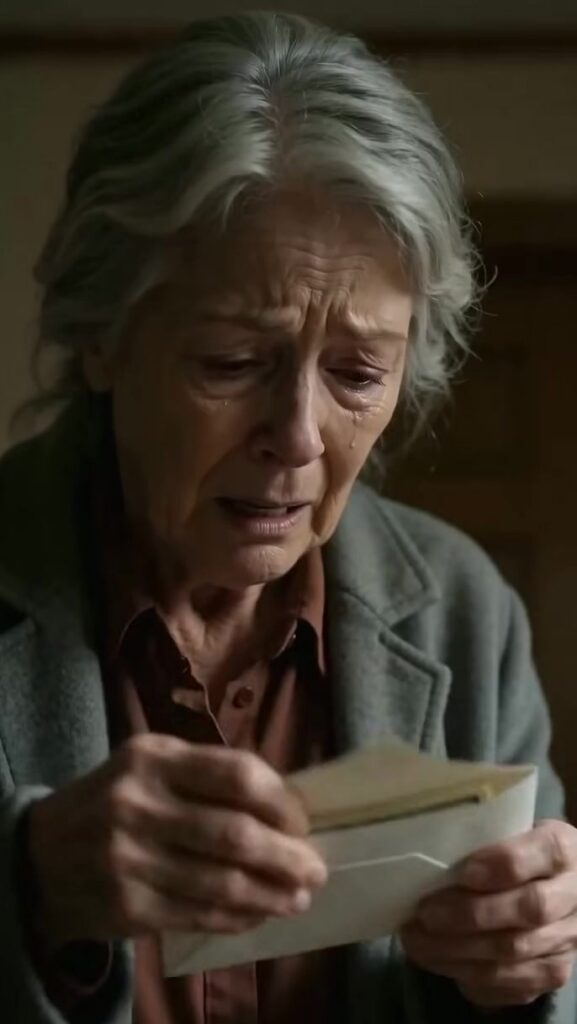
Marisol froze. She pulled her hand back, then reached in again, more carefully. Buried under the rice was a white envelope sealed tight, edges already soft from humidity. Her heart started pounding with an old, familiar fear—like when you find a letter from the landlord. She opened it anyway, thumb working under the flap. A thick stack of bills slipped out into her lap, heavier than it should have been. She stared at it until her eyes blurred. The number of zeros made no sense. This wasn’t “here’s a little help.” This was “here’s a lifeline.”
A folded note fell with it, written in Mateo’s messy, slanted handwriting. Marisol’s hands trembled so hard she had to press the paper to the table to steady it. She read aloud because the quiet was too loud otherwise. “I’m sorry, Mom,” it began. Her throat tightened at the word sorry, because Mateo almost never apologized. “You never did me wrong.” A sob slipped out of her like air escaping a tire. She pressed her free hand to her mouth, tasting salt and rain and years.
Then she read the next line, and it cut through her tears with a strange clarity. “I couldn’t say it in front of her.” Marisol lowered the paper, blinking. The younger woman in the yellow raincoat flashed in her mind like a warning light. Marisol read on. Mateo’s words tumbled across the page in a rush: he owed people, bad people, the kind you don’t argue with. He’d taken a “job” that wasn’t a job. The woman at the gate—Lina—wasn’t a girlfriend. She was the person sent to make sure Mateo didn’t get any ideas about disappearing. The money was his way of pushing Marisol away so she wouldn’t get pulled into the mess. “If I’m cold, it’s because I’m scared,” he wrote. “If I act like I don’t care, it’s because I care too much and I can’t let them see it.”
Marisol sat down hard in her chair, the old wood creaking under her. Her eyes burned as she reread the note. There was a phone number scrawled at the bottom, and beneath it: “Don’t call my phone. Use this. It’s safe for now.” She looked at the stack of cash again and realized what it really was: not just money, but time. Enough to pay her rent for months. Enough to get her somewhere else. Enough to keep her out of reach while Mateo tried to fix whatever he’d tangled himself into.
Outside, the rain didn’t let up. It drummed on the metal fire escape, on the window, on the city like it was trying to wash everything clean. Marisol wiped her face with her sleeve and laughed once, a shaky, disbelieving sound. “Ay, Mateo,” she whispered. “You still think you have to carry it alone.” She folded the note carefully, like it was something sacred, and tucked it inside her blouse close to her skin. Then she stood, went to the kitchen drawer, and pulled out the old cellphone she kept for emergencies. Her hands steadied, not because she wasn’t afraid, but because fear had never been the thing that stopped her. Love had survived too much. And if her son thought pushing her away would save her, he’d forgotten one important detail: mothers don’t leave when the rain gets heavy. They learn how to walk through it.