The bride did not run into the cemetery to say goodbye. She ran like someone had lit a fuse in her ribs, like the whole world was a hallway she could finally sprint down without asking permission. Rain slapped the funeral tent in bright, mean sheets, and the plastic sides shuddered like they wanted to peel off and fly away. Everyone else stood still and respectful—black coats, bowed heads, the quiet choreography of grief—until a flash of white tore across the wet grass and turned the whole scene into a glitch.
She was barefoot. That was the first thing people noticed, even before the soaked wedding dress clinging to her legs. Satin, once smooth and proud, now heavy and darkened at the hem with mud. Her hair had given up on pins and curls and just stuck to her cheeks. She slid the last few feet and hit her knees by the coffin with a wet thud that made a few mourners flinch. Her hands grabbed the polished wood like it could float, like she could keep it from sinking just by holding on hard enough.
The officiant’s voice died in his throat. The cemetery workers froze with their straps half-looped. Umbrellas tilted, faces leaned forward, and you could practically hear everyone thinking the same thing: wrong funeral. Some old-fashioned aunt in pearls whispered, “Is that… performance art?” and then immediately looked ashamed for even saying it. The bride’s shoulders shook, but the sound coming out of her wasn’t the tidy crying people saved for services. It was raw, furious, like she’d discovered the universe had cheated and she planned on appealing the decision in person.
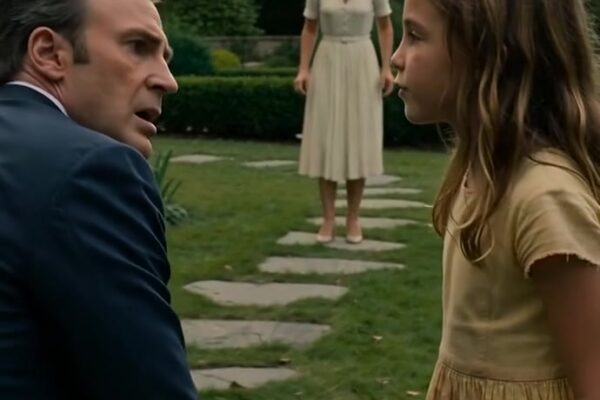
A man in a dark suit stood a few steps back, the kind of suit that screamed money without needing a logo. He’d been keeping his expression locked down all afternoon—sympathetic, distant, professional grief. But when the bride lifted her face, he went pale in a way that had nothing to do with the cold rain. His eyes flicked over her like he was checking for a knife, a microphone, a camera crew, an exit. His jaw tightened so hard it looked painful.
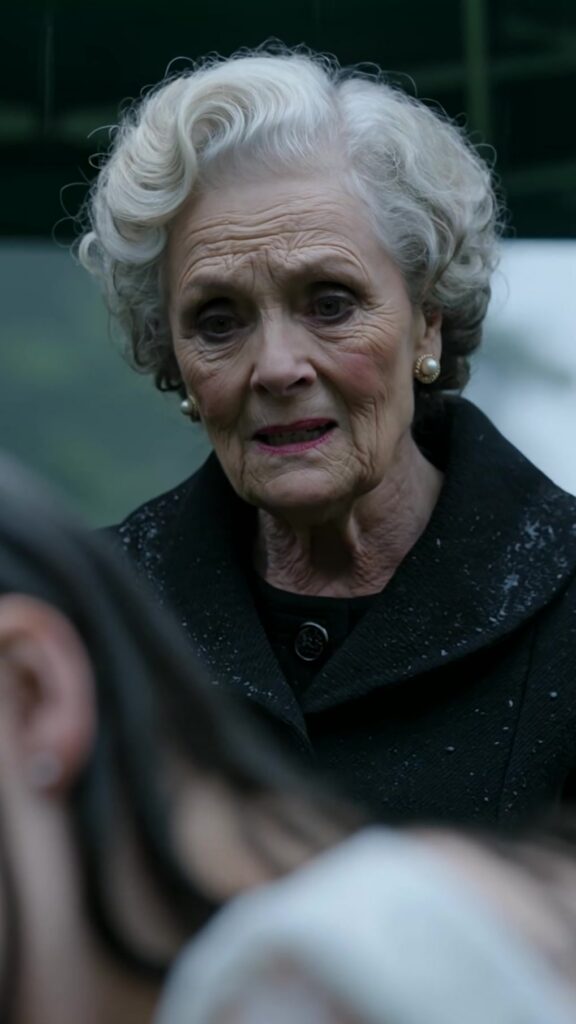
The woman in pearls—later someone would say she was the deceased man’s mother—leaned forward, squinting through the drizzle. “Who are you, dear?” she asked, not unkindly, just honestly lost. The bride swallowed, and for a second it seemed like she might actually give the polite answer people expected. Instead she fumbled inside the bodice of her dress and pulled out a folded piece of paper protected in a cheap plastic sleeve. Her fingers were shaking so badly the plastic rattled. She held it up like a ticket, like proof she belonged here.
It was a marriage certificate. County seal, signatures, date. Yesterday. The deceased man’s name written in confident loops on the groom line. The bride’s own signature beneath it, a little crooked, like she’d been crying when she signed. A few people leaned in close enough to see the ink. A few others backed away like the paper might bite. The mother’s face went paper-white, then flooded red, then drained again. “That’s not possible,” she said, but the words sounded like she was asking for someone to please make it not possible.
The man in the suit didn’t say anything. He just turned, fast, and walked away at first—too controlled, too careful—then the control cracked and he broke into a run between headstones. His shoes splashed through puddles, his tie whipped sideways, and he disappeared into the low fog hanging over the back of the cemetery like it had been waiting for him. People stared after him, stunned, like they’d just watched a character bolt from the wrong movie.
“That guy knows you,” someone muttered. It wasn’t a question. The bride looked after him with the kind of focus you’d give a moving target. Then she turned back to the coffin and pressed her forehead against it. “He’s not supposed to be here,” she whispered. Not loud enough for the whole crowd, but close enough that the mother heard it and stiffened. “I married him last night. I talked to him. I held his hands. He kissed me and told me not to worry about anything. And then this morning someone called and said he’d died in an accident two days ago.” She let out a short laugh that was more like a choke. “Two days ago he was busy pretending to be someone else in a casket.”
At that, the mother grabbed the edge of the tent pole for balance. “What are you saying?” she demanded. “My son is right there.” She pointed like pointing could make the universe behave. The bride wiped rain from her eyelashes with the back of her hand and stared up at her. “I’m saying the man I married is alive,” she said. “Or he was alive last night. And if he’s alive, then whoever is in this coffin isn’t him.” She tapped the certificate. “And if whoever is in there isn’t him, then someone has been lying to you. Maybe to me too. Maybe the whole point was to make me a widow before I even got to be a wife.”
The officiant, who had been hovering like a confused bird, tried to regain control. “Ma’am, we can discuss this after—” he started. The bride cut him off with one sharp look. “After you bury the wrong person?” she snapped. “No.” She turned to the cemetery workers. “Don’t lower it,” she said. Her voice wasn’t loud, but it carried the kind of authority that comes from having nothing left to lose. The workers glanced at each other, then at the man in the suit—gone—then at the mother, who looked like she might faint or slap somebody or both.
A younger mourner, probably a cousin, took out her phone and started recording. The bride noticed and didn’t care. She stood up, dress dragging in the mud, and addressed the crowd like she was giving a toast at the worst reception ever. “My name is Mara,” she said. “I met Ethan—your Ethan—six weeks ago.” The mother made a strangled sound at the name. “He told me he was trying to get away from his business partner. He told me he needed a clean break, something legal, something binding. He said if I married him, it would protect me too.” She shook her head, rain flying. “That should’ve been my clue. Who gets engaged in a week and thinks it’s romantic?”
There were whispers now, a whole swarm of them. Someone said, “Business partner?” Someone else said, “Insurance.” The bride’s eyes hardened. “Last night we got married at a twenty-four-hour chapel off the highway,” she continued. “No family. No friends. Just a tired clerk and a bouquet that looked like it had been assembled from leftovers. Afterward Ethan gave me a key to a storage unit and told me if anything happened, I was to go there first and trust no one.” She lifted the key on a thin chain from under her dress. “Then he left. He said he had one more thing to handle.” Her gaze flicked to where the suited man had run. “And now I’m standing here watching strangers try to bury him.”
The mother’s voice came out small. “Why would he do that?” Mara’s expression softened, just for a second. “Because he was scared,” she said. “And because he thought a wedding ring could be armor.” She looked down at the coffin again, rain beading on the varnish. “But if he faked his death, someone else paid the price. Someone else is in there. Somebody’s child. Somebody’s brother.” She lifted her head, and the casual tone slipped into something steadier, more dangerous. “So no, I didn’t come here to say goodbye. I came because the man inside that box wasn’t supposed to be dead, and the people who made sure of it are still walking around.”
For a moment nobody moved. Even the rain felt like it was waiting. Then the mother, trembling, stepped closer to Mara and put a hand on the coffin lid—careful, like touching it might burn. “Stop,” she said, not to Mara, but to the workers. “Stop everything.” Her voice cracked, but she said it again, louder. “Stop.” The workers eased back, straps slack. The officiant backed away like he’d been dismissed by a queen.
Mara inhaled, long and shaky. She looked toward the fog where the suited man had vanished and then back at the crowd. “If you want answers,” she said, “help me find him.” She didn’t specify who—Ethan, the man in the suit, the person in the coffin, the truth. Maybe all of it. She squared her shoulders, wet dress heavy as guilt, and stepped away from the grave like she’d just decided funerals weren’t the end of stories. They were the part where the living finally started telling the truth.