The hall was pretending to be warm. Crystal chandeliers threw light like spilled champagne, and the walls sweated gold. Outside, snow piled up against the valet stand, and every time the doors opened, a cold breath slid in and made the candle flames flinch.
Someone had gone hard on the white roses. They were everywhere—arched over the aisle, crowded into bowls, braided around columns like the building had grown thorns. It smelled expensive, clean, and slightly suffocating, like you were supposed to be grateful for breathing it.
It wasn’t even the main wedding yet. This was the “winter blessing,” the kind of pre-ceremony ritual rich families invented so they could host two events, collect twice the gifts, and still call it tradition. The groom—some finance guy with hair that looked like it had never met humidity—stood up front looking like he was waiting for his own mirror to arrive. The bride smiled and smiled, but her eyes kept flicking to the left, toward the flowers, toward the front row.
That’s where Raymond Kessler sat, stiff as a statue in a black suit, with his daughter attached to him the way a shadow clings to a wall. She was seven, maybe eight, wearing a pale-blue dress that made her look like a piece of winter sky that had wandered indoors. Her small hand was hooked into his sleeve so tightly that his cuff had a wrinkle worn into it.
People kept telling Raymond how brave he was. The words floated around him like cheap confetti: strong, admirable, devoted. They said it softly, like compliments could be anesthesia.
But everyone also knew the real reason he was here. A year ago, in this exact hall, the room had been set up almost the same. White roses again. Same chandeliers. Same band tucked into the back corner behind a fake wall of greenery. Raymond’s wife, Elise, had been the one walking down the aisle that night—she’d been standing right in front of the flowers when she suddenly crumpled, like someone had unplugged her.
Officially, it had been a freak medical thing. A heart issue no one saw coming. That’s what the doctors said. That’s what the family repeated. That’s what the lawyers insisted. But the gossip had teeth, and it kept chewing on the same detail: Raymond’s little girl had been the last person with Elise before she fell. She’d seen something. Heard something. After that night, the kid’s voice vanished, as if it had been snatched out of her throat.
Raymond had tried everything—specialists, therapists, retreats in the mountains where people promised healing if you paid upfront and didn’t ask too many questions. He’d even flown in some famous speech expert who made the girl hold ice cubes and hum into a tuning fork. Nothing. Not a word. Not even a whisper.
Tonight, he’d finally asked for the microphone. People assumed it would be a classy toast about new beginnings. The band was ready with something soft. Servers paused near the edges with trays balanced like offerings. The room tilted toward Raymond, hungry for a moment.
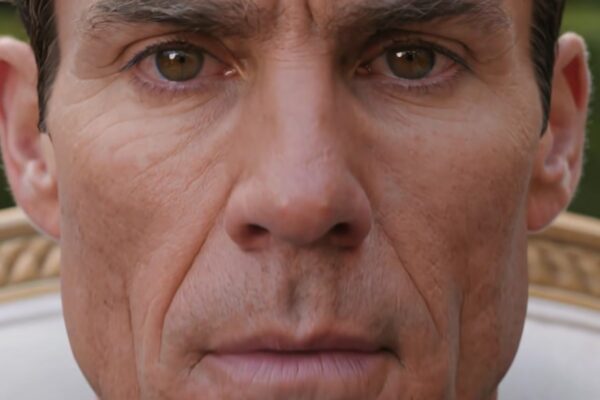
He stood up, and the movement alone turned heads. He looked older than he did in the magazines. His jaw was clenched so hard the muscles jumped. His daughter stood too, still attached, her face calm in that eerie, practiced way kids get when adults are always trying to fix them.
Raymond brought the microphone close. His hand shook. “I’m not good at speeches,” he started, and a few people did that polite little laugh, like they’d been trained. Then his voice thinned, like paper tearing. “My daughter hasn’t spoken since Elise died.”
The laugh died instantly. It was like someone had dropped a heavy coat over the room. Even the chandelier light seemed to hush.
Raymond swallowed, and his eyes did that awful glassy thing that means a person is about to fall apart in public and can’t stop it. “I’ve spent… I don’t even know how to put a number to it. Doctors, counselors, anyone who claimed they could help. And she’s still quiet.” He looked down at his daughter like he was checking if she was still real. “If there’s anyone here—anyone—who can make her speak, I’ll give you everything I have left. Whatever you want. Houses. Cars. Donations. I don’t care.”
There were no clinks of forks. No whispers. Nobody coughed. The band didn’t even pretend to play. It was the kind of silence that makes your ears ring because you suddenly notice your own blood.
The little girl stared at the roses. Her lips were parted, just barely, as if a word was waiting right behind her teeth and couldn’t find the door. Her eyes were wet but she didn’t wipe them. She didn’t do anything. She was small beneath all that wealth and decoration, like a fragile thing put on display and forgotten.
Then, from the back of the hall, someone moved.
A kid—maybe twelve, maybe thirteen—stepped out from near the coat check area. He wore a green hoodie with a frayed cuff and jeans that clearly hadn’t ever met a dry cleaner. He looked like he’d wandered in looking for the bathroom and decided to stay for the show. He didn’t have parents trailing behind him, no invitation ribbon, no shiny shoes.
A ripple went through the guests. Confusion first, then that automatic irritation rich people get when something unplanned walks into their space.
The boy started down the flower-lined aisle. Slow, steady steps, hands in his pockets like he was taking a casual stroll through a mall. He didn’t glance up at the chandeliers. He didn’t look impressed by the roses. He just walked straight toward Raymond and the girl.
Raymond’s face tightened as the boy approached. Up close, the kid’s cheeks were pink from cold. A snowflake melted on his hairline and left a bead of water that ran toward his eyebrow. His eyes were clear and weirdly calm.
He stopped in front of them, close enough that the roses framed his shoulders. He looked at the girl first, not Raymond. Then he said, plain as anything, “I can get her to talk.”
Raymond’s grief flashed into anger so fast it was like a switch. “This isn’t a game,” he snapped, voice sharp in the microphone. “Who let you in? Get out. Now.”
The boy didn’t flinch. He just nodded once, like he’d expected that reaction. “I know it’s not a game,” he said. “That’s why I’m here.”
Someone in the front row hissed for security. Someone else muttered, “This is disgusting.” The bride looked like she’d been slapped by the awkwardness. The groom leaned toward a groomsman as if delegating the problem.
But the girl—silent, pale-blue dress, fingers hooked into her father’s sleeve—lifted her eyes to the boy. And her face changed.
It wasn’t dramatic, like a movie. It was smaller and somehow worse. Her eyebrows pulled together in a way that said recognition before her brain could argue. Her mouth opened a fraction more. Her grip on Raymond tightened, like she was bracing for impact.
The boy’s gaze softened, and he said something without the microphone, low enough that only she could hear it. Just a few words. Nobody else caught them. It might’ve been a name. It might’ve been a question. It might’ve been a secret handed back like a lost coin.
The little girl’s lips trembled. Her chest hitched as if her body had forgotten how to make sound and was trying to remember the instructions. Her eyes filled and finally spilled over.
Raymond stared down at her, breath caught like he was afraid to move and break whatever fragile thing was happening. The whole hall leaned in, held hostage by the tiniest motion of a child’s mouth.
And then—after a year of quiet so complete people had started calling it permanent—she formed a word. Not loud. Not clean. But unmistakable. It came out like it had to crawl through thorns to reach the air.
“Theo,” she whispered.
The boy’s throat bobbed. Raymond blinked like he’d been punched. “Who is Theo?” Raymond asked, but his voice cracked on the name, and suddenly the flowers didn’t look decorative anymore. They looked like a witness.
The kid in the green hoodie finally pulled his hands from his pockets. In one fist he held something small and dark—an old-fashioned button, the kind that came off a coat. He set it gently on the edge of the nearest rose arrangement like it belonged there. “That was my mom’s,” he said quietly, eyes on the girl. “She worked here last winter.”
Raymond’s face drained. In the front row, someone shifted like they wanted to disappear into their designer scarf. The bride’s smile collapsed. The band member in the back lowered his instrument, eyes narrowed.
The little girl’s voice, having found a crack in the wall, pushed again—raw and shaky but real. She clung to her father’s sleeve like the world might steal him, and with tears sliding down her cheeks, she breathed, “I saw… I saw her. By the flowers.”
It wasn’t a full confession. Not yet. But in that single broken sentence, the hall changed shape. The chandeliers didn’t feel warm anymore. The roses didn’t smell like money. They smelled like a memory that had been trapped too long.
Raymond stared at his daughter, then at the boy, then at the white roses arching overhead like a mouth. He lowered the microphone with a shaking hand, because for the first time all night, the room didn’t need amplification to hear what mattered.
All it needed was the painful sound of a child finally speaking—and the sudden understanding that the most brutal moment of the night wasn’t going to be the toast, or the dancing, or even the grief.
It was going to be what came next, right there in front of the flowers.