Have you ever waved off a stubborn headache as “just stress,” or blamed sudden exhaustion on a packed calendar? Everyday symptoms like these can feel harmless—until they keep coming back. When discomfort persists, it’s easy to spiral into uncertainty about what’s normal and what deserves attention. Learning the possible early warning signs of a brain tumor doesn’t mean jumping to conclusions; it means knowing when to start a smart conversation with a healthcare professional.
What Brain Tumors Are—and Why Early Awareness Helps
A brain tumor is an abnormal growth of cells in or around the brain. Tumors vary widely: many are non-cancerous (benign), while others are malignant. Regardless of type, any growth in the brain can matter because even small changes may affect critical functions.
Medical organizations such as the Mayo Clinic emphasize that symptoms often resemble common conditions like migraines, stress, or sleep issues. Meanwhile, insights referenced by the American Cancer Society suggest that noticing symptom patterns earlier can lead to timelier check-ups and clearer answers. This isn’t about self-diagnosing—it’s about being informed and proactive.
The 10 Early Signs of a Brain Tumor to Watch For
Below are 10 possible early signs, starting with the more subtle ones. Keep in mind: each symptom can have many causes. The key is persistence, progression, or clustering (several symptoms occurring together).
10) Unexplained Fatigue and Drowsiness
If you feel unusually drained day after day—even after sleeping—take note. This may look like heavy drowsiness during normal tasks or a sudden drop in stamina. Clinical sources such as the Cleveland Clinic note that pressure or disruption in certain brain areas can affect alertness and energy regulation.
Many people dismiss this as burnout, but when it lingers, tracking sleep quality and daily energy levels may reveal a pattern worth discussing with a doctor.
9) Personality or Behavior Changes
Mood shifts that feel “out of character”—irritability, apathy, withdrawal, impulsiveness—can sometimes be noticed by family first. The frontal lobes, which influence behavior and decision-making, may be involved depending on tumor location (as discussed in resources like the Mayo Clinic).
Because these changes can creep in slowly, they’re often labeled as stress—until other symptoms appear alongside them.
8) Memory Problems or Confusion
Forgetting recent conversations, struggling to focus, or feeling disoriented in familiar places can start subtly and worsen over time. Tumors may interfere with memory-related regions or raise pressure within the skull, affecting cognition.
It’s easy to blame aging (even in younger adults), but persistent cognitive fog deserves medical attention—especially if it’s new or progressive.
7) Balance Issues or Dizziness
Frequent stumbling, clumsiness, or a spinning sensation may relate to the cerebellum, which helps control coordination. Experts (including those cited by the Cleveland Clinic) recognize balance changes as a potential early clue in some cases.
Because dizziness is commonly linked to ear problems, people often treat it as minor—yet gradual progression should raise awareness.
6) Nausea or Vomiting (Often Worse in the Morning)
Waking up nauseated without a clear stomach-related reason—especially if symptoms improve later in the day—can be linked to increased pressure in the skull. Some people notice it’s worse when changing positions (like sitting up quickly).
A symptom log can help you identify whether this is random or following a consistent pattern.

5) New-Onset Seizures
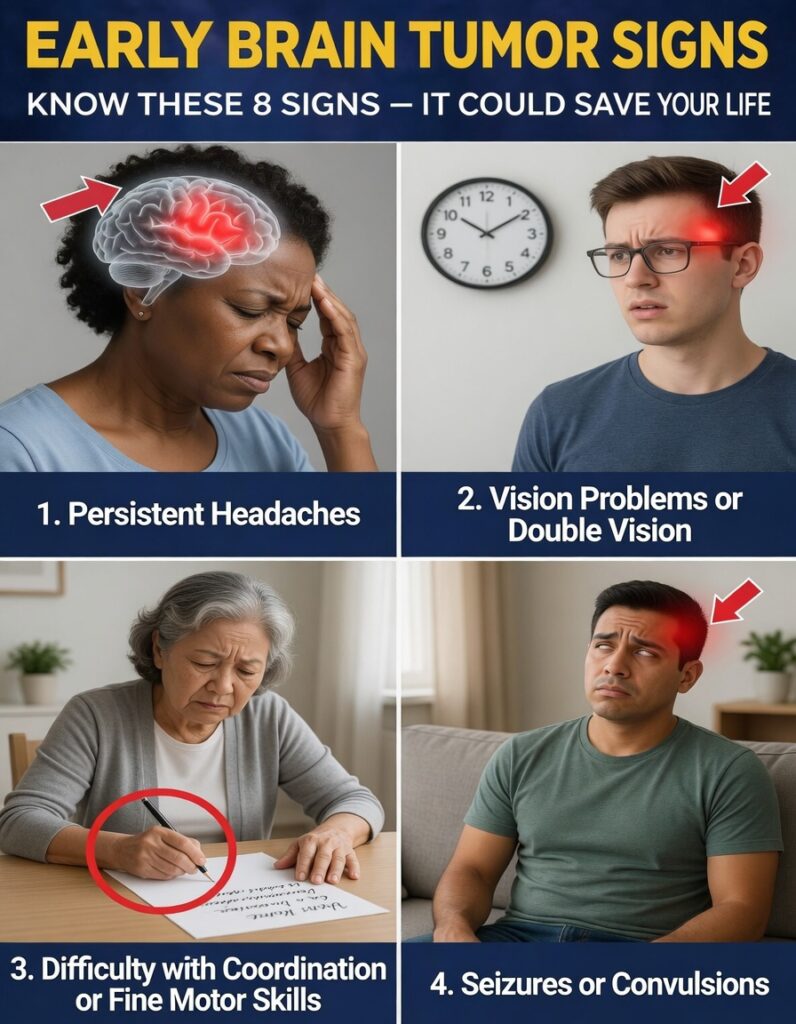
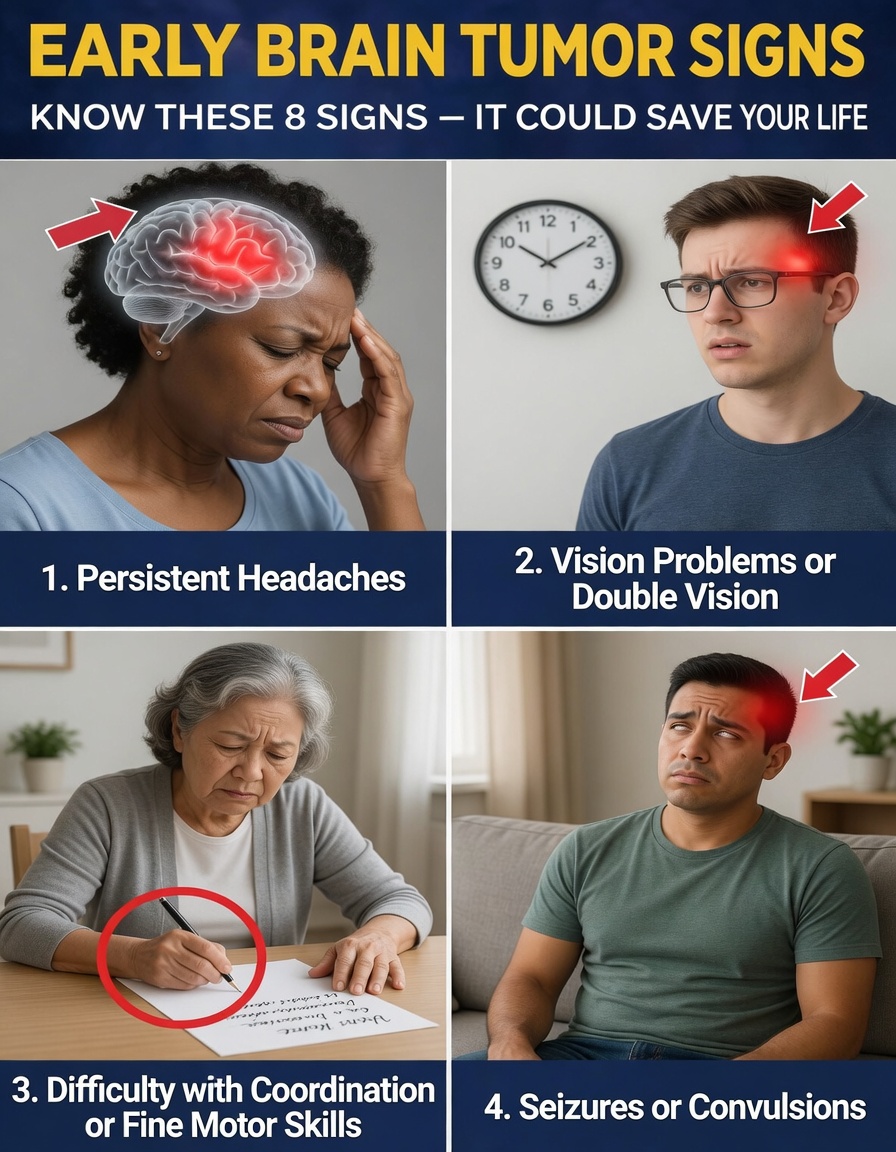
A first-time seizure—whether a major convulsion or subtle episodes like staring spells—should be treated as urgent. Data referenced by the American Cancer Society indicates seizures are common among people diagnosed with brain tumors.
If this happens, seek medical help immediately. Prompt evaluation often leads to faster answers and better symptom control.
4) Speech Difficulties
Trouble finding words, slurred speech, or sudden difficulty expressing thoughts can occur when growth affects brain regions tied to language. It may begin as mild “brain fog,” then become more noticeable.
If speech changes are new, recurring, or worsening, document when they occur and seek professional assessment.
3) Weakness or Numbness in the Arms or Legs
Tingling, numbness, or weakness—especially on one side of the body—may develop gradually and can resemble other neurological conditions. Pressure on pathways controlling movement and sensation is often implicated.
Even simple at-home observations (like grip strength differences or uneven coordination) can help you describe symptoms clearly to a clinician.
2) Vision Changes
Blurred vision, double vision, blind spots, or a narrowed field of view may appear during routine activities like reading or driving. Tumors can affect areas connected to vision, including the optic nerve pathways.
Regular eye exams are helpful, but vision changes combined with headaches, nausea, or balance issues should be taken more seriously.
1) Persistent or Worsening Headaches
Headaches are among the most reported symptoms. Concerning features include:
- A new pattern of headaches you didn’t have before
- Pain that worsens over time
- Symptoms that are stronger in the morning
- Headaches that don’t respond to typical remedies
- Pain that worsens with coughing, straining, or bending
Tracking headache timing, intensity, and triggers can be especially useful when speaking with a healthcare provider.
Making the Signs Easier to Understand: Visual Breakdowns
Many people find it easier to recognize patterns through visuals. Common formats include:
- Symptom overview charts showing overlap (for example, headaches and vision changes appearing together)
- Brain area maps linking symptoms to regions involved in balance, behavior, speech, or memory
A simplified comparison can look like this:
- Fatigue → energy regulation pathways → often mistaken for overwork
- Behavior shifts → frontal regions → dismissed as mood or stress
- Memory issues → cognitive centers / pressure effects → blamed on aging
- Dizziness → coordination pathways → attributed to inner ear problems
- Morning nausea → pressure changes → assumed to be diet-related
When symptoms cluster, the need for evaluation becomes more urgent.

Real-Life Examples: When Awareness Improved Outcomes
Consider Lisa, 48, who developed morning headaches and dizziness. At first, she assumed it was lifestyle-related. After tracking the symptoms and seeing a clear pattern, she booked an appointment. Imaging revealed a growth that was manageable—identified early enough for timely care.
Mark, 55, experienced a seizure along with increasing memory lapses. Because he sought help quickly, he was able to get appropriate evaluation and treatment sooner.
While individual stories differ, they highlight one consistent theme: paying attention to patterns can change the timeline of care.
Practical Steps You Can Take Today
If you’re concerned about persistent symptoms, here are actionable, low-stress steps:
-
Start a symptom journal
- Record what happens, when it happens, and severity (1–10)
- Include details like sleep, stress, hydration, and time of day
-
Look for patterns over 1–2 weeks
- Examples: headaches + nausea, dizziness + vision shifts, fatigue + confusion
- Use a notes app or symptom-tracking app if that’s easier
-
Schedule a medical check-up if symptoms persist or worsen
- Bring your notes
- Ask about risk factors, family history, and whether imaging is appropriate
-
Support brain health habits
- Prioritize consistent sleep
- Hydrate regularly
- Take walks or use gentle movement to manage stress
-
Ask people close to you what they’ve noticed
- Others may pick up on speech, mood, or behavior changes you don’t recognize
Quick reminders:
- Drink enough water daily
- Practice simple stress-reduction (breathing, short walks, mindfulness)
- Include nutrient-rich foods such as nuts and berries
Closing Thoughts: Awareness Without Panic
These 10 potential early signs of a brain tumor—from headaches and vision changes to fatigue and seizures—are not a reason to assume the worst. They are a reason to listen to your body, watch for patterns, and seek professional guidance when something doesn’t feel right.
The key insight many people report after acting early is not only better clinical outcomes, but also a stronger appreciation for everyday wellness—proof that small observations can lead to meaningful, life-improving decisions.
Frequently Asked Questions (FAQ)
What should I do if I notice several signs at once?
If multiple symptoms appear together, persist, or worsen, consult a healthcare provider promptly. They may recommend evaluation and, if appropriate, imaging studies to clarify the cause.
Are brain tumors common?
Brain tumors are relatively uncommon. Overall lifetime risk is generally cited as under 1% in many public health summaries, though exact figures vary by tumor type and region.