
That stubborn nighttime cough, a tight, heavy chest, and nonstop mucus can make even simple tasks feel exhausting—especially during cold and flu season or when air quality drops. When respiratory discomfort flares up, many people look for gentle, natural ways to feel better alongside rest, hydration, and proper care. One long-loved option is a traditional homemade expectorant tea: a soothing, warm drink made from common kitchen staples that may help you breathe more comfortably when congestion or throat irritation shows up.
What makes this grandma-style remedy so popular is how straightforward it is—simple ingredients, familiar flavors, and a comforting ritual you can repeat when you need support. Below, you’ll find the complete recipe, how each ingredient is traditionally used, and practical ways to fit this tea into your routine.

Why Choose a Natural Homemade Tea for Respiratory Discomfort?
Season changes, viruses, smoke, and pollution can leave the airways irritated, inflamed, and packed with mucus. A warm infusion helps you hydrate while also delivering plant compounds that may support clearer breathing and throat comfort.
Scientific and traditional wellness sources often highlight these ingredients for respiratory support:
- Honey has been studied for reducing cough frequency and severity, sometimes offering short-term relief comparable to certain over-the-counter options for upper respiratory infections.
- Ginger and garlic are widely recognized for their anti-inflammatory and antimicrobial potential in traditional practice and lab research.
- Onion contains quercetin, an antioxidant associated with inflammation support.
- Lemon contributes vitamin C, which can support overall immune function.
This tea is not a substitute for medical treatment. Instead, think of it as a gentle, supportive addition for mild symptoms while you recover.
Grandma’s Classic Expectorant Tea (Makes About 4 Cups)
This recipe is designed to be simple and practical—using ingredients you may already have in your kitchen.
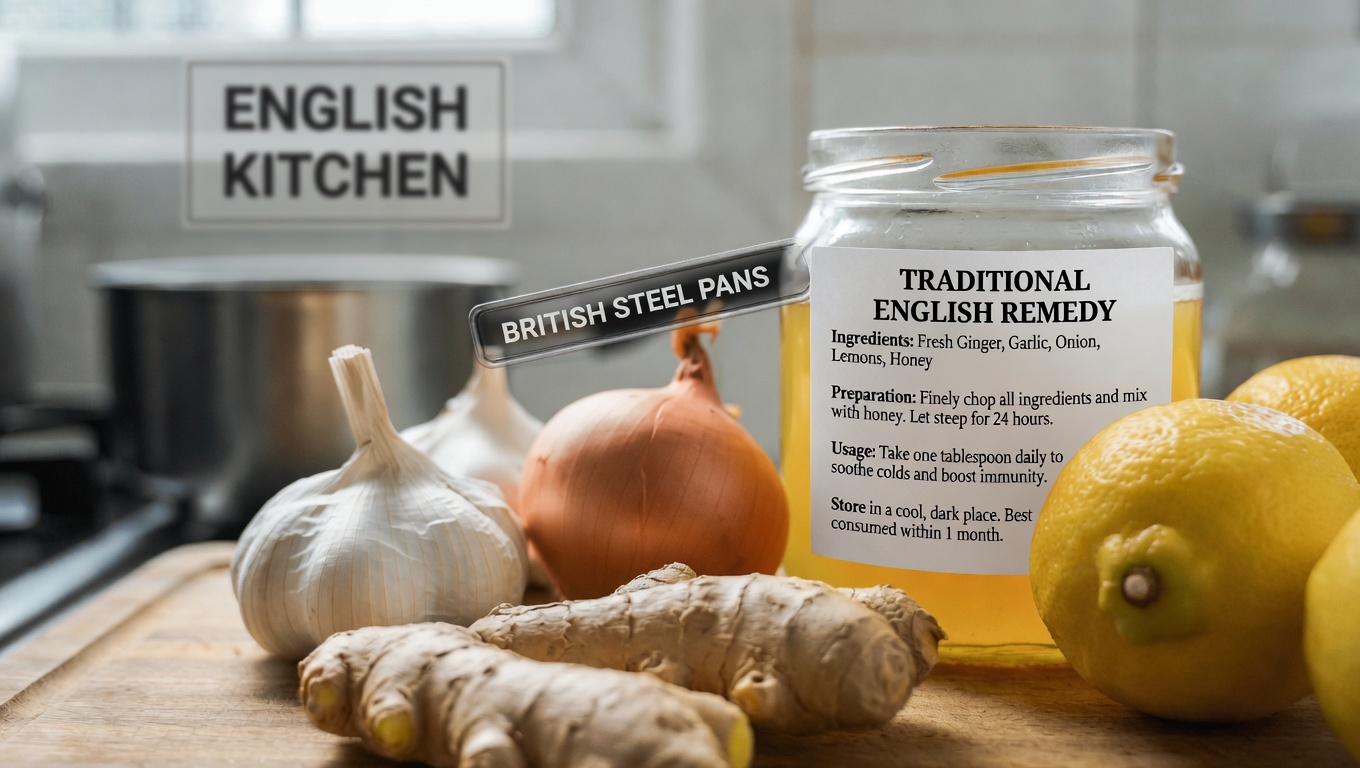
Ingredients
- Fresh ginger: 1 piece (about 2 inches / 5 cm)
- Garlic: 3 cloves
- Onion: 1 medium
- Lemons: 2
- Raw honey: 2 tablespoons
- Water: 4 cups
Step-by-Step Instructions
- Peel and dice the onion into small pieces to help release its natural compounds.
- Lightly crush the garlic cloves to activate allicin and related sulfur compounds.
- Rinse the ginger and slice thinly (peeling is optional if it’s organic and well-cleaned).
- Juice the lemons and set the juice aside for later.
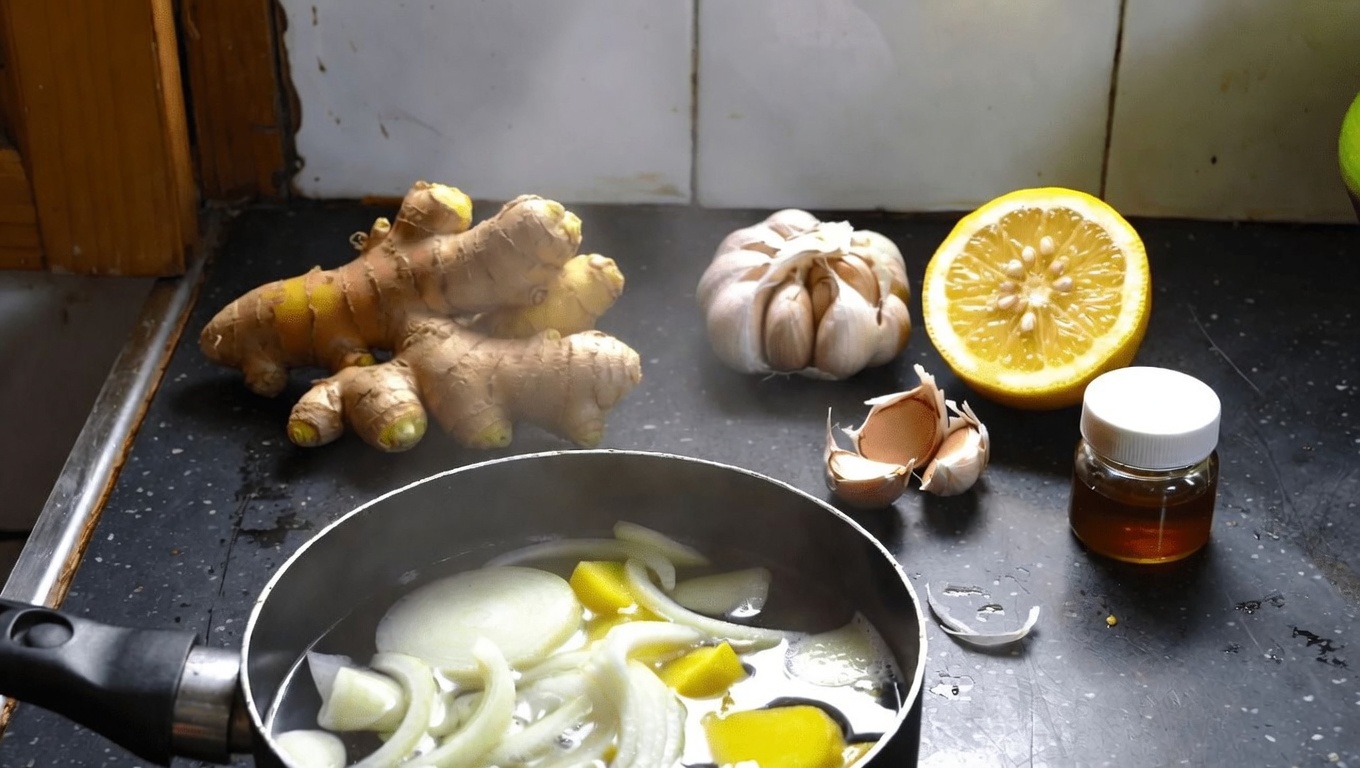
- In a pot, combine water + onion + garlic + ginger.
- Bring to a boil, then lower the heat and simmer for 15 minutes.
- Turn off the heat and steep for 5 more minutes, then strain into mugs or a teapot.
- Stir in fresh lemon juice and raw honey until fully dissolved.
- Drink warm, slowly, to maximize the soothing effect.
The rising steam and strong aroma can feel comforting—especially when you’re congested and run down.
How to Drink This Tea for the Most Comfort
- Drink 1 cup in the morning on an empty stomach for gentle daily support.
- Have 1 cup before bed to help reduce nighttime irritation.
- Use consistently for up to 7 days during periods of congestion or throat discomfort.
- Optional: inhale the steam for a few slow breaths before sipping to enhance the “open-airway” feeling.
For best results, pair this tea with plenty of fluids, adequate rest, and humidified air.
Potential Benefits of This Natural Expectorant Tea
Because the blend combines multiple traditional ingredients, it may offer broad, comfort-focused support:
- May help loosen mucus and encourage easier clearing
- Soothes dry or productive coughs
- Supports airway and bronchial comfort by easing irritation
- May help you feel less stuffed up through nasal and sinus support
- Provides antioxidants and vitamins that support immune health
- Offers mild antimicrobial properties (not a replacement for medical care)
- Helps calm a scratchy throat
- May support better sleep by reducing disruptive nighttime coughing
- Promotes comfort through warmth and hydration
Individual results vary, but many people find this kind of routine noticeably calming during mild respiratory flare-ups.
Ingredient Breakdown: Why Each One Is Used
Ginger
Ginger is prized in traditional wellness for its warming nature. Compounds such as gingerols are associated with inflammation support and are commonly used to help the body manage congestion and mucus.
Garlic
Garlic contains allicin and other sulfur compounds valued for their immune-supportive reputation and broad antimicrobial properties in traditional use.
Onion
Onion is a natural source of quercetin, a flavonoid with antioxidant activity. In folk remedies, onion is often used to help thin mucus and promote clearer breathing.
Lemon
Lemon adds vitamin C and acidity, supporting general immune defenses while balancing the stronger flavors of garlic and onion.
Honey
Raw honey is well known for coating and soothing the throat. Research reviews suggest honey can be helpful for easing cough symptoms, especially when mixed into warm liquids.
Together, these ingredients create a balanced, traditional blend designed for comfort and respiratory support.
Precautions: When to Use Caution
This tea is typically well tolerated, but it’s not ideal for everyone:
- Avoid if you have allergies to any ingredient (garlic, onion, etc.).
- Use caution with ginger and garlic if you experience acid reflux, ulcers, or gallbladder issues.
- If you have high blood pressure, consume moderately (these ingredients can mildly affect circulation for some people).
- Speak with a clinician before use if you take blood thinners or other prescription medications.
“Natural” doesn’t automatically mean risk-free—choose what fits your body and health situation.
Conclusion: A Traditional, Comforting Tea for Easier Breathing
This time-tested recipe combines ginger, garlic, onion, lemon, and honey into a warming drink that may support respiratory comfort, help loosen congestion, and make recovery feel a bit easier—without relying on synthetic additives.
Try it the next time a cough or mucus buildup starts to bother you. Use it as a supportive home remedy—not a replacement for medical guidance. If symptoms persist or worsen, or you have fever, shortness of breath, chest pain, or severe fatigue, contact a healthcare professional promptly.
FAQ
Can I prepare this tea in advance?
Yes. Make a batch and store it in the refrigerator for up to 3 days. Reheat gently (avoid re-boiling) and add fresh lemon and honey when serving for the best flavor and potential benefits.
Is this tea safe for children?
Honey should not be given to children under 1 year old due to botulism risk. For older children, use small amounts and consult a pediatrician if you’re unsure.
What if the flavor is too strong?
Reduce the garlic and onion, then increase lemon and honey to balance the taste. You’ll still get the comforting warmth and steam.
Disclaimer
This content is for informational purposes only and does not provide medical advice. It is not intended to diagnose, treat, cure, or prevent any disease. Always consult a qualified healthcare professional before trying new remedies, especially if you have underlying conditions or take medications.