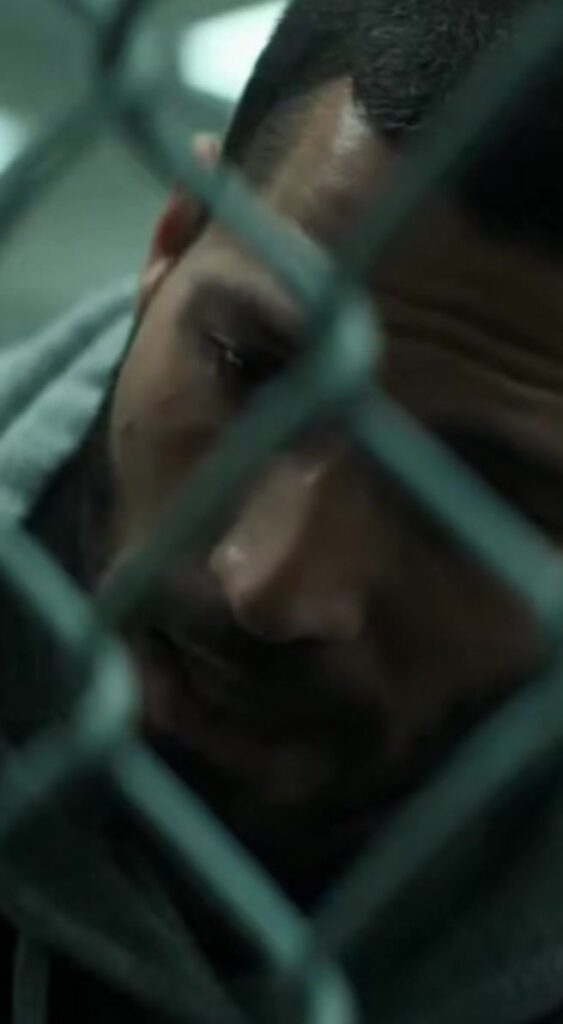
The town looked smaller than he remembered, as if the years had been tightening it like a fist. Evan Mercer parked beside the courthouse square, killed the engine, and sat with both hands on the steering wheel until his knuckles paled. Across the street, the iron gates of Briar Hollow Animal Shelter caught the afternoon sun and flung it back like a warning. He had rehearsed this moment on sleepless nights: the walk up to the door, the smell of disinfectant, a bark he’d know like his own name. He had not rehearsed what he would do if the bark didn’t come.
Five years was a long time to vanish from a dog’s life. A long time to be told—by attorneys and doctors and the occasional well-meaning stranger—that moving on was “healthy.” Evan had moved on only in geography. He’d crossed state lines, signed papers, learned to work a forklift with a damaged shoulder. He’d learned how to wake from nightmares without shouting. But there was a part of him that had stayed tethered to a muddy riverbank behind his childhood home, where a brindle mutt with a white blaze down his nose had once sprinted into his arms as if Evan were the only gravity he trusted.
He pushed open the shelter door. A bell chimed, cheerful and wrong. The air inside was cool and sharp, layered with detergent and wet fur and something older—fear, maybe, or the residue of too many goodbyes. A volunteer looked up from behind the counter, a woman with gray hair pinned in a tight knot and reading glasses perched like a judgment. “Can I help you?” she asked, already measuring him the way people did when they saw his limp.
“I’m here about a dog,” Evan said. His mouth went dry around the words he’d carried for years. “Name’s Sheriff. Brindle. White face marking. He’d be… older now.” The woman’s expression softened, but it wasn’t the softness Evan wanted. It was the kind that preceded bad news.
“We don’t have a Sheriff in-house,” she said gently. “But—wait. Are you Evan Mercer?”
The fact that she knew his name hit him like a shove. He nodded, and the room tilted with possibility. She disappeared into a back office and returned with a man in a blue polo shirt that read DIRECTOR. He was broad-shouldered, his smile practiced but not unkind. “Mr. Mercer,” he said, offering a hand. “I’m Daniel Rusk. Sheriff’s case was… memorable.”
“Where is he?” Evan asked, skipping the handshake. He didn’t want memorable. He wanted warm fur and that particular smell of sun and dust Sheriff carried after rolling in the yard.
Rusk’s eyes flicked downward. “He was adopted,” he said. “Four years ago. A retired couple out by the lake. We keep records. We weren’t able to contact you—your number was disconnected.”
The words struck like stones. Adopted. Four years ago. Evan’s throat tightened until it felt sealed. “So that’s it?” he managed. “I just… missed him?”
“Not exactly,” Rusk said, and the carefulness in his voice made Evan’s stomach drop. “Sheriff was surrendered after the incident. He came in with injuries and he… he didn’t do well for a long time. He wouldn’t eat if he couldn’t see the door. He growled at anyone wearing work boots.” Rusk hesitated, then added, “He’d press his nose to the gate whenever a truck pulled in. Like he was waiting for one particular engine.”
Evan’s mind snapped back to that day with brutal clarity: the river, rain turning the bank to grease, Sheriff barking at the water because Evan’s little sister had slipped and vanished beneath the current. Evan remembered the rope burning his palms, the taste of mud, Sheriff launching without hesitation, teeth finding the jacket collar and hauling. Evan remembered the sirens, the chaos, the stranger’s hand yanking Sheriff away by his collar. And then the court case that followed, and the animal control officer who’d called Sheriff “aggressive” because a dog that had just been kicked would snap. Evan had been taken away in an ambulance, and Sheriff had been taken away in a van.
“I need to see him,” Evan said, the words scraping out of him. “I need—just once.”
Rusk studied him, perhaps weighing policy against the ache in Evan’s face. Finally he nodded. “We can’t give you their address,” he said, “but I can call the adopters and ask if they’d be willing to meet. If Sheriff is up for it. He’s thirteen now. Arthritis. Hearing’s not what it used to be.”
Thirteen. Evan swallowed hard. “Call,” he said. “Please.”
Two days later, Evan stood at the edge of Briar Lake Park with a bouquet of dog treats in his pocket like an absurd offering. The wind smelled of algae and cut grass. He watched families pass—strollers, laughter, leashes—and every jangling collar made his chest seize. When a white sedan finally pulled in, his heart began to hammer like it was trying to escape.
An elderly couple stepped out: the man steadying himself with a cane, the woman holding a leash with both hands. At the other end of it was a dog that might have been Sheriff if Evan squinted through hope: brindle coat gone gray along the muzzle, shoulders slightly hunched, one ear torn at the tip like a remembered battle. The dog’s tail hung low, and his eyes scanned the world with tired caution.
Evan took one step forward and stopped. “Sheriff,” he said, softly, as if speaking too loudly might shatter what was left of his courage. The dog looked up, but there was no flash of recognition, no joyous explosion. Only a polite, wary attention.
It was worse than any rejection Evan had imagined, because it wasn’t anger. It was absence. Evan felt his face heat, humiliation and grief twisting together. He crouched, careful with his bad leg, and held out his open hand. “Hey, buddy,” he whispered. “It’s me.”
Sheriff sniffed the air. He took a slow step forward, then another, as if approaching a memory that might bite. He put his nose near Evan’s fingers, inhaled, and paused. His body went still. A small tremor ran through him like a ripple in water.
Evan didn’t move. He didn’t beg. He just let the space between them fill with scent and time: motor oil, river mud, the cheap soap from Evan’s new apartment, the faint metallic tang of old scars. Sheriff’s nostrils flared again, then his head jerked slightly, ears pricking in confusion as if a door had opened somewhere deep inside and light had poured in.
And then, quietly—so quietly Evan almost missed it—Sheriff let out a sound that wasn’t quite a bark and wasn’t quite a whine. It was the kind of noise a dog makes when the world suddenly makes sense again. His tail lifted, uncertain at first, then began to wag with growing urgency. Sheriff pressed his forehead into Evan’s palm and leaned as if he’d been carrying something heavy for years and had finally found the place to set it down.
Evan’s vision blurred. “I’m sorry,” he said, the words breaking apart. “I’m so sorry I wasn’t there.” He felt Sheriff’s breath warm against his wrist, felt the familiar stubborn weight of him pushing closer. Sheriff’s tongue swept across Evan’s knuckles, and the dam inside Evan gave way. He bowed his head until his forehead touched the dog’s and let himself cry without trying to make it silent.
The elderly woman wiped her eyes. “He didn’t do that for anyone at first,” she murmured. “For months he slept by the front door. Then one day he moved to our bedroom. Like he finally accepted we weren’t going to leave him.”
Evan stroked Sheriff’s neck, fingers finding the old collar line that no longer held a collar. “He was waiting,” Evan said, voice hoarse. “He didn’t forget. He just… didn’t know where to put the missing.”
The man with the cane cleared his throat. “We weren’t sure this was a good idea,” he admitted. “He’s old. We didn’t want to upset him.” He nodded toward Evan’s hand, still buried in Sheriff’s fur. “But maybe he needed it. Maybe we all do.”
Evan drew a shaky breath and sat back on the grass, careful, letting Sheriff decide. The dog lowered himself beside Evan with a grunt, joints stiff, and rested his head on Evan’s thigh as if claiming a familiar piece of ground. Around them, the lake glittered, indifferent. Children shouted. A bicycle bell rang. Life kept moving like it always had, but in that small circle of shade, something that had been torn open finally began to stitch.
“Can I… can I see him again?” Evan asked, looking up at the couple, fear creeping in again. “I’m not asking to take him. I just want—whatever time he has. I want him to know I didn’t choose to disappear.”
The woman smiled through her tears. “He already knows,” she said. “But yes. You can see him. Bring him those treats next time, though. He’ll pretend he doesn’t care, but he does.”
Evan laughed once, a broken sound that still felt like relief. Sheriff’s eyes slid closed, contentment softening the hard angles of age. Evan kept his hand on Sheriff’s ribs, feeling the slow, stubborn heartbeat beneath. Five years had changed them both. It hadn’t erased them from each other. Some friendships, Evan realized, didn’t live in perfect memory. They lived in scent and touch and the undeniable truth of being found again.