Marcus Denton didn’t just have money. He had gravity. People leaned toward him in restaurants, in boardrooms, even in elevators where nobody spoke. He could make problems evaporate with a phone call, could buy apologies, could turn the world into something that behaved.
He liked that about his life—the way it held still when he told it to.
His house sat above the city like a private argument with the sky, all glass and sharp angles. His cars were quiet and fast. His suits were tailored by people who didn’t ask personal questions. Even his security system had redundancy—backup power for the backup power, cameras that watched the cameras.
Control was his religion.
Then one Tuesday afternoon, his daughter stopped seeing the left side of his face.
It started like a joke, because everything starts like a joke until you realize it isn’t. Avery was seven, sun-kissed and stubborn, the kind of kid who negotiated bedtime like a lawyer. Marcus was crouched in front of her with a ribbon for her ponytail, and she said, squinting, “Why are you hiding?”
“I’m not hiding,” he told her, laughing.
“You’re disappearing,” she insisted, and pointed at him like he’d offended her.
Within days it wasn’t funny. Avery bumped into a doorframe so hard she cried. She started turning her head oddly, like she was trying to catch the world out of the corner of her eye. She complained about bright light as if the sun had become personal.
Marcus did what he always did. He attacked the problem.
He drove her to a pediatric ophthalmologist the same day, then to a neurologist the next morning. He brought in specialists from out of state. He arranged scans and bloodwork and second opinions and third. He bought time slots other parents waited months for. He sat across sleek desks and listened to doctors speak in careful, cautious sentences that sounded like they were padded with cotton so nobody got hurt.
“The structure looks normal.”
“We’re not seeing tumors.”
“Maybe it’s inflammation.”
“Maybe it’s rare.”
“Maybe it will stabilize.”
Maybe, maybe, maybe—words Marcus couldn’t negotiate with.
Three weeks later, Avery couldn’t read the big letters on the chart. The school called because she’d gotten lost walking from the classroom to the office. Marcus picked her up and she clung to his suit jacket, fingers tight at his ribs like she was anchoring herself to him.
That night he stood in the glass hallway upstairs and stared down at the city lights. It looked like a circuit board, all those little points of electricity, and for the first time in his adult life he didn’t know where to put his hands.
He started bargaining with himself in the dark.
Anything. Whatever it costs. Whoever I have to call. Take mine instead. Just—
Avery’s mother, Talia, had died two years earlier in a crash on an icy bridge. Marcus had fought grief the way he fought everything: by working, by building, by making sure no one could ever take anything from him again. But loss had snuck in anyway, soft-footed and patient, and now it was reaching for the one thing he couldn’t replace.
The following Saturday he took Avery to the park because the doctors had told him to keep her routine normal, as if routine could solve anything.
It was brutally hot, the kind of heat that pressed down on the shoulders. The park’s grass had turned the color of old straw. A playground stood baking under the sun, empty except for a forgotten plastic shovel and a swing that moved slightly in wind that didn’t feel cool.
Marcus sat with Avery on a bench in the open, because she said she liked “the bright place.” That hurt to hear. She was chasing the light while her eyes were betraying her.
Avery’s hands were sticky from a popsicle she couldn’t see dripping. Marcus kept wiping them with napkins, over and over, like if he cleaned the mess enough, it would all go back to normal.
“Daddy,” she asked, voice small, “am I going to be blind forever?”
He swallowed. “No,” he said, too quickly. “No. We’re fixing it.”
She nodded as if she trusted that. Like the world still followed his instructions.
“Do you promise?” she pressed.
Marcus opened his mouth—and nothing came out. A promise was a contract, and he couldn’t enforce this one.
That was when the boy appeared.
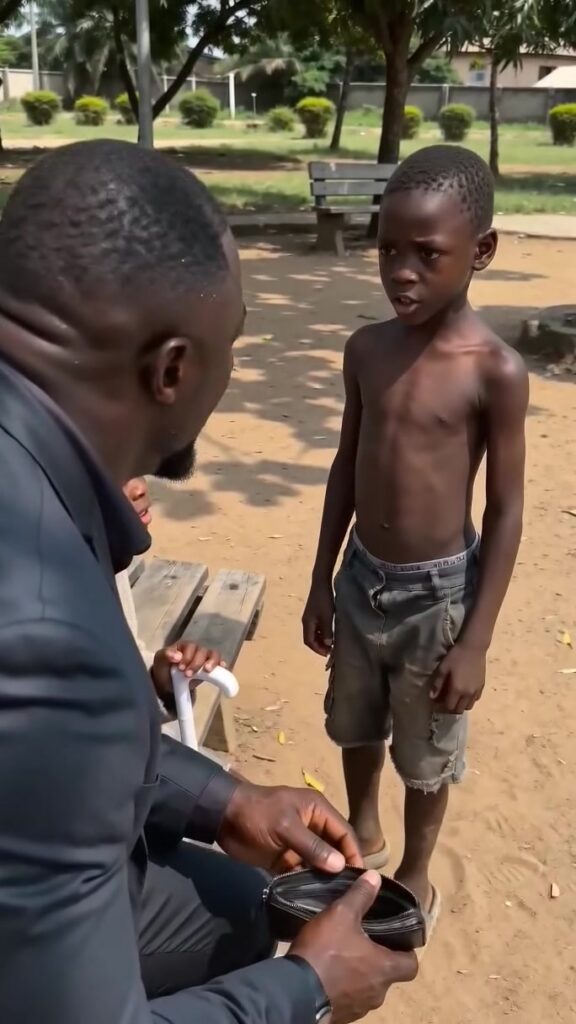
Marcus noticed him only because he didn’t fit. He was maybe twelve or thirteen, sun-browned, barefoot, wearing oversized shorts and a faded T-shirt. He walked with the calm confidence of someone who didn’t care if he was being watched. He wasn’t on a bike, wasn’t with other kids. He just… arrived, as if he’d stepped out from behind the heat itself.
He stopped in front of Marcus and Avery, shaded his eyes with his hand, and studied Avery’s face with a seriousness that made Marcus’s skin tighten.
“Sir,” the boy said, polite but firm, “your daughter is not sick.”
The sentence hit like a slap. Marcus’s body reacted before his mind did—shoulders squared, jaw locked, attention sharp as a blade.
“Who are you?” Marcus demanded. “Where are your parents?”
Avery tilted her head toward the boy, listening like he had become a sound she could hold. “Daddy,” she whispered, “I hear him.”
Marcus didn’t like that. He didn’t like the way Avery’s voice softened. He didn’t like the way the boy’s gaze didn’t flinch from his.
“My name’s Eli,” the boy said. “I’m not trying to scare you. But the doctors won’t find what they’re looking for, because they’re looking for a disease.”
Marcus let out a harsh laugh. “So what is it, then? Magic?”
Eli’s expression didn’t change. “It’s not magic. It’s… pressure. Like something sitting on her sight. Like a hand over a lamp.”
Marcus’s throat went dry. “Pressure from what?”
The boy glanced at Avery’s hands, sticky and fidgeting. “From you,” he said simply.
For a second, Marcus didn’t process it. Then anger surged up, hot and immediate. “Excuse me?”
Eli nodded toward Marcus like he was pointing at a storm cloud. “You live like nothing can touch you. You build walls. Locks. Rules. The world around you has to behave.” He spoke without judgment, like he was describing a weather report. “That kind of need doesn’t stay only in your head. It leaks. Kids feel it.”
Marcus stood so fast the bench creaked. Avery reached for his sleeve blindly, panicked.
“Don’t,” Marcus snapped, half to Eli and half to the universe. “You don’t know anything about me.”
“I know you’re terrified,” Eli said. “And you’re trying to beat terror with force. But you can’t bully fear out of a child.”
Marcus’s heart thudded hard enough to hurt. “My daughter is losing her vision,” he said through clenched teeth. “That’s not fear. That’s biology.”
Eli stepped closer, lowering his voice. “Can I tell you something your doctors didn’t ask?”
Marcus stared at him, refusing to look away.
“When did this start?” Eli asked. “Not the symptoms. The feeling. When did she start carrying something heavy?”
Marcus opened his mouth to deny it—then saw the memory, sharp and clear: three weeks ago, the anniversary of Talia’s death. He’d thrown himself into work that day, made phone calls, barked orders, refused to speak her name. Avery had asked, softly, “Are you sad today?” and Marcus had replied, too fast, “No. We’re fine. Go play.”
Fine. Always fine. His favorite lie.
Avery had gone quiet after that.
Marcus felt his stomach drop.
Eli watched him like he’d been waiting for that realization. “She loves you,” he said. “So she tries to fit into the world you built. A world where sadness is dangerous and loss is something you can outsmart. But you can’t. And she can’t either. So she shuts down the part that sees it.”
Marcus’s mouth tasted like pennies. He turned to Avery. Her face was turned toward the sun, eyes narrowed, lashes trembling. She looked so brave and so small that something inside him cracked.
“Avery,” he said, voice rough, “baby… I’m here.”
She reached, found his hand, held on tight. “I don’t want you to go away,” she murmured. “Like Mommy.”
Marcus’s knees went weak. He sat back down, pulling her into his lap. Her hair smelled like sunscreen and sugar. He pressed his forehead to hers and for the first time in years, he let the grief come all the way up.
He didn’t shape it into a plan. He didn’t schedule it. He didn’t buy it a solution.
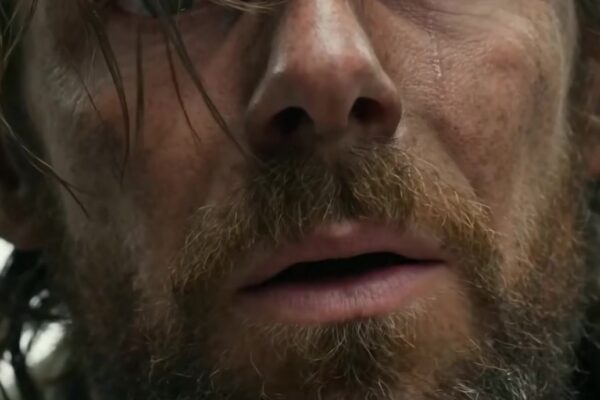
He just cried, silently at first, then with shaky breaths that made his shoulders tremble. Avery made a small sound and clung to him harder, like she’d been waiting for permission to be scared.
“I miss her too,” Marcus whispered. “I miss Mommy so much. I’m sorry I pretended I didn’t.”
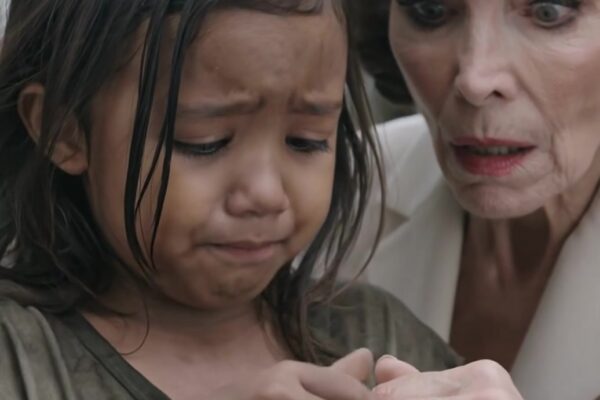
Avery’s body relaxed against him, like a knot loosening. “I miss her,” she said, and then she cried too—hot tears that slid down onto his collar. Marcus held her and didn’t try to stop it.
When he finally lifted his head, Eli was still there, sitting on the edge of the bench like he belonged. He looked older now somehow, less like a kid and more like a messenger who’d finished delivering something fragile.
Marcus wiped his face with his sleeve, not caring about the suit. “What are you?” he asked, voice hoarse. “A therapist? Some kind of—”
“Just a boy,” Eli said. “And a neighbor. I’ve seen this before.”
Marcus stared at him. “How?”
Eli shrugged. “My little sister stopped talking for a year after our dad left. Doctors called it selective mutism. My mom called it heartbreak. Turns out both were kind of true.”
Avery sniffed and lifted her head. “Eli,” she said, as if tasting his name. “Can you… can you make me see again?”
Eli didn’t promise her anything. He just smiled gently. “I think you’ll come back to it,” he said. “But it’s not about making. It’s about letting.”
Marcus looked at his daughter’s eyes, trying to see the world from behind them. He’d built a life nobody could touch, and it had felt like safety. Now he saw what else it had been: a fortress that kept out pain by starving everything inside it.
He took a long breath and made a decision that didn’t involve money or leverage.
“We’re going home,” he told Avery. “And we’re going to talk about Mommy. All of it. As much as you want.”
Avery’s lips parted. “Even the scary parts?”
“Especially the scary parts,” Marcus said.
Eli stood up. “That’s a good start,” he said, and stepped back into the sunlight.
“Wait,” Marcus called, suddenly desperate. “How do I find you? What’s your last name?”
Eli paused and looked over his shoulder. “You won’t need it,” he said. “You already found what you were missing.”
Then he walked away across the dry grass, barefoot, unhurried, until Marcus blinked and realized he couldn’t tell where the boy ended and the heat began.
Avery leaned against Marcus’s chest, tired. “Daddy?” she murmured.
“Yeah, babe?”
“I can see your whole face again,” she said softly. “For a second.”
Marcus closed his eyes, holding her as if he could hold the moment still—not with control this time, but with presence. Above them the sun blazed, merciless and bright, and for once he didn’t try to fight it. He just sat there with his daughter in the open, letting the light touch them both.