Marcus Bennett’s calendar looked like a world map with bruises. London on Monday, Dubai on Wednesday, New York by Friday, back home whenever his assistant could wedge him into an opening like a late apology. He owned shipping lanes, banks, a couple of “strategic” media outlets he pretended he didn’t care about, and a private jet that smelled faintly of leather and regret.
None of it mattered in the pediatric wing at Mount Sinai, where the doctor had gently explained that Lila’s tests didn’t match any neat category. Her optic nerves looked irritated, then normal, then irritated again. Steroids helped for a week. Then nothing. Scan after scan came back like a shrug. Specialists spoke in careful circles. Everyone avoided the word “incurable” the way people avoid saying “earthquake” in a tall building.
Lila was seven, which meant she still believed adults were basically competent. She asked why the machines were so loud, why the nurses wore funny shoes, why Daddy’s smile looked like it hurt him. When she started bumping into doorframes, Marcus bought soft corner guards for the entire penthouse, as if money could pad reality.
By the time they landed in Accra, Marcus was running on two hours of sleep and a stubborn, ugly optimism. Ghana wasn’t on his usual circuit. But a retired neurologist—one of those names whispered like a prayer among desperate parents—had agreed to see Lila privately. The man didn’t ask for payment up front, which Marcus took as either a good sign or the scariest kind of confidence.
The appointment ended with the old doctor rubbing his temple and saying, “I’m sorry.” Not in a dramatic way. Just factual, like telling you the store is closed.
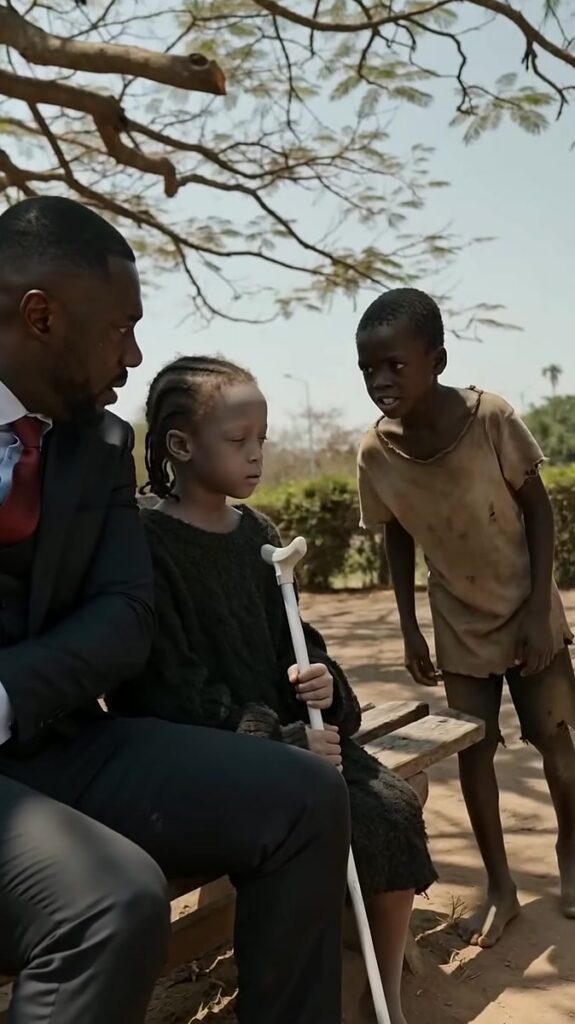
So Marcus took Lila to a nearby park because he didn’t know what else to do. The heat sat on the city like a heavy hand. Even the shade felt warm. Vendors moved lazily between benches. Somewhere, a radio played highlife music that sounded cheerful in a way Marcus couldn’t access.
Lila sat beside him with her legs swinging, her small hand tucked in his. Her sunglasses were too big, the kind that made kids look like tiny celebrities. She’d insisted on wearing them, not because she thought she looked cool, but because bright light made her eyes ache.
“Daddy,” she said, voice careful, “is it nighttime already?”
His throat tightened. The sky was painfully blue. Kids were chasing a deflated soccer ball. A couple argued quietly near a food cart. He wanted to scream at all of it for continuing.
“Not yet,” he said, forcing a normal tone. “It’s just… clouds, baby.”
Lila turned her face toward him like she could still find him with sound. “It’s okay. I can tell it’s you. You smell like airplane.”
Marcus laughed—one short sound that wasn’t joy. He kissed her forehead, tasting sunscreen and salt, and felt something inside him fold inward like paper.
That’s when he noticed the boy.
He wasn’t selling anything. He wasn’t begging. He was just there, barefoot on the dusty edge of the walkway, watching Marcus and Lila with a stillness that didn’t fit his age. Maybe twelve or thirteen. Skinny. Shirt too big. Eyes bright and unblinking, like he’d already decided something and was waiting for the world to catch up.
Marcus’s security detail had kept a polite distance; even billionaires look ridiculous with bodyguards hovering in a park. Still, Marcus saw one of them shift his stance when the boy came closer. The kid ignored the guards like they were furniture.
He stopped a few feet away. Looked at Lila, then at Marcus.
“Your daughter is not sick,” he said.
Marcus felt the words hit him like cold water. He blinked. “Excuse me?”
The boy’s voice stayed calm, almost bored. “She isn’t losing her sight by accident. Someone is taking it.”
Marcus’s pulse jumped into his ears. Anger arrived, sharp and ready—because he’d spent months wading through false hope and miracle claims. “Listen,” he said, leaning forward, “I don’t know who put you up to this, but—”
“Your wife,” the boy said, and the park noise seemed to drop away for half a second. “She’s doing it.”
Marcus went very still. His mind tried to reject it like a bad organ transplant. Naomi? His wife Naomi, who packed Lila’s lunches into little compartments and cried quietly in hotel bathrooms? Naomi, who slept curled around Lila on the nights Marcus couldn’t be there?
“That’s insane,” Marcus said, but his voice didn’t have the force he wanted. “Get away from us.”
The boy didn’t move. He tilted his head slightly. “You came here because the old doctor told you the truth. He can’t fix her because there’s nothing wrong with her eyes.” He nodded toward Lila’s sunglasses. “It’s not the eyes. It’s the thing around her life.”
Marcus’s guard took a step, but Marcus lifted a hand without looking. “Why are you saying this?” he asked the boy. “Who are you?”
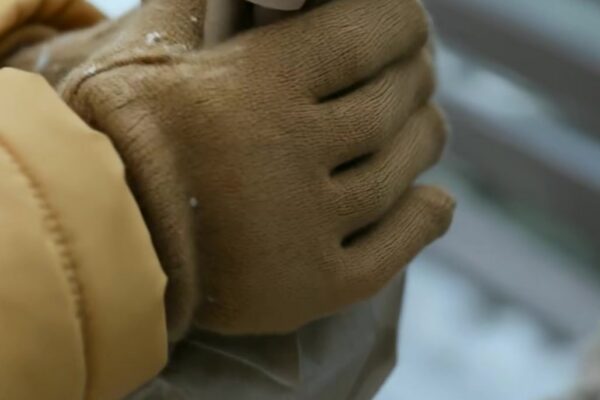
The boy shrugged. “Does it matter?” Then he pointed—not dramatically, just a small motion—at the charm bracelet on Lila’s wrist. It was a thin gold chain with a tiny heart Marcus had bought in Dubai after a meeting. Lila had loved it because it jingled.
“Take it off,” the boy said.
Marcus stared. “It’s jewelry.”
“Take it off,” the boy repeated, eyes locked on Marcus’s like he was tired of arguing with adults. “Now.”
Lila shifted. “Daddy? Are we playing a game?”
Marcus’s hands trembled as he unfastened the clasp. He didn’t know why he was listening. Maybe because he’d listened to everyone else and gotten nowhere. Maybe because desperation makes room for nonsense.
The bracelet slid free. The moment it left Lila’s skin, she sucked in a breath like someone coming up from underwater.
“Oh,” she whispered, startled. “Daddy… I can see… the yellow.”
Marcus’s head snapped up. “What?”
Lila turned her face toward the sun, squinting. “The… the bench is yellow. And your shirt is—” She reached up with both hands and touched his cheeks like she was checking he was real. “Daddy. Your eyes are brown.”
Marcus didn’t realize he was crying until he tasted it. He pulled her into his chest so hard she squeaked. The world didn’t feel safe enough for a miracle, yet here it was, warm and shaking in his arms.
He looked up wildly at the boy. “What did you—”
The boy backed away a step. “It’s not me. I just told you where to look.” His gaze flicked to Marcus’s pocket where the bracelet lay coiled like a sleeping insect. “Your wife gave her that, right?”
Marcus’s stomach dropped. “I bought it,” he said automatically. “But Naomi… she…”
He remembered Naomi insisting Lila wear it even when it snagged on sweaters. Naomi saying it was “for protection.” Naomi taking it off at night and putting it back on in the morning like a ritual. The way she’d gone oddly quiet whenever a doctor suggested environmental toxins. The way she’d flinched when Marcus mentioned hiring a private investigator to look into rare industrial exposures.
“Why would she—” Marcus started, but the question broke in half. He pictured Naomi’s face, the neat control she held when everything else was falling apart. He pictured their last argument, when he’d threatened to take Lila to yet another specialist and Naomi had snapped, “You can’t buy your way out of everything, Marcus.”
The boy spoke softer now. “Some people don’t want her to see.”
Marcus swallowed. “See what?”
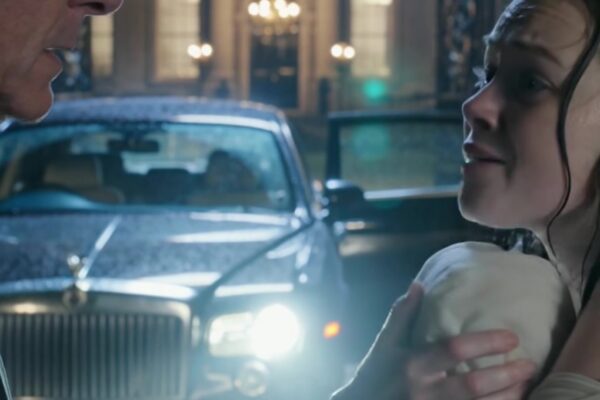
The boy’s eyes drifted past Marcus, toward the street beyond the park, where a black SUV idled too long at the curb. Marcus’s security noticed it too—one of them touched his earpiece.
“The truth,” the boy said. “And the people who benefit from you staying distracted.”
Marcus’s billionaire brain finally caught up: empires, governments, influence. The lawsuits he’d buried. The deals he’d made with smiles and signatures. The enemies he’d turned into partners and the partners he’d turned into liabilities. He’d always assumed the only thing that could touch his family was random tragedy. He’d never considered leverage.
He stood, scooping Lila into his arms. She laughed, giddy and disoriented, her hands patting his hair. “Daddy! I can see the sky! It’s so big!”
Marcus looked for the boy again, but he was already melting into the park crowd, barefoot and unhurried, like he’d never been there at all.
“Wait!” Marcus called, voice cracking. “What’s your name?”
The boy didn’t turn around. His answer floated back, half swallowed by the city noise.
“Names don’t help,” he said. “Choices do.”
Marcus tightened his grip on Lila and walked fast toward his security, toward the car, toward the life he thought he understood. In his pocket, the bracelet felt heavier than gold.
And for the first time in months, as Lila pointed excitedly at everything she’d been missing, Marcus realized saving her wasn’t going to be about finding the right doctor. It was going to be about surviving the right enemy.