Better Balance After 75: Why Walking Is Only Part of the Story
Many older adults rely on daily walks to stay active and healthy. Yet after age 75, that familiar routine may no longer fully protect you from a very real concern: losing your balance during ordinary movements. The thought of struggling to stand up after bending down, or not being able to catch yourself after a small stumble, can turn simple tasks into sources of stress. This fear can threaten the independence that lets you enjoy time with family, travel, and pursue hobbies you love.
Orthopedic and rehabilitation specialists point out that while walking offers many benefits, it does not adequately train quick reaction muscles or side-to-side stability. These are precisely the abilities that targeted balance exercises for seniors help strengthen, especially in adults over 75.
The encouraging news: a short, focused routine of exercises for seniors over 75 can fill in the gaps left by walking alone and support greater confidence, steadiness, and mobility as you age.
Why Walking Alone May Not Be Enough for Seniors Over 75
Walking is excellent for cardiovascular health and building endurance, and it gives you a tangible sense of accomplishment. However, it mostly involves forward motion and repetitive use of the same muscle groups. For seniors over 75, this means that fast-twitch muscle fibers (needed for quick reactions) and smaller stabilizing muscles often remain undertrained.
This matters when you consider how a sudden trip, sideways step, or unexpected obstacle can lead to a fall and a potential loss of independence. Research shows that balance, strength, and reaction-time demands change significantly after the age of 75. That’s why dedicated balance exercises for seniors become increasingly important with each passing year.
Many older adults easily achieve thousands of steps per day yet still feel uneasy in crowded environments, on uneven ground, or when turning quickly. These feelings can cause you to pull back from activities you enjoy, such as traveling, walking in busy markets, or gardening with grandchildren. To address these issues, experts recommend specific exercises for seniors over 75 that go far beyond basic walking.
5 Expert-Recommended Balance Exercises for Seniors Over 75
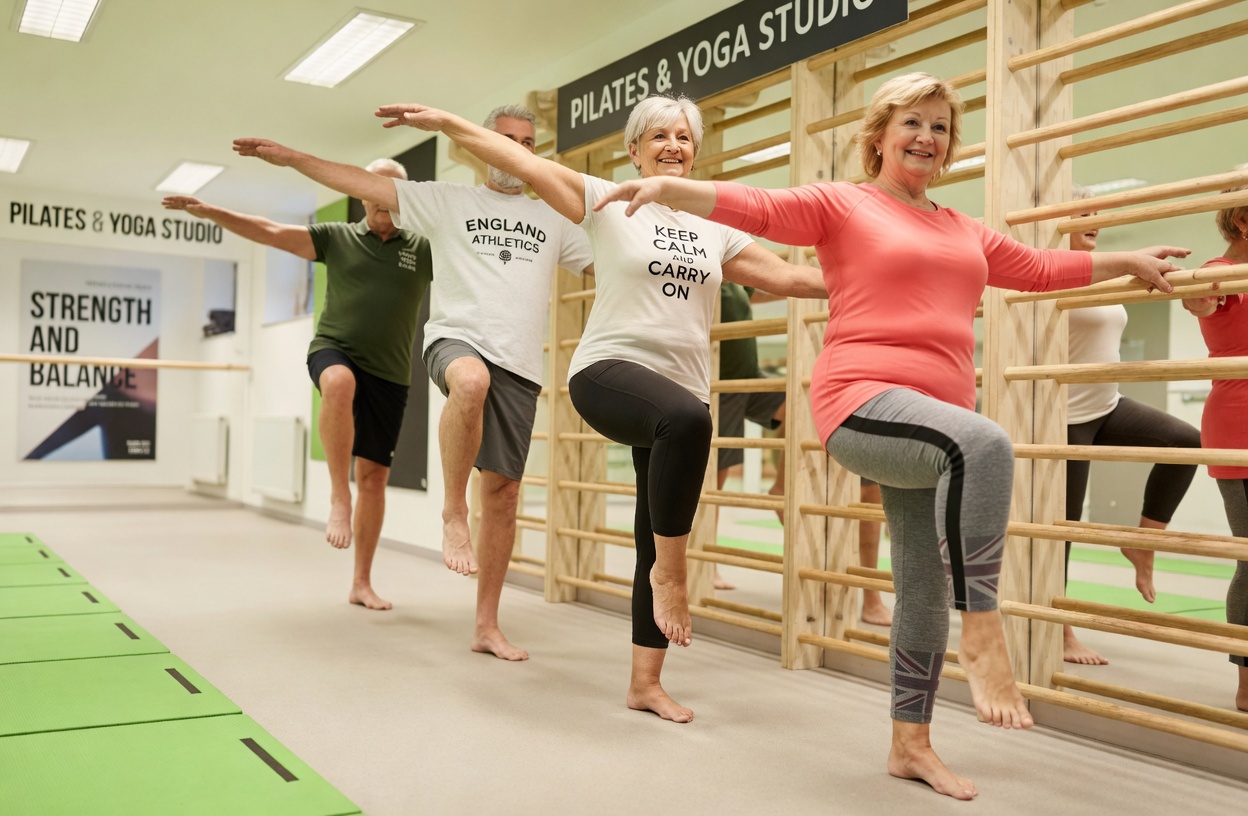
Rather than depending solely on walking, adding the following balance exercises for seniors can help train the exact muscles and neural pathways that keep you steady. Each move is simple, can be done at home, and can be adjusted for different fitness levels. These exercises for seniors over 75 should feel mildly challenging but never painful.
1. Single-Leg Stance: Laying the Groundwork for Stability
If standing on one leg feels shaky, it’s a clear sign that targeted exercises for seniors over 75 could significantly reduce your risk of falls. This basic drill directly challenges your balance system, proprioception (your body’s awareness of position), and stabilizing muscles in the legs and feet.
Regular practice of this type of balance exercise for seniors can rebuild confidence that may have been lost due to previous slips or near-falls.
How to do it:
- Stand next to a sturdy counter, table, or wall you can hold onto.
- Shift your weight onto one leg and lift the other foot about an inch off the floor.
- Hold for 10–30 seconds, then switch sides.
- Repeat 3 times per leg each day. You can fit this in while brushing your teeth or waiting for the kettle to boil.
- Once this feels steady, progress by briefly closing your eyes or standing on a softer surface (like a folded towel).
Studies, including those referenced by the Mayo Clinic, link better single-leg balance in older adults to improved overall stability and reduced risk of falls.
2. Chair Squats: Preserving Everyday Independence
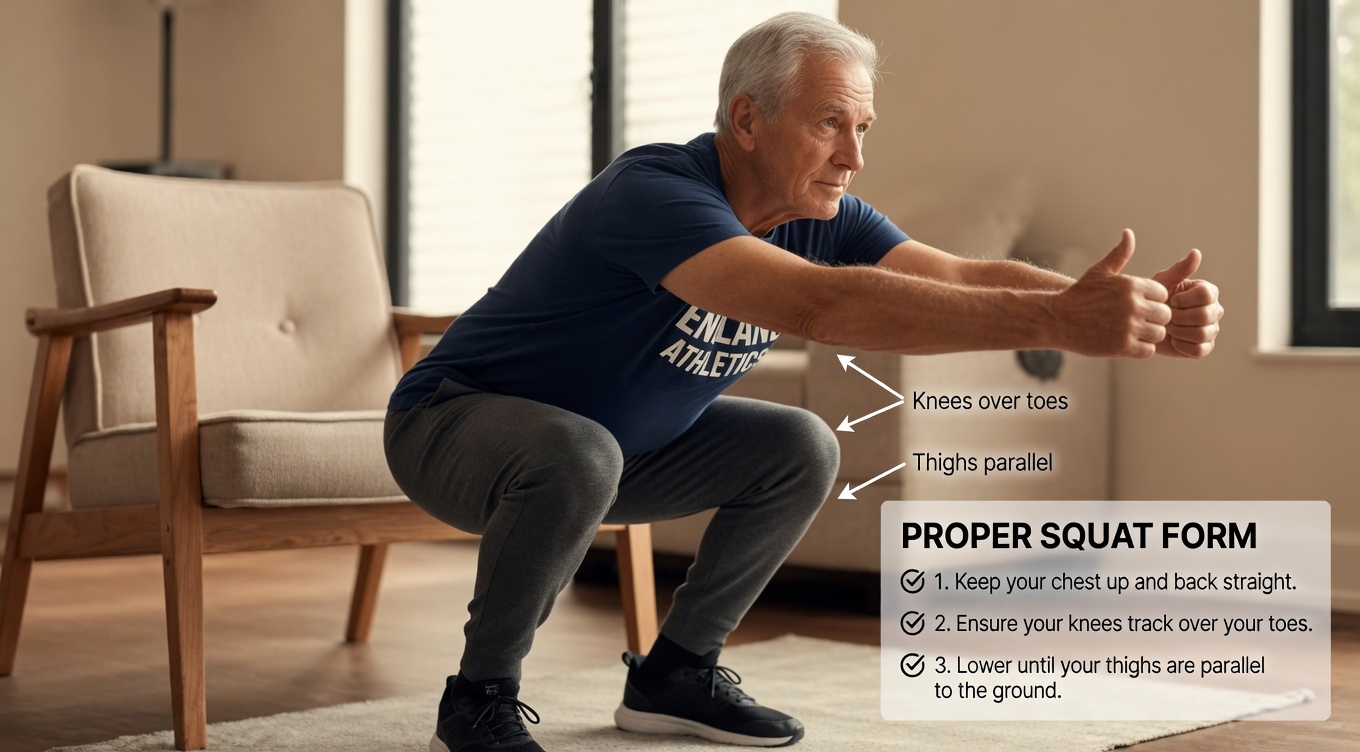
Standing up from a chair is something you do many times each day, but it often becomes more difficult with age. Struggling with this movement can heighten worries about losing your independence. Chair squats are among the most functional balance exercises for seniors because they closely mimic daily activities like getting up from the sofa or toilet.
Experts regularly recommend chair-based exercises for seniors over 75 to maintain leg strength and power for essential tasks.
How to do it:
- Sit on a sturdy chair with your feet flat on the floor and arms crossed over your chest.
- Press your feet into the ground, especially through your heels, and slowly stand up.
- Lower yourself back down with control, avoiding a sudden “drop” into the chair.
- Aim for 8–10 repetitions, for 2 sets each day.
- If needed, lightly use the armrests at first, then gradually reduce your reliance on them.
Research on sit-to-stand exercises suggests that regularly strengthening this movement can support prolonged independent living in older adults.
3. Standing Hip Circles: Boosting Side-to-Side Stability
Many falls occur sideways rather than forward, yet walking does little to strengthen the lateral (side-to-side) hip muscles that help prevent these slips. Weakness around the hips can make you feel unstable when stepping sideways, turning, or navigating tight spaces.
Standing hip circles are powerful balance exercises for seniors because they specifically target these often-neglected stabilizers.
How to do it:
- Stand facing a counter or back of a chair and lightly hold on for support.
- Lift one knee to a comfortable height.
- Slowly draw large, controlled circles with your knee, moving from the hip joint.
- Make 5 circles in one direction, then 5 in the opposite direction.
- Switch legs and repeat.
- Perform daily as part of your exercises for seniors over 75 routine.
Physical therapy guidelines emphasize this type of movement to improve hip mobility and lateral stability, both crucial for preventing falls.
4. Isometric Wall Push: Building Strength Without Strain
If you have joint pain or arthritis, you may be cautious about traditional strength training. The isometric wall push offers a joint-friendly way to build upper body and core strength, making it an excellent complement to other balance exercises for seniors.
Instead of moving through a large range of motion, you create effort by pushing against an immovable surface, which can be easier on sensitive joints.
How to do it:
- Stand an arm’s length away from a wall with feet shoulder-width apart.
- Place your palms flat against the wall at chest height.
- Push into the wall as if you are trying to move it, keeping your body in good alignment.
- Hold the push for 10–15 seconds while breathing steadily.
- Relax and rest briefly, then repeat 4–5 times.
This isometric style of training has been shown to support safe strength gains in older adults and is a useful option in exercises for seniors over 75, especially if traditional weights feel too demanding.
5. Heel-to-Toe Walking: Fine-Tuning Your “Internal GPS”
Moving through tight spaces, narrow hallways, or uneven paths can become stressful when your balance feels uncertain. Heel-to-toe walking—also called tandem walking—is one of the most effective dynamic balance exercises for seniors to sharpen coordination and foot placement.
This drill is particularly valuable in exercises for seniors over 75 because it challenges your nervous system to control each step precisely.
How to do it:
- Stand near a wall or counter for safety.
- Place one foot directly in front of the other so the heel of your front foot touches the toes of your back foot, like walking on a tightrope.
- Take 15–20 slow, deliberate steps forward.
- Keep your gaze slightly ahead rather than looking down at your feet.
- Practice this twice a day, and as you improve, you can add gentle head turns or brief moments with eyes partially closed (only if safe and supported).
Balance-training research suggests that tandem walking is one of the most effective balance exercises for seniors over 75 to enhance dynamic stability during real-life movement.
Walking vs. Targeted Balance Exercises for Seniors: A Quick Comparison
The chart below highlights how daily walking compares with a focused routine of balance exercises for seniors:
| Benefit | Daily Walking | These Balance Exercises for Seniors |
|---|---|---|
| Endurance | Excellent | Good |
| Quick reaction power | Limited | Better developed |
| Side-to-side stability | Minimal | Targeted improvement |
| Proprioception (body awareness) | Basic challenge | Significant challenge |
| Fall-risk support | Moderate | More comprehensive |
| Time required | 30+ minutes | Under 15 minutes |
This comparison shows how adding exercises for seniors over 75 can complement, rather than replace, your walking routine to provide more complete protection for balance and stability.
Safety Tips for Starting Balance Exercises for Seniors Over 75
Safety should always come first when doing balance exercises for seniors. Begin cautiously, and never push through sharp or severe pain.
- Start with shorter holds, smaller movements, or fewer repetitions.
- Always have a sturdy support nearby, such as a wall, counter, or heavy chair.
- Increase difficulty slowly as your strength and confidence improve.
- Stop immediately if you feel dizzy, extremely unsteady, or experience chest pain or shortness of breath.
- Talk with your doctor or healthcare provider before beginning any new exercises for seniors over 75, especially if you have heart conditions, joint problems, or a history of falls.
A Simple 15-Minute Daily Routine for Better Balance
You can weave these exercises for seniors over 75 into your day without feeling overwhelmed:
-
Morning:
- Single-leg stance
- Chair squats
-
Afternoon:
- Standing hip circles
- Isometric wall pushes
-
Evening:
- Heel-to-toe (tandem) walking around the house or along a hallway
Consistency matters more than intensity. Many seniors report feeling steadier and more secure on their feet within a few weeks of daily practice.
FAQ About Balance Exercises for Seniors Over 75
How often should I do these exercises for seniors over 75?
Aim to practice them every day, even if only for a few minutes. Short, consistent sessions of balance exercises for seniors are more effective for building habits and improving stability than occasional long workouts.
Can these exercises replace my walking routine?
No. These exercises for seniors over 75 are designed to complement your walking, not replace it. Keep walking for heart health and endurance, and add targeted balance exercises to improve strength, reaction time, and stability for a more complete approach to healthy aging.