Rain hammered the city all night like it was trying to drown every secret hiding inside it. The kind of rain that turns streetlights into blurry halos and makes every alley look like a throat you shouldn’t step into. It hit the jewelry shop’s front window in fat, furious beads, sliding down the glass like the city was sweating out its lies.
At 11:47 PM, the shop was nearly empty in the way late-night places get—too quiet, too polished, too aware of their own reflections. The only sound inside was soft jazz struggling through an old radio with a bad antenna, and the gentle, deliberate rhythm of a cloth moving over metal.
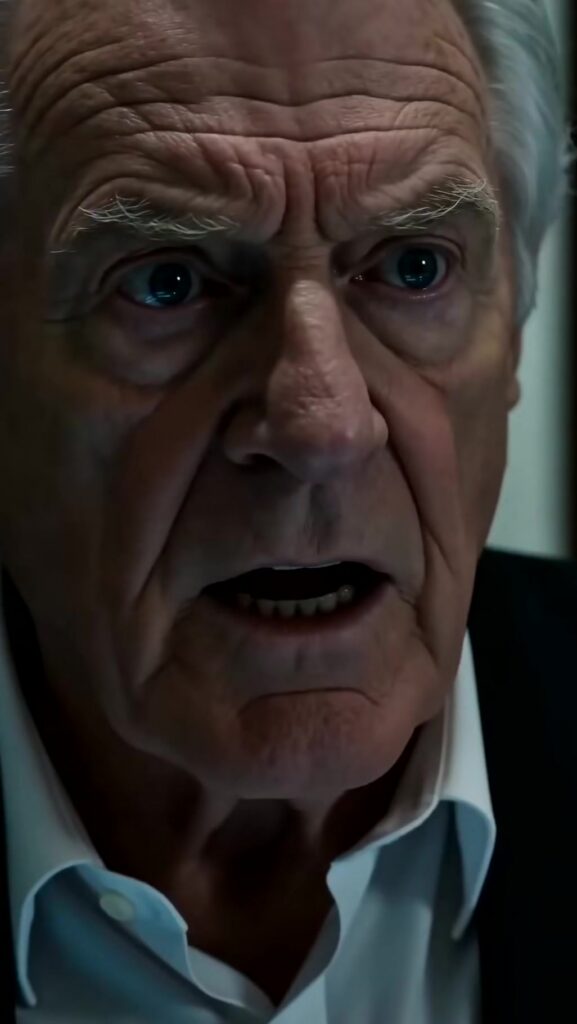
Hector Vale, owner, jeweler, and stubborn relic of a time when people paid with cash and kept their promises, stood behind the counter and polished a gold watch. He didn’t need to. It was already spotless. But polishing was something his hands could do without his brain getting involved, and lately he liked anything that kept his brain from wandering.
His brain wandered anyway, because it always did when it rained. Eighteen years ago it had rained, too. Not this hard, but enough that gutters overflowed and the police wore their coats with the collars up. Enough that a little girl in a yellow raincoat—his little girl—had vanished like a candle pinched out in the dark.
The bell above the front door was silent when the door exploded inward. Not a gentle push. Not a polite entry. The door hit its stopper and rattled the glass cases like the whole shop flinched.
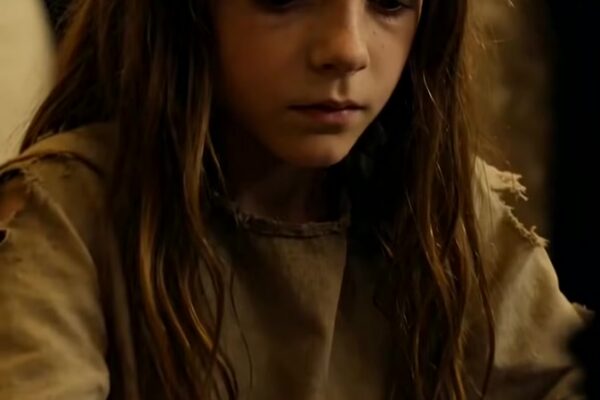
A young woman stumbled inside and immediately looked like she regretted it, like she’d been chased into the wrong mouth. She was soaked through: hoodie plastered to her shoulders, torn jeans darkened with water. One sleeve had a smear of blood that didn’t match the rain. Her hair stuck to her face in wet ropes. Her eyes snapped over the shop in quick, sharp sweeps, measuring exits, angles, threats.
Then she spun and shoved the door shut. The lock clicked. She pressed her back against it and breathed like her lungs were trying to catch up with whatever she’d survived in the last sixty seconds.
Hector set the watch down slowly. He’d lived long enough to know that accidents came with apologies and panic came with no manners at all.
“Miss,” he said, voice careful, not loud. “Are you hurt?”
Her gaze flicked to him, took him in—white hair, lined face, rolled-up sleeves, soft amber lighting. The kind of man you didn’t expect to be dangerous. The kind of man people underestimated. Her throat bobbed like she swallowed a scream. Then she crossed the shop in three fast steps and slammed something onto the glass counter.
A gold locket. Old. Heavy. The kind of jewelry that isn’t stylish so much as it’s stubborn.
“How much?” she demanded.
Her voice shook, but it wasn’t weakness. It was anger with nowhere to go.
Hector didn’t touch it right away. He looked at her sleeve, at the blood and the way she kept her right hand close to her side as if holding something or guarding an injury. He nodded once, like he’d agreed to a transaction in a world where none of this was normal.
“Let me see,” he said.
He picked up the locket. The gold was scratched in familiar places, worn smooth where thumbs had worried it over the years. A tiny dent on the edge. He knew that dent. His pulse did a strange little stutter, like it tripped over a step that wasn’t there.
He flipped it open.
Inside was a black-and-white photograph, slightly warped from time and pressed too close to the glass. A little girl smiled at the camera with missing front teeth and an expression that said she’d been told to stand still but had no intention of obeying for long. Beside her sat a younger Hector, less tired, eyes less haunted, arm wrapped around her shoulders as if holding her there could stop the world from taking her.
Under the photo, in handwriting Hector recognized the way you recognize your own name, were the words: For my little Clara.
His fingers locked up around the locket. The shop seemed to tilt.
No. Impossible. Clara was a ghost with a police file. Clara was a face on old flyers, a case that had grown cold and stayed that way until the paper yellowed and the ink faded. Clara was a silence that lived in his house and sat at his table like an extra chair nobody mentioned.
The woman saw his face change and reacted like a trapped animal. She stepped backward, palms up, ready to bolt.
“Give it back,” she snapped.
Hector didn’t. He couldn’t. He stared at her now—not at the blood, not at the frantic posture, but at the details his grief had kept polished for nearly two decades. The same shape of eyes. The same tiny scar just above the left eyebrow, like a comma on her forehead. He remembered kissing it when she was five after she tried to “fly” off the couch with an umbrella.
His throat tried to close. His voice came out broken anyway.
“Clara…?”
For a second, it looked like her lungs forgot how to work. Her pupils widened, then narrowed, then widened again as if her brain was cycling through every possible lie. The name hit her like a thrown rock.
“No,” she said.
Hector’s hands trembled around the locket. His whole life leaned toward her.
“You’re my daughter,” he whispered, and the words felt like stepping onto ice: terrifying, miraculous, likely to crack.
“NO!” she yelled, and the sound bounced off the glass and velvet and gold. She grabbed the counter so hard her knuckles turned bone-white. “Don’t say that. Don’t—don’t do that.”
Her eyes shone with something that wasn’t just fear. It was rage. It was pain so old it had turned sharp.
Hector took one step from behind the counter, careful, hands open like he was approaching a skittish horse. “Clara, listen to me. I don’t know what happened to you. I’ve—” The rest of the sentence was a cliff he couldn’t jump off. I’ve looked for you. I’ve never stopped. I’ve died every day.
Her gaze flicked to the windows, to the door, to the dark street outside. “You don’t understand,” she said, voice suddenly low, like she didn’t want the shop itself to overhear. “You can’t—”
The lights cut out.
Not a flicker. Not a dim. Just gone, as if someone had snapped the city’s neck.
The amber glow vanished, taking the warmth with it. The shop turned into a cavern of faint outlines and reflections. The radio fizzed, then died with a soft pop. In the sudden darkness, Hector heard his own breathing, and hers, quick and ragged.
Outside, tires screamed over wet asphalt. The sound came from close—too close—and ended with the brutal certainty of brakes slammed hard.
Headlights spilled across the rain-streaked window, bright enough to paint the shop in ghostly stripes. Hector moved instinctively toward the counter, toward the back room where he kept a phone and a heavy safe and a baseball bat he pretended was for security and not for the nights he couldn’t sleep.
In the white glare, silhouettes jumped out of black vehicles. More than one. Men—at least four—moving with trained speed. Their faces were hidden behind masks, their bodies wrapped in dark gear that ate the light.
Clara—if that name was real, if it belonged to her, if the world wasn’t playing the cruelest joke imaginable—made a small, broken sound.
“They found me,” she whispered. Not surprised. Not confused. Like a person who’s been waiting for the knock that finally came.
Hector held the locket tighter, like it could anchor him. “Who?” he asked.
She shook her head fast. “Doesn’t matter. Just—just don’t—”
A masked man lifted something long and dark. A rifle, unmistakable even through the glass and rain. The barrel aimed straight at the front of the shop as if the door was just a suggestion.
Hector’s mind finally caught up to the shape of the moment. This wasn’t a robbery. These men weren’t here for watches or rings or gold. Their movements were too tight, too certain. Their aggression was too focused.
They were here for her.
And if she really was Clara, then whatever had stolen his daughter eighteen years ago hadn’t finished with her yet.
The first shot didn’t come. Not yet. But Hector saw the masked man’s finger settle with calm precision, saw the way the others spread out to cut off escape. Like a net closing.
In the darkness, Clara’s eyes met Hector’s, and something in her expression shifted—fear, yes, but also a plea she didn’t have words for. Hector made a decision so fast it felt like it had been waiting in him all along.
He reached under the counter for the hidden button that triggered the back door lock release and whispered, “When I say run, you run.”
Her mouth opened, ready to argue, ready to refuse.
Glass began to crack under the sudden pressure of a fist or a tool against the front door.
Hector didn’t look away from her. “Clara or not,” he said, voice steadier now, “I’m not letting them take you from me again.”
Outside, the rain kept hammering, relentless and loud, like it wanted to erase the whole city before anyone could tell the truth.
And then the lock on the front door started to give.