Sleep After 70: Why Your Nighttime Position Matters More Than Ever
You slip into bed exhausted, settle into your familiar spot, and expect to wake up refreshed. Yet morning often brings the same frustrations: a stiff lower back, a sore neck, or aching hips that seem to linger longer each year. After age 70, these symptoms are frequently linked to overnight body alignment. Positions that once felt harmless can start placing quiet, steady stress on the spine and joints as flexibility decreases and issues like arthritis become more common.
The good news: small tweaks—such as adding one pillow or slightly changing your angle—can noticeably improve comfort and reduce morning stiffness. Below are four sleeping positions experts often caution older adults about, followed by four supportive alternatives that promote better alignment and easier mornings.
The 4 Worst Sleeping Positions to Avoid After 70
Some sleep habits gradually contribute to back pain, joint pressure, and poor spinal alignment. Many people keep these positions out of routine, but guidance from reputable medical and orthopedic sources often highlights how they can aggravate discomfort in aging bodies.
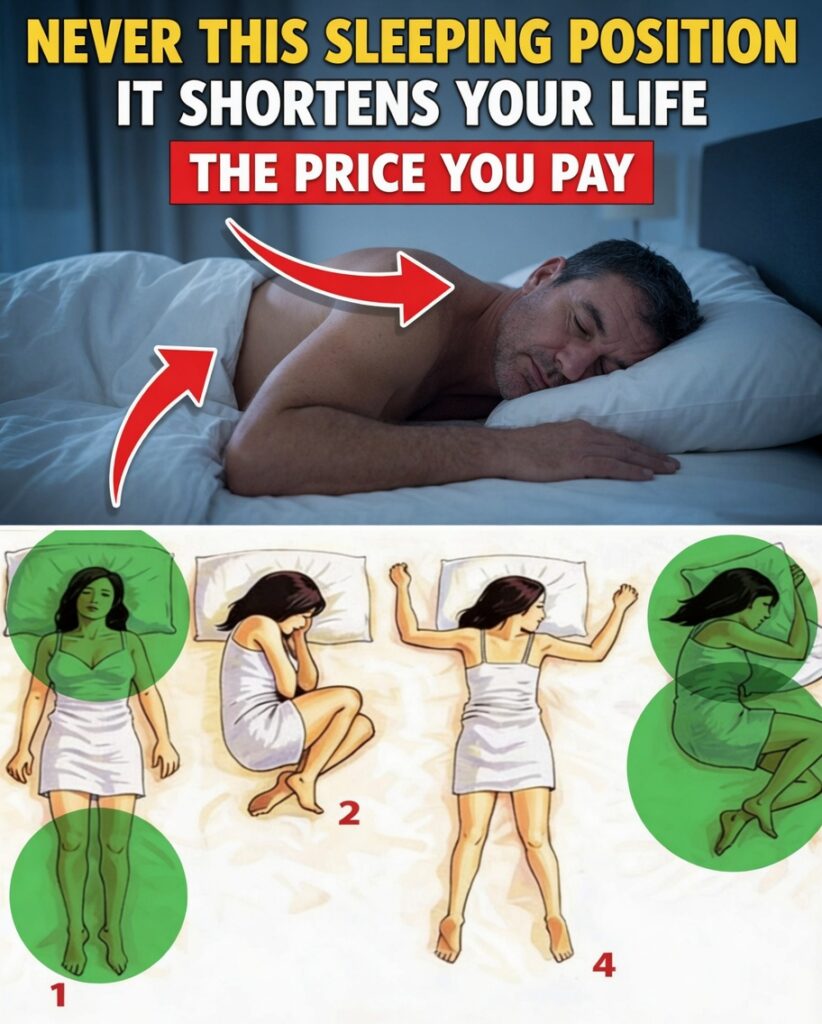
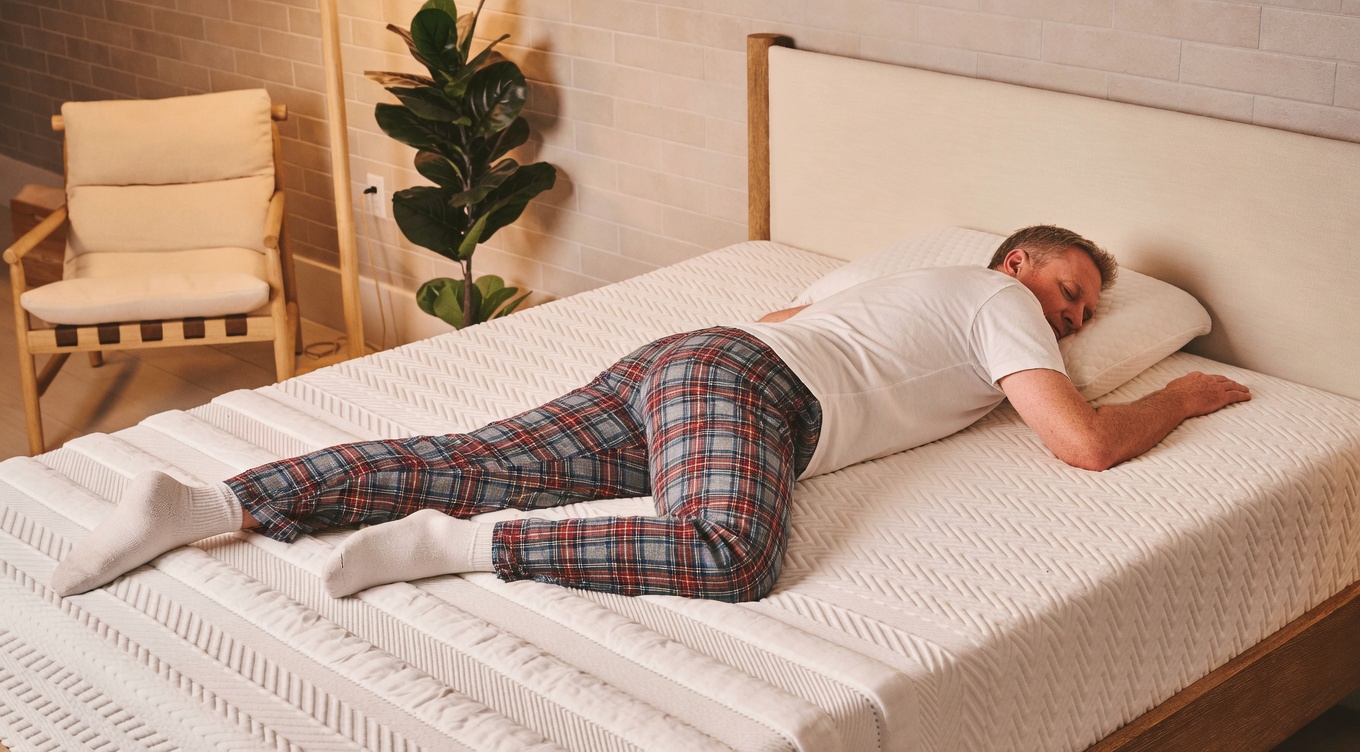
Worst #4: Stomach Sleeping (Prone)
Sleeping face-down typically forces your neck to rotate sharply just to breathe. At the same time, it tends to flatten the natural spinal curve and over-arch the lower back. For many adults over 70—especially those managing arthritis, disc issues, or a history of back pain—this can increase:
- Neck stiffness and upper back tension
- Nerve irritation
- Extra pressure on spinal joints and discs
Orthopedic experts frequently describe stomach sleeping as one of the most demanding positions for long-term spine health.
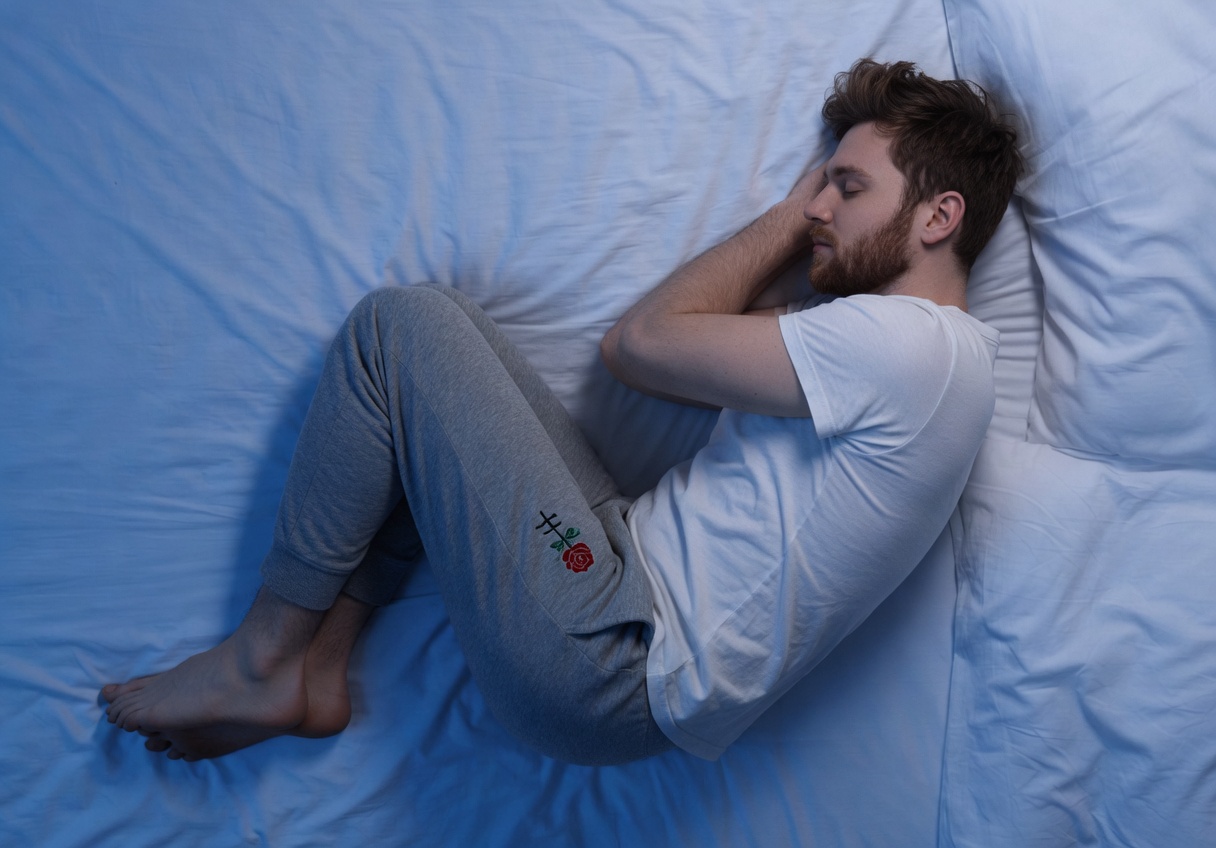
Worst #3: The Tight Fetal Position (Over-Curled Side Sleeping)
Curling up on your side with knees pulled high and chin tucked can feel comforting at first. But staying in a tightly curled posture for hours often rounds the spine too much, shortens hip flexors, and loads pressure into the knees, shoulders, and lower back. Over time, it may contribute to:
- Increased hip and knee irritation
- More morning stiffness
- Shallower breathing due to a compressed chest position
A relaxed side curl can be helpful for some people—but the extreme fetal position many default to often does more harm than good.
Worst #2: Side Sleeping Without Leg Support
Side sleeping is common and can be comfortable, but it becomes problematic when the legs aren’t supported—especially if the top knee drops forward or the legs remain stacked without any cushion. This can twist the pelvis and pull on the lower back and hip joints, leading to:
- One-sided hip or low-back soreness
- Pelvic misalignment that builds night after night
- Uneven pressure on joints affected by age-related changes
Worst #1: Flat on Your Back With No Support (No Knee or Head Adjustment)
Sleeping on your back can be healthy—if it’s supported correctly. But lying flat with no pillow under the knees (and an ill-fitting head pillow) may strain the lumbar area by forcing the lower back into an uncomfortable arch or flattening it unnaturally. For some older adults, this can also worsen:
- Lower back discomfort
- Snoring or breathing disruption
- Nighttime reflux symptoms
In many cases, it’s not back sleeping itself—it’s unsupported back sleeping that causes trouble.
Real-Life Examples: Small Changes, Big Relief
Many seniors find that minor adjustments can dramatically improve how they feel in the morning.
- Linda (74) slept on her stomach for years because it felt relaxing, but she regularly woke up with neck stiffness that lasted into the day. After gradually shifting away from the prone position, her tension noticeably eased. She realized the constant neck twisting was feeding her daily aches.
- Tom (78) preferred an extra-tight fetal curl for comfort, but his hip soreness kept worsening overnight. Once he added a pillow between his knees, he naturally relaxed the curl and began waking up with less stiffness overall.
Both made simple changes using pillows they already had—and checked in with their doctors first, which is always the safest approach when chronic pain or medical conditions are involved.
The 4 Best Sleeping Positions to Try Instead
These options prioritize a neutral spine, reduced joint pressure, and more stable hip alignment—recommendations that align with widely cited medical guidance, including advice associated with organizations like the Mayo Clinic. Try one adjustment at a time so you can clearly tell what helps.
Better #4: A Modified Stomach Position (If You Truly Can’t Switch Yet)
If you’re not ready to quit stomach sleeping immediately, a partial improvement can reduce strain:
- Place a thin pillow under the pelvis/lower abdomen to limit excessive low-back arching
- Slightly bend one leg and rotate your torso a bit toward your side
- Use a minimal head pillow to reduce neck rotation
This isn’t ideal long-term, but it may be less stressful than fully flat prone sleeping while you transition.
Better #3: Gentle Side Sleeping With a Pillow Between the Knees
Side sleeping can be excellent when properly supported. For better alignment:
- Bend knees comfortably (not pulled tightly to the chest)
- Place a firm pillow between the knees to keep hips level
- Use a supportive head pillow so the neck stays aligned with the spine
Many adults over 70 find this setup reduces morning hip pain and lower back tension by preventing pelvic twist.
Better #2: Semi-Reclined (Elevated) Back Sleeping
Many older adults are surprised by how comfortable a slight incline can be. Using an adjustable base or stacked pillows to elevate the upper body—paired with a small pillow under the knees—often helps with:
- Lower back pressure reduction
- Breathing comfort and snoring reduction for some
- Reflux management by keeping the torso slightly raised
A gentle, “zero-gravity-like” angle can feel significantly easier on joints than lying completely flat.
Better #1: Supported Back Sleeping (Supine With Proper Pillows)
For many people, the most alignment-friendly option is sleeping on the back with correct support:
- Put a pillow under the knees to maintain the natural lumbar curve
- Choose a medium-support head pillow to keep the neck neutral (not pushed forward or tilted back)
This position distributes body weight evenly, reduces pressure points, and often leads to more restorative sleep—especially for adults experiencing joint stiffness.
Quick Comparison Table (After 70)
-
Stomach (Prone)
- Key issue: High neck and spine strain
- Why: Neck rotation + flattened spinal curve
- Better approach: Avoid if possible; thin pillow under pelvis if needed temporarily
-
Tight Fetal
- Key issue: Joint stress and over-rounded back
- Why: Excessive hip/knee flexion + spinal rounding
- Better approach: Loosen the curl; pillow between knees
-
Unsupported Side
- Key issue: Pelvic twisting and one-sided soreness
- Why: Hips misalign without leg support
- Better approach: Pillow between knees; aligned neck pillow
-
Flat Back (No Support)
- Key issue: Lumbar strain and awkward neck angle
- Why: Poor support under knees/head
- Better approach: Pillow under knees + properly sized head pillow
-
Supported Side
- Benefit: Strong alignment when set up correctly
- Support: Knee pillow + neutral neck alignment
-
Reclined Back
- Benefit: Pressure relief and easier breathing for some
- Support: Elevated upper body + pillow under knees
-
Supported Supine
- Benefit: Excellent overall alignment and even pressure
- Support: Knee pillow + medium-support head pillow
A Simple Plan to Start Tonight
- Choose one option to try first (supported side or supported back is often easiest).
- Use medium-firm pillows you already own (a body pillow works well).
- Set up before you fall asleep: place the pillow under your knees or between them right away.
- Track results for 7–14 days: note morning stiffness, hip soreness, and neck tension.
- Give your body time: most people adjust within a couple of weeks.
If you have chronic pain, arthritis flare-ups, sleep apnea, or ongoing medical concerns, check with a doctor or physical therapist before making major sleep-position changes.
Wake Up Looser, Calmer, and More Rested
After 70, better sleep supports steadier movement, sharper thinking, and more comfortable days. Improving your sleeping posture doesn’t always require special equipment—often, one well-placed pillow is enough to protect the spine, ease joint pressure, and reduce those familiar morning aches.
Try one adjustment tonight and see how your body responds. Thoughtful alignment is a small change that can pay off with far more comfortable mornings.
P.S. If you sleep on your side, that pill