
A Nighttime Folk Remedy for Cough and Congestion: Onion Slices in Socks
Rest can feel impossible when a stubborn cough or blocked nose keeps you waking up for air. These symptoms often get worse after you lie down, because mucus tends to collect and irritate the throat and airways—turning bedtime into a long, uncomfortable night.
Across many cultures, people have leaned on simple kitchen-based comfort measures during cold season. One of the more unusual traditions is placing onion slices in socks before sleep. It’s not a medical treatment, but it remains popular among those looking for gentle, everyday support.

Does the Onion-in-Sock Trick Actually Help?
This method is often shared as a low-effort way to feel more comfortable at night. The key question is whether it has a plausible basis—and how to try it in a safe, sensible way.
While strong clinical evidence is lacking for applying onion to the feet, the idea persists because onions contain compounds associated with respiratory and immune-related research (mostly through eating onions or using extracts, not skin application). For some people, the aroma and bedtime ritual itself may also feel soothing.
The Onion: A Common Ingredient with Notable Natural Compounds
Onions (Allium cepa) have been used for centuries for both cooking and traditional wellness practices. Once cut, onions release a strong scent due to sulfur-containing compounds. They also contain quercetin, a plant flavonoid widely studied for its antioxidant properties.
Some scientific reviews and experimental studies suggest onion-derived compounds may have:
- Anti-inflammatory activity (observed mainly in lab/animal models)
- Antimicrobial effects in certain settings
- Possible support for airway comfort, depending on the form used (such as extracts)
Quercetin has also been discussed for mild antihistamine-like effects in some contexts, which—at least in theory—could help with irritation linked to seasonal discomfort.
However, it’s important to be clear: there is no strong evidence that placing onions on the feet treats coughs or congestion through transdermal absorption. Any benefit people report may relate more to the aroma, a mild “clearing” sensation, or a calming bedtime routine.
Why Congestion and Cough Often Feel Worse at Night
Many people notice symptoms intensify after dark due to factors such as:
- Lying flat, which can increase postnasal drip
- Cooler, drier nighttime air
- Mucus pooling and throat irritation
- Sleep disruption that makes symptoms feel more intense
Because of this, many look for non-pharmaceutical nighttime comfort options that feel simple and low-risk.
Why This Remedy Appeals to So Many People
The onion-in-sock method remains popular because it is:
- Budget-friendly and easy to find anywhere
- Quick to prepare in a few minutes
- Often viewed as low-risk for occasional use
- Commonly described in anecdotal stories as calming—especially when a child’s cough disrupts family sleep
Possible Comfort Benefits People Associate With It
Even though evidence for foot application is largely anecdotal, interest often centers on:
- Naturally occurring onion compounds, including sulfur elements and quercetin
- A gentle aromatic experience that some compare to a mild “steam-like” sensation
- A simple approach some families use during seasonal discomfort
- No devices or special tools—just an onion and socks
- A low-commitment experiment you can assess in a single evening
How to Try the Onion-in-Sock Method (Step-by-Step)
If you want to experiment safely, use these straightforward steps.
-
Choose an onion
- Pick a fresh, firm onion.
- Red onions are often considered milder on the skin.
- Yellow/white onions may smell stronger.
-
Slice it
- Wash and peel the onion.
- Cut thin rounds, roughly ½ cm thick.
- Use 1–2 slices per foot.
-
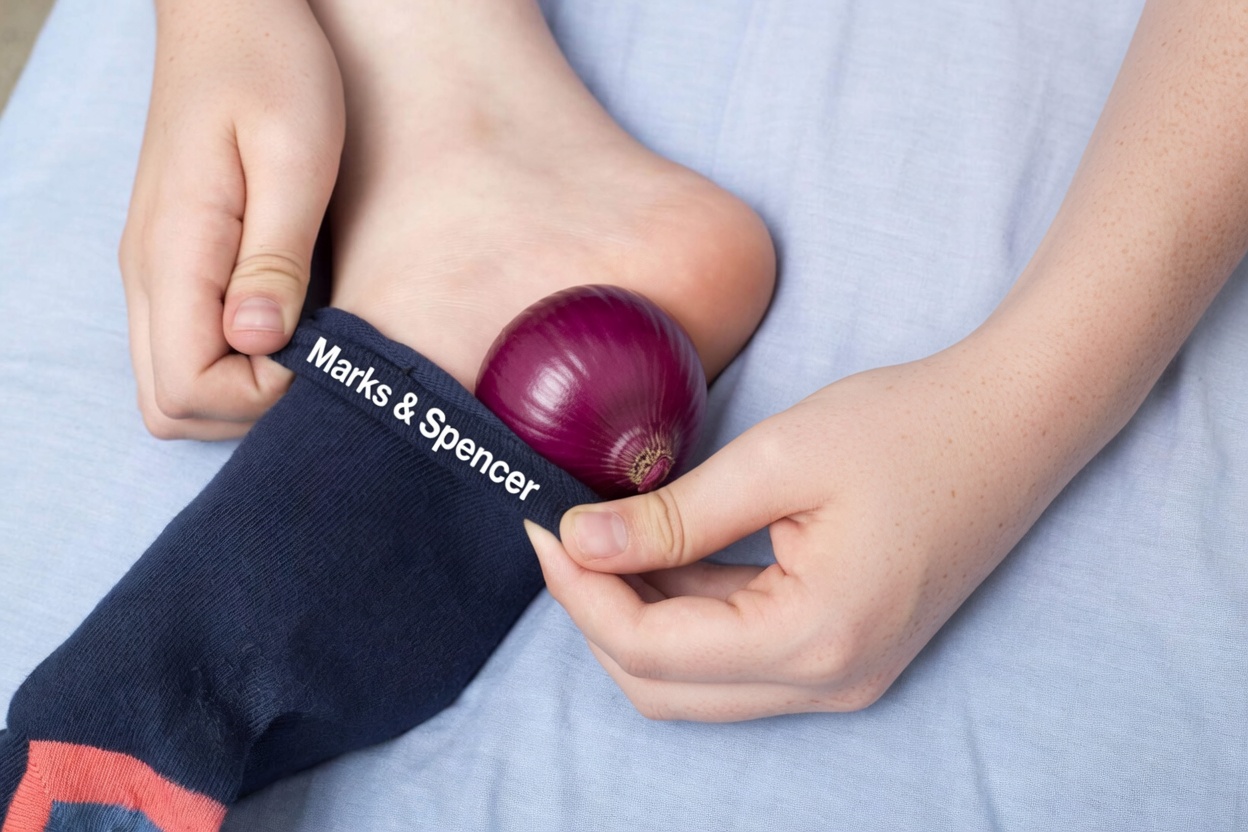
Place slices on your feet
- Position slices on the arch or sole.
- Put on clean, snug cotton socks to keep them in place.
-
Relax
- Leave them on for 20–60 minutes while winding down.
- Some people keep them on overnight, but it’s best to start with shorter sessions.
-
Clean up
- Remove and discard the slices.
- Wash feet with warm water and mild soap to reduce odor and residue.
For children: use smaller pieces, supervise closely, and check skin often. Present it as a playful “comfort routine,” but don’t delay professional care if symptoms persist.
Quick Ways to Make Nights Easier (With or Without Onions)
To improve overall nighttime breathing comfort, consider combining this tradition with common supportive habits:
- Drink enough fluids during the day to help keep mucus thinner
- Use a humidifier to add moisture to dry air
- Try a warm foot soak before bed for relaxation
- Sleep with your head slightly elevated using an extra pillow
- Use saline nasal spray for gentle clearing
- Sip warm, non-caffeinated tea (such as chamomile) before sleep
- Practice good hand hygiene to reduce spread of seasonal germs
If you choose to add essential oils (like eucalyptus or peppermint), do so cautiously and only if you know you are not sensitive—many people find strong scents irritating.
Safety Notes and Precautions
This practice is usually considered mild, but it still isn’t right for everyone.
- Patch test first: place a small onion piece on the inner arm for 10 minutes and watch for irritation.
- Avoid using onions on feet with cuts, wounds, or very reactive skin.
- Start with under an hour to reduce the chance of redness.
- Stop immediately if burning, itching, or discomfort occurs.
- Do not use if you have an onion allergy.
Seek medical care promptly if symptoms are severe or include high fever, worsening cough, wheezing, chest pain, breathing difficulty, or lasting more than a few days. This is a comfort practice—not a substitute for diagnosis or treatment.
Why Bedtime Rituals Can Feel Helpful
When mucus flow changes in a horizontal position, irritation can increase and sleep becomes harder to achieve. A calming pre-sleep ritual—like a warm wash, quiet room, and even a simple traditional practice—can help signal relaxation. For some people, the onion’s scent may feel soothing enough to support falling asleep more easily.
Final Takeaway: A Simple Tradition, Not a Miracle Cure
The onion-in-sock remedy is best viewed as a gentle nod to tradition rather than a proven treatment. Science does not support dramatic claims, especially regarding absorption through the feet. Still, if you approach it safely, it can be a low-effort way to explore comfort during cold-season nights.
If nighttime symptoms hit, you might decide to try it once—slice an onion, put on socks, and see how your body responds. Sometimes the simplest rituals are the ones that feel most reassuring.
Frequently Asked Questions
Is the onion-in-sock method safe for children?
Some families use it cautiously, but you should patch test, use smaller slices, supervise closely, and consult a pediatric professional if symptoms persist or worsen.
How long should the onion slices stay in my socks?
Begin with 20–30 minutes. Longer sessions (including overnight) are common in anecdotes, but shorter sessions reduce irritation risk.
Can this replace over-the-counter cold remedies?
No. Consider it complementary comfort support only. Persistent or serious symptoms require professional guidance.
Disclaimer
This article is for educational and informational purposes only and does not provide medical advice, diagnosis, or treatment. Always consult a qualified healthcare professional before trying new remedies, especially if you have underlying conditions or are caring for children. Individual results vary, and this folk tradition lacks robust scientific validation for treating respiratory symptoms.