Everyone in Larchfield knew the sound of boys on a mission—shouts bouncing off brick storefronts, sneakers skidding on old pavement, laughter that felt like a dare. It was a Saturday in late October, the kind of cold that carried the smell of leaves and chimney smoke, and the town was busy pretending nothing had changed.
But something had changed. The river had risen all week, swollen and fast, and the old trestle bridge at Pike Hollow had been posted with fresh orange warnings that flapped like nervous flags. “NO TRESPASSING.” “UNSAFE STRUCTURE.” “STAY BACK.” People read them and shook their heads, then went on with their errands, trusting the paper to do the work of a fence.
At the edge of Main Street, three boys moved with the confidence of those who believed the world was made of second chances. Jace, tall and wiry, led the way with his chin tipped up as if he could smell glory. Milo, smaller and quick, clutched his phone in one hand like a compass. Behind them was Reed—broad-shouldered, quiet, trying to look unafraid while his eyes kept flicking to the clouds. They were sixteen, which meant they were certain of their own invincibility and terrified someone might notice they weren’t.
“It’s just a walk,” Jace said. “A quick shot from the middle of the bridge. The river’s wild right now. It’ll look insane on video.”
“And then we’re legends,” Milo added, already imagining comments and likes like fireworks.
Reed said nothing, which was how he agreed to things he didn’t want to do. He told himself he’d turn back at the first creak, the first sign. He told himself lots of things.
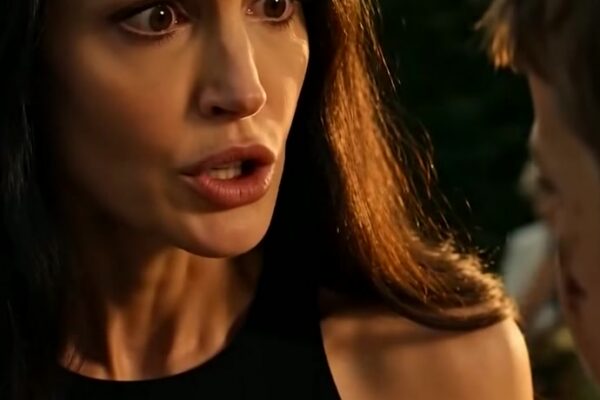
Across the street, Mara Ellison stepped out of the pharmacy with a small paper bag and a receipt that curled like a dry leaf. She didn’t look like the sort of person who would notice a trio of restless teenagers. She was thirty-two, hair pinned back, coat buttoned neatly, a woman who lived behind routines. But when she heard Jace say “middle of the bridge,” her hand tightened around the bag so hard it crinkled.
For a moment she saw not three boys but one—her brother Evan—running toward water years ago with the same grin, the same hunger to prove that fear was optional. The river had taken Evan in a single, casual gulp. No drama. No warning that mattered. Just a slick rock, a current with teeth, and a town that said, afterward, “He shouldn’t have been there.”
Mara watched the boys angle toward the road that led out past the last houses and into the thinning woods. She could have called after them with the usual adult vocabulary—Stop. Don’t. You’re not allowed. But she’d heard those words before, and so had they. Words like that were walls boys liked to climb just to show they could.
She crossed the street quickly, the paper bag swinging at her side. “Hey,” she said, not loud, not sharp. Just enough to thread through their momentum.
Jace turned, surprised to be addressed by a stranger. Milo stopped recording nothing and frowned as if interrupted in the middle of a thought. Reed hovered half a step back, as if bracing for impact.
“You’re headed to Pike Hollow,” Mara said. It wasn’t a question, and that certainty made them pause.
“So?” Jace’s voice had the protective edge of someone defending a plan he hadn’t fully examined.
Mara didn’t point at the warning signs. She didn’t mention cops or parents. She simply looked at Reed, because Reed was the one scanning the sky, the one still tethered to doubt. “You’re the one who checks the horizon,” she said. “You already know it’s dangerous.”
Reed blinked, caught. “I—”
“We’ll be fine,” Milo cut in, lifting his phone. “We’re just filming.”
Mara nodded as if she believed him, and that nod disarmed the boys more than an argument would have. “I’m not here to win against you,” she said. “I’m here to tell you something you won’t hear from a sign.”
Jace scoffed. “Lady, we’re not kids.”
“I know,” Mara said softly. “That’s what scares me.”
They stood there with traffic whispering past, the town moving on around them. Mara could feel her heart pushing against her ribs, but she kept her voice steady, almost conversational. “I grew up here,” she said. “There’s a story this place tells itself. It says the river is pretty in summer, it ices over in winter, and it behaves if you respect it.”
Milo rolled his eyes. Reed’s fingers tightened around the strap of his backpack.
“The part we don’t say out loud,” Mara continued, “is that the river doesn’t care what you meant to do. It doesn’t care about your video, or your jokes, or whether your shoes are new. It doesn’t bargain. It only collects.”
Jace’s bravado wavered, just a hair. “You’re being dramatic.”
Mara reached into her coat pocket, and the boys flinched as if she might pull out something sharp. Instead she drew out a folded scrap of paper—creased, worn thin at the edges. She didn’t wave it like proof. She held it between her fingers like something fragile. “This is the last thing my brother wrote,” she said. “He was your age. He wrote it on a napkin at the diner because he forgot his notebook. He wrote, ‘Don’t worry. I’ll be back before dinner.’”
The street noise seemed to dim. Even Milo lowered his phone.
“He wasn’t back,” Mara said. “And you know what haunts me most? It wasn’t the day he died. It was the way everyone talked after, like it was a lesson for him alone. Like his loss was payment for his mistake. But it wasn’t. It was payment we all made. My mom stopped singing while she cooked. My dad quit fixing things. I learned to hold my breath whenever someone I loved walked too close to water.”
Reed swallowed, his eyes glossy in the cold air. Jace shifted his weight as if his feet wanted to keep moving but his mind had stumbled.
Mara took a step closer, careful not to crowd them. “I’m not asking you to be afraid,” she said. “I’m asking you to be honest. If you go out there and the bridge gives way, it won’t be a story about how brave you were. It’ll be your mothers at the edge of the river screaming your names into the wind. It’ll be your friends watching the news and saying, ‘We were just there.’ It’ll be an empty chair at Thanksgiving that nobody knows where to look at.”
Jace opened his mouth, then closed it. The air between them tightened with the weight of what she’d painted—so vivid it felt like a memory from the future.
“You don’t have to prove anything to that bridge,” Mara added, lowering her voice. “The bridge is already broken.”
For a long moment, no one spoke. Then Reed exhaled, a slow release like letting go of a rope. “I don’t want to go,” he said, words tumbling out as if they’d been trapped behind his teeth. “I didn’t. I just—” He glanced at Jace, pleading without saying please.
Milo looked at the ground. “My mom thinks I’m at the library,” he muttered, suddenly aware of how flimsy that lie was against the image Mara had given him.
Jace’s jaw worked as he fought the urge to save face. Mara didn’t rescue him with reassurance. She let him sit with the choice, because choice was the only thing that could undo the momentum of disaster.
Finally, Jace pushed a hand through his hair. “Fine,” he said, but the word came out thin, stripped of swagger. “We won’t go.” He tried to turn it into a joke—“You win, okay? You scared us straight.” But his eyes stayed on Mara’s folded paper, as if he could see the ink through it.
Mara shook her head. “I didn’t win,” she said. “You did. You turned around.”
They stood there awkwardly, three boys with nowhere heroic to aim their energy now. Mara reached into her pharmacy bag and pulled out a box of bandages, then set it in Milo’s hands. “I bought these for blisters,” she said. “Keep them. Use them for something boring.”
Milo stared, then gave a small, embarrassed laugh that sounded like it belonged to a child he’d left behind. “Thanks,” he whispered.
Jace nodded once, a gesture that carried more respect than words. Reed looked at Mara as if trying to memorize her face.
They walked away from Pike Hollow and back toward town, their shoulders no longer squared for battle. Mara watched them go until they disappeared into the crowd of weekend errands and ordinary life.
When she finally turned to head home, the wind lifted the corner of her coat and carried the damp scent of the river through the streets. Mara held the folded napkin in her pocket like a small, stubborn light. She had not built a fence. She had not called the police. She had only offered language—carefully chosen, sharpened by grief—and for once, it had been enough to change the direction of a story.