The monitor screamed before anything else moved. Not a polite hospital chirp, not the meek reminder of a failing battery—this was a jagged, accusatory alarm that tore through the penthouse like glass through silk. BEEP—BEEP—BEEP—each pulse sharper than the last, ricocheting off the floor-to-ceiling windows that held the city in its dark, distant grip. Below, traffic lights blinked patiently. Up here, the sound declared an emergency that had no business existing in a room this immaculate.
Alexander Crane’s body jolted against the Egyptian cotton sheets. The movement was not his. It never was. It was the old panic response, the leftover twitch of a nervous system that still remembered running, even if the legs beneath the duvet had forgotten. He gasped, fingers clawing at the edge of the mattress, eyes snapping to the machine beside him as if he could threaten it into silence. A red line danced wildly on the screen. A number climbed, stuttered, climbed again.
Then a hand touched his leg.
Warm. Steady. Precisely placed on the part of him that had become, over the last four years, more rumor than flesh. The contact was wrong in the way a voice is wrong when it comes from a dead phone.
“Hey—what are you doing?” he barked, forcing anger into his throat because fear would make him small. His voice came out too loud, too sharp, and bounced off the glass and brushed steel. The sensor pads on his chest trembled with the vibration.
A boy stood at the bedside, half in shadow, half washed by the city’s reflected glow. He was maybe fifteen. Maybe younger. His hair was clipped close, his face too composed for a child who had apparently entered through a locked door in a building that had its own security team and a lobby that required a retinal scan. The boy’s expression didn’t change when Alexander spoke, which made the silence around him feel deliberate, like a weapon.
“Who let you in?” Alexander demanded. His right hand groped for the call button attached to the bed rail. His fingers found it, squeezed, and nothing happened. The little light that usually answered him stayed dead. The monitor’s scream continued, unhelpful, hysterical.
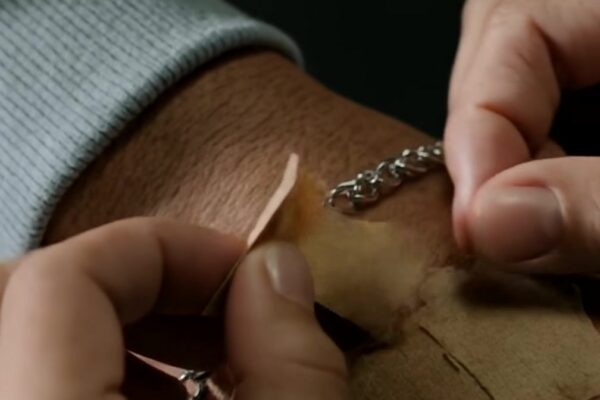
The boy lifted his left hand. In it was a stone—black, dense-looking, not smooth like a river rock but cut by thin, branching veins that caught the room’s light as if something faintly luminous moved beneath its surface. It looked less like geology and more like a piece of night condensed into matter.
Alexander’s mouth went dry. “Put that down,” he said. “If you want money, I can—” He tried to lean forward, but his body obeyed only as far as his waist. Beyond that was the familiar wall, the dead certainty of his own paralysis. He swallowed hard. “Tell me what you want.”
The boy didn’t answer. His gaze dropped, not to Alexander’s face, but to the motionless blanket-covered shape of his legs. With the calm of someone setting a coin on a counter, he slid the stone under Alexander’s knee, between fabric and skin, as if he knew exactly where it belonged.
The monitor’s rhythm shifted.
Not faster. Not slower. Different. The alarm pitch bent into a new pattern, as though it had stopped reporting a crisis and started listening to something else. The room thickened. Even the air-conditioning seemed to hesitate, as if the building itself had paused to hear.
Alexander exhaled through clenched teeth. “What is this?”
The boy finally spoke, voice low and even. “It’s not for you.”
“Then why bring it here?” Alexander demanded. He was aware, suddenly, of how naked rage sounded against such stillness. The boy’s calm made Alexander’s own emotions look like a tantrum.
The boy’s eyelids lowered, and his free hand—empty, small—rested lightly over the stone beneath Alexander’s knee. No incantation. No theatrics. Just contact. The monitor’s scream softened into an urgent chatter of changing numbers.
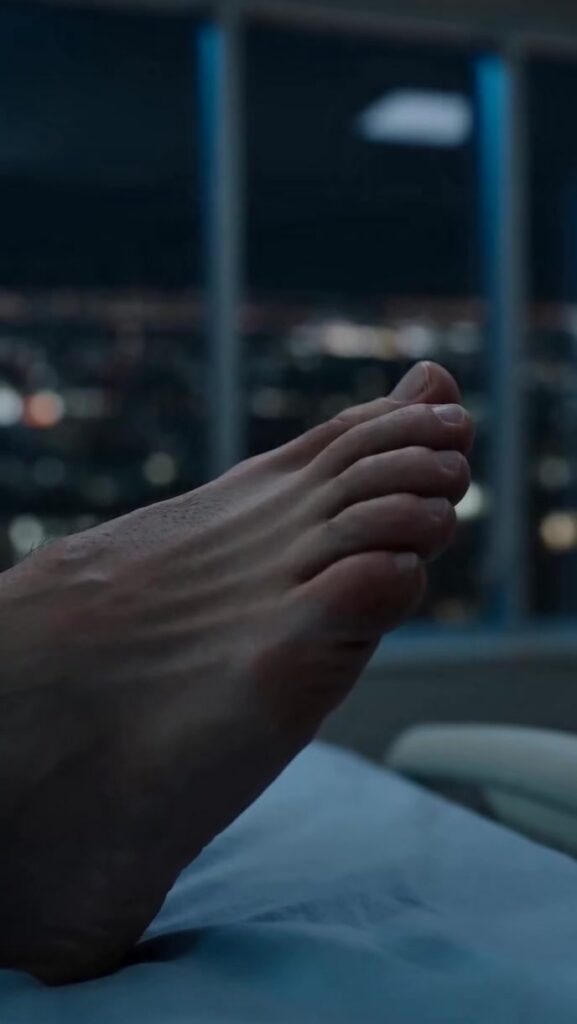
And then—so small he almost missed it—Alexander’s foot twitched.
It was the faintest movement, the kind people could argue was imagined. But Alexander had lived inside stillness long enough to know the difference between hope and physics. He held his breath so hard his ribs ached.
His big toe bent.
Not a spasm. Not an accident. It curled with intention, as if the limb had found a forgotten switch and, stunned by its own power, tried it again.
Alexander’s throat tightened until his next words came out raw. “How—how are you doing that?”
The boy opened his eyes and looked at him directly, and Alexander had the unreasonable sense that he was being examined the way a surgeon studies an incision: with precision, not pity.
“I’m not,” the boy said. “You are.”
Alexander laughed once, a brittle sound. “Don’t—don’t play games. I’ve paid for every treatment that exists. Spinal implants, stem cells, neuro-” He stopped. The city lights blurred for a second as something rose up in him, slow and cold. “Who are you?”
The boy hesitated—his first imperfection—and in that breath of hesitation Alexander felt a memory scrape against the inside of his skull. The stone’s texture. The weight of it in a palm. A smell of rain and soil. A night lit by cheap flashlights and panicked whispers.
“Jamal,” the boy said finally, like he was offering a name because names were required in this world, not because it contained the truth.
Alexander stared at the black-veined stone as if it might crack open and show him what he had spent years paying therapists to bury. His heart began to hammer. The monitor responded eagerly, numbers climbing. “That stone…” he whispered, tasting the words like poison. “I’ve seen it.”
Jamal’s voice stayed level. “You remember where it came from.”
Images snapped into place: a cemetery fence slick with rain; the sound of shovels biting earth; Alexander’s own hands, younger, stronger, shaking not from grief but from urgency. Someone beside him—his father’s silhouette—saying, It’s the only way to fix what we broke. A small coffin lid pried open, a stolen moment of desecration. The stone wrapped in cloth, tucked against a child’s ribs as if it belonged there. As if it had always belonged there.
“No,” Alexander breathed. His foot twitched again, stronger, and terror flooded him—not of paralysis, but of recovery. Because if the stone could wake his body, it could wake anything. “That was buried with—”
The lights flickered.
The glass walls reflected their own dimming, the city outside suddenly sharper by contrast. The monitor surged into a frantic chorus, and then the sound clipped, as though a giant hand had pinched the throat of the entire room.
Power snapped off.
Silence slammed down so hard Alexander’s ears rang with it. The city’s glow still painted the windows, but every device in the penthouse went dark: the monitor, the climate controls, the bed’s motors. The luxury around him turned instantly into expensive dead weight.
In the dark, Alexander felt the stone under his knee grow warmer. Not the warmth of skin against fabric. Something deeper, like an ember through ash. Jamal’s hand remained in place, steady as a promise.
“Listen,” Jamal whispered, so close Alexander could smell rain on his clothes that hadn’t been there before. “When it wakes, it doesn’t stop at your legs.”
Alexander’s voice came out thin. “What did I bury?”
Jamal’s answer was swallowed by a low vibration that rolled through the floor, through the bed frame, through Alexander’s bones. Somewhere in the building, metal groaned. Somewhere far below, car alarms began to stutter awake as if the city itself had heard the monitor’s first scream and decided to join in.
Alexander felt his calf tighten—muscle, real muscle, pulling against years of atrophy. His knee jerked, the duvet shifting. The sensation was both miracle and violation. He grabbed for Jamal’s wrist, but his own hands were clumsy with shock.
“Stop,” Alexander pleaded, and hated himself for the desperation in it. “Stop—please.”
Jamal’s eyes shone in the citylight, too old for his face. “I can’t,” he said. “You already started it. You just forgot.”
Another tremor ran through the room. The windows hummed. Alexander’s legs—his impossible legs—moved again, stronger, as if something underneath the skin had found its way back and was testing the hinges. In the black glass reflection, Alexander saw himself upright for a heartbeat—standing—before the image fractured into darkness and glare.
And in that suspended moment before the building decided whether it would hold together or crack, Alexander understood why the monitor had screamed before anything else moved. The machine hadn’t been warning him about his heart. It had been warning the world.
Something was waking up.