The dining room shimmered like the inside of a jewelry box—golden sconces reflected in polished mirrors, crystal stemware throwing small rainbows over linen so white it looked newly fallen. The sound was a careful music: forks brushing porcelain, low laughter filtered through money, the gentle clink of a world that had never learned to count its meals.
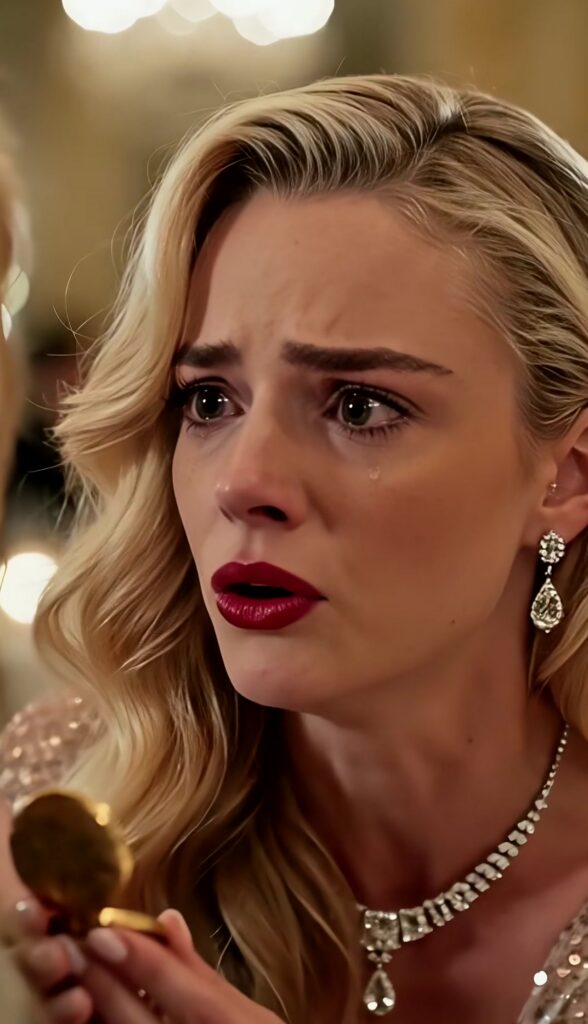
At the corner table, the one angled toward the windows and away from the door, Aurelia Vance sat alone in a gown that seemed stitched from midnight and stars. A necklace of diamonds lay at her collarbone like a frostline. She held her glass by the stem as if it were a delicate instrument and not a thing made to be drained, her posture as immaculate as the place settings. It had taken years to build this armor: a name that opened doors, a face that could smile without letting anyone in, a life that could be photographed at any moment and still look expensive.
The maître d’ had promised privacy. “No interruptions,” he’d murmured, glancing at her as if she were royalty. Aurelia had nodded without looking up from her menu, and he had retreated, satisfied. She came here when she needed to remember what safety felt like: the predictable cadence of service, the certainty that no one would touch her unless invited.
Then a small shadow cut into the lamplight beside her chair.
Aurelia’s eyes flicked down, irritation rising like heat. A child stood there, too thin for the season and too small for the bravado it took to step into this room uninvited. The girl’s hair—pale, nearly the same shade as Aurelia’s—was matted and tangled, as if it had been combed with fingers instead of a brush. Her shirt hung on her like a borrowed sack. Smudges of grime darkened her cheeks, but it wasn’t only dirt that made her look wrong in this place; it was hunger, the kind that reshapes bones.
In her hands, held as carefully as a bird, was a pocket watch. Not just any watch. Even from a glance, Aurelia recognized the distinctive curve of the case and the faint scrollwork worn soft at the edges. The chain trembled as the girl’s hands shook.
“Excuse me,” the child said, voice small enough to be swallowed by the room, yet it threaded through the clink of glass like a needle. “I… I think this belongs to you.”
Aurelia’s annoyance stuttered. She stared, then slowly set her glass down. The watch’s gold surface caught the light and flared, like a signal meant for her alone. For a moment she could not make her fingers move. She had spent years training her reactions into something elegant and controlled, but the sight of that watch undid her more efficiently than any accusation.
She reached out and took it, careful as if the thing might burn. The metal was warmer than it should have been, as though it had been held against a living body. “Where did you get this?” she asked. She meant for her voice to come out clipped, authoritative, the voice that closed deals and ended conversations. Instead it wavered at the edges.
The girl swallowed. Her eyes were a pale gray-blue, too serious for her age. “My mom kept it,” she said. The word mom fell like a stone into the polished quiet between them.
Aurelia’s thumb found the latch without thinking. She knew exactly where it was because she had opened this watch a thousand times in another life, in another room, when the air smelled of cheap soap and wet pavement. Click. The lid sprang back, and time itself seemed to pause.
Inside, behind the scratched glass, was a tiny photograph—faded at the corners, but unmistakable. A young woman with wind-tousled blonde hair held a bundled baby against her chest. The woman’s smile in the photo was fierce and tired and bright all at once, as if she was daring the world to try to take joy away from her. Aurelia’s lungs locked. Her vision narrowed until there was nothing but that face, and the baby’s round cheek pressed against it.
She heard herself make a sound she had not made in years, something raw and unpolished. “No,” she breathed, as if denial could undo ink and paper. Her fingers tightened around the chain so hard it bit into her skin. The watch trembled between her hands.
The child flinched as if she expected to be struck. Her shoulders drew in, protective. “I’m sorry,” she whispered. “I didn’t mean—”
“No.” Aurelia leaned forward too quickly, a sudden desperate movement that upset the balance of her flawless posture. Diamonds at her wrist flashed as her hand lifted, stopping in the air just short of the girl, unsure whether she had the right to touch her. “Listen to me,” she said, voice cracking. “Who gave this to you? Tell me.”
The child blinked hard, and tears rose, cutting clean paths down through the dirt. “My mom,” she said again, but softer, as if repeating it might make it more real. “She said… she said I should find the lady in gold. She didn’t know your name. Just… that.”
The room around them went on pretending nothing was happening. Waiters glided by with silver trays; someone laughed at a joke; a wine bottle was uncorked with a gentle pop. Aurelia could no longer hear any of it. The photograph in the watch was a door opening, and the air coming through was cold with memory.
She forced her eyes from the picture to the girl’s face. The curve of her mouth, the slight cleft in her chin, the way she fought tears by holding her breath—Aurelia had seen it before, not in a mirror, but in a hospital window at three in the morning when she’d been young and terrified and told she could not keep the life she’d made. She had signed papers with a hand that shook, had been promised the baby would have everything. She had also been told, very firmly, that this was the cleanest way. The safest way. The only way.
Her throat tightened until speaking hurt. “What is your mother’s name?” she asked, and it sounded less like a question than a prayer.
The girl’s entire body quivered. She glanced toward the door as if she might run, then back at Aurelia, as if some invisible thread tethered her to this table. “Eva,” she whispered.
Aurelia’s composure shattered with a sound that was almost laugh-like, almost a sob. “Eva,” she echoed, and the name tore through her. Eva had been the only person in her early life who had ever said Aurelia’s real name with kindness. Eva had held her hand in a cramped apartment and promised that whatever happened, love wasn’t a thing you could sign away.
Aurelia stood so abruptly her chair scraped the floor. Heads turned. She didn’t care. She crouched in front of the girl, lowering herself until they were eye level. Up close, the child’s eyelashes were clumped with tears, and her hands were red from cold. Aurelia’s own hands hovered, then finally settled—lightly, reverently—around the girl’s wrists, feeling the fragile pulse there.
“Before she died,” the girl said, voice splintering, “she told me to tell you something.” The word died rang in Aurelia’s skull like a bell struck too hard. She shook her head once, a helpless motion, but she couldn’t stop the child from speaking. She couldn’t stop time.
Aurelia leaned closer, as if proximity could keep the next words from destroying her. “Tell me,” she whispered. There was no gold left in her voice, no diamond-edged distance—only a woman stripped down to the raw truth of wanting.
The girl drew in a shaky breath. “She said you didn’t leave because you didn’t want us,” she murmured. “She said you were made to believe you were saving someone by disappearing. And she said…” The child’s gaze clung to Aurelia’s face as though searching for permission to finish. “She said you’re my mother.”
For one terrible heartbeat, Aurelia could not move. She could not blink. The restaurant’s warm light felt suddenly like a spotlight, exposing every lie she had ever used to survive. Then, as if her body finally remembered how to live, she pulled the girl into her arms. The child was stiff at first—trained by hardship not to trust embraces—but then she sagged into Aurelia’s shoulder, crying with the fierce, exhausted release of someone who has carried too much for too long.
Aurelia held her tighter, pressing her cheek to the girl’s tangled hair. She smelled dust and rain and the faint metallic edge of fear. Aurelia’s own tears slipped silently down, wetting the child’s shirt. “I’m here,” she said, the words breaking apart as she spoke them. “I’m here now.” And for the first time in years, the glittering room did not feel like safety. It felt like a cage she was ready to leave, as long as she did not leave this child behind.