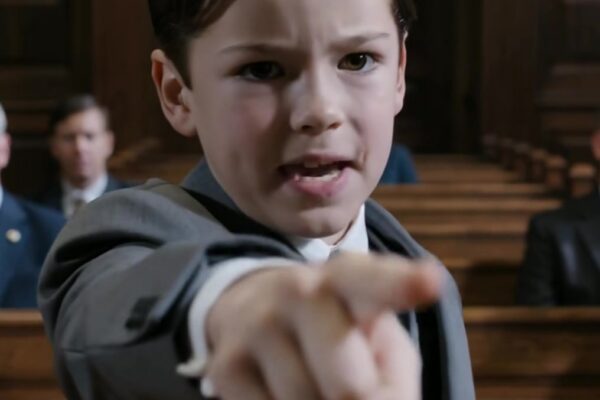
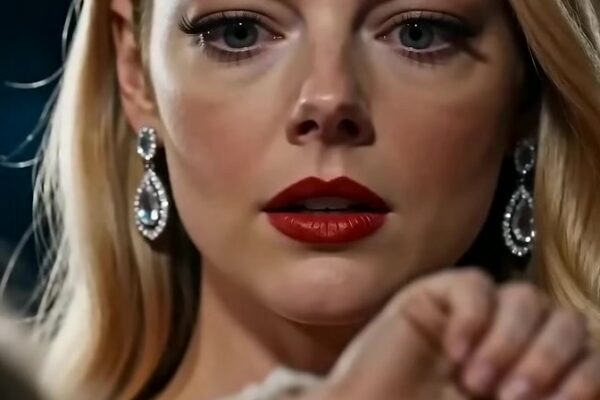
The room buzzed with quiet laughter the way a jar of trapped insects might—soft, constant, and too contained to be natural. The air was warm with bodies and old carpet, threaded with the bitter perfume of cheap cologne and the sugary sting of spilled cider. Someone had turned the lights low, so faces were mostly suggestion: cheekbones, teeth, the glint of a glass tilted toward a mouth.
“This won’t end well,” Noah said, not quite under his breath. He meant it as a joke, the way people did when the clock crept toward midnight and their courage began to impersonate wisdom. His grin was wide enough to hide his unease, and the others rewarded it with a ripple of laughter that kept itself polite, as though it didn’t want to wake the neighbors.
They’d gathered in Mira Lorne’s apartment because her place had history. It sat above a shuttered bookstore on Nettle Street, the kind of building that remembered every tenant by the stains they’d left and the arguments they’d lost. Mira had invited them with a flippant message—something about “one last reunion before we become ghosts in our own lives.” Everyone had come anyway. That was how it always went with Mira: you came, even when you told yourself you wouldn’t.
Mira stood near the fireplace that never worked, her dark hair pinned up like she had an appointment with someone important. On the coffee table in front of her was a box of objects arranged with care, as if it were a display in a museum. It made the room look staged, the way an old photo might, a moment posed before something collapses.
“It’s not a game,” she said, and her voice somehow cut through the murmurs without raising. “It’s a test.”
“A test of what?” Priya asked. Priya’s laughter had a sharpness that could turn to anger without warning. She cradled her drink in both hands, as though warmth could be borrowed from it.
Mira’s smile showed nothing. “Honesty. Courage. Or lack of it.”
Noah leaned over the box. Inside were ordinary things made strange by context: a house key with a faded green tag, a torn photograph, a ring that looked too small to fit an adult finger, a thick envelope sealed in red wax. There was also a small audio recorder, the kind used for interviews, with its light already blinking.
“You’ve been planning,” Noah said. “That’s… alarming.”
“I’ve been remembering,” Mira corrected. She tapped the recorder. “This is the only rule: when it’s your turn, you pick one item and you tell the truth about it. The real truth. Not the story you rehearsed for strangers. Not the version you tell yourself when you can’t sleep.”
“And if we don’t want to?” asked Daniel from the couch, his voice lazy, his posture carefully casual. Daniel always looked like he’d arrived late to his own life and was pretending it didn’t matter.
Mira’s gaze slid to him. “Then you can leave,” she said. “But you’ll leave without your coat.”
“What?” Daniel laughed, but it snagged. “Why?”
Mira pointed at the entryway where, indeed, every coat had been piled together like discarded skins. “Because I’ve locked the door,” she said. “And I’ve hidden the keys.”
The laughter returned, higher now, uncertain. Someone said, “She’s kidding,” and someone else said, “Of course she is,” and no one moved toward the door to check.
There were seven of them, counting Mira: Noah, Priya, Daniel, Lena with her nervous smile, Tom with his quiet eyes, and Jules who hadn’t spoken much since arriving. Jules sat on the floor near the bookshelf, cross-legged, his back straight, his gaze fixed on the objects as if they were dangerous animals.
Mira gestured to Noah first, because she always did—picked him when the room needed someone to make it lighter. Noah’s fingers hovered over the box and then closed around the torn photograph.
He turned it over, and the room leaned with him. The photo was of their old school hallway, faces blurred by motion, lockers painted the same institutional blue they’d once believed would trap them forever. In the corner, half cut off by the tear, was a figure slumped against the lockers. A girl with dark hair. A smear of shadow at her temple that could have been hair or blood. Noah swallowed.
“It’s nothing,” he said quickly. “Just… old trash.”
The recorder’s little light blinked. Mira’s eyes did not blink at all. “Truth,” she said.
Noah’s grin faltered. “Fine. It’s from the day… the day after.” His gaze flicked to Jules and away. “Someone took it. I kept it.”
“After what?” Lena asked, though everyone knew. The room tightened around the word nobody wanted to say.
Noah’s voice dropped. “After Eliza fell down the stairs.”
Silence splintered, not complete yet—Priya inhaled, Daniel shifted, Tom’s glass clicked against his teeth. Mira’s hand rested on the edge of the box like a judge’s gavel. “Why did you keep it?” she asked.
Noah’s throat bobbed. “Because it proved… she was there,” he whispered. “Because I was scared I’d forget.”
“You were scared you’d forget,” Priya echoed, and there was no humor left in her. “Or scared you’d remember wrong?”
Noah’s eyes shone with a wetness he refused to let fall. “I didn’t push her,” he said, too fast. “I didn’t.”
Mira nodded as if he’d answered a question she hadn’t asked. “Next,” she said, and pointed at Priya.
Priya’s fingers trembled only once before she reached into the box and pulled out the small ring. It was silver, dull with age. She held it up between thumb and forefinger, squinting as though it might transform if she stared hard enough.
“Eliza’s,” Priya said. Her voice cracked on the name. “She wore it on a chain. She said it was lucky.”
“You have it?” Tom asked, quiet but sharp.
Priya’s jaw worked. “I took it,” she admitted. “From her locker.”
Daniel scoffed. “Why?”
Priya’s eyes flashed at him. “Because she didn’t need luck anymore. Because she’d been unbearable for months—talking about how she had this secret, how she could ‘burn the whole place down’ if she wanted.” Priya’s fingers tightened around the ring until her knuckles whitened. “Because I wanted something of hers that didn’t get turned into a memorial.”
Noah stared at Priya like she was someone new. Jules’s hands curled into fists on his knees.
Mira’s voice remained calm. “Next,” she said, pointing at Daniel.
Daniel rolled his eyes with practiced ease and chose the thick envelope with the wax seal. He held it like it was a prop. “What, a letter? From beyond the grave? Is this where you pull out a Ouija board?”
Mira didn’t smile. “Open it.”
Daniel broke the seal with his thumb and slid out a folded stack of papers. His face changed, only for a second—something like recognition, something like fear—before he forced a laugh. “These are copies,” he said. “School records. Report cards. Who cares?”
“Truth,” Mira repeated, and this time the word landed heavy.
Daniel’s eyes skimmed the top page. His lips parted. The room watched him stumble. “It’s… it’s a disciplinary report,” he said, and his voice was thinner now. “About the staircase.”
“Read it,” Jules said suddenly. It was the first time he’d spoken since arriving. His voice was not loud, but it made everyone startle, as if they’d forgotten he was there.
Daniel hesitated, then read, halting: “Witness statement. Student observed… observed Eliza Hart arguing with Daniel Kessler near the third-floor landing. Student heard Daniel say: ‘Do it. Jump. I dare you.’”
Daniel’s laugh came out wrong. “That’s not—” he began.
Mira leaned forward. “Truth,” she said again, and there was something pleading inside the command now, as if she were trying to pull them all back from a cliff edge.
Daniel’s shoulders rose, then collapsed. “I said it,” he admitted. The words were small, like a confession forced through a keyhole. “I didn’t think she’d—she always threatened things. I thought she’d laugh.” His eyes darted around the room, searching for someone to absolve him. “I didn’t touch her.”
“You didn’t have to,” Tom said. His quiet eyes were suddenly fierce. “Sometimes words are hands.”
The laughter that had started the night was gone now, drained as if someone had pulled a plug. The room seemed to hold its breath, the walls inching closer, the shadows gathering courage.
Mira reached into the box herself and drew out the key with the faded green tag. She held it up like a verdict. “This is the key to the maintenance stairwell,” she said. “The door that was always supposed to be locked. The one the cameras didn’t cover.”
Jules went still, his face draining of color. “Where did you get that?” he asked, but his voice already knew.
Mira’s eyes finally softened, and in that softness was something devastating. “From Eliza,” she said. “She gave it to me the day she died.”
Priya’s breath hitched. Noah’s hands shook openly now. Daniel’s mouth worked without sound.
Mira set the key on the table and pressed the record button on the blinking device. The red light turned steady. “Eliza left me a message,” Mira said. “Not a ghost story. Not revenge. A message.” She glanced at each of them. “She said she was tired of carrying secrets alone.”
She reached under the coffee table and pulled out her phone. Her thumb hovered over the screen. “Do you want to hear it?”
No one answered. Even the building seemed to listen, the pipes holding their usual groans, the old windows refusing their drafts.
Mira hit play.
At first there was only static, a hiss like breath through clenched teeth. Then a girl’s voice, unsteady but clear enough to cut skin. It was Eliza—older than their memories, closer than they could bear.
“If you’re hearing this,” Eliza said, “it means I did it, or someone helped me do it. Either way, I’m done. I’m sorry to Mira for leaving you holding this. I’m sorry to myself for waiting so long.”
The sound of a shaky inhale. “Daniel, you don’t get to pretend words don’t leave bruises. Priya, I know you took my ring. Noah, I saw you take the photo. Tom, you watched and said nothing. Lena, you laughed because you were afraid to stop. Jules…”
Jules’s eyes widened as if struck.
Eliza’s voice softened, heartbreakingly. “Jules, I’m sorry I told you to keep the door open. I’m sorry you did. I’m sorry they’ll call it an accident and you’ll let them because you think silence is kindness. It isn’t.”
The recording ended with a click and then nothing—no music, no static, just the clean absence of sound.
The room, which had been buzzing with quiet laughter, ended in silence so complete it felt like a physical thing pressed against their lips.
Mira didn’t cry. She only looked at them, one by one, as though memorizing the exact moment their faces stopped being masks. “I didn’t lock you in,” she said softly. “You’ve been locked in for years.”
Jules’s voice broke the stillness, thin and raw. “I didn’t think—”
“None of you thought,” Mira said, and her calm finally shattered, not into screaming, but into a tremor that made her words more frightening than rage. “That’s the point.” She slid the key toward the center of the table. “The door is downstairs. The maintenance stairwell. The one that should’ve been locked. The one you all walked past every day.”
Priya stared at the key as if it were a blade. Noah covered his mouth with his hand. Daniel’s eyes were wet now, his bravado washed away. Lena’s fingers dug crescents into her own palms. Tom’s jaw clenched hard enough to ache.
Mira’s voice lowered to something like a final prayer. “We can keep ending things in silence,” she said. “Or we can finally make noise that matters.”
Outside, somewhere beyond the old windows, a siren rose and fell in the distance—unrelated, accidental, a reminder that the world kept moving regardless of guilt. Inside, no one moved at all.
Then Jules reached forward, his hand shaking so badly the key rattled against the wood. He picked it up as if it weighed more than metal ever should. He stood, and the others, one by one, stood with him.
They didn’t laugh. They didn’t speak. They only listened to the sound of their own breathing as they walked toward a door they’d been avoiding for years, and for the first time, the silence behind them did not feel like an ending. It felt like the moment before a confession.