The watch looked ordinary when the boy set it on the glass counter—ordinary in the way old things tried to disappear. Its brass case was dulled to the color of dried leaves. The hinge was stiff, the crown worn smooth by a thumb that had long since stopped winding it. A few scratches crossed the face like faint scars, and the leather strap had been replaced with a cheap band that didn’t match. It was the kind of object people brought in for spare change, apologizing for taking up time.
Leon Harker did not like objects that begged to be forgotten. He had spent his life fighting that drift, sitting beneath a lamp in the back of his jewelry shop with loupe and tweezers, listening for the private heartbeats of watches others had already given up on. Some mornings he swore he could tell which ones had been carried into war, which had timed births, which had counted down the hours of a long goodbye. He could tell, too, when a customer was trying not to shake.
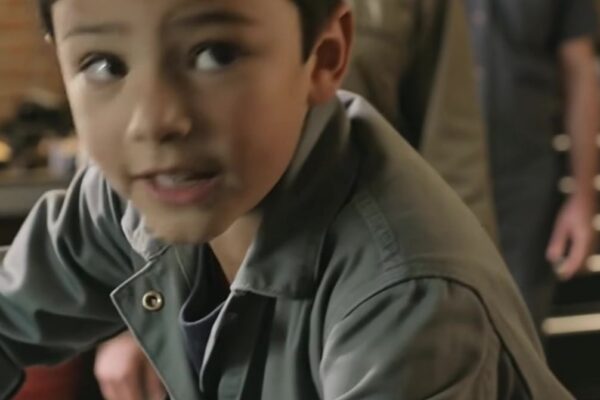
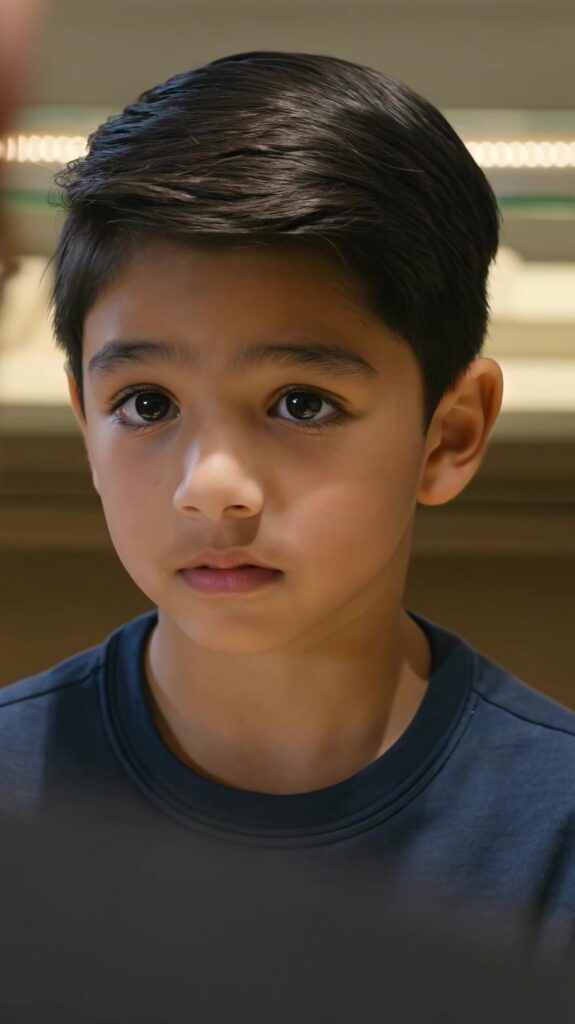
The boy’s hands stayed still. No tapping, no fidgeting, no anxious glance toward the door. He looked about fifteen, maybe younger—thin, dark hair trimmed too neatly for the street, eyes too calm for a pawnshop errand. His coat was one size too big, the sleeves swallowing his wrists as if he’d borrowed it from an older brother who never returned it.
“It doesn’t run,” the boy said. His voice had the levelness of someone reciting a fact that did not matter.
Leon picked up the watch and felt its weight settle into his palm like a coin that had learned sorrow. He listened, the way he always listened—ear close to the case, breath held—then turned it under the light. The face was plain, black numerals on white enamel. No brand name. No flourish. Nothing that would make a collector lean in.
“It’s older than it looks,” Leon murmured. “You know where it came from?”
“My mother kept it,” the boy said. “She said it belonged to someone who could fix anything.”
The words struck like a finger pressed against a bruise. Leon’s gaze moved to the boy’s face, searching for a resemblance he didn’t have the right to ask about. The set of his mouth was unfamiliar. The eyes, though—there was something in the eyes, a directness that made Leon feel suddenly unsteady, as if he were the one being examined.
Leon turned the watch over. The back was smooth except for a shallow dent near the hinge, the kind made when someone drops a precious thing and picks it up too fast. He ran a thumb along the seam and found a notch that wasn’t part of any standard case. Someone had modified it. Someone patient.
“This is a locket-style hunter,” Leon said, and his own voice sounded far away. “But the latch is… strange.”
The boy leaned forward an inch. “Can you open it?”
Leon should have said no. There were rules in his world: do no harm, make no promises to strangers, never open what wasn’t meant for you. Yet his fingers moved on their own, guided by an old instinct, and the shop around him—dusty velvet trays, rings under glass, the clock on the wall ticking too loudly—seemed to narrow to the watch and the boy.
He pressed the notch.
Click.
The sound was small, but it cracked the day into before and after. The jeweler’s hands froze with the case half open.
Inside, where there should have been a simple mechanism—gears, springs, the practical anatomy of time—there was a thin inner lid, a second face fitted beneath the first. The boy watched without blinking as Leon lifted it. The hinge resisted, then yielded with a careful sigh.
There, set under glass no thicker than an eyelash, was a photograph—no, smaller than that, a miniature image sealed in place as if the watch were a tomb.
A face.
A young woman with hair pinned back and eyes bright with the kind of defiance that could make a person brave just by standing near her. She smiled as if the photographer had said something only she understood. The world fell away from Leon’s ribs. His throat tightened until it hurt to breathe.
“Mara,” he whispered before he could stop himself.
The boy’s expression did not change. “You know her.”
Leon swallowed hard. His fingers trembled now, the practiced steadiness deserting him. “I—” His voice scraped. “I gave this to her.”
He had made it years ago, back when his hands were younger and the shop still smelled of fresh paint. Mara had come in on a rain-soaked evening, cheeks flushed from the cold, and demanded something that could not be bought—something that could prove he would not forget her. Leon had laughed, and then, because he had been hopeless, he had worked through the night. A watch that would carry more than time.
“She vanished years ago,” Leon said. The words tasted like rust. “No one knew where. No note. No body. Just… gone.”
The boy’s gaze stayed on the photograph as if he’d stared at it often enough for it to become ordinary. “She didn’t vanish.”
Silence settled between them, thick and wrong. Outside the shop window, traffic hissed along wet pavement. Somewhere in the building, a radiator clicked as it cooled.
Leon stared at the boy. “Then where is she?”
The boy stepped closer, close enough that Leon could see a faint scar near his left ear, a pale line that looked like it had healed badly. Calm. Certain. He lowered his voice until it barely stirred the air.
“She’s where you left her,” he whispered.
Leon took a step back as if struck. “What—” His mind threw up images: Mara’s laughter, her hands on his workbench, the last night he had seen her when a black sedan idled across the street and he told himself it was none of his business. The night he chose his shop and his safety and his quiet life over her fear.
“That’s impossible,” Leon said, but his pulse had begun to drum a confession.
The boy reached into his coat and produced a second item: a folded scrap of paper, creased so many times it had become soft. He slid it across the counter. Leon opened it with fingers that refused to cooperate.
It was a map, hand drawn, the lines thick where someone had pressed too hard. At the top corner, in a slanted script Leon recognized as well as his own name, was written: IF HE EVER COMES BACK.
Leon’s chest tightened until he thought he might shatter. “This is her handwriting,” he managed.
“She wrote it for you,” the boy said. “After you didn’t come.”
Leon lifted his eyes. “Who are you?”
The boy hesitated, and for the first time something flickered across his composed face—an old anger, carefully leashed. “I’m the reason she kept breathing,” he said. “I’m the reason she kept hoping you weren’t the coward she said you were.”
Leon’s mouth went dry. The boy’s eyes were Mara’s eyes, after all, and Leon felt the floor tilt beneath him. “Your son,” Leon whispered, the words arriving like a verdict.
The boy did not confirm it. He did not have to.
Leon’s knees threatened to fold. He gripped the edge of the counter, staring at the map, at the watch, at the tiny frozen smile beneath glass. “Tell me where,” he said. “Tell me now.”
The boy’s gaze slid toward the door, as if he’d heard something Leon hadn’t. “You’re going to have to remember what you promised her,” he said quietly. “Because they’re listening.”
Leon’s pulse stumbled. “Who?”
Before the boy could answer, the bell above the entrance gave a thin, metallic jingle. The door creaked open behind them with the slow certainty of something that had all the time in the world.
Cold air dragged across Leon’s neck. He did not turn right away. He stared at the watch, at Mara’s face, at the map that led somewhere Leon had tried not to look. The boy’s calm seemed suddenly like preparation, not confidence.
A voice from the doorway, polite as a knife, said, “Mr. Harker. We should talk.”
Leon’s fingers closed around the watch until the brass bit his skin. In the glass, Mara’s smile did not change, but it felt like a demand.
This time, he thought, there would be no vanishing act. Only the reckoning he had delayed for years—measured, at last, in something more honest than minutes.