Noticing “Bleach Spots” on Dark Underwear? It’s Often Completely Normal
Pulling your favorite dark underwear from the wash and finding pale patches that look like bleach stains can feel confusing—or even a little alarming. Many women immediately wonder whether it’s a laundry mistake, a hygiene issue, or a sign that something is “off” vaginally.
In most cases, the explanation is reassuring: these lightened areas are frequently caused by normal vaginal discharge and can actually reflect a healthy vaginal environment. By the end of this article, you’ll know why it happens, what’s considered normal, when to pay closer attention, and how to support intimate health with simple daily habits.

What Causes Bleach-Like Patches on Underwear?
The most common reason for faded spots on underwear is vaginal discharge interacting with fabric dye over time.
Vaginal discharge is a natural fluid that helps the vagina stay clean, lubricated, and balanced. In healthy women of reproductive age, this discharge is typically mildly acidic because the vagina’s normal pH usually falls around 3.8 to 4.5.
This acidity is largely maintained by beneficial bacteria, especially lactobacilli, which produce lactic acid. When acidic discharge dries on underwear—particularly on cotton and dark colors—it can slowly lighten the dye, creating marks that resemble bleach stains.
Importantly, this acidity isn’t a problem—it’s protective. A mildly acidic vaginal pH helps discourage the growth of harmful bacteria and reduces the risk of infections by making the environment less welcoming to pathogens.
Why Some Underwear Shows the Fading More Clearly
Not every pair of underwear will show these marks the same way. Visibility depends on the fabric, the dye, and everyday body changes.
- Cotton vs. synthetic fabrics: Cotton commonly shows fading more because dyes can be more easily affected after repeated exposure. Many synthetics hold color differently and may resist discoloration.
- Dark underwear makes contrast obvious: Black, navy, and deep tones highlight light patches, while beige, pastels, and lighter shades can hide them.
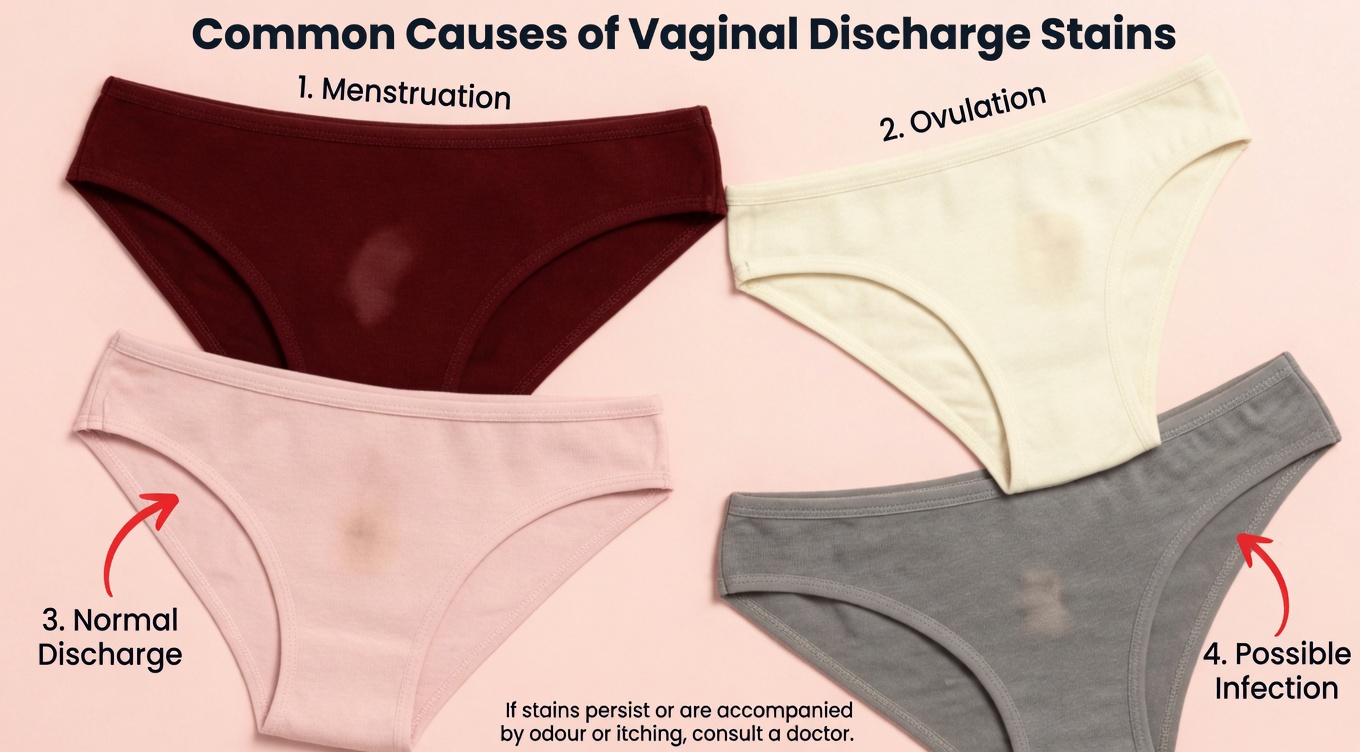
- Normal cycle changes: Discharge often increases around ovulation, during arousal, or in specific phases of the menstrual cycle—meaning more contact with fabric and more opportunities for fading.
The key takeaway: these patches are usually not dirt, not a hygiene failure, and not something you “caused”—they’re often just a side effect of the vagina doing what it’s designed to do.

Signs Your Vaginal pH Is Likely Balanced
A healthy vaginal environment often comes with predictable, non-alarming patterns. Common reassuring signs include:
- Clear or white discharge that is odorless or only mildly scented
- No itching, burning, swelling, or irritation
- Gradual, consistent underwear fading over time (rather than a sudden dramatic change)
- Normal cycle-related shifts in discharge without pain or discomfort
In many cases, bleach-like fading aligns with an acidic pH range where beneficial bacteria remain dominant—supporting balance and helping defend against infection.
Normal vs. When to Pay Attention
Here’s a simple way to distinguish common, healthy signs from symptoms that may warrant medical advice:
-
Usually normal
- Mildly acidic pH
- Clear/white discharge
- Light fabric fading over time
- No pain, itching, or strong odor
-
Worth checking with a healthcare provider
- Strong or “fishy” odor
- Discharge that turns yellow, green, or gray
- Burning, itching, swelling, or pelvic discomfort
- Sudden changes that don’t match your usual pattern
If symptoms appear alongside discharge changes, it may signal an imbalance such as bacterial vaginosis or a yeast infection, and a clinician can help confirm what’s going on.
Simple, Practical Ways to Support Vaginal Health
You don’t need complicated products or aggressive cleansing routines. In fact, keeping things simple is often best for maintaining a stable vaginal microbiome and healthy pH.
- Wear breathable underwear
- Choose 100% cotton when possible for better airflow and moisture control.
- Avoid harsh cleansing
- Stick to water or gentle, fragrance-free cleansers externally. Skip douching and strongly scented products that can disrupt good bacteria.
- Change out of damp clothing quickly
- Wet swimsuits and sweaty gym clothes can trap heat and moisture, which may throw off balance.
- Support overall wellness
- Hydration and a nutrient-rich diet can help overall microbiome health. Probiotic foods like yogurt may be beneficial for some people.
- Choose breathable outfits
- Tight synthetic clothing can trap moisture; looser, cotton-lined options help ventilation.
These habits support your body’s natural defenses without overcorrecting or irritating sensitive tissue.
Common Myths About Discharge and Underwear Stains
Misunderstandings about vaginal discharge often lead to unnecessary worry. Let’s clear up a few:
-
Myth: Faded patches mean poor hygiene.
Reality: They often reflect normal acidity and a healthy vaginal pH—not uncleanliness. -
Myth: You need special feminine washes to stop it.
Reality: Extra products can sometimes cause more harm than good by disrupting natural balance. -
Myth: Only a few women experience this.
Reality: It’s common, especially in reproductive years—many people just don’t talk about it.
Understanding what’s normal can reduce embarrassment and help you feel more confident about your body.
Final Thoughts: What Those “Bleach Marks” May Be Telling You
Light patches on dark underwear are usually not a warning sign—they’re often a quiet signal that your vagina’s natural acidity is doing its job. A pH of about 3.8–4.5 supports beneficial bacteria, helps protect against infection, and can sometimes lighten fabric dye as discharge dries.
If you feel comfortable, have no irritation, and notice no unusual odor or discharge color changes, there’s typically no reason to panic. When symptoms do change—especially with discomfort—it’s wise to check in with a healthcare professional.
Frequently Asked Questions
What if I never see bleach-like patches on my underwear?
That can be completely normal. Discharge levels vary from person to person, and fabric dyes react differently depending on material, brand, and color. If you have no discomfort or unusual symptoms, it’s usually not a concern.
Can this happen with light-colored underwear too?
Yes, but it’s less noticeable. On light fabrics, you may not see “bleaching” at all, and some people notice subtle discoloration (such as slight yellowing) instead.
When should I talk to a doctor about discharge changes?
Seek medical advice if you notice:
- Strong or unusual odor
- Yellow, green, gray, or frothy discharge
- Itching, burning, swelling, or pain
- Sudden changes that persist and don’t match your usual cycle pattern
Disclaimer
This article is for informational purposes only and does not replace professional medical advice. For personalized guidance, diagnosis, or treatment, consult a qualified healthcare provider.