Hearing the Quiet Signals Your Body Sends
You’re folding laundry late at night when you notice faint spotting that doesn’t fit your usual cycle. It’s not your period, it isn’t painful, but a quiet worry taps at the back of your mind. Is it just hormones, or something you should mention to your doctor?
Many women in their 30s, 40s, and later assume these subtle reproductive changes are just stress, perimenopause, or “getting older.” Over time, that habit of brushing things off can delay important conversations with a healthcare provider.
Cervical cancer is one of the most preventable cancers. Awareness, HPV vaccination, and regular screening (Pap tests and HPV tests) can stop most cases before they ever become cancer. Yet early warning signs are often so mild that they’re easy to ignore in the rush of daily life.
Key prevention fact: Most cervical cancers can be prevented or caught very early through routine screening and HPV vaccination. That single truth can completely change how you prioritize your reproductive health.

Why Cervical Cancer Often Stays Hidden Until Later
Life after 35 is full: demanding work, family responsibilities, and a never-ending to-do list. In the middle of all that, your own health can quietly slide downward on the priority ladder. Small changes—especially around your cycle—are easy to chalk up to hormones, stress, or fatigue.
Most cervical cancers are caused by a persistent infection with high-risk types of human papillomavirus (HPV). This virus can be present for years without causing pain or obvious symptoms. During that time, HPV can trigger abnormal cell changes in the cervix. Without regular screening, these early changes may go unnoticed until they progress and become harder to treat.
Organizations such as the Mayo Clinic and the American Cancer Society consistently show that early detection dramatically improves outcomes. The challenge is knowing when a change is part of normal fluctuation—and when it’s a potential sign of cervical cancer that deserves attention.

How Early Cervical Changes Usually Show Up
Many people imagine that serious illness will arrive with dramatic, unmistakable symptoms. In reality, the early signs of cervical cancer often look like minor disturbances in your normal patterns.
They tend to show up as:
- Changes in bleeding
- Changes in vaginal discharge
- New or persistent pelvic discomfort
- Symptoms that subtly interfere with daily comfort or intimacy
These signs can be easy to rationalize, especially if you’re busy or already stressed. But learning what is typical for your body—and noticing when something falls outside that pattern—gives you valuable information, not a reason to panic.
Observing these changes does not mean you have cancer. It simply means you have data you can share with a healthcare provider, who can decide if further evaluation is needed.

9 Commonly Overlooked Signs of Cervical Cancer
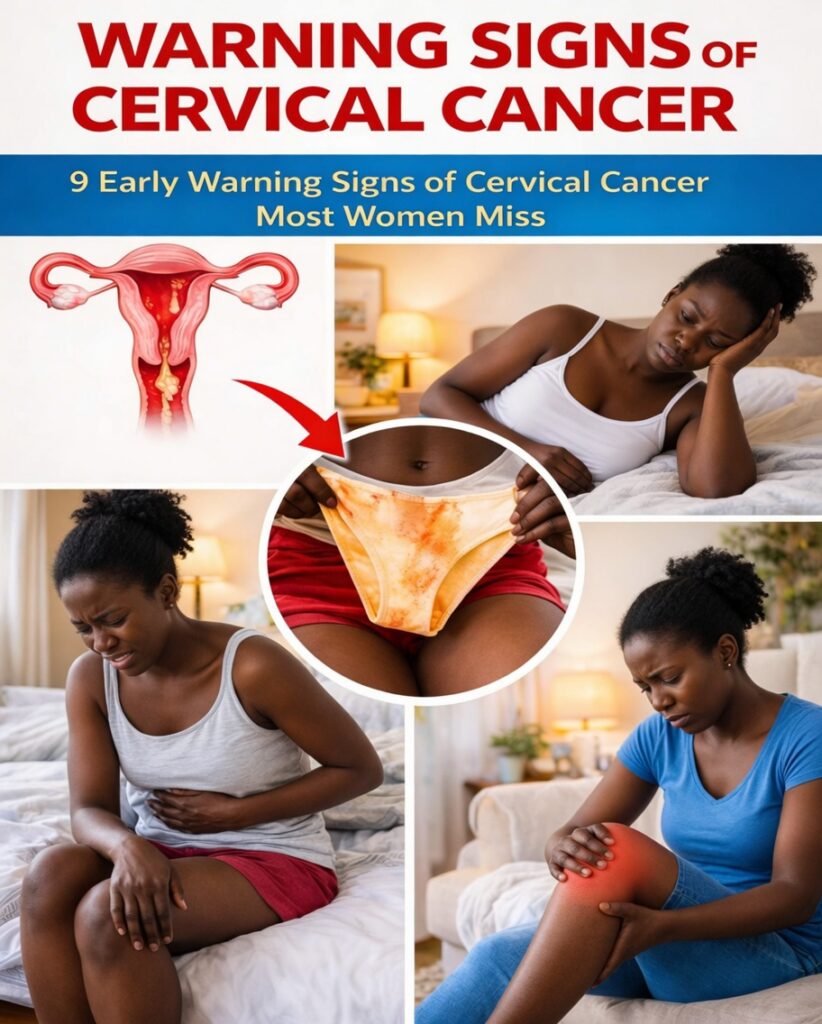
Below are nine symptoms that often appear in discussions of early or developing cervical cancer. Many of them can also be caused by noncancerous conditions, but when they are new, persistent, or unexplained, they merit attention.
9. Changes in Urination or Bowel Habits
Needing to urinate more often than usual, feeling pressure when you try to empty your bladder, or noticing new constipation or difficulty with bowel movements can easily be blamed on aging, hydration, diet, or stress.
However, when these changes are persistent and not explained by obvious causes, they may reflect pressure or involvement in the pelvic area. The Cleveland Clinic notes that urinary and bowel changes can sometimes occur when structures in the pelvis are affected, including in more advanced cervical disease.
What to watch for:
- Frequent urge to urinate that isn’t relieved after going
- Trouble fully emptying your bladder
- New constipation or changes in bowel patterns that last
Alone, these symptoms are non-specific. But when combined with other signs—especially abnormal bleeding or discharge—they strengthen the case for a medical check-in.
8. Leg Pain or Swelling (Especially On One Side)
Unexplained pain, heaviness, or swelling in one leg can be unsettling, especially if it doesn’t improve and isn’t tied to injury or overuse. In the context of cervical cancer, this is more often a later sign, when enlarged tumors or affected lymph nodes may impact blood or lymph flow.
The American Cancer Society describes leg swelling or pain as a possible indication of disease that has spread beyond the cervix. While it’s not a common early symptom, its presence emphasizes why earlier, subtler signals should never be ignored.
Consider seeking evaluation if you notice:
- Swelling in one leg without a clear cause
- Leg pain or heaviness that persists or worsens
- Symptoms combined with pelvic pain, abnormal bleeding, or weight loss
7. Persistent Fatigue or Unusual Weakness
Feeling tired is common in busy lives. But ongoing exhaustion that doesn’t improve with rest, sleep, or schedule changes may signal that something deeper is going on.
Women with developing cervical disease sometimes describe:
- Constant low energy despite adequate rest
- Feeling “worn out” by normal tasks
- Weakness that accompanies other pelvic or bleeding changes
Fatigue has many potential causes (including anemia, thyroid issues, chronic stress, depression, and more). However, when unexplained fatigue appears along with other signs of cervical cancer—such as abnormal bleeding or pelvic pain—it becomes part of an important pattern to share with a provider.
6. Bleeding After Menopause
Once you’ve gone through menopause, you expect monthly bleeding to be over. That’s why any vaginal bleeding after menopause is a significant red flag and should never be dismissed as “just a fluke.”
Guidance from the Mayo Clinic and other major health organizations is clear:
Postmenopausal bleeding always warrants prompt evaluation.
Examples include:
- Spotting, even light, after menopause
- Bleeding after sexual intercourse once periods have ceased
- Any return of bleeding months or years after your last period
This does not automatically mean cervical cancer—there are other causes, such as uterine or hormonal conditions—but it is a symptom that should be taken seriously and discussed with a doctor as soon as possible.
5. Longer, Heavier, or More Draining Periods
If your menstrual periods:
- Last significantly longer than they used to
- Become noticeably heavier or involve large clots
- Leave you feeling far more drained than before
then your cycle is sending you information that deserves attention.
The American Cancer Society notes that heavier or prolonged menstrual bleeding can be one of the more common signs of cervical cancer. Of course, fibroids, hormonal changes, and perimenopause can also alter periods, so tracking your cycle can help distinguish a temporary shift from a pattern worth investigating.
Signs to watch:
- Needing to change pads or tampons much more frequently
- Bleeding that continues several days longer than your usual pattern
- Increasing exhaustion or dizziness during your period
4. Persistent Pelvic Pain or Pressure
A dull ache, heaviness, or pressure low in the abdomen or pelvis can be easy to blame on sitting too long, lifting something heavy, or general tension. But if that discomfort keeps returning or never fully resolves, it’s time to pay closer attention.
Health systems such as UnityPoint Health highlight ongoing pelvic pain or pressure as a possible indicator of cervical changes.
Take note if:
- Pain or pressure is present most days
- Discomfort interferes with work, exercise, or sleep
- Over-the-counter pain relief or posture changes don’t provide lasting relief
Pelvic pain has many potential causes, but persistence is what makes it important to discuss with a healthcare professional, especially if you also notice abnormal bleeding or discharge.
3. Pain or Discomfort During Sex
Pain with intercourse (dyspareunia) can deeply affect intimacy and relationships. When sex that once felt comfortable suddenly becomes painful, many women feel guilt, confusion, or strain in their partnerships—and may suffer in silence.
According to the Mayo Clinic, pain during or after intercourse can be associated with cervical tissue changes, including precancerous or cancerous conditions.
Pay attention to:
- New or worsening pain during penetration
- Deep pelvic pain during sex
- Bleeding after intercourse
This is not something you need to “tough out” or ignore. Many causes of painful sex are treatable, and evaluation can restore both physical comfort and emotional connection.
2. Unusual Vaginal Discharge
Vaginal discharge naturally varies throughout your cycle. However, discharge that is clearly different from your normal pattern—and remains that way—may be an early sign of cervical problems.
Cleveland Clinic and the CDC note that changes in discharge can reflect cervical tissue changes, including infection or early disease.
Concerning features include:
- Watery discharge that is persistent and unusual for you
- Discharge mixed with blood, outside of your period
- Thick, foul-smelling, or discolored discharge that doesn’t improve
While infections like bacterial vaginosis or STIs are common and treatable causes, persistent or unexplained changes deserve a professional evaluation rather than repeated self-treatment.
1. Abnormal Vaginal Bleeding That Feels “Not Like You”
Among all signs of cervical cancer, abnormal vaginal bleeding is one of the most frequently reported. Major organizations including the Mayo Clinic and the American Cancer Society list it as a key symptom.
Abnormal bleeding may include:
- Spotting between periods
- Bleeding after sexual intercourse
- Bleeding after douching or pelvic exams
- Heavier or longer periods than usual
- Any bleeding after menopause
The critical factor is not how “dramatic” the bleeding looks—but whether it feels different from your norm and keeps occurring.
Many women who catch precancerous changes early describe a similar experience: they noticed odd spotting, mentioned it to a healthcare provider, had a Pap or HPV test, and were able to treat changes before they became cancer. The difference came from listening to their bodies and following up rather than dismissing the signs.

Abnormal vs. Typical Changes: Quick Comparison
Not every change means something serious. The table below can help you distinguish when to watch and when to call your provider:
| Aspect | Potential Cervical Cancer Signs | Common Hormonal/Aging Variations |
|---|---|---|
| Bleeding | Between periods, after sex, or after menopause; recurrent or worsening | Occasional light spotting that resolves quickly and does not repeat |
| Discharge | Watery, bloody, foul-smelling, or unusual for you, and persistent | Short-term changes with mild infections that clear with treatment |
| Pain/Discomfort | Ongoing pelvic pressure, pain during sex, or discomfort that keeps returning | Mild cramps or aches tied clearly to your cycle or specific activity |
| Duration | Symptoms linger, repeat, or slowly intensify | Symptoms appear briefly and resolve on their own |
| Daily Impact | Changes interfere with intimacy, energy, or comfort | Minor inconvenience with no lasting effect |
This comparison is not a diagnostic tool, but it can help you decide when curiosity and follow-up are more appropriate than dismissal.
Real-World–Inspired Moments of Paying Attention
Experiences vary, but many stories share a common thread: a small sign, noticed repeatedly, finally led to a crucial appointment.
- One woman saw light spotting after sex again and again. She told herself it was probably nothing—until she mentioned it during a routine visit. Testing revealed precancerous cervical changes that were treated quickly, bringing immense relief and gratitude that she spoke up.
- Another woman quietly endured painful intercourse for months, worried about how it might affect her relationship. When she eventually sought medical help, evaluation identified the cause and restored comfort, improving both her physical and emotional well-being.
These stories underscore a simple truth: you don’t lose anything by asking—but you could gain years of health by catching changes early.
What to Do If You Notice Possible Signs of Cervical Cancer
If you observe any of the signs listed above, especially if they persist or appear together, you can take practical steps to regain a sense of control:
- Track what you notice. Use a notebook or phone app to record dates, type of symptom (bleeding, discharge, pain, fatigue), and any patterns.
- Note triggers and timing. Pay attention to whether symptoms occur after sex, around your period, with certain activities, or at random.
- Watch the duration. Symptoms that last for two weeks or more, recur over several cycles, or gradually worsen should be brought to a provider’s attention.
- Schedule an appointment. Share your symptom log and ask whether Pap testing, HPV testing, or a pelvic exam is recommended.
- Advocate for yourself. If you feel your concerns are being minimized, it is reasonable to ask more questions or seek a second opinion.
When to Move From Watching to Acting
Consider contacting a healthcare provider when:
- Symptoms persist for several weeks
- You notice multiple signs together (for example, abnormal bleeding plus pelvic pain or unusual discharge)
- Changes interfere with work, sleep, intimacy, or daily comfort
- You experience any bleeding after menopause
Simple Guide to Help Your Next Appointment
| Guideline | Suggested Action | Key Notes |
|---|---|---|
| Self-monitoring | Track symptoms in a notes app or journal | Include dates, intensity, and any triggers you notice |
| Symptom duration | Observe for at least 1–2 weeks | Persistent or worsening patterns matter more than one-off events |
| Medical follow-up | Book a visit with your gynecologist or PCP | Bring your symptom log; ask specifically about cervical screening |
| Screening | Stay current with Pap and HPV tests | Follow national or local guidelines for your age and history |
| Prevention | Discuss HPV vaccination if eligible | Vaccination plus screening greatly reduces cervical cancer risk |
The Takeaway: One Fact That Can Change Your Approach
Nearly all cervical cancers are linked to high-risk HPV, and most can be prevented or caught at a very early, highly treatable stage through regular screening and, when appropriate, HPV vaccination.
Your body often whispers long before it ever raises its voice. By learning the early signs of cervical cancer, noticing what’s normal for you, and acting on changes that feel “off,” you transform uncertainty into informed action—and give yourself the best possible chance at long-term health.