Slower circulation and subtle shifts in urinary comfort can quietly change everyday life after 45—cooler hands, heavy legs, and interrupted sleep from frequent bathroom trips. Over time, these “small” annoyances can drain your energy and confidence, even when they get dismissed as normal aging. It’s no surprise many people look for gentle, natural ways to support their routine without extreme interventions. That’s where vibrant purple herbal teas come in—and in this guide, you’ll learn a simple, practical way to make them part of your daily rhythm.
Why Circulation and Urinary Comfort Matter More Than Most People Realize
Circulation affects much more than heart metrics. It influences how energized you feel, how your body rebounds after activity, and how warm your hands and feet stay—especially in cooler weather.
Urinary wellness plays a major role in sleep quality and day-to-day comfort. Hormone shifts, hydration timing, and low-level irritation can all affect how often you feel the urge to go.
What many people miss is this: small, consistent habits tend to create the biggest long-term change—and that’s one reason purple-toned herbal infusions are attracting attention.
What “Purple Plant Herbal Tea” Actually Means
Purple plant herbal tea isn’t one specific herb. It’s a broad category of naturally colorful infusions made from antioxidant-rich flowers and leaves, such as:
- Hibiscus (Hibiscus sabdariffa), valued for deep red-purple calyces
- Butterfly pea flower (Clitoria ternatea), known for vivid blue petals that turn purple with lemon
- Purple-leaf tea varieties (Camellia sinensis), naturally rich in anthocyanins
These plants are especially known for their intense pigments—particularly anthocyanins, antioxidants studied for potential support of vascular and cellular health. Traditional use has long linked these teas with circulation and urinary comfort, and scientific interest is now exploring those claims more closely.
How Antioxidants Can Influence Circulation in Daily Life
Oxidative stress—when free radicals outpace antioxidants—may gradually reduce blood-vessel flexibility. Anthocyanins (the compounds behind purple and red hues) are being studied for their possible role in supporting endothelial function, the health of the inner lining of blood vessels.
Research reviews suggest these compounds may help:
- Support healthy blood flow
- Encourage vessel relaxation
- Contribute to overall cardiovascular balance
This isn’t about instant results. It’s about steady, supportive nutrition over time—and that’s why consistency matters more than intensity.
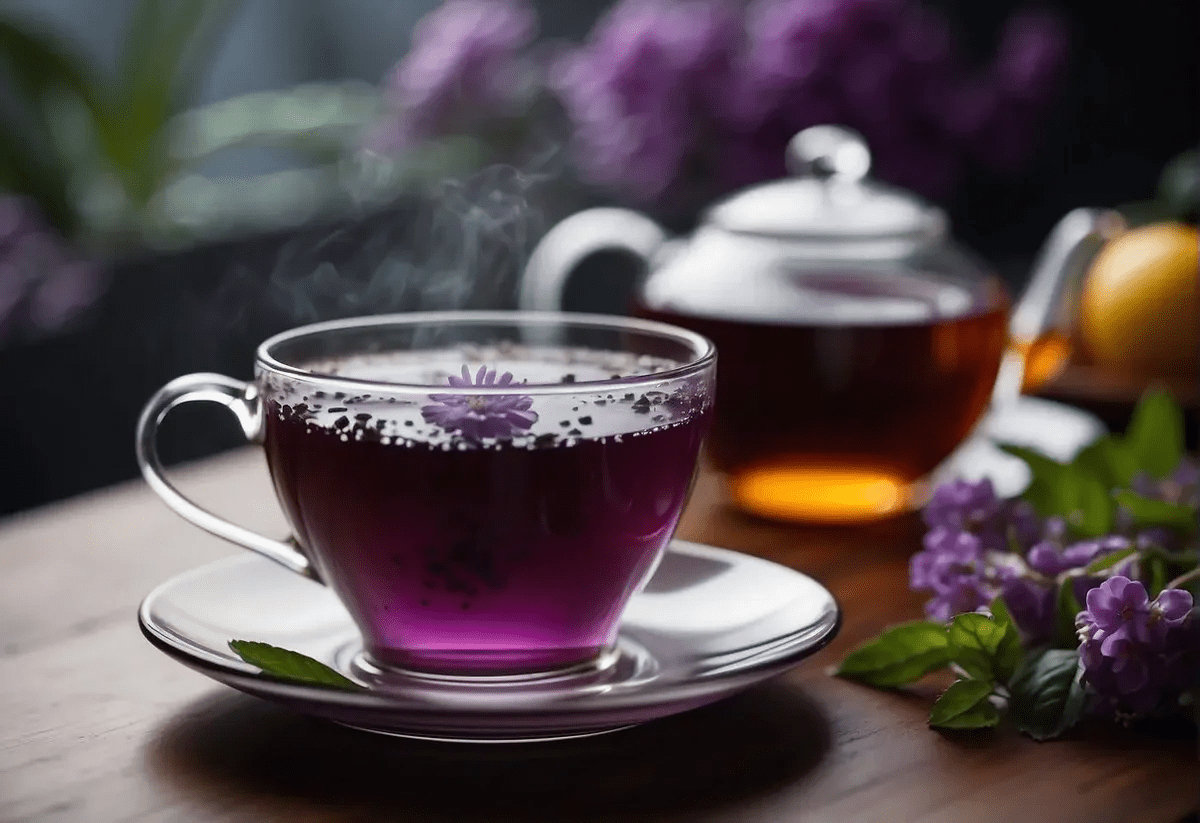
Potential Benefits of Purple Plant Herbal Tea (Realistic and Clear)
Below are the most commonly discussed benefits, presented in a grounded, practical way.
1. Antioxidant Support for Blood-Vessel Resilience
Hibiscus and purple tea varieties contain anthocyanins and other polyphenols that are widely studied for antioxidant activity. Some findings suggest these compounds may help protect blood vessels from oxidative strain.
Healthier vessel function supports smoother circulation—which, over time, may contribute to better warmth and energy.
2. Support for Healthy Blood Pressure Balance
Several small clinical studies involving hibiscus tea have reported mild blood pressure reductions in adults who drink it regularly. Results vary by person, but this is a key reason hibiscus frequently appears in heart-health discussions.
If you monitor blood pressure or use blood pressure medications, it’s wise to discuss regular hibiscus intake with a qualified healthcare professional.
3. Traditionally Used Gentle Diuretic Action
In traditional wellness practices, both hibiscus and butterfly pea flower have been used for mild diuretic support—meaning they may gently encourage urine output.
This may contribute to:
- Less sensation of “fluid heaviness”
- Mild support for urinary flow
- Better overall hydration balance
Moderation is essential. More tea is not automatically better.
4. Plant Compounds Studied for Soothing (Anti-Inflammatory) Effects
Low-grade inflammation can affect both vascular comfort and urinary well-being. Polyphenols found in purple plant teas are being investigated for their calming, supportive properties.
These teas are not medical treatments, but they may complement a lifestyle focused on healthier aging.
5. A Simple Wellness Ritual You Can Actually Maintain
For many people, the biggest advantage is practical:
- Affordable
- Easy to prepare
- Pleasant to drink
A colorful cup can turn plain hydration into a daily ritual—often the kind of habit that’s easiest to keep long term.
Purple Herbal Tea vs. Real-World Expectations
- Circulation: may support flow and vessel relaxation (hibiscus research shows encouraging trends)
- Urinary comfort: may offer mild diuretic support (strong traditional use; modern evidence is emerging)
- Antioxidant protection: may support cellular and vascular health (anthocyanin reviews are promising)
- Soothing support: laboratory research continues on polyphenols and tissue comfort
- Accessibility: easy to brew; dried flowers and teas are widely available
Most meaningful changes are gradual—not overnight.
How to Prepare Purple Plant Herbal Tea Safely
If you want to try it, keep it simple and start gently.
Step-by-Step Brewing Method
- Use 1–2 teaspoons of dried hibiscus calyces or butterfly pea flowers
- Pour hot water over the herbs
- Steep for 5–10 minutes
- Strain and drink
Optional additions:
- Add lemon (butterfly pea shifts from blue to purple almost instantly)
- Stir in a small amount of honey if desired
Start with 1 cup per day. Notice how you feel. If it suits you, slowly increase—typically no more than 2–3 cups daily unless your healthcare professional advises otherwise.
Important Safety Notes
Purple plant teas are generally considered safe when used moderately, but take precautions:
- If you take blood pressure medication, consult a healthcare professional
- If you have kidney conditions, get personalized guidance
- Avoid excessive intake if you already use diuretics
- If pregnant, discuss hibiscus with a qualified provider
“Natural” does not automatically mean risk-free. Informed, balanced use is key.
Why the Ritual Itself Can Be Surprisingly Effective
This isn’t just about antioxidants in a cup:
- Hydration supports circulation and urinary balance
- Relaxation helps reduce stress hormones that affect vascular tone
- Consistent rituals make healthy behaviors easier to maintain
When you drink a warm, colorful infusion, you’re also reinforcing a daily cue: “I’m taking care of myself.” That psychological reinforcement often lasts longer than short-term motivation.
Practical Ways to Get More Value From Your Tea Habit
For better results, pair your tea routine with supportive basics:
- Light daily movement (even a 20-minute walk)
- Steady hydration across the day (not all at night)
- Lower sodium intake
- A colorful, plant-forward diet
Think of purple herbal tea as one helpful layer, not the entire solution. Wellness works best when habits stack together.
Final Thoughts
Purple plant herbal teas—especially hibiscus and butterfly pea flower—offer antioxidant-rich support, traditional mild diuretic benefits, and an easy daily ritual that fits naturally into life after 45.
They aren’t miracle drinks. They’re supportive habits.
Start small, stay consistent, and combine tea with movement and hydration. Let the gentle purple hue remind you that feeling better often begins with simple steps.
Frequently Asked Questions
1. Can purple plant herbal tea improve circulation?
Research suggests anthocyanins in hibiscus and purple tea varieties may support blood-vessel function and healthy blood flow. Results differ by person, and consistency matters.
2. Is hibiscus tea safe to drink every day?
For most healthy adults, 1–3 cups per day is generally considered moderate. If you take medications (especially for blood pressure) or have health conditions, consult a healthcare professional.
3. Does butterfly pea flower tea help with urinary comfort?
Traditionally, it’s been used for gentle diuretic support. Modern research is still developing, but many people enjoy it as part of a balanced hydration routine.
Disclaimer: This article is for informational purposes only and does not replace professional medical advice. Always consult a qualified healthcare provider before changing your health routine.