Feeling Exhausted, Bloated, and “Off”? Your Liver May Be Asking for Help
You get a full night of sleep—yet you still wake up tired. Your waistband feels snugger than it used to, and the afternoon slump seems impossible to shake. It’s easy to blame stress, a packed schedule, or age. But in many cases, these can be quiet signals that your liver is under strain.
Fatty liver conditions affect millions of people worldwide and often develop with few obvious symptoms in the beginning. The encouraging part is that noticing the early signals—and responding with simple lifestyle changes—can make a meaningful difference.
Many people miss these clues until the problem becomes harder to ignore. Below are the early and later warning signs to watch for, plus practical food and habit changes that can support liver health starting today.
6 Early Warning Signs Your Liver Is Struggling (Often Mistaken for “Normal”)
Early liver stress can feel like everyday discomfort. Because the symptoms are subtle, they’re frequently dismissed. Identifying them sooner gives you a chance to act before fat buildup or inflammation progresses.

-
Feeling uncomfortably full after small meals
Getting “stuffed” after a few bites—or dealing with mild bloating—may reflect digestive changes that can occur when the liver is overloaded. -
Ongoing gas or digestive upset
Frequent gas isn’t only inconvenient. It can be tied to shifts in digestion and gut balance that sometimes accompany liver strain. -
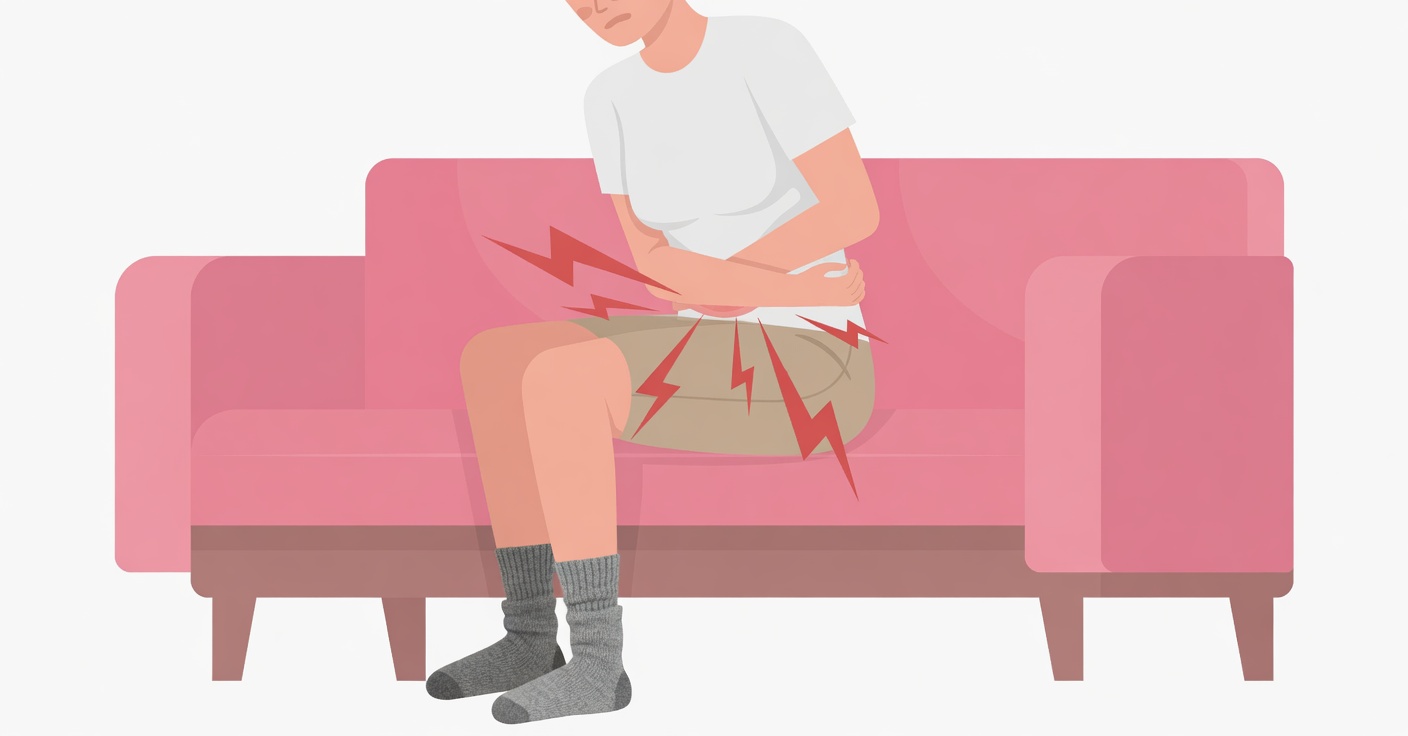
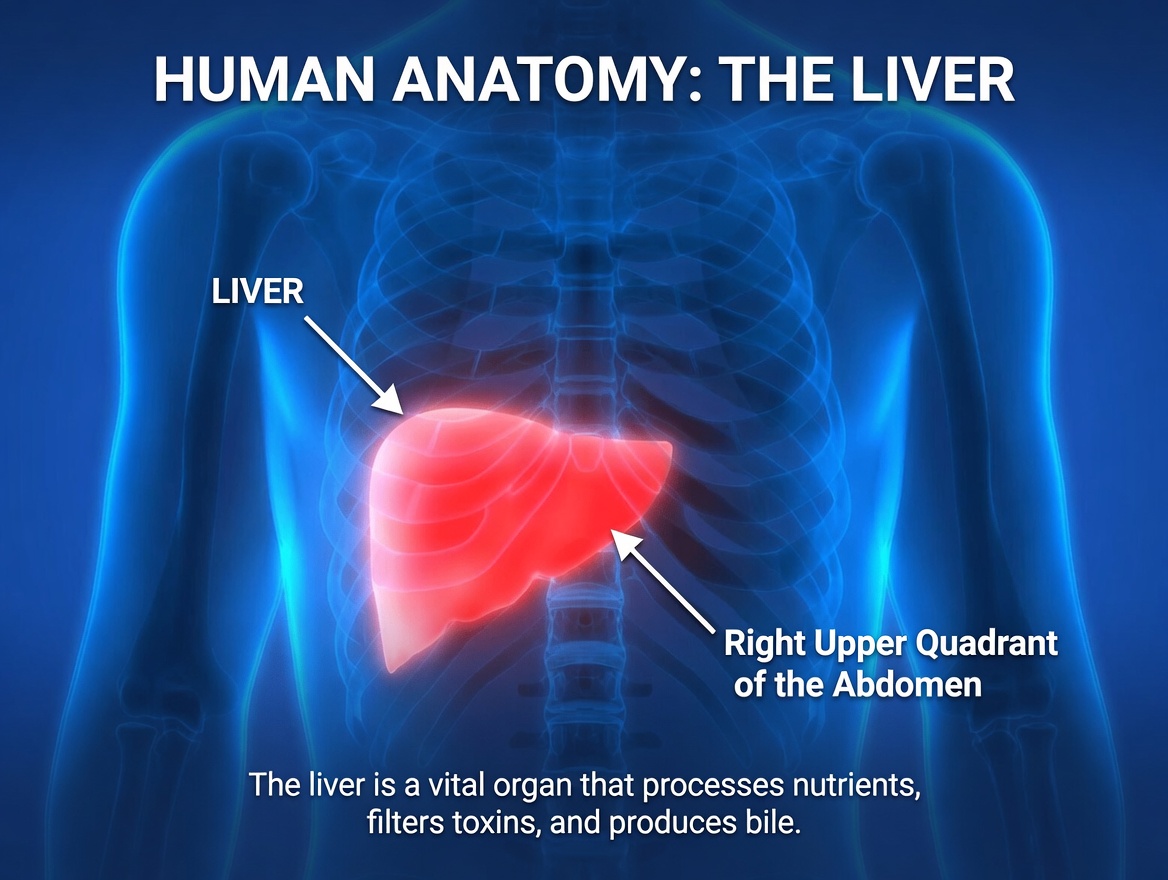
A dull ache or pressure under the right rib cage
This can be mistaken for posture problems or a minor muscle issue. In some cases, it may relate to an enlarged or irritated liver. -
Reduced appetite that seems to come out of nowhere
When inflammation affects the body’s signals, foods you usually enjoy may suddenly feel unappealing. -
Heavy fatigue—especially later in the day
If you feel worn out by mid-afternoon even with adequate rest, it may reflect disrupted energy processing when fat accumulates in the liver. -
Occasional, seemingly random nausea
Periodic waves of queasiness can be an overlooked sign that the body isn’t clearing byproducts as efficiently as it should.
If a few of these sound familiar, you’re not the only one. The key is not to ignore them—because more obvious symptoms can appear as liver stress increases.
11 Later Signs of Liver Strain You Should Not Ignore
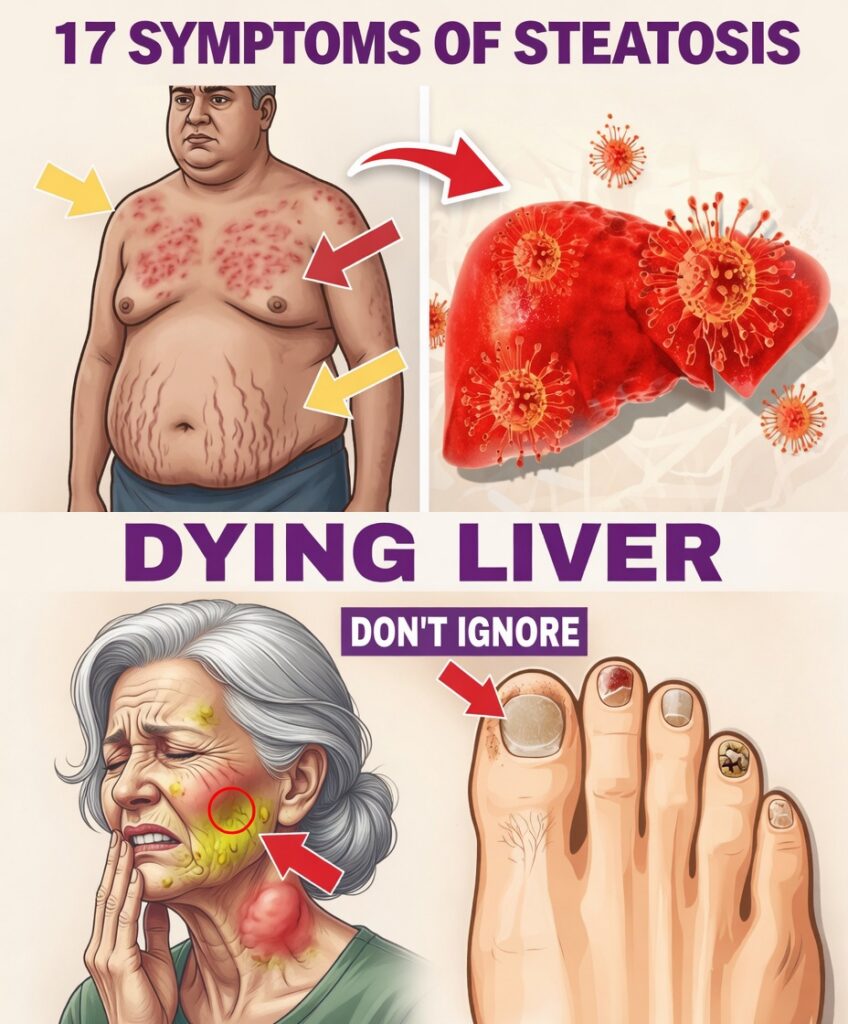
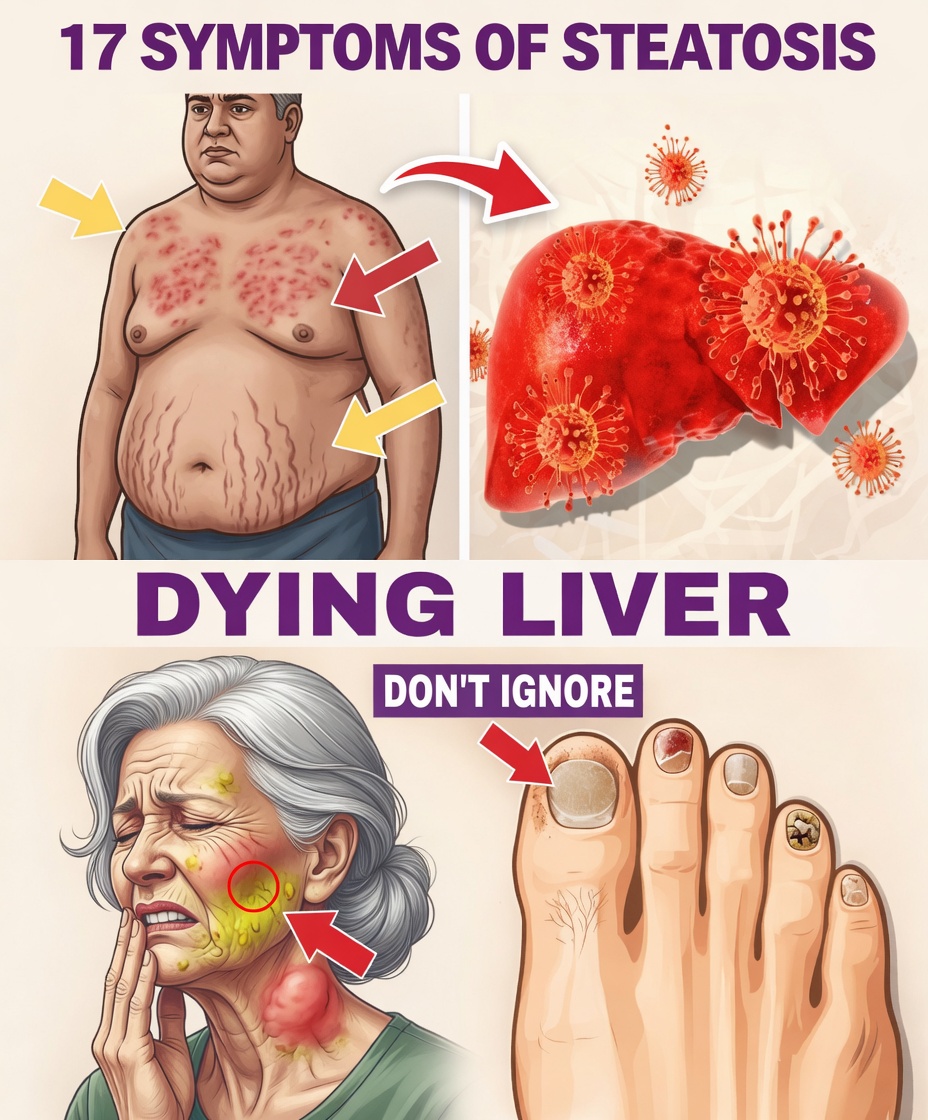
As liver issues advance, symptoms tend to become clearer and more disruptive. These signs can indicate significant fat buildup, inflammation, or impaired function. If you notice any of the following, it’s important to seek medical evaluation promptly.
- Dark, cola-colored urine
- Very pale or white-looking nails
- Small red “spider” veins on the skin
- Strong itching, especially on palms and soles
- Yellowing of the skin or eyes (jaundice)
- Unusually red palms
- Pale, clay-colored stools
- Trouble seeing in dim light
- Unexpected breast tissue growth in men
- Bruising easily or unexplained skin spots
- Persistent sharp pain under the right ribs
These later symptoms highlight why early awareness matters: liver problems can impact comfort, confidence, and daily life—and may require medical treatment.
5 Common Foods That Can Burden a Stressed Liver (And Better Swaps)
When your liver is already struggling, certain everyday foods can add more workload. Reducing these options may help lighten the load.
-
Ultra-processed foods and fast food
Why it’s tough on the liver: often high in unhealthy fats, additives, and excess calories
Try instead: mostly home-cooked meals using whole ingredients -
White bread and refined grains
Why it’s tough on the liver: can spike blood sugar quickly, promoting fat storage
Try instead: whole oats, quinoa, brown rice, or other whole grains -
Sugary drinks (soda, sweetened teas, energy drinks)
Why it’s tough on the liver: fructose is processed largely by the liver and can contribute to fat accumulation
Try instead: water, sparkling water, lemon water, or unsweetened herbal tea -
High added-sugar snacks and desserts
Why it’s tough on the liver: added sugars can directly drive fat buildup
Try instead: fruit like berries, or lightly sweetened alternatives in smaller portions -
Fried foods made with low-quality oils
Why it’s tough on the liver: inflammatory fats can increase metabolic stress
Try instead: cook with extra-virgin olive oil and choose baked/roasted meals
6 Research-Supported Foods That May Help Support Liver Health
While no single food is a cure, research suggests that certain choices can support liver function and metabolic health. Adding these consistently may help—especially when combined with movement and reduced sugar intake.
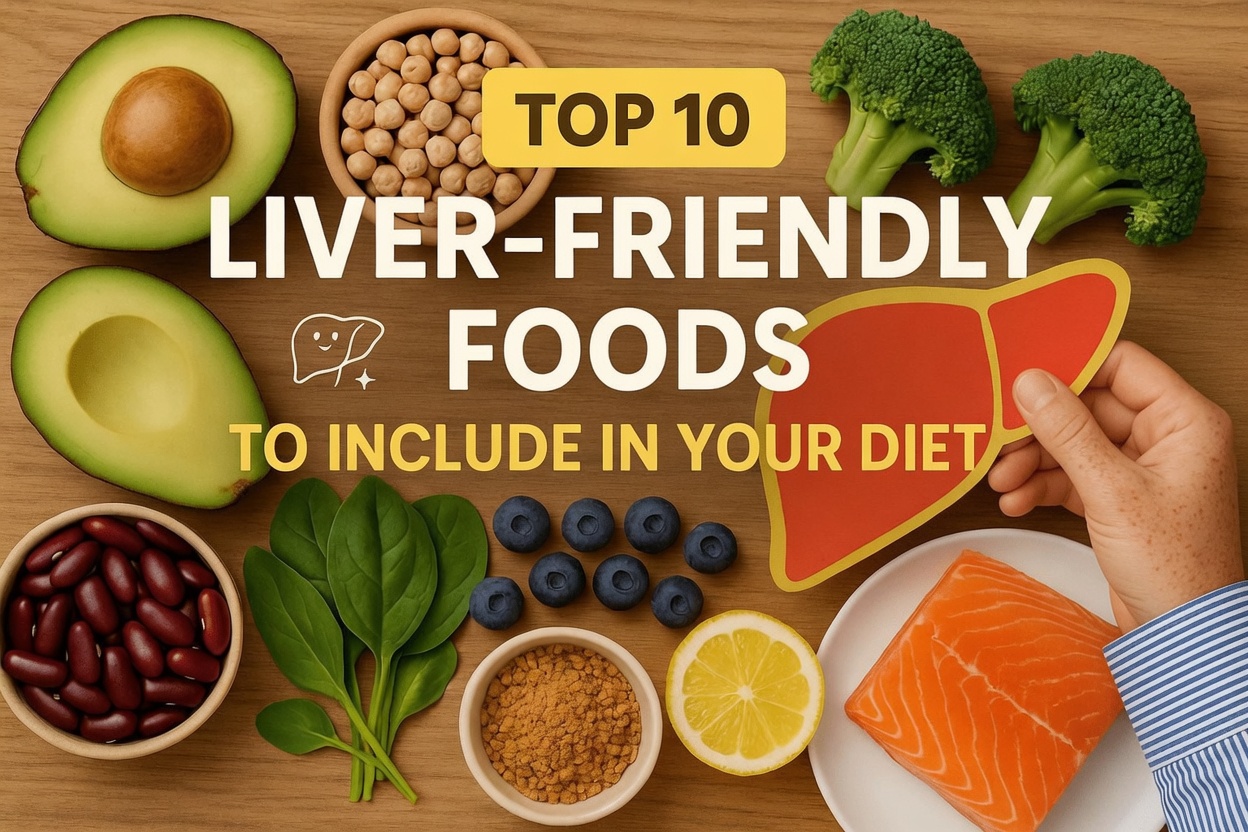
- Black coffee (unsweetened) – Associated in studies with a lower risk of certain liver problems
- Extra-virgin olive oil – Provides healthier fats that support metabolic processing
- Avocados – Nutrient-dense and supportive of healthy dietary patterns
- Cruciferous vegetables (e.g., broccoli, Brussels sprouts) – Contain compounds linked to helpful enzyme activity
- Whole oats and seeds – Soluble fiber can support healthy cholesterol and fat handling
- Turmeric (culinary amounts) – Curcumin shows potential benefits in research; use moderately and consistently
A Simple 30-Day Liver Support Plan (Realistic, Not Extreme)
You don’t need an overhaul overnight. Small, repeatable steps often produce the best results. Many people report improved energy within a few weeks when they stay consistent.

- Week 1: Cut out sugary drinks and reduce fried foods
- Week 2: Add a 30-minute daily walk and consider 1–2 cups of unsweetened black coffee (if tolerated)
- Week 3: Replace refined grains with oats or quinoa on most days
- Week 4: Add avocado or broccoli at least 5 times per week
Support the plan with plenty of water and balanced meals (protein, fiber, and healthy fats). Track how you feel—energy and digestion are often the first changes people notice.
Your liver is remarkably resilient. Paying attention to early warning signs today can help you protect your health for the long run.
Frequently Asked Questions
What are the earliest signs of liver problems?
Common early clues include unexplained fatigue, mild discomfort under the right ribs, feeling full quickly, and digestive changes. They’re easy to dismiss, but worth monitoring—especially if several occur together.
Can liver health improve with diet changes alone?
Many people see improvements in energy and lab markers through consistent nutrition changes and regular movement. However, results vary, and some liver conditions require medical treatment.
When should I see a doctor about possible liver issues?
Seek medical advice promptly if you notice multiple symptoms—especially later signs such as jaundice, dark urine, intense itching, pale stools, or persistent right-side pain. A clinician can order appropriate tests and guide next steps.
Medical Disclaimer
This article is for informational purposes only and does not provide medical advice. Always consult a qualified healthcare professional for personalized guidance—especially if you have symptoms or underlying conditions. Early evaluation is often the best step toward better outcomes.