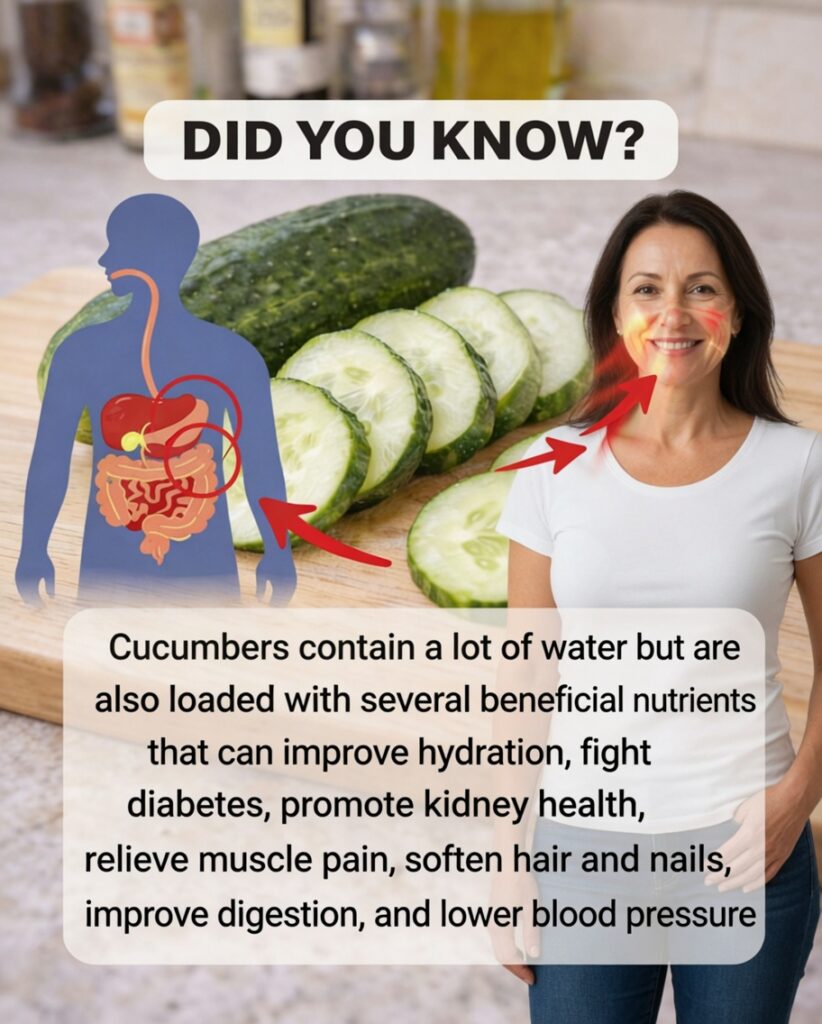
In a world that moves fast, staying hydrated and eating a balanced diet can easily slip down the priority list—especially when tight schedules and ultra-processed foods take over. Over time, that can show up as low energy, mild discomfort, and difficulty keeping up with everyday demands. A simple solution may be closer than you think: adding cucumbers to your meals. This water-rich vegetable is light, refreshing, and surprisingly nutrient-dense. And at the end, you’ll find an unexpected kitchen trick that can completely change how you use cucumbers.
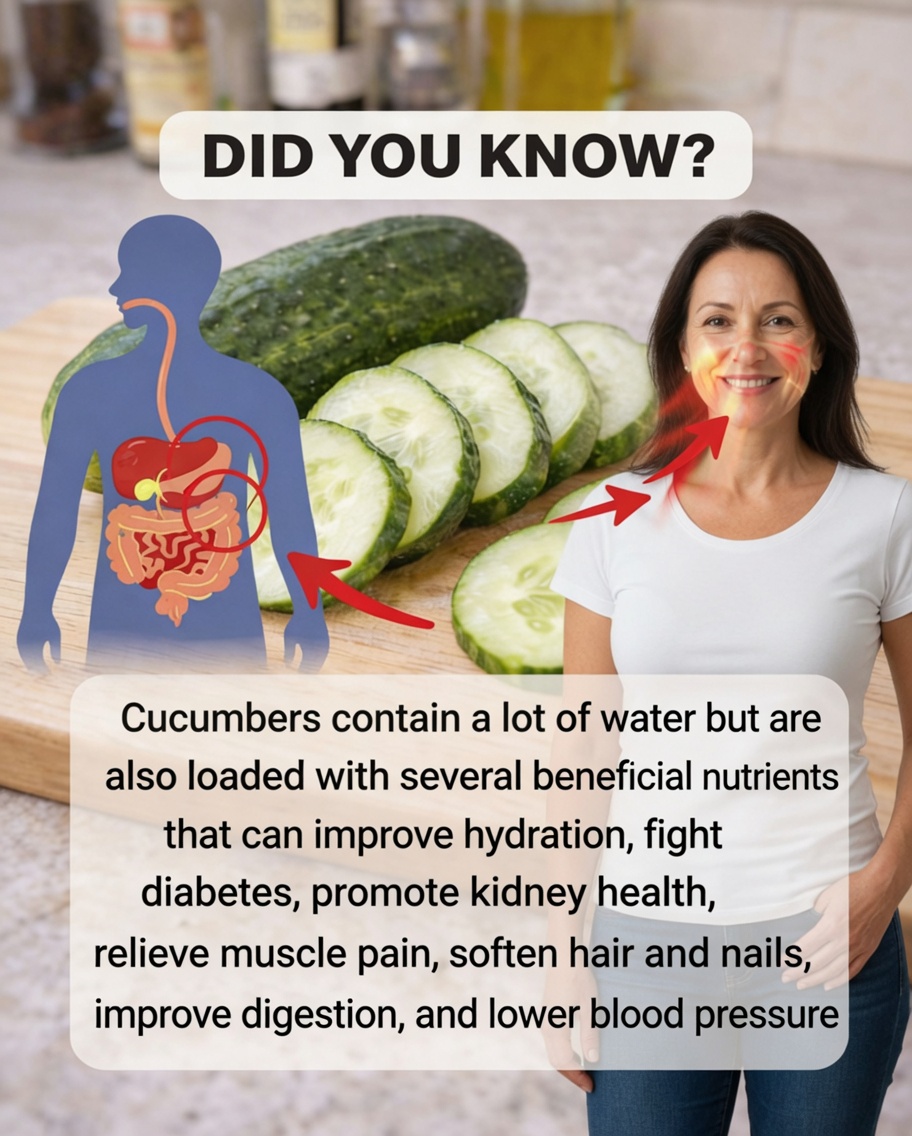
Why Cucumbers Belong in Your Everyday Diet
Cucumbers aren’t just a crunchy salad ingredient. Because they’re made up of about 95% water, they’re a smart, natural way to increase daily fluid intake—without relying on sweetened beverages. Beyond hydration, cucumbers provide a mix of vitamins, minerals, and antioxidants that support normal body function.
Nutrition data (including USDA references) highlights how cucumber is low in calories—around 45 calories for a large cucumber—while still offering nutrients such as:
- Vitamin K
- Potassium
- Magnesium
Their clean, mild taste also makes them extremely versatile. You can slice them, blend them, pickle them, or add them to savory dishes without overpowering other flavors—perfect for anyone who wants healthy eating to feel effortless.
Better Hydration, Without Getting Bored of Water
Hydration affects everything from energy to physical performance, but plain water can feel repetitive. Thanks to their high water content, cucumbers support hydration through food, which research (including studies in the Journal of Human Nutrition and Dietetics) suggests can help overall fluid status—especially in heat or after exercise.
Simple ways to put this into practice:
- Infuse water overnight with cucumber slices for a light, refreshing flavor.
- Snack on chilled cucumber spears for a hydrating, crunchy break.
- Add cucumber to meals like cold soups (gazpacho-style).
Cucumbers also contain potassium, an electrolyte that plays a role in fluid balance, which matters during workouts and daily activity.

Cucumbers and Blood Sugar Support
Blood sugar ups and downs are common when meals are heavy in refined carbohydrates. Cucumbers offer a low-glycemic choice, meaning they’re unlikely to cause sharp spikes in glucose. Guidance referenced by organizations like the American Diabetes Association often emphasizes the value of high-water, fiber-containing foods for steadier energy.
One fiber in cucumbers that gets attention is pectin (a soluble fiber). It can form a gel-like texture in the digestive tract, which may help slow down sugar absorption.
Easy meal ideas:
- Add cucumber strips to a turkey wrap for crunch and hydration.
- Pair fresh cucumber slices with a yogurt-based dip for a balanced snack.
Making vegetables like cucumber a regular habit can be a simple way to support more consistent daily energy.
Supporting Kidney Function with Hydrating Nutrition
Your kidneys regulate fluids and filter waste, so food choices that support hydration and mineral balance matter. Cucumbers provide potassium, which the National Kidney Foundation associates with fluid balance and blood pressure support—both closely tied to kidney health.
Cucumbers also contain compounds (including caffeic acid) that are often linked to mild diuretic effects, potentially encouraging urine output and helping the body flush waste.
Practical ways to include cucumbers more often:
- Add them to water for a clean flavor boost
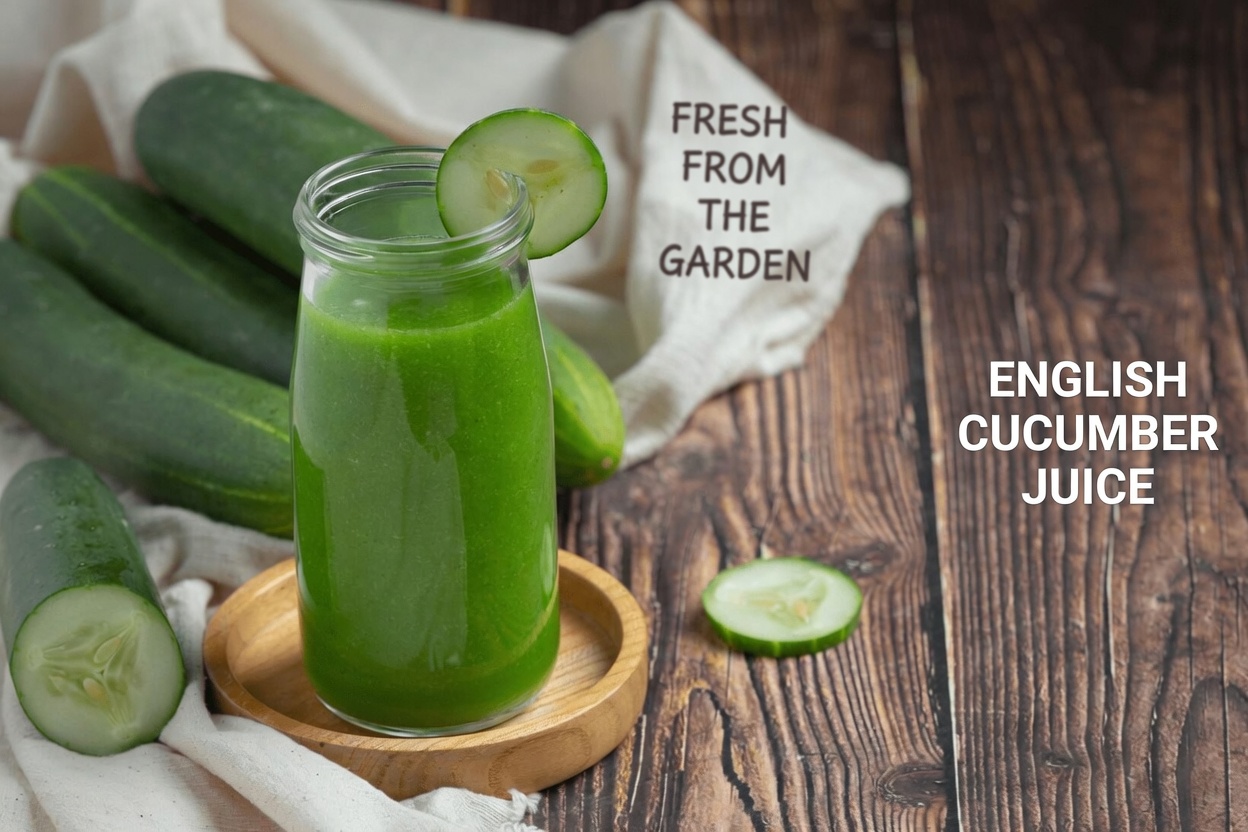
- Blend into green smoothies with spinach and lemon
- Use them as a base ingredient in cold soups during warm weather
Natural Support for Occasional Muscle Discomfort
Muscle soreness after intense activity—or even a long day—can throw off your routine. Cucumbers contain plant compounds such as flavonoids and tannins, which research (including work published in Phytotherapy Research) associates with anti-inflammatory activity.
Two simple approaches:
- Eat cucumbers after activity to help replenish fluids
- Apply chilled slices to areas that feel hot or puffy for a cooling effect
For additional recovery support, pair cucumbers with magnesium-rich foods like nuts or seeds.
Healthier Hair and Stronger Nails from the Inside
Hair and nail strength often reflects long-term nutrition. Cucumbers contain silica, a trace mineral linked in dermatology research (including references in the Journal of Investigative Dermatology) to connective tissue strength, which can influence hair and nails.
They also provide vitamin C, which supports collagen production—important for structure and growth.
A simple weekly habit:
- Make a cucumber salad and add pumpkin seeds, sunflower seeds, or chopped nuts for extra protein and minerals.
Consistency matters most—small daily portions tend to be more impactful than occasional large servings.
Supporting Digestion with More Water and Fiber
Comfortable digestion improves nutrient absorption and day-to-day well-being. Cucumbers contain both soluble and insoluble fiber, and research (including publications in the World Journal of Gastroenterology) notes that fiber supports regularity.
How cucumbers may help:
- Their water content can help soften stool
- Their fiber supports smoother movement through the gut
- Enzymes such as erepsin are often noted for assisting protein breakdown
Try these gentle, easy add-ons:
- Mix grated cucumber into yogurt for a refreshing probiotic-style snack
- Add cucumber slices to sandwiches and wraps for crunch and hydration
Cucumbers and Blood Pressure-Friendly Eating
Blood pressure is strongly influenced by lifestyle, including daily food choices. Potassium helps counterbalance sodium and may support healthy blood vessel function, a relationship commonly emphasized by the American Heart Association.
Cucumbers are also naturally low in sodium, making them a convenient option for heart-friendly eating.
A practical swap:
- Replace salty packaged snacks with cucumber sticks and hummus
Small substitutions like this can add up quickly.
Simple, Actionable Ways to Eat Cucumbers Every Day
If you want cucumbers to become a true staple, use these easy routines:
- Morning boost: Add cucumber to a smoothie with banana, spinach, and almond milk.
- Smarter snacking: Make “cucumber boats” (halved cucumbers) filled with cottage cheese or tuna.
- Upgrade meals: Grate cucumber into salads and wraps, or make a quick yogurt-garlic-dill sauce (tzatziki-inspired).
- Evening wind-down: Steep cucumber slices with mint in hot water for a calming, lightly flavored drink.
- Weekly prep: Slice cucumbers in advance and store them in the fridge for grab-and-go use.
How Cucumbers Compare to Other Hydrating Foods
Here’s a quick look at cucumber versus other water-rich options:
-
Cucumber
- Water content: 95%
- Key nutrients: Potassium, Vitamin K, Silica
- Calories: 45 (large)
-
Watermelon
- Water content: 92%
- Key nutrients: Lycopene, Vitamin C
- Calories: 46 (per cup)
-
Celery
- Water content: 95%
- Key nutrients: Fiber, antioxidants
- Calories: 16 (per stalk)
-
Lettuce
- Water content: 96%
- Key nutrients: Folate, Vitamin A
- Calories: 5 (per cup)
Cucumbers stand out for their mix of high water content, mild flavor, and everyday convenience.
Fresh Recipe Ideas to Keep Cucumbers Interesting
If you want more variety, try:
- Cucumber salsa: Dice cucumber with tomatoes, onion, and cilantro for a bright topping.
- Quick pickles: Slice and soak in vinegar with salt and spices for a tangy side dish.
- Herbed cucumber soup: Blend with herbs for a light, cooling lunch.
Final Thoughts: A Small Habit with Big Benefits
Adding cucumbers to your daily routine is an easy, affordable way to support hydration, digestion, steady energy, and overall wellness. Their nutrients—especially water, potassium, fiber, vitamin K, silica, and vitamin C—make them far more than just a salad filler.
Unexpected kitchen tip: grate cucumber, squeeze out the excess water, then freeze it in ice cube trays. Drop a cube into smoothies, cold soups, or even sparkling water for instant freshness—without waste.